




Aitutaki – Days 3 and 4 – Rain and Polynesian Dancing
February 2-3, 2011
And then came the rain. We knew it was rain season, so we couldn’t complain. We were happy we had moved our boat trip, which had been scheduled for February 2.
Actually it is also cyclone season, so we were lucky it wasn’t worse. Aitutaki was struck by Cyclone Pat one year ago. They eye of the cyclone passed straight over the island and people here endured winds of around 190 km/h (120 mph) for over 4 hours. 60% of the houses here were damaged and New Zealand sent an emergency plane with supplies and an engineering team. Calculated risk, each island here gets a visit from a nasty cyclone on the average about every 30 years or so.
The hot water for our bungalow is heated with solar energy, so at the end of the two days it was mostly lukewarm:
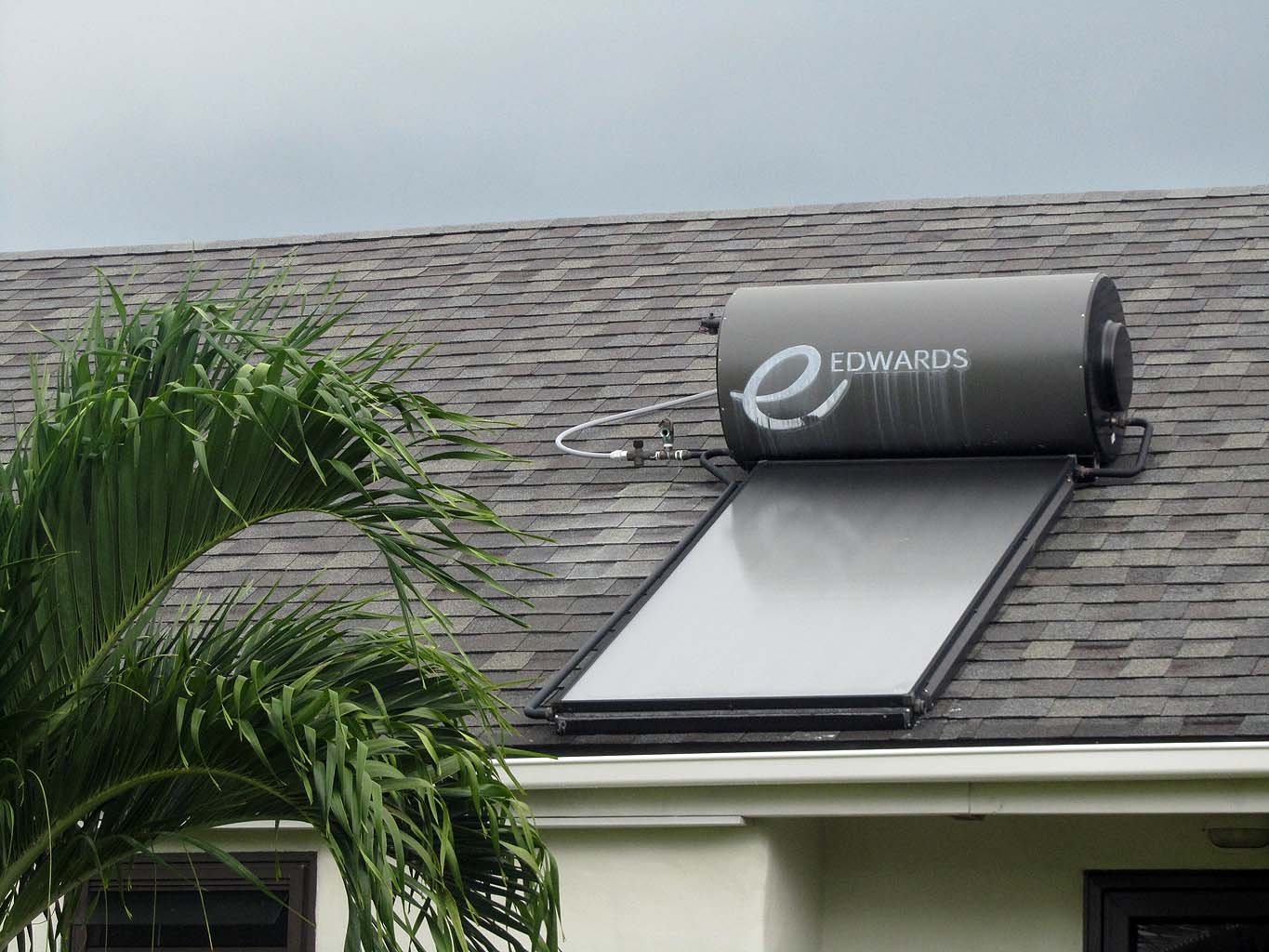
Who needs very hot tap water in this climate, anyway?
We didn’t want some sissy tropic drizzle to ruin our plans, so we went ahead with our excursion for the day, a trip to the highest mountain on Aitutaki, Maungapu at 124 meters (407 feet). Although high, Aitutaki’s highest point is left in the dust by Denmark’s highest point, Møllehøj, at a breathtaking 171 meters (561 feet).
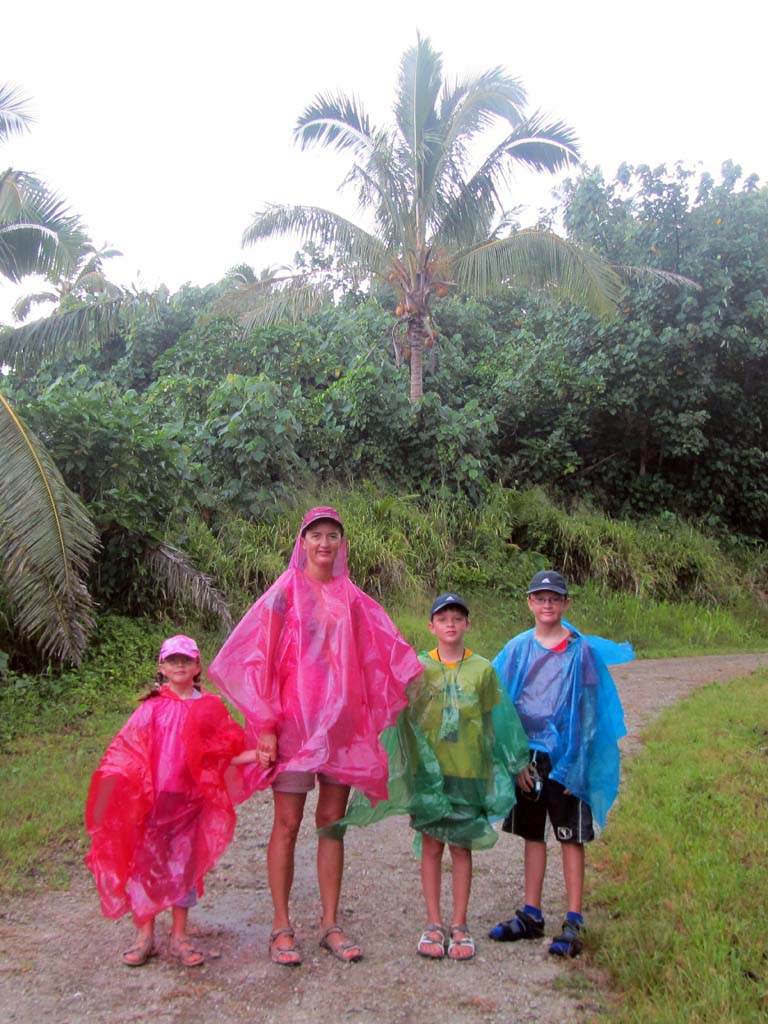
A group of happy trekkers on their way:
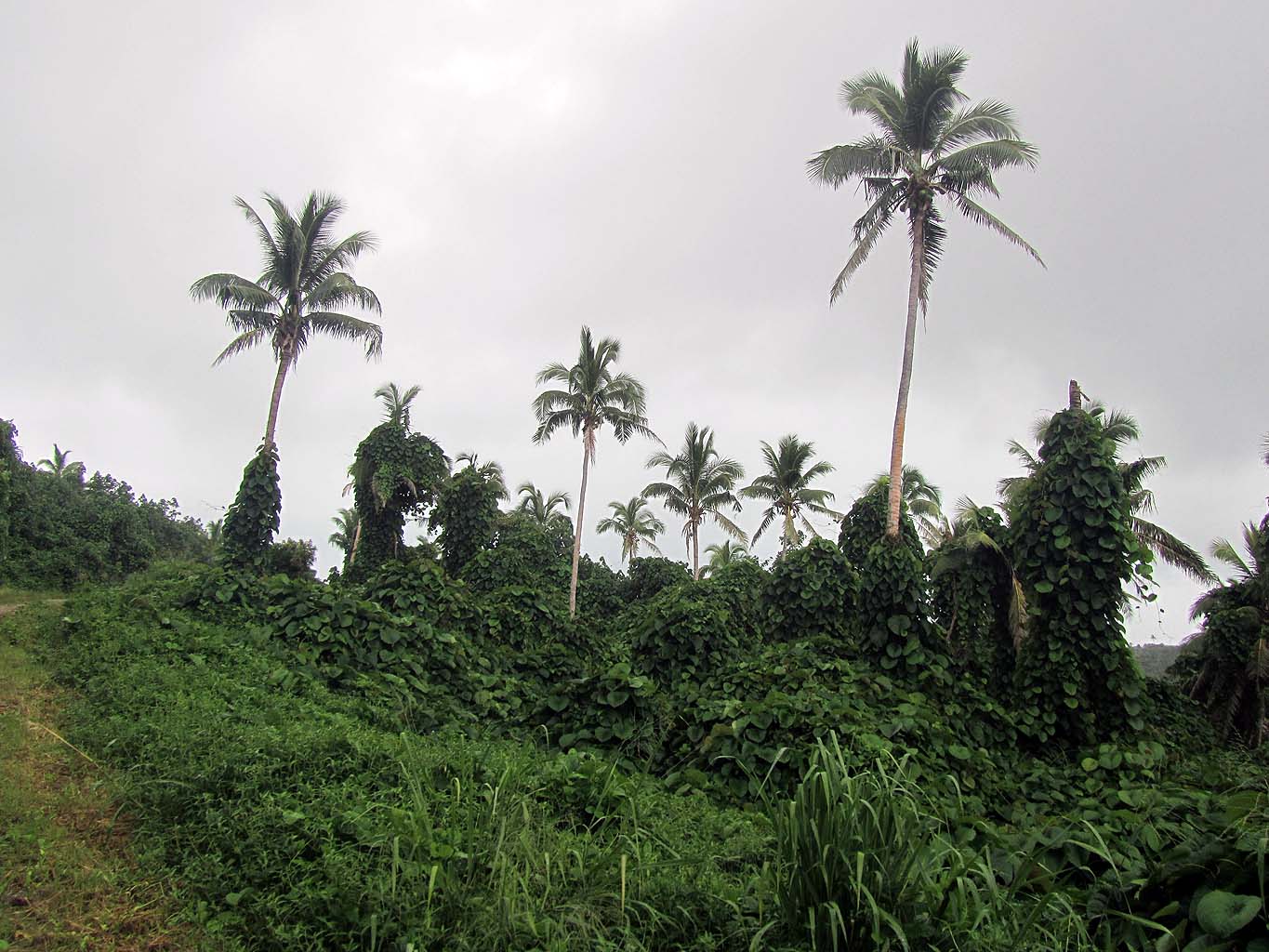
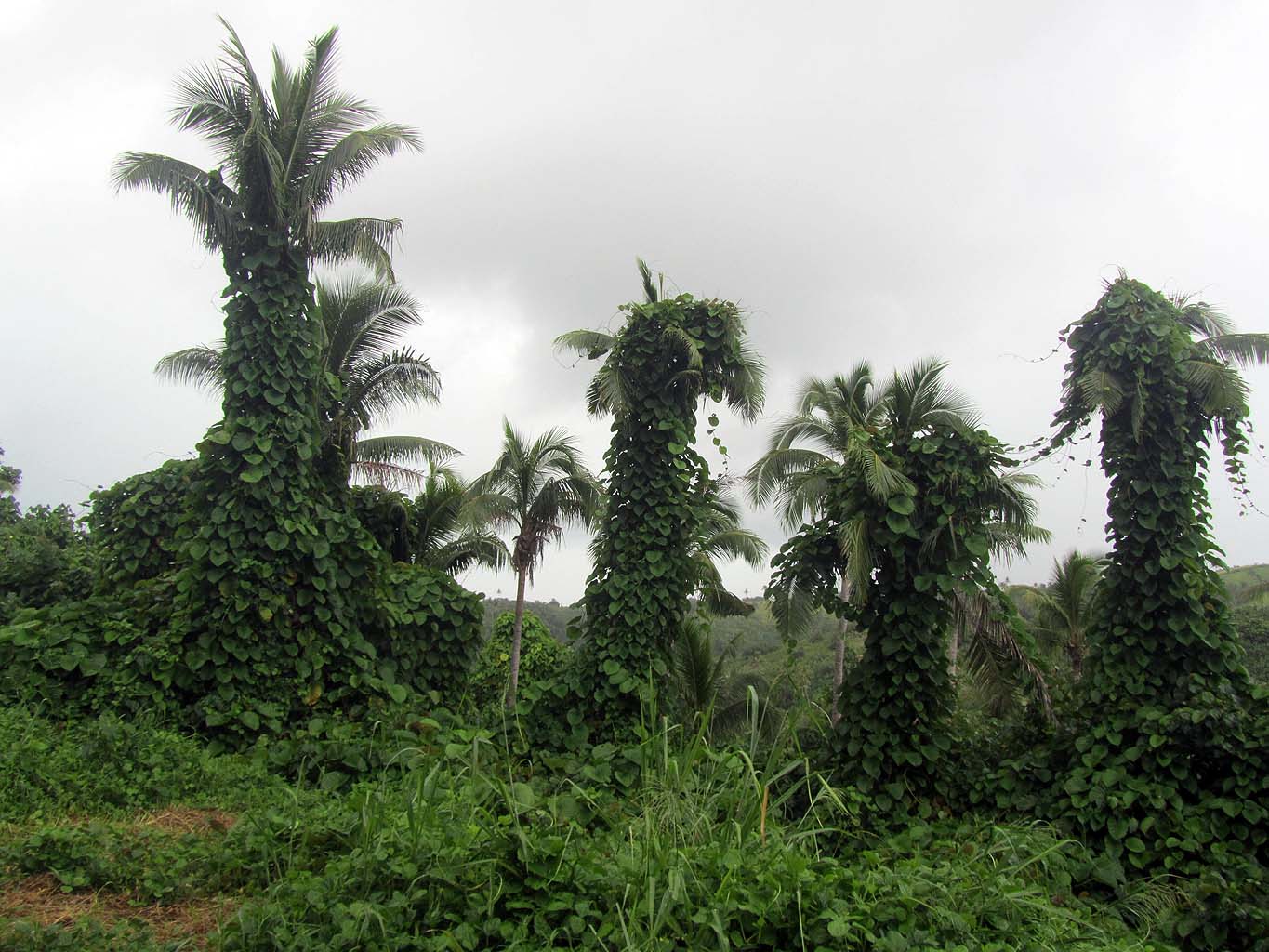
The vegetation was lush as we climbed the hill. A battle was going on between a climbing plant and the palm trees here and the palm trees seemed to be loosing:
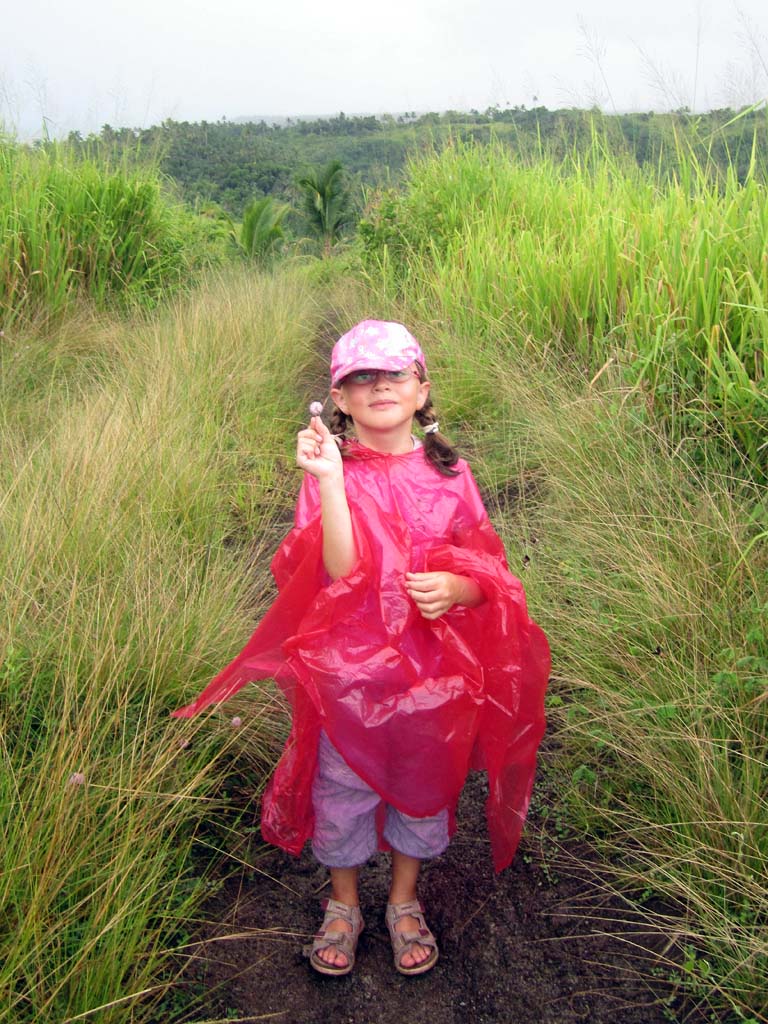
Iseline found a flower on the way up:
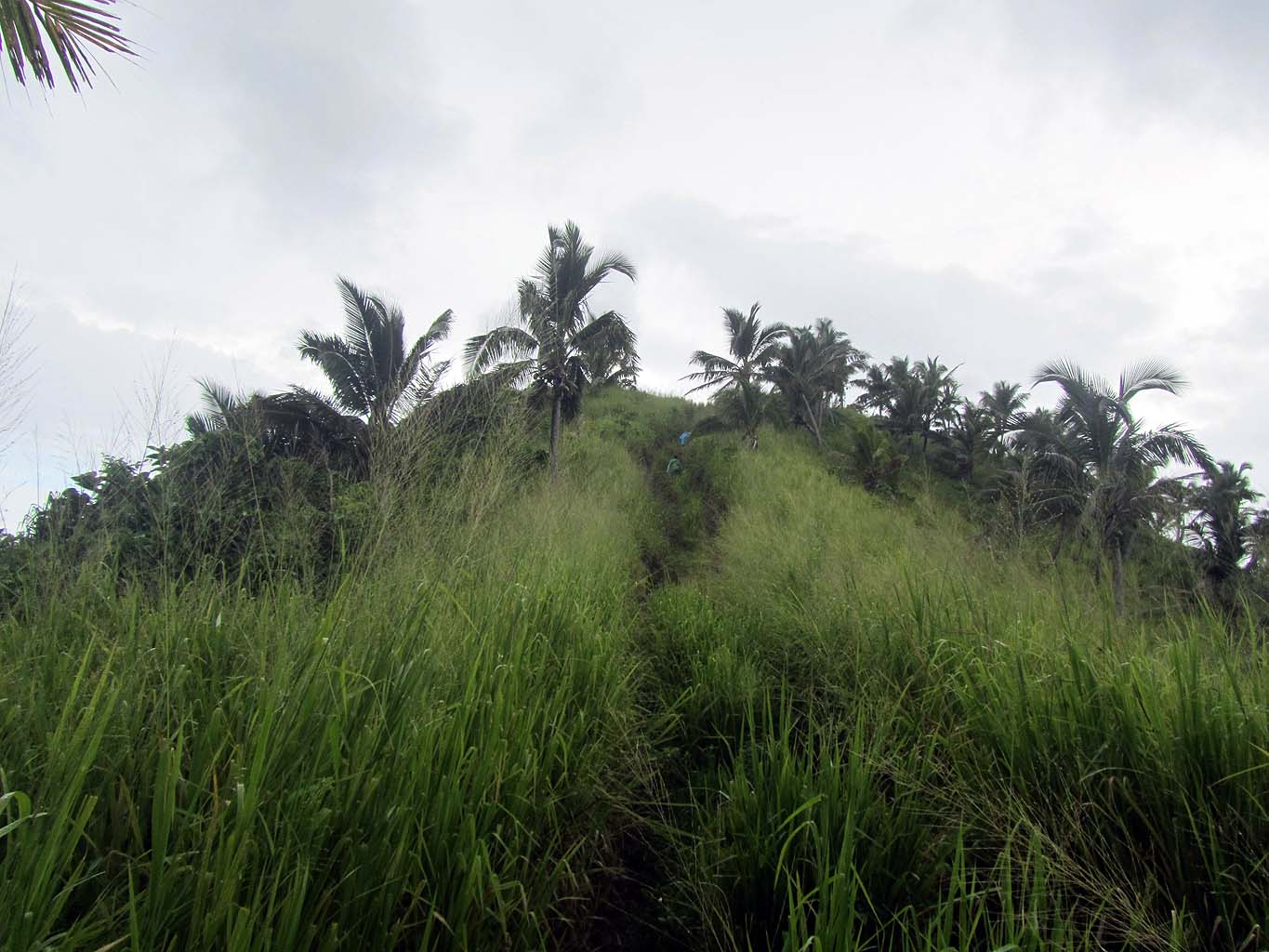
We defied the weather gods and fought our way up:
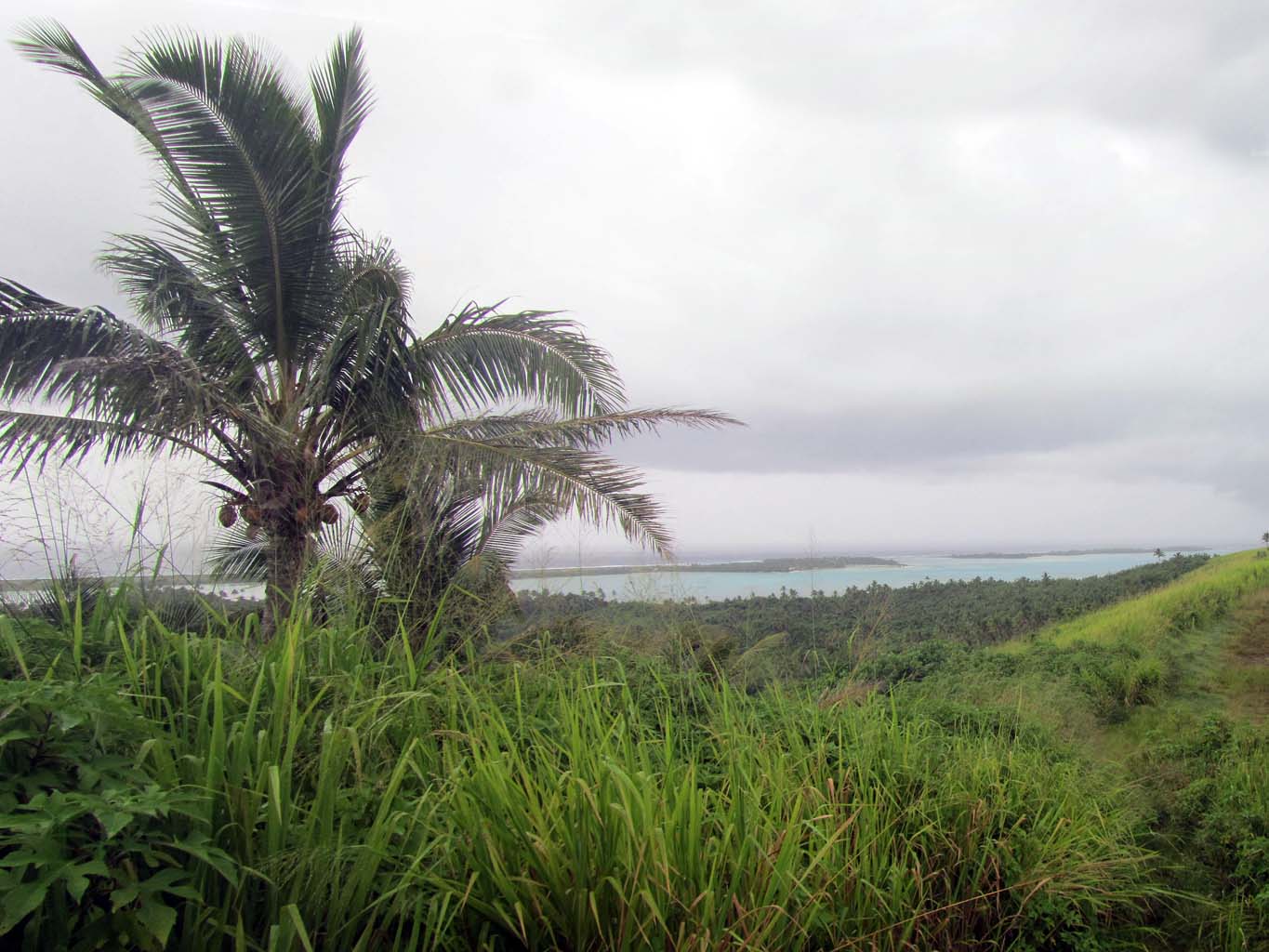
At the top we got a great view of the lagoon, which is probably more impressive on a sunny day:
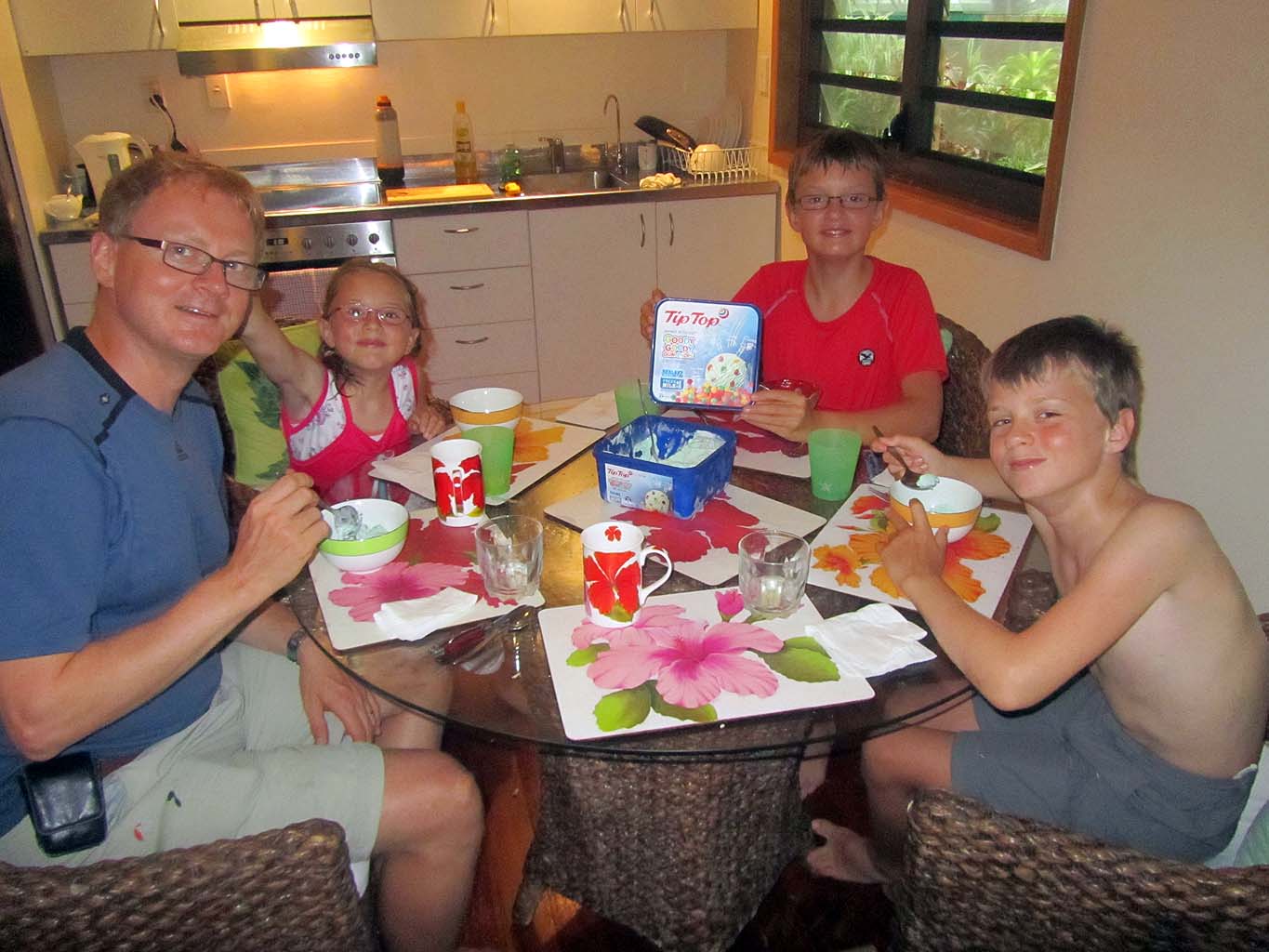
Nah, better to go shopping for groceries. I stumbled upon a very tempting ice cream in the local shop: “Goody goody gum drops” ice cream, made in New Zealand. It had a strange bubble gum type artificial flavor and was filled with jelly candy. Totally calorie free. After the long and tiring trek we deserved it:
The next day the bad weather contiued. It rained on and off and the sky was gray, gray and more gray. The weather forecast didn’t look good for the coming day either, the new day for our boat trip.
We took a morning bath at the beach. To our surprise the water was pretty cold, probably around 18 C (65 F). Lots of rain water from the very heavy rain during the night had filled the small lagoon on the west side of the island and made it colder than the ocean. The boys didn’t last very long in the water:
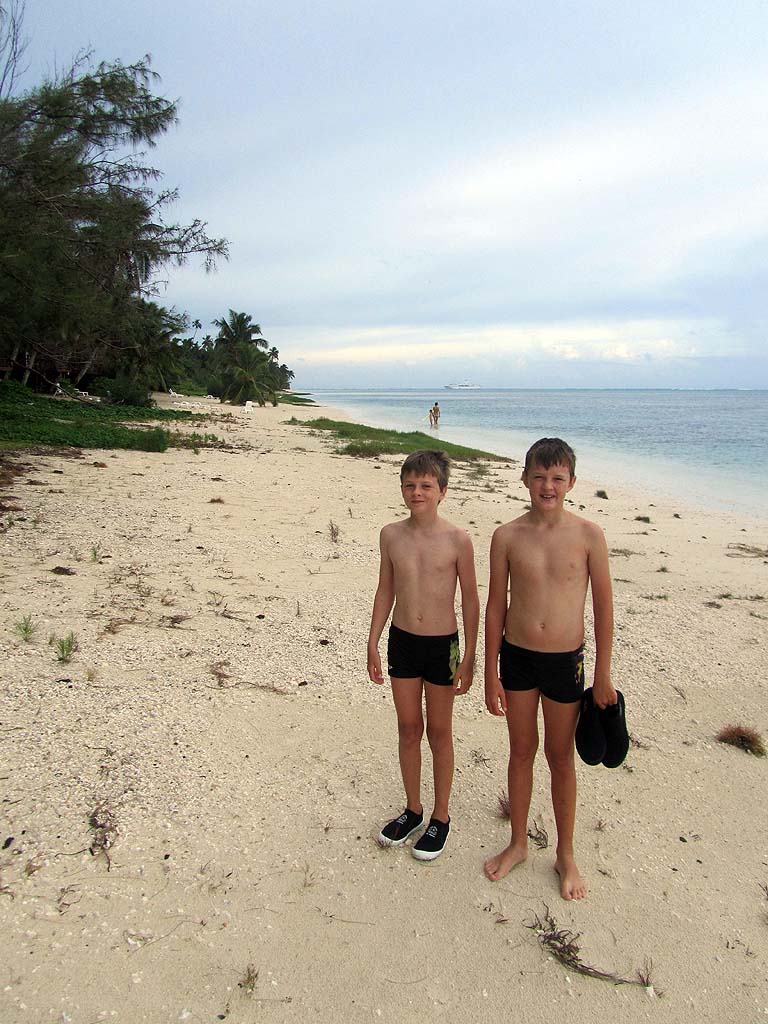
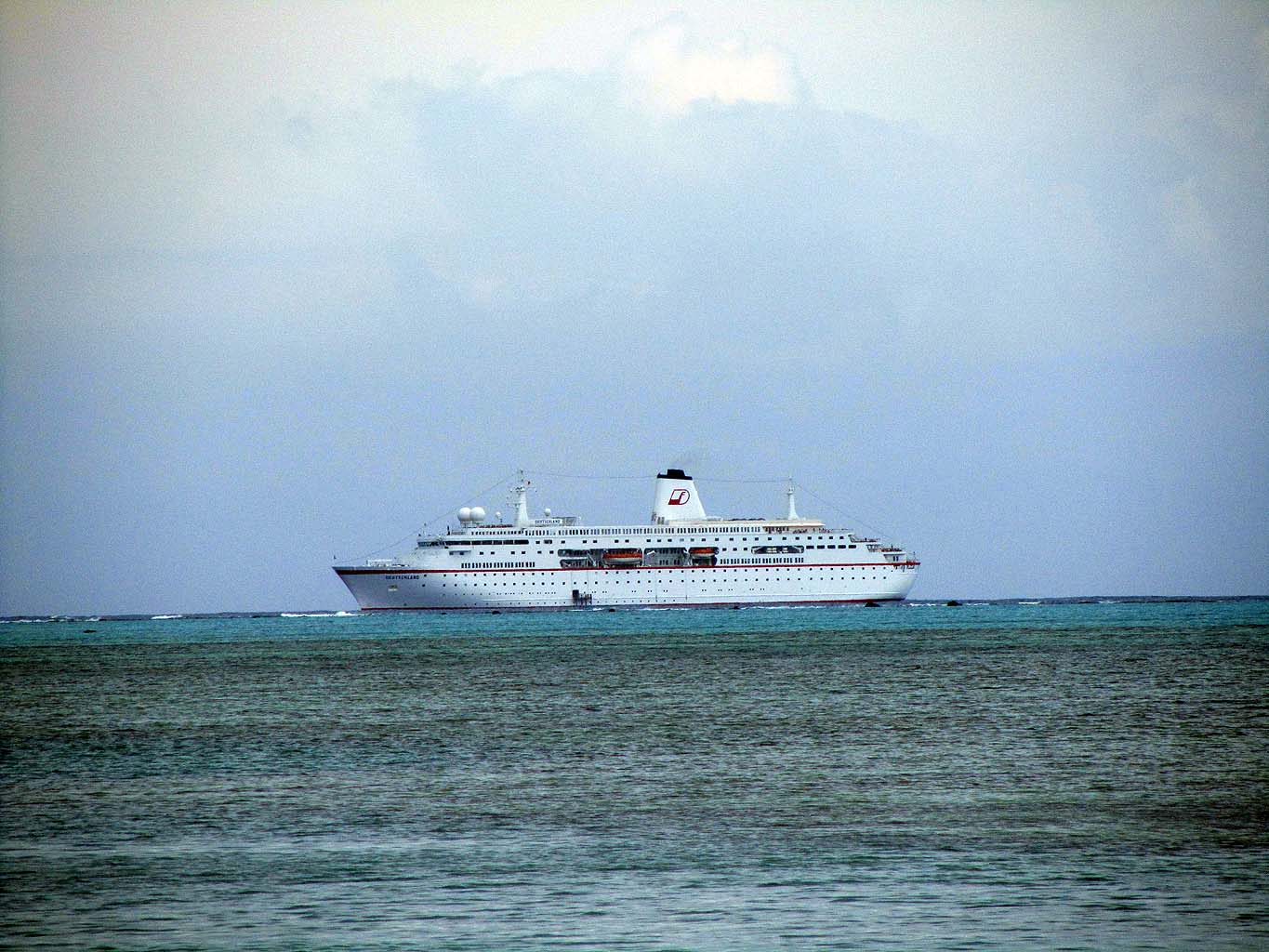
You can see the day’s cruise ship in the background. There was a different one there yesterday. Two large groups of tourists who did not get to see Aitutaki in sunshine.
Just to show off the zoom of my compact camera again, here comes a zoomed photo of the ship taken at the same spot as the photo above:
And zooming that photo on the computer reveals the name of the ship:
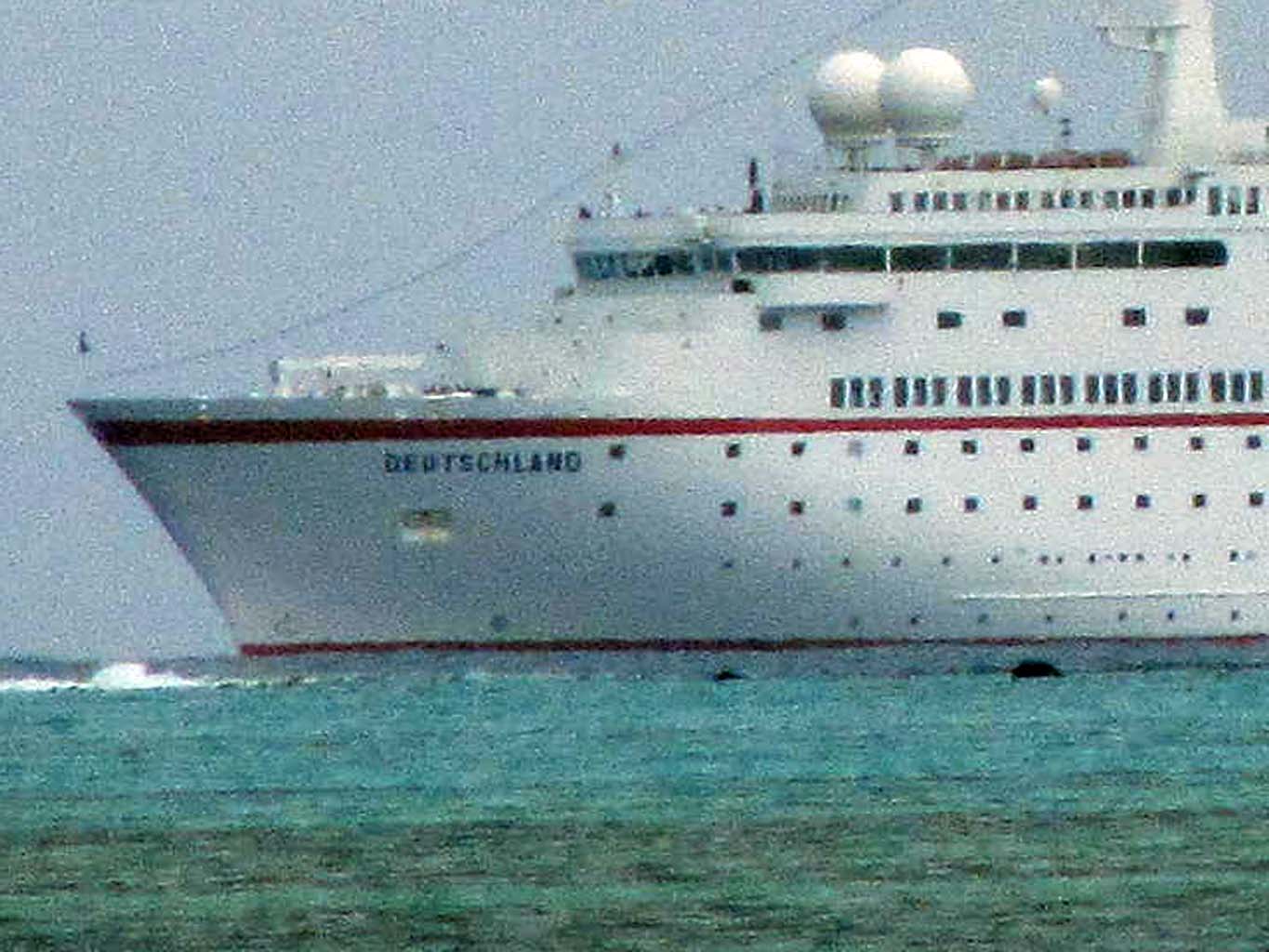
Achtung Kartoffel! I think I can guess the nationality of the tourists on board.
The air was much warmer than the water and more than warm enough for breakfast on the porch:
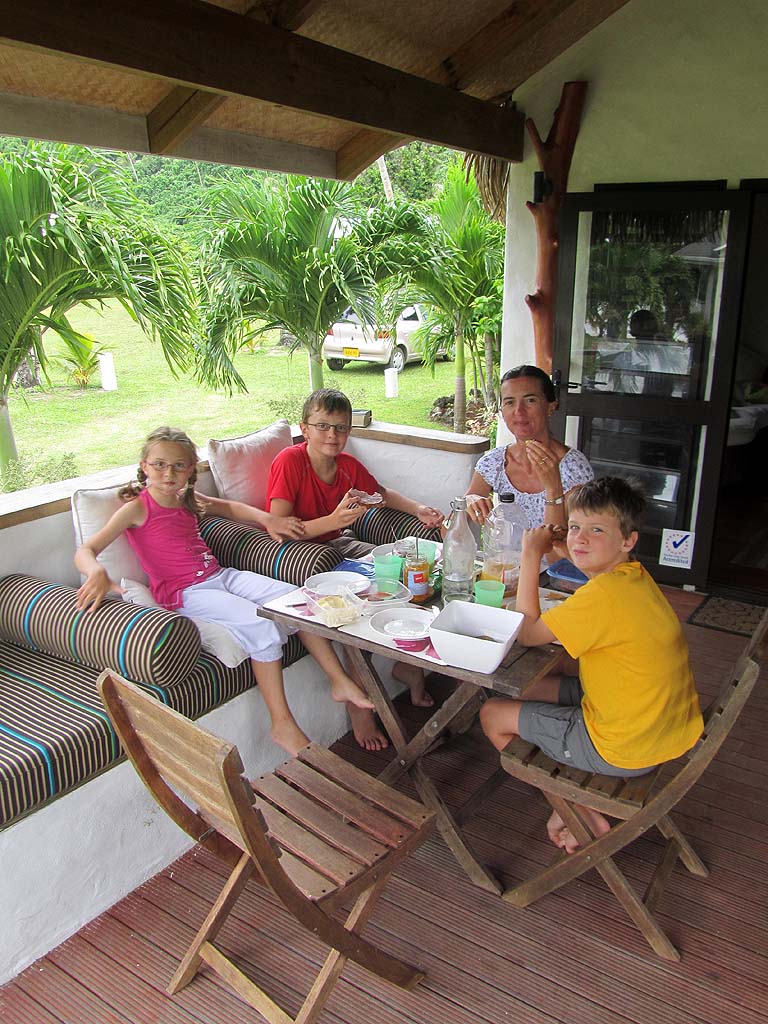
The water in the bottle in the middle has been purified by yours truly using a gadget I haven’t had the opportunity to tell you about yet. We are carrying with us an ingenious device called the LifeSaver bottle:
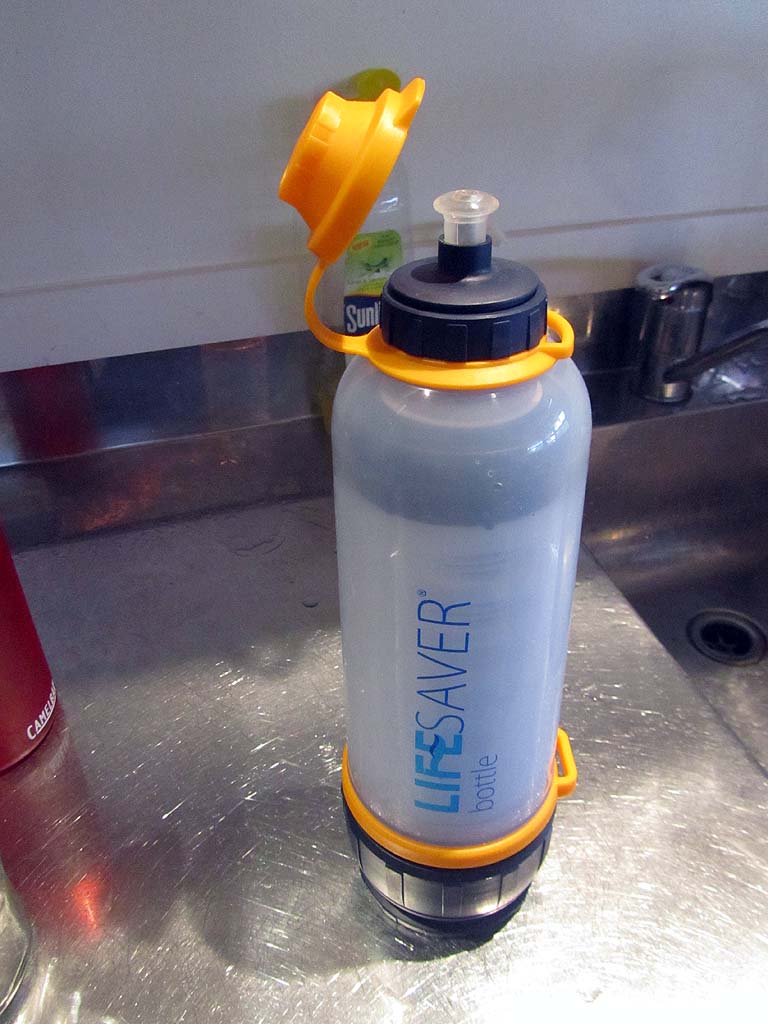
This handy little bottle with a capacity of 750 ml (1.6 US pints) in one filling hides a complex filtering system driven by air pressure. It has an ultrafine ceramic filter with pore openings of only 15 nanometers. That’s 15 billionth of a meter, folks. 15 nanometers is small enough to filter out not only bacteria, but also virus, the smallest living things. From all my research on filtering technologies on the net, this is the only portable system I could find that is capable of removing virus.
In addition to the nanofilter there is also a carbon filter which removes many chemical pollutants.
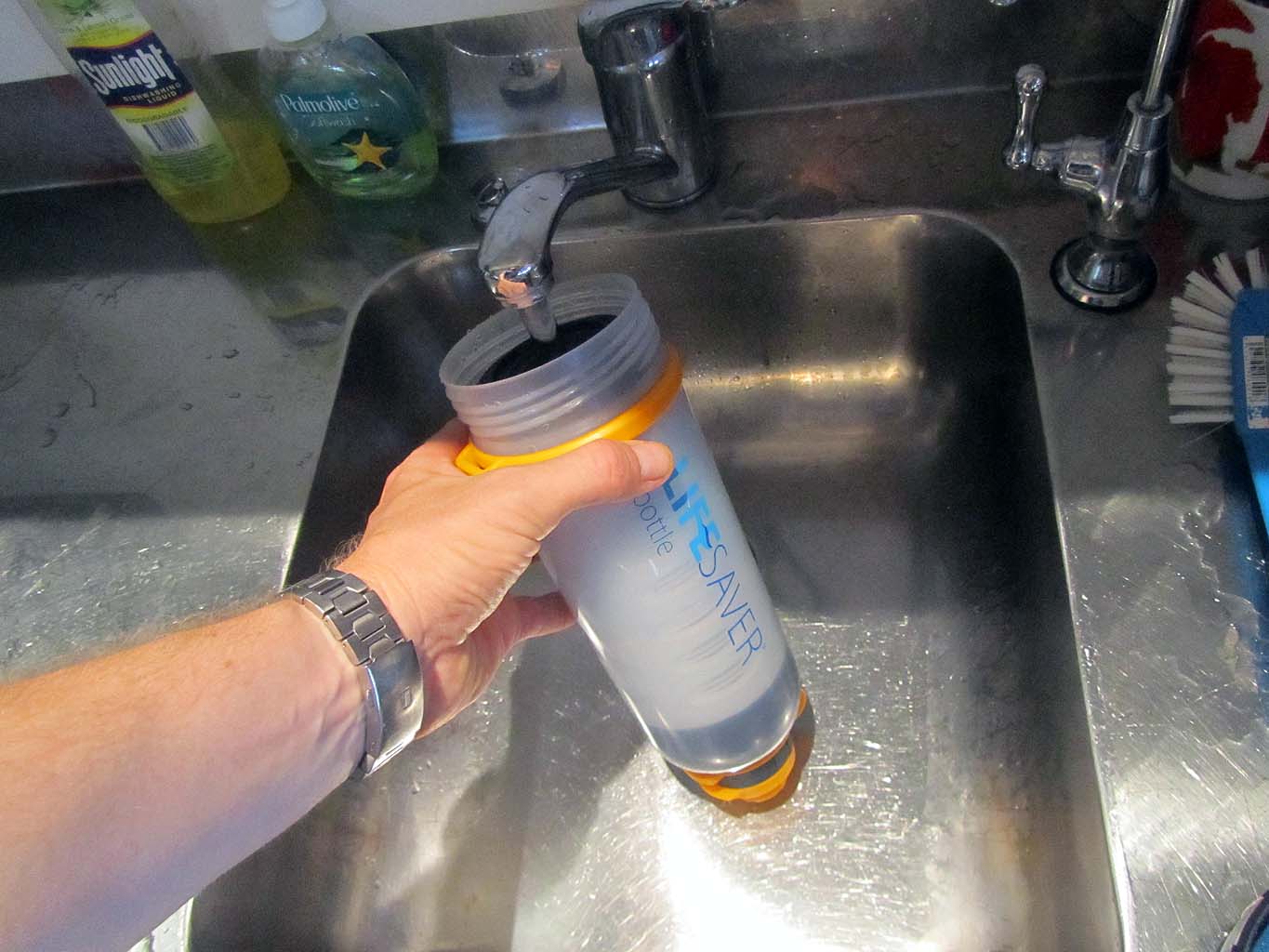
The water in the tap on Aitutaki is untreated ground water, full of potential illness makers. A perfect water source for the LifeSaver bottle. We filtered all the water we needed from tap water while staying on the island.
Just fill her up:
Put the pumping mechanism back on:
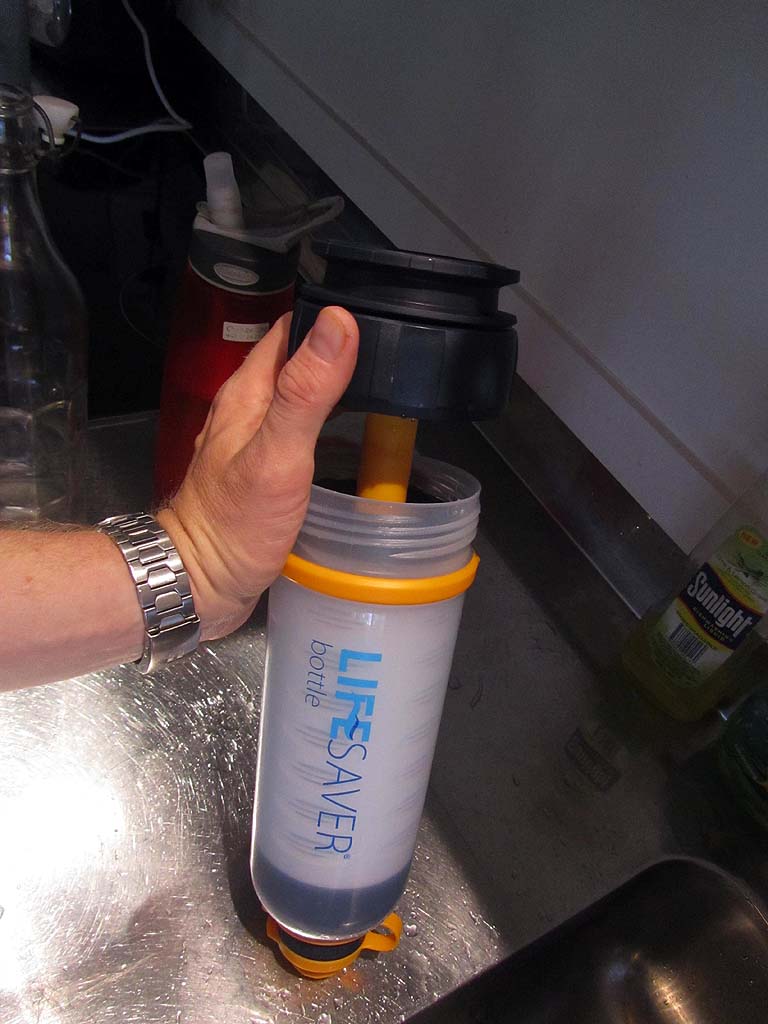
and pump:
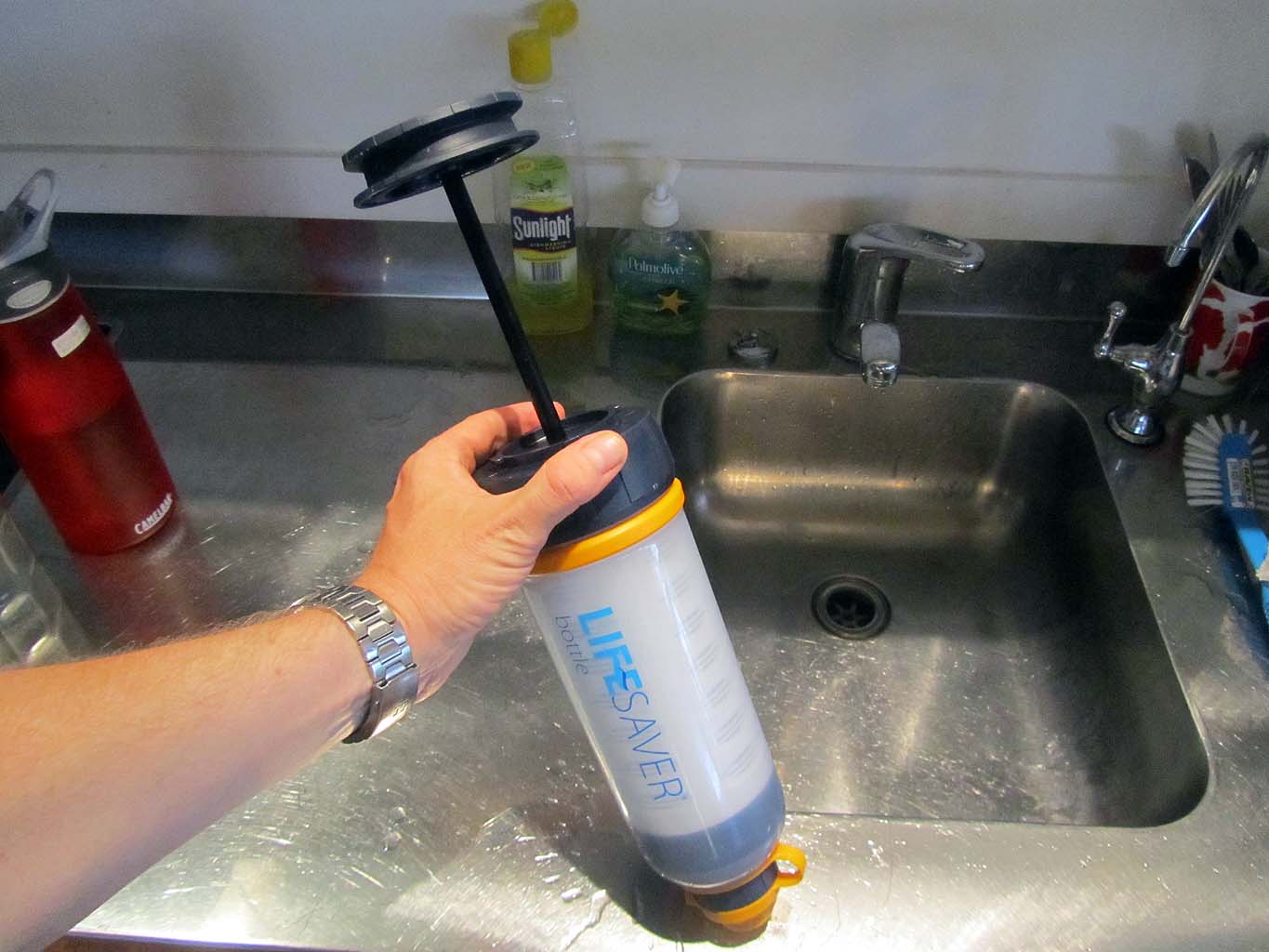
Crystal clear sterile water comes out the other end. This bottle is nothing short of a revolution in water purification. Think about the impact if these are distributed after natural flooding disasters, where water is abundant, but clean water is impossible to find. Actually the inventor of the bottle invented it after he saw TV reports about the lack of drinking water in New Orelans after hurricane Katrina. This technology could also bring water to the many people on earth who do not have access to clean drinking water.
Here you can see the inventor of the bottle talk about its potential impact during a TED talk in 2009:
It beats me why this technology has not gotten more attention.
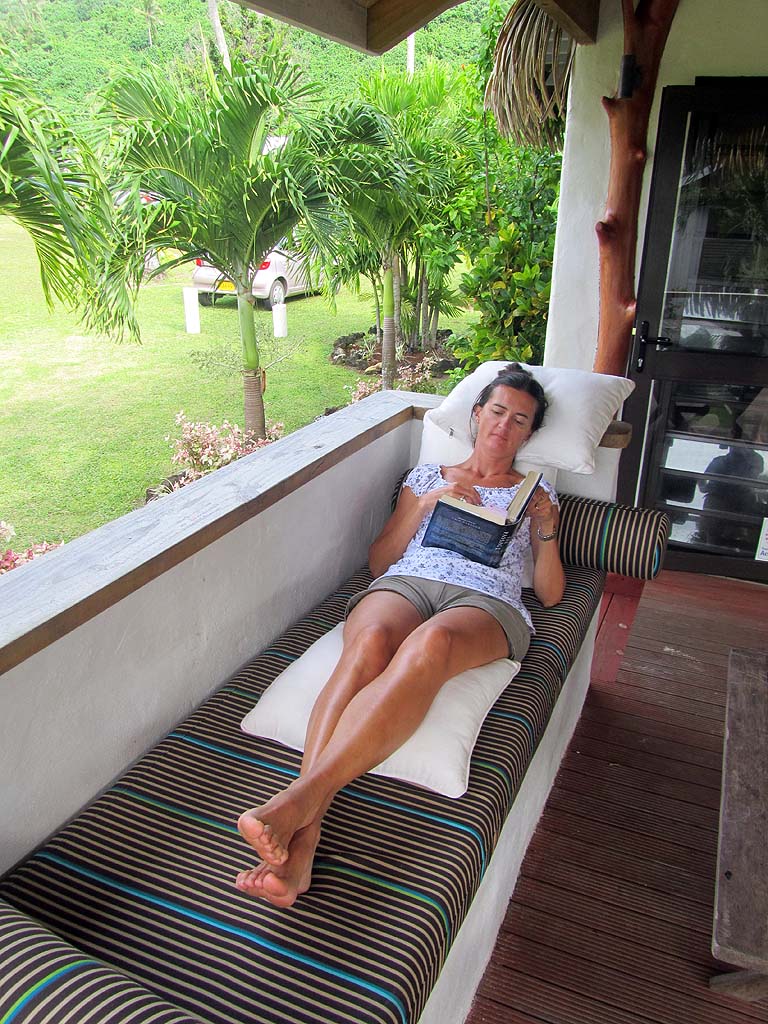
Helene relaxed with a book she found in the bungalow. She managed to get through it during our stay here:
In the evening we went to a so-called island night. An island night is basically a great meal followed by a Polynesian music and dance show. Several restaurants on Aitutaki take turns so that only one of them has island night on any given day of the week.
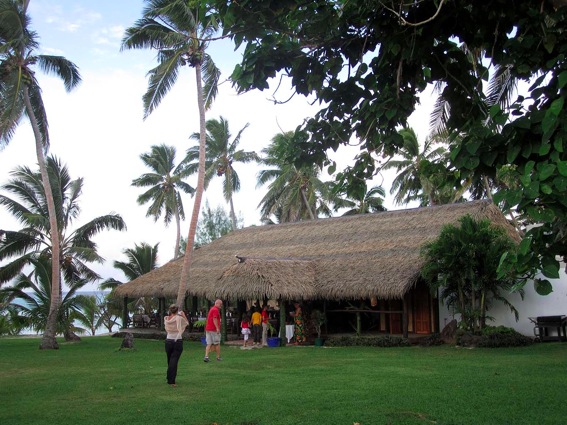
The restautant was of the almost outdoors kind:
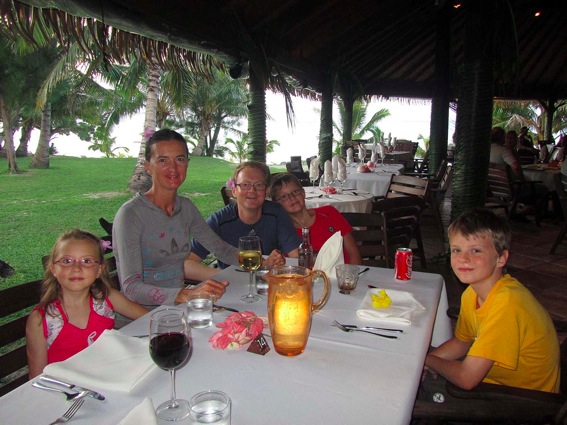
The buffet was a fantastic mix of genuine Aitutaki Polynesian food. Oh, that waistline…
The owner of the restaurant held a small speech and told everyone that his greater family prepares the meals. He pointed out dishes made by this and that relative. His speech gave our meal a very nice extra touch. Then he kept going on for too long about the history of his and his brothers restaurant business and how glad he was to be able to share Aitutaki with us (repeat 7 times). I recalled some of my own speeches from my time as a leader and seeing it from the other side made me realize I probably bored a lot of people on several occasions. I do believe I entertained on several other occasions also, so I’m not too worried about my legacy 🙂
Then he held a prayer blessing the food. Christianity seems to be ever present here.
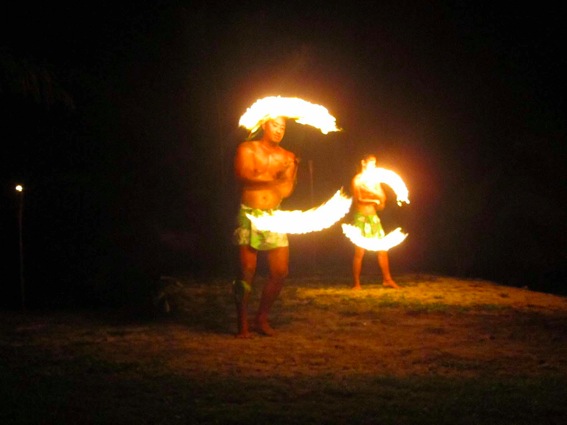
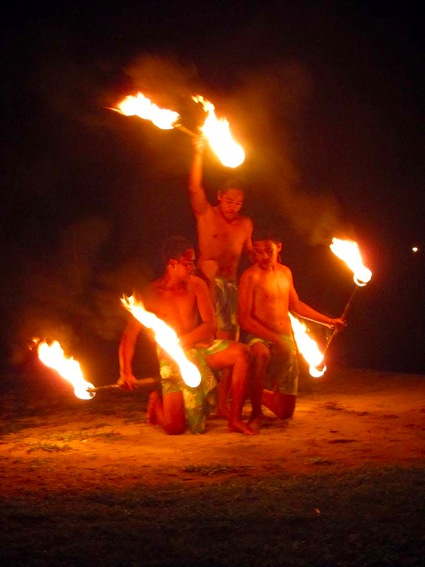
After dinner plastic chairs were placed in the garden for the tourists, and then the dancers and drummers arrived. Aitutaki has been known for a long time throughout Polynesia to have some of the best drummers around. The beat was hypnotizing and impressive.
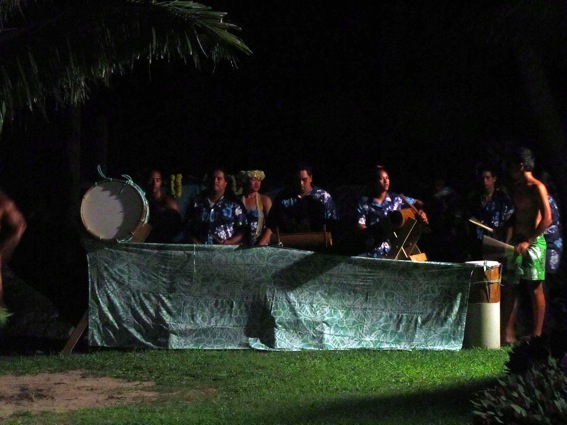
The dancers were really good. It’s impressive what this little society of 2000 people has of talent.
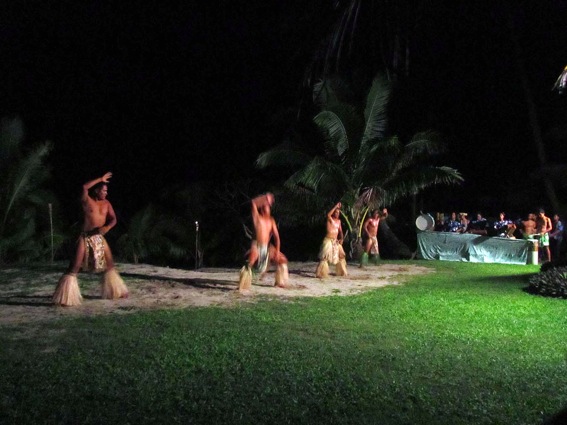
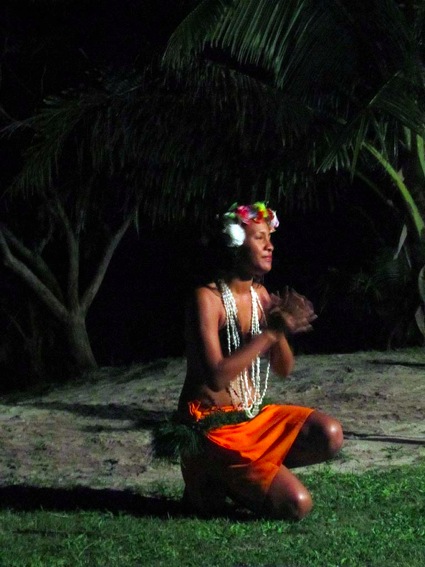
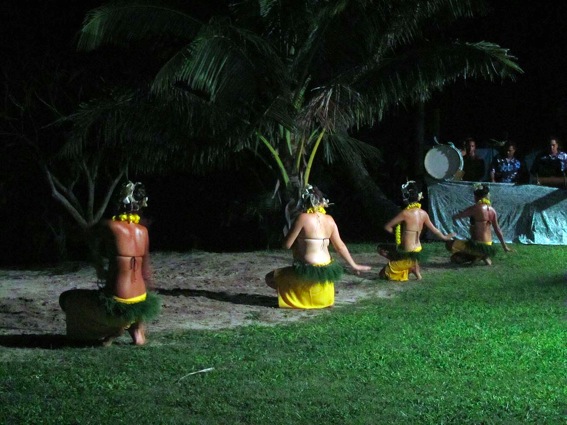
Fire dancing gives a great visual effect in the pitch dark Pacific night.
The rain had stopped well before our dinner and when we went home the sky was full of stars. This looked promising for our boat trip tomorrow. The night sky here is very impressive, since light pollution is minimal. The moon was not out and we had a look up for a long time before going into the bungalow. We spoke about the Polynesian navigators and how you must feel really small when you are out in the middle of the ocean at night and the only thing you can see is the massive dome of stars over you, which you study to figure out which direction you need to go.
Eirik
—–

Very interesting and educating as always, Eirik !
By now I think you have to start preparing for the inevitable question: “If I have only one week to spend in the Pacific; where should I go ?”
LOVE the water purifier – I could use it here in Afghanistan! I will have to order one.