





Going to Hiva Oa, One of the Marquesas Islands
January 14, 2011
After a night of blog updating it was time to get up early again. We had an 06:00 flight to Hiva Oa to catch.
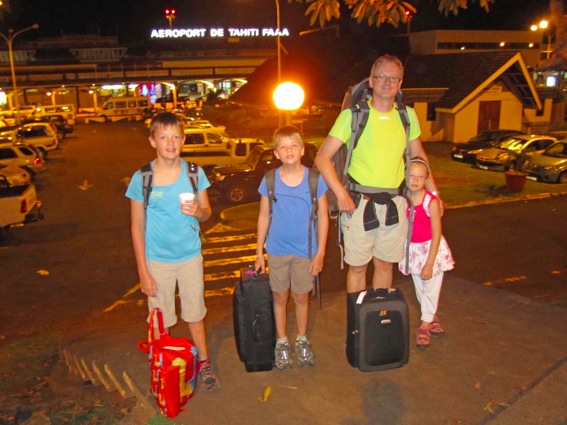
It was still dark outside when we crossed the street over to the airport at 04:58am
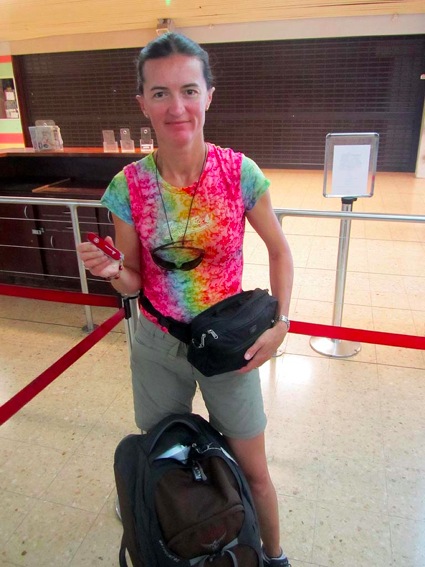
For those of you who have placed bets that I will have my new Swiss Army knife confiscated by security before we get to Norway, you were very close to winning yesterday and today. Yesterday I totally forgot to remove it from my pocket when we left Tikehau. Luckily for me there is no security control in Tikehau and I had the knife in my pocket all the way to Tahiti.
Today Helene asked me if I had the knife just as we were about to check in. Wheh! Saved in the nick of time:
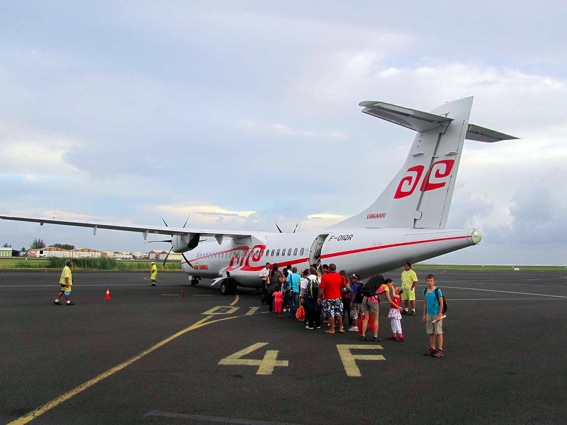
Another ATR-72 would bring us up to the Marquesas Islands.
The flight magazine had a very instructive route map for Air Tahiti where they have superimposed the islands of French Polynesia on a map of Europe with Papeete just over Paris:
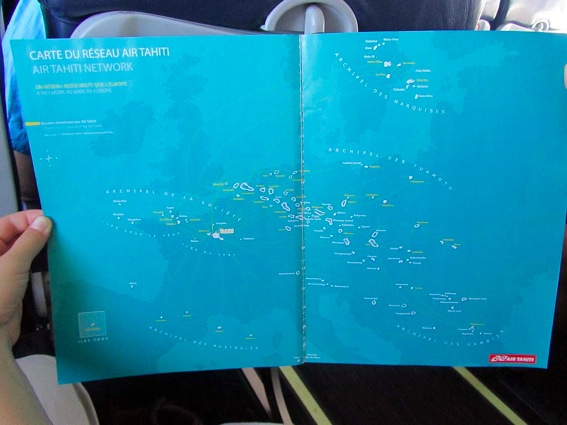
Distances are huge here. Today we would fly from Paris to Stockholm. Pukapuka in the Tuamotus is in Poland. Mangareva (from which Easter Island probably was populated) in the Gambier Islands is in Turkey and Rimatara in the Austral Islands is in Spain.
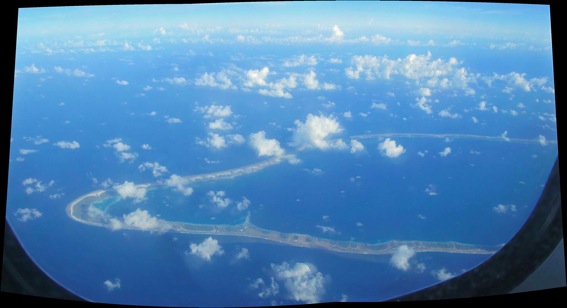
Our flight went via Nuku Hiva, the largest island in the Marquesas group. On our 3 hour flight there we passed over the Tuamotus and saw several of the atolls on our way. These wonders of nature look completely artificial from the air:
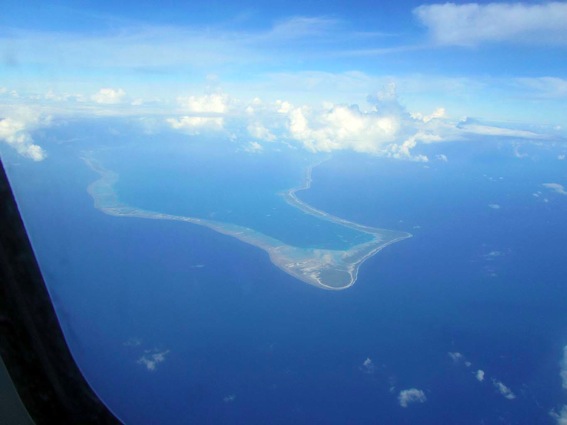
With the help of image stitching software I managed to double the size of the airplane window:
After an hour and a half of waiting in Nuku Hiva
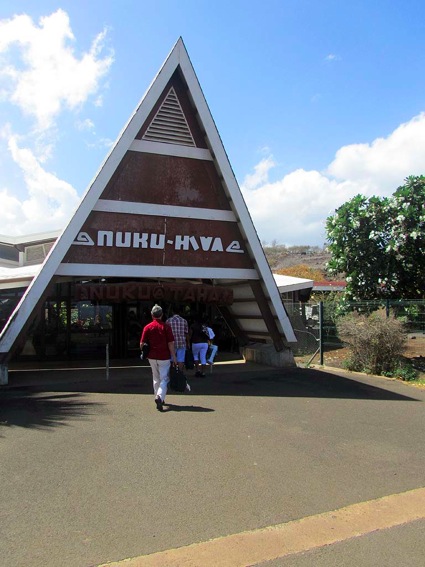
we could finally head for Hiva Oa and the Jaques Brel airport
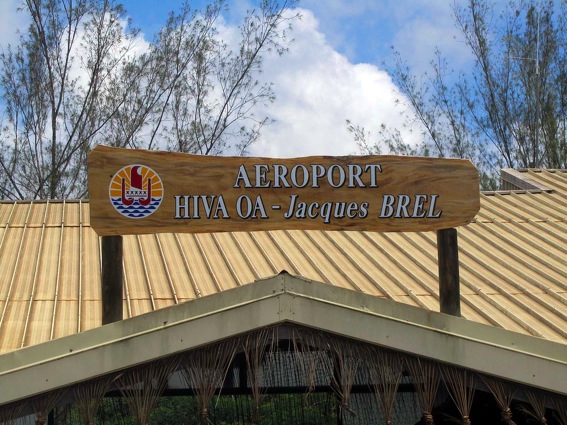
where our hostess, Tania, was waiting for us with the traditional Polynesian welcoming flower necklaces
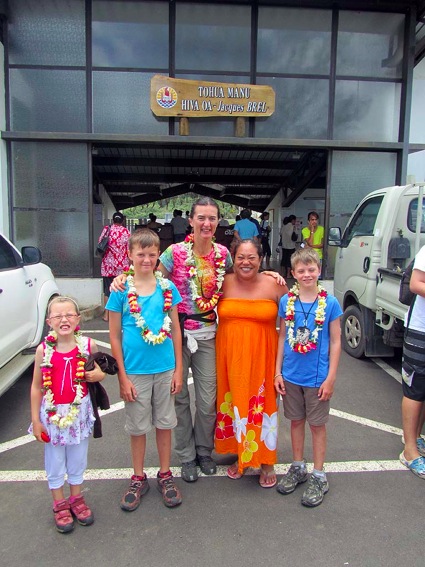
We had to adjust our watches. As I have mentioned previously the French have done their time zone calculations much better than the Chileans on Easter Island. However, I did not realize just how a**l they are about getting solar time and watch time in synch. The Marquesas islands are half an hour before Tahiti time. Yes, half an hour. Marquesas time is GMT -9:30 Cool! This is the first time in my life that i am in a time-zone which is not a whole number of hours offset from GMT.
Less cool is the fact that Apple has forgotten about Marquesas time, and since Apple always knows what´s best for you, there is no way to manually set the time zone on your Macbook/iPhone/iPod/iPad. You can only choose from Apple´s predefined list. Shame on you, Steve Jobs.
In ancient Polynesian times the Marquesas were distinctly separate from the Society Islands (which Tahiti is part of). They still speak a different language here (several dialects, actually) and the word for foreigner in Marquesan Polynesian includes people from Tahiti and the other Society Islands.
In other trivia, Hawaii was populated from the Marquesas Islands some time between AD 300 and 500.
The Marquesas Islands themselves were populated around AD 100 from the Tonga and Samoa region. These islands were the homes to an estimated 100 000 Polynesians when the Spanish first reached them in 1595. Like on Easter Island a population decline of unimaginable proportions took place here. Unlike on Easter Island the decline came after major western involvement and much later than on Easter Island.
In 1790 the population was still around 100 000, but then westerners started arriving in large numbers. In as little as 60 years an advanced 2000 year old culture was disintegrated. Epidemic after epidemic swept the islands, slave traders kidnapped people and tribes at war were given access to firearms. Later, to finish off the wiping out of the culture, the French colonial masters outlawed all traditional cultural activities: tattooing, singing, dancing, artwork and any other activities related to their “heathen” religion.
At the beginning of the 20th century there were only 2000 Marquesans left. Another dark spot on the conscience of western society, another dark spot they didn´t teach us about in school.
Tania runs a small bed & breakfast on a hillside outside Atuona, the capital of Hiva Oa, together with her husband. We had booked one bungalow, but when we arrived Tania told us there were no other guests so she would let us use two for the price of one, with one for the kids and one for the adults. Good deal.
The bungalows were beautiful
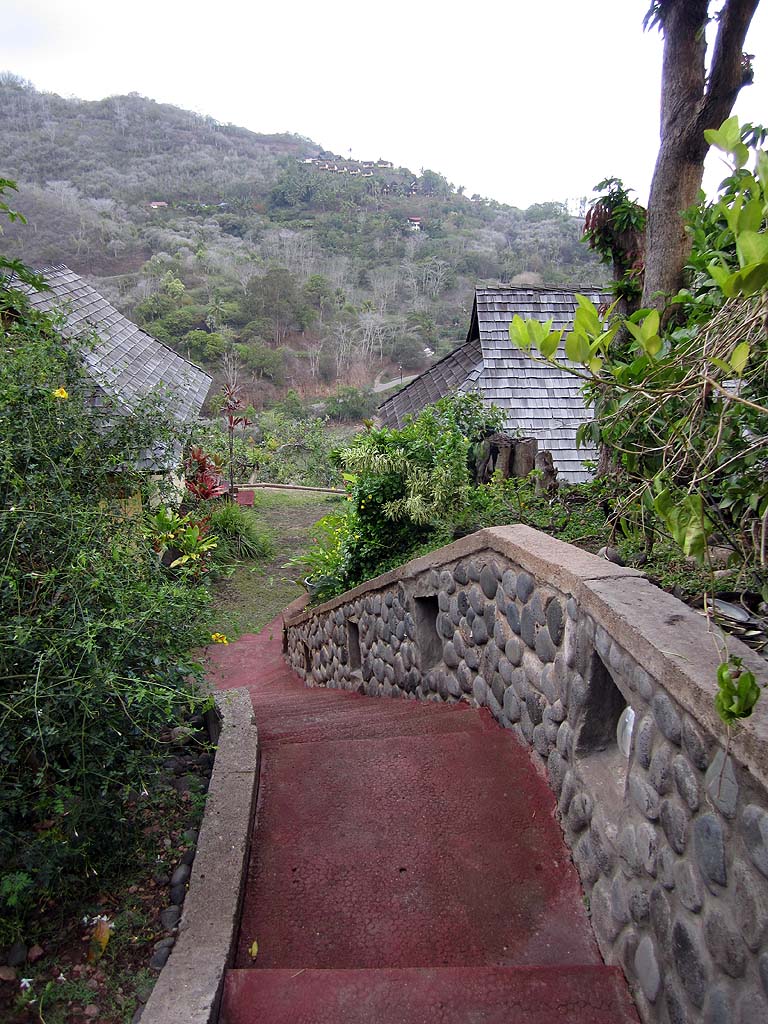
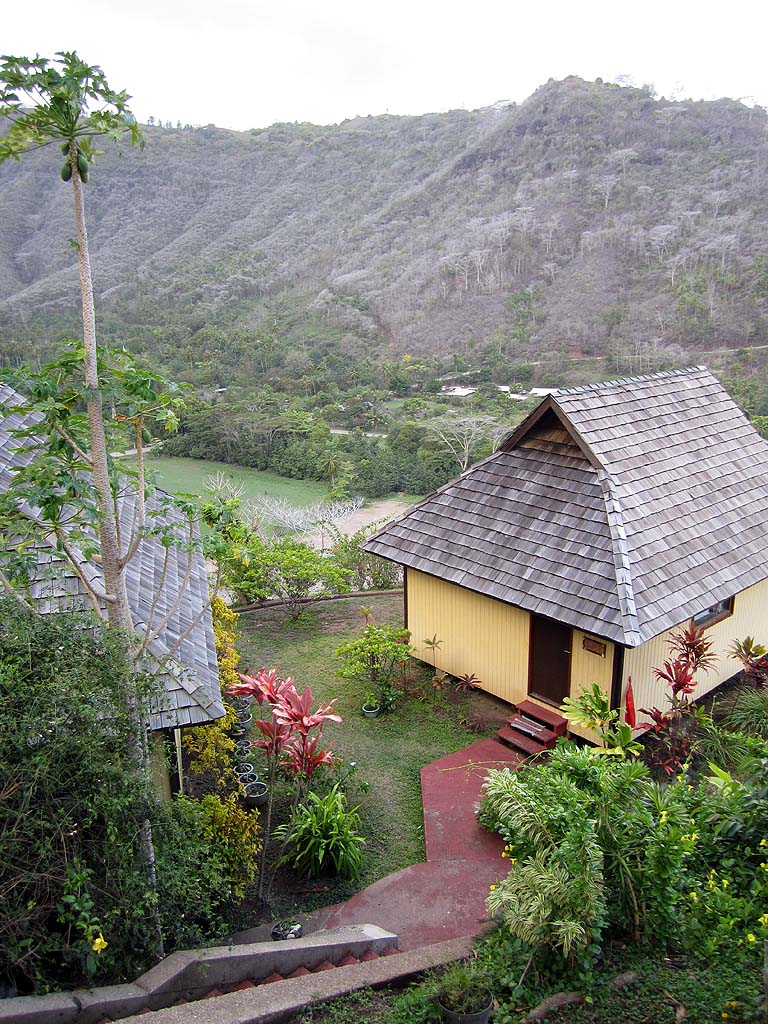
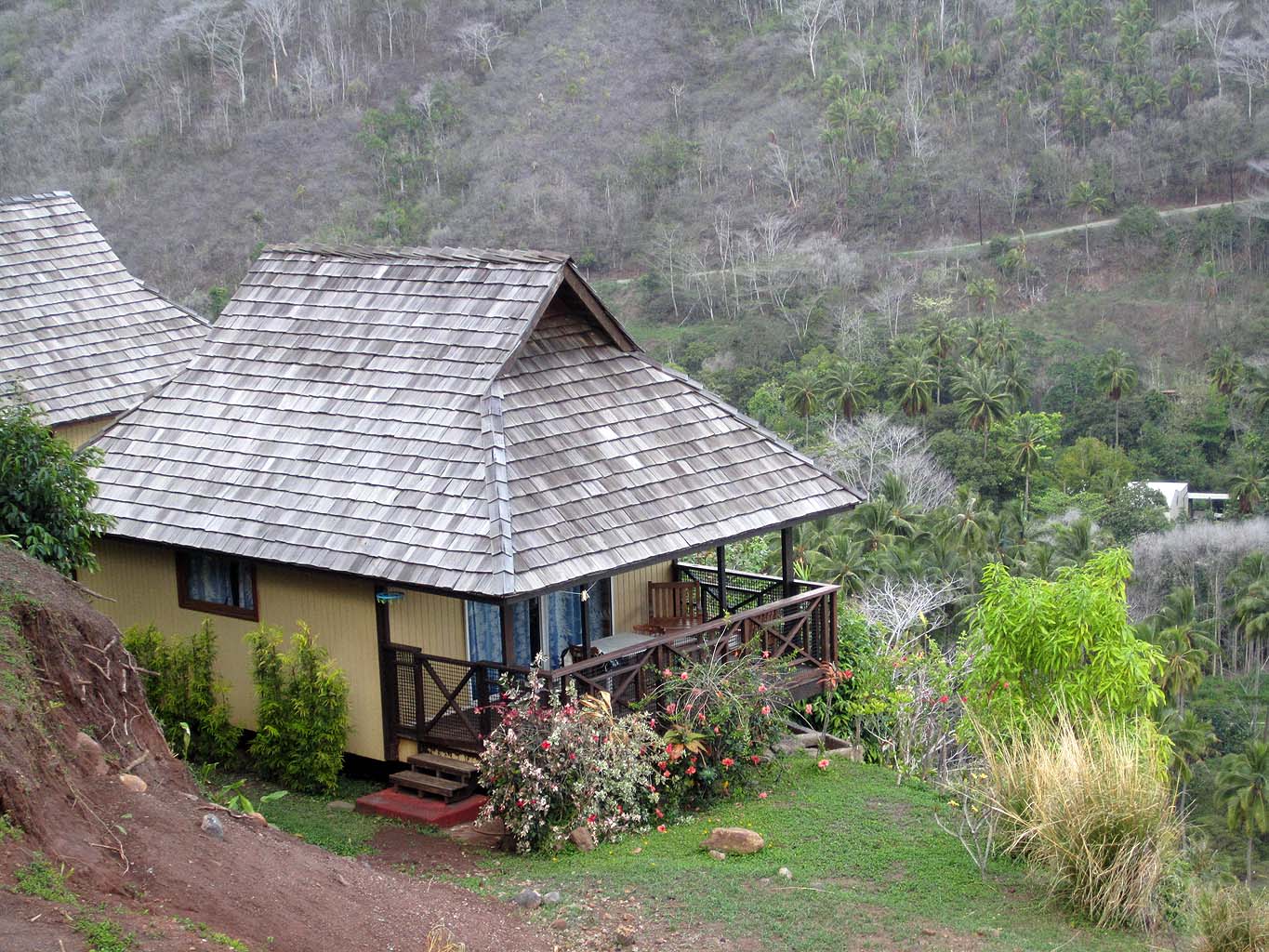
The view was nothing to complain about. 🙂
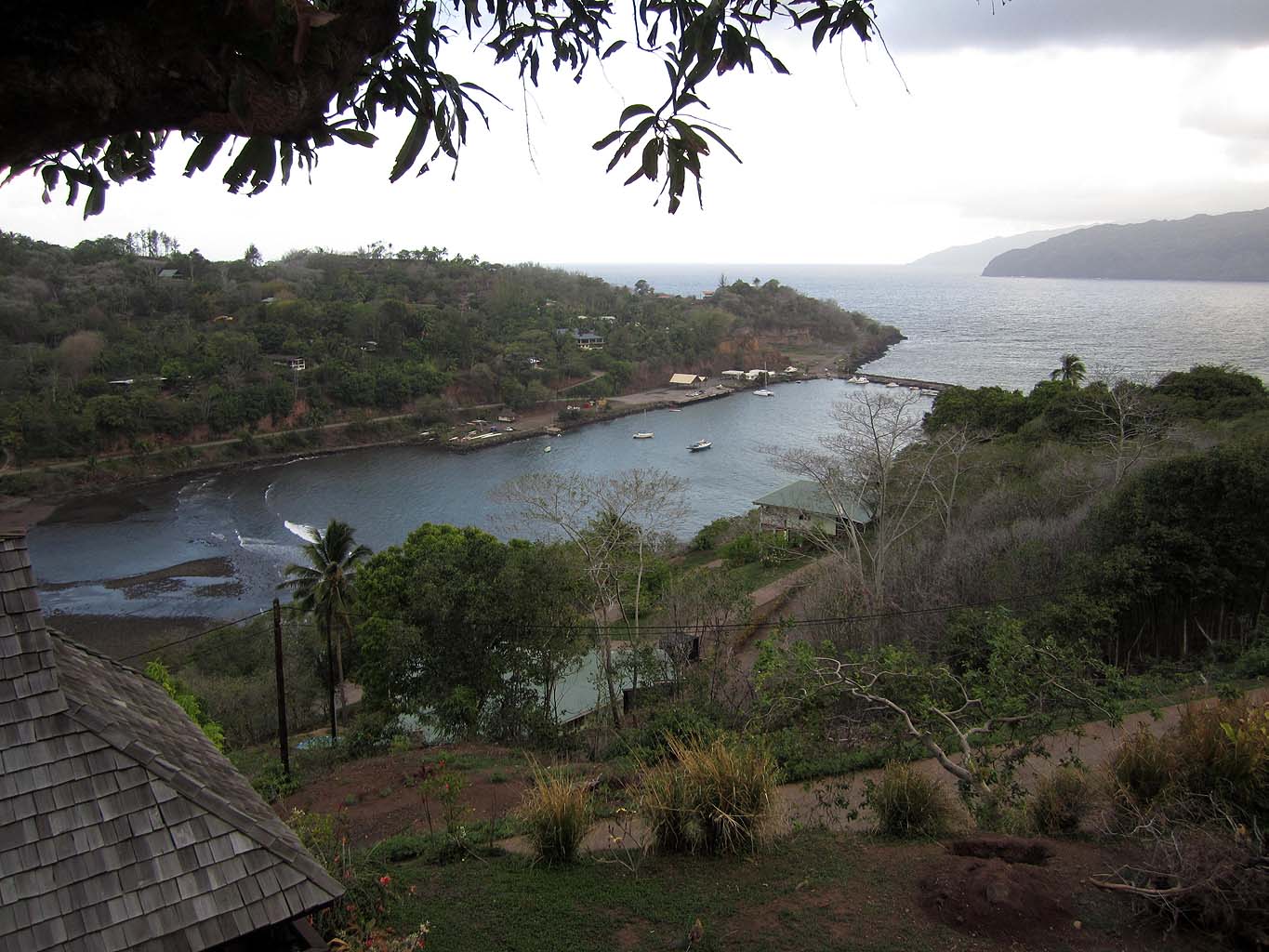
We had rented a car, a pick-up, and took a first look around the island. This place is very different from both Tikehau and Tahiti. We are much closer to the equator now (9 degrees south, like Iquitos in the Amazon in Peru) and there is a lot of vegetation here. Hiva Oa is also a mountain island. There are valleys and peaks everywhere, the highest is at more than 1200 meters (3900 feet) altitude.
We followed the road through Atuoana and then further east. We got a nice view of Atuona from a hilltop:
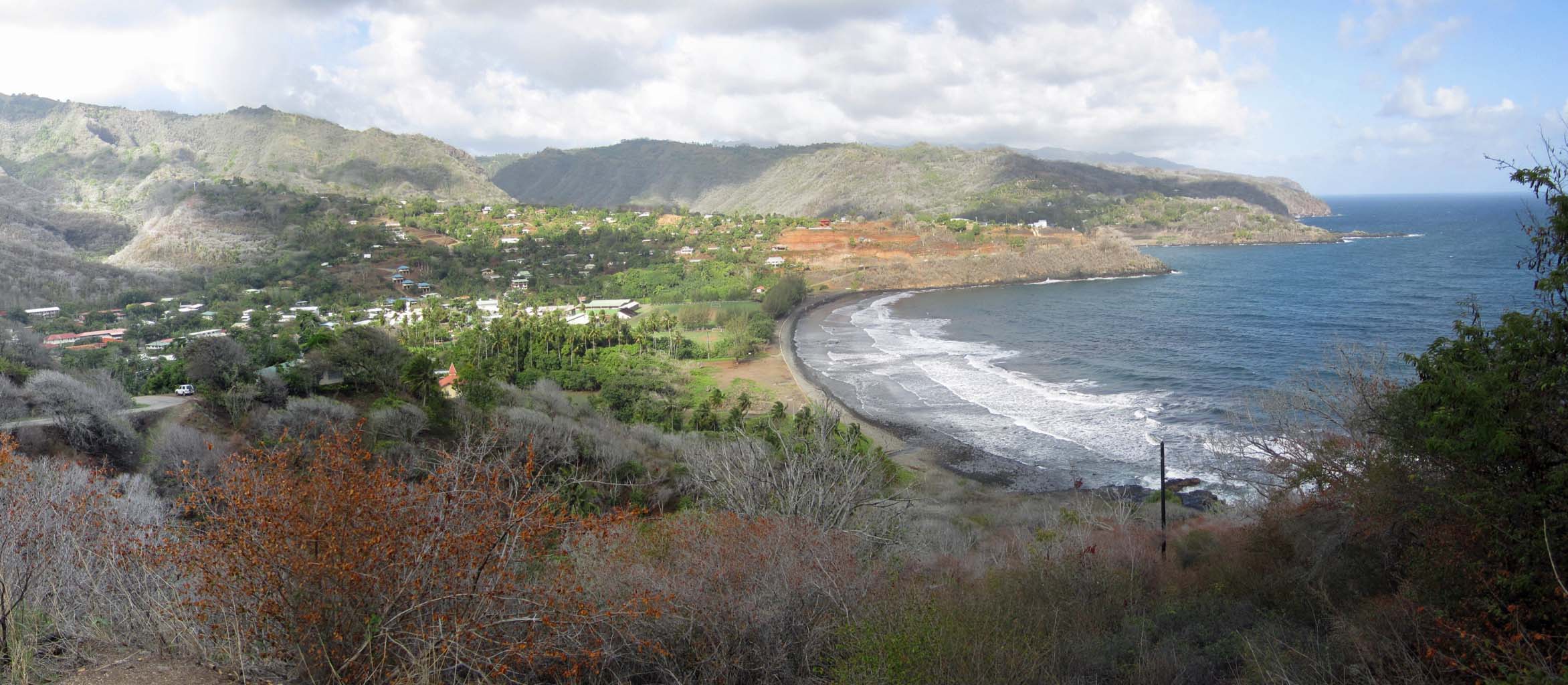
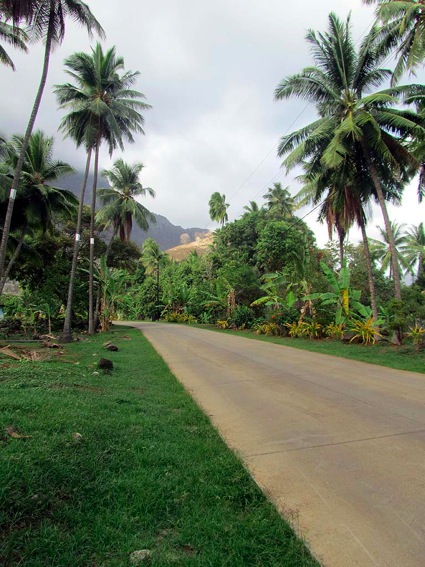
We continued
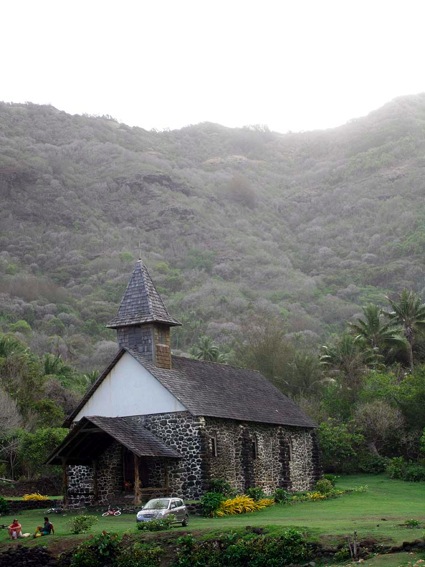
and passed by a church
The road became very narrow
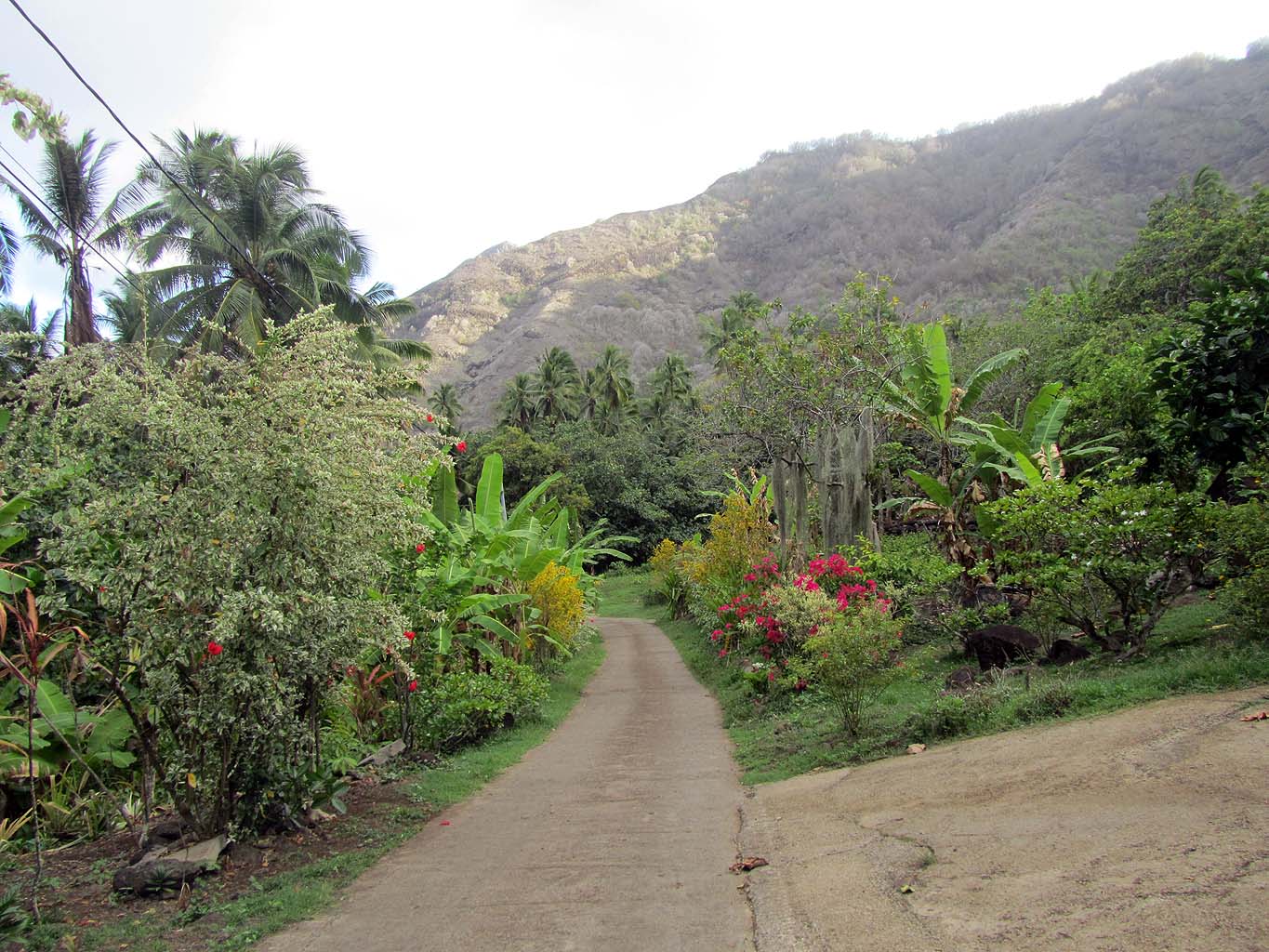
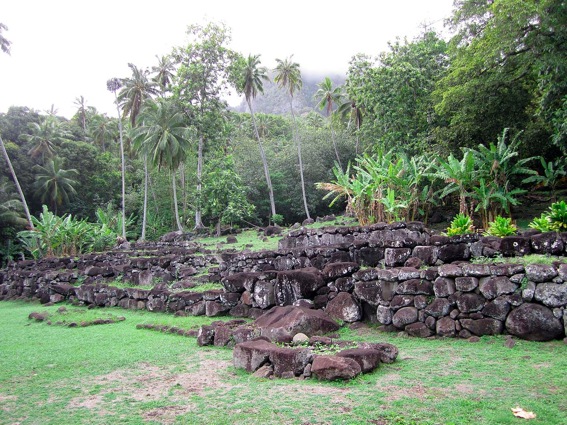
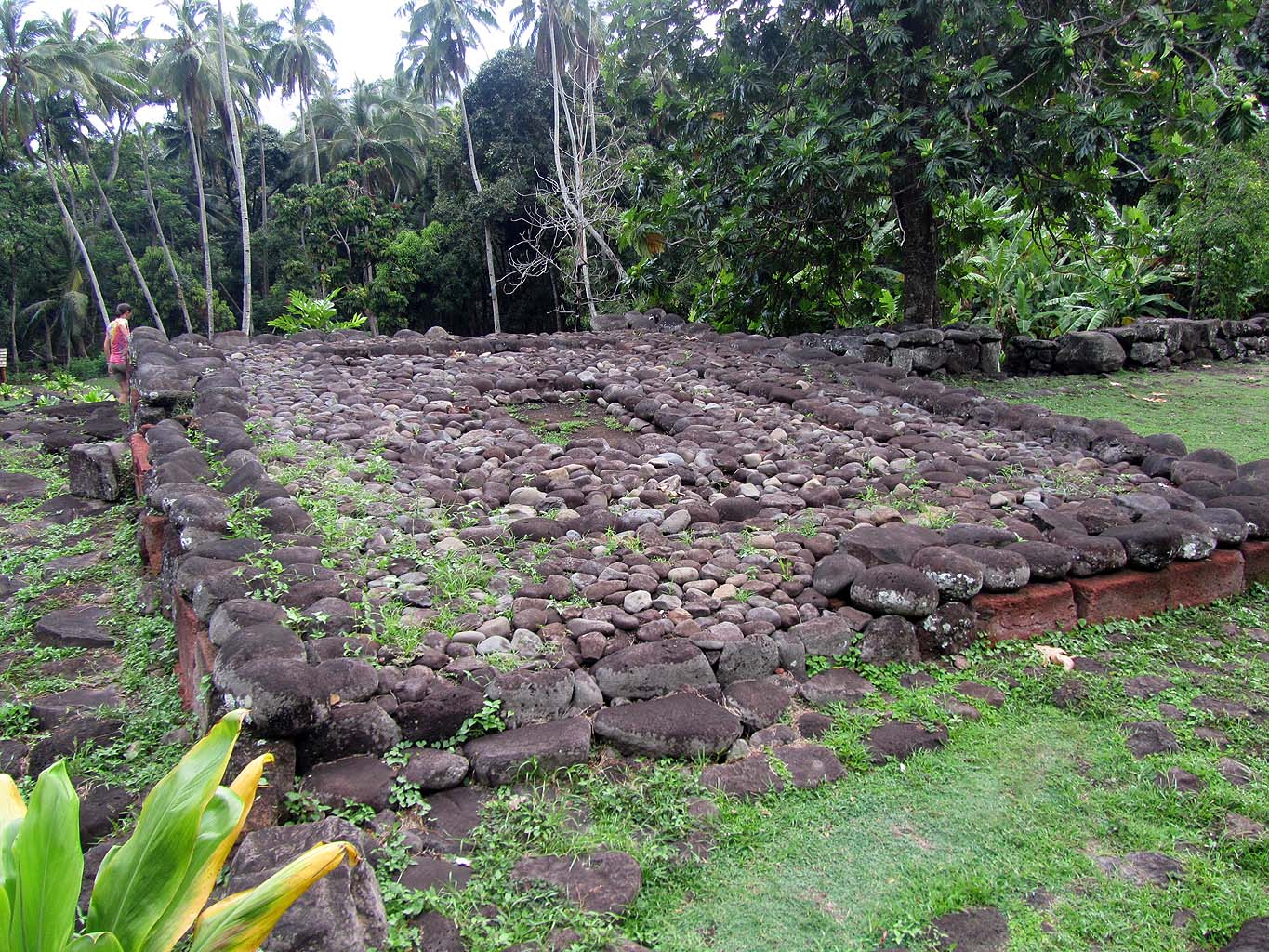
before we arrived at Te´a Oa, an archeological site with Polynesian ruins:
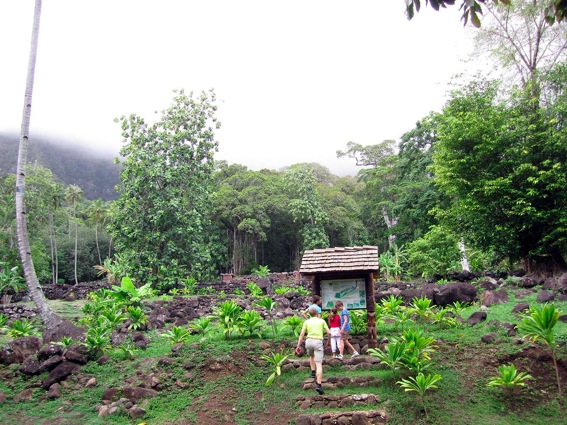
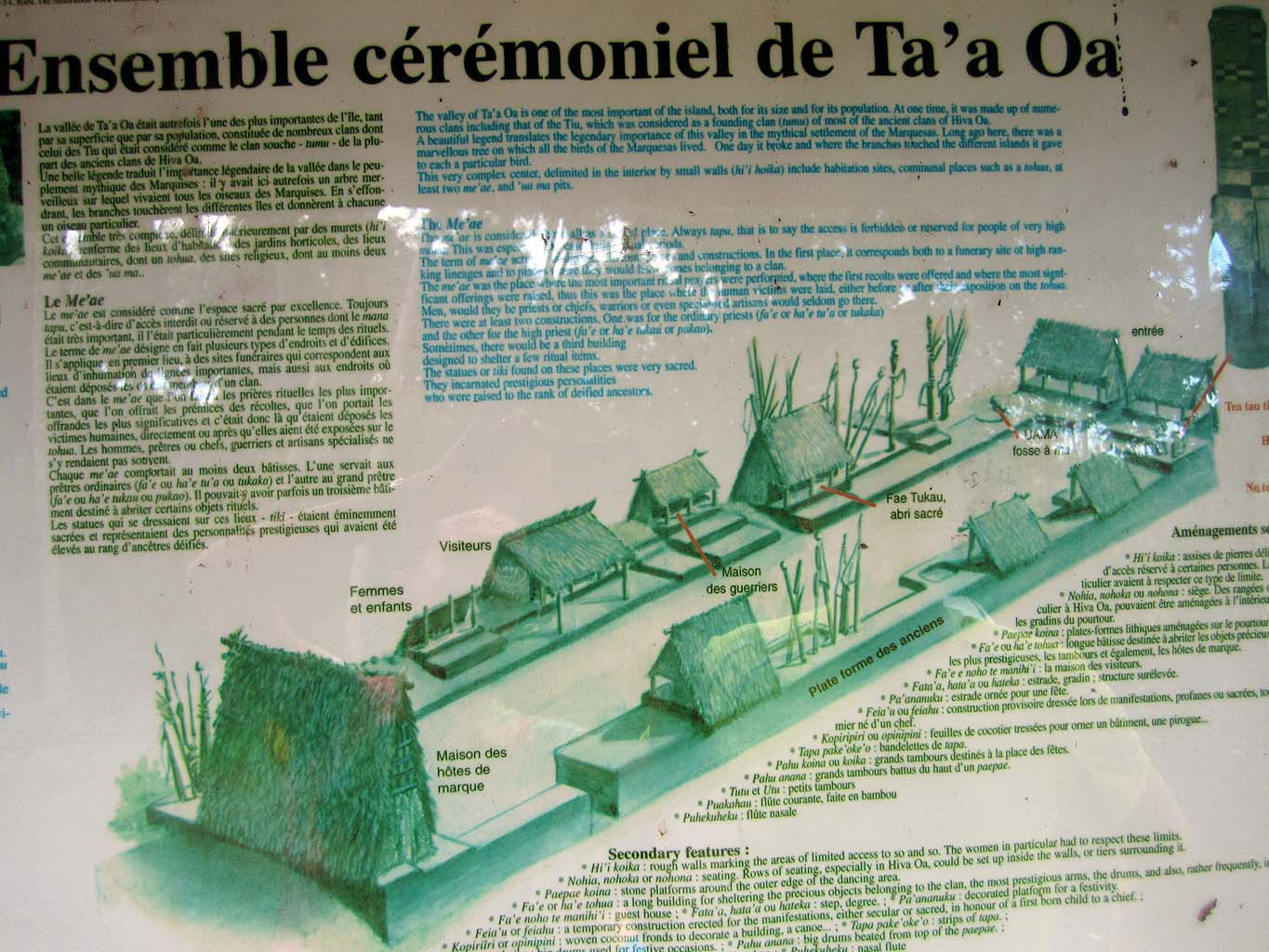
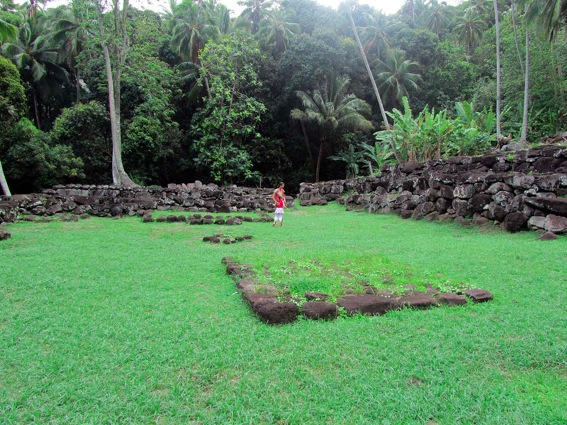
Mostly between AD 1400 and 1600 the Marquesans build many sacred places. Like on Easter Island these were meant to preserve the “mana” of powerful people. They were ceremonial sites, only people with very high mana were allowed access. Archeological evidence shows that humans were sacrificed in these places.
As i have explained previously “mana” is roughly equivalent to the force in Star Wars. Just like on Easter Islands statues were built that were meant to channel the mana of a deceased. These statues are called tikis.
The site was impressively large, but except for a single sign at the entrance there were no fences, signs, or other explanations of any kind.
If it hadn´t been for our Lonely Planet guide we would never have found the sole tiki at the site. We had to walk into the jungle for a couple of hundred meters to find it:
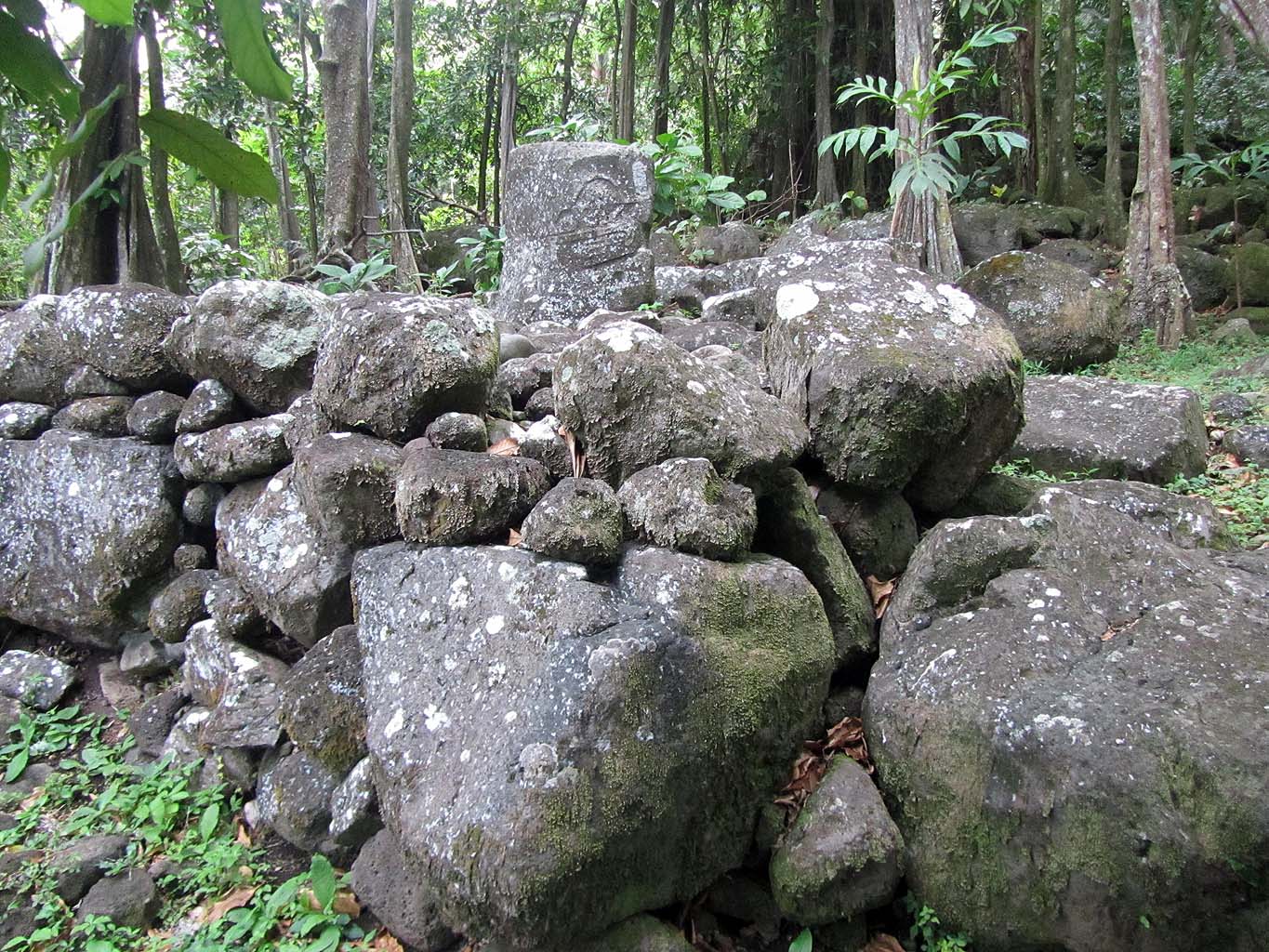
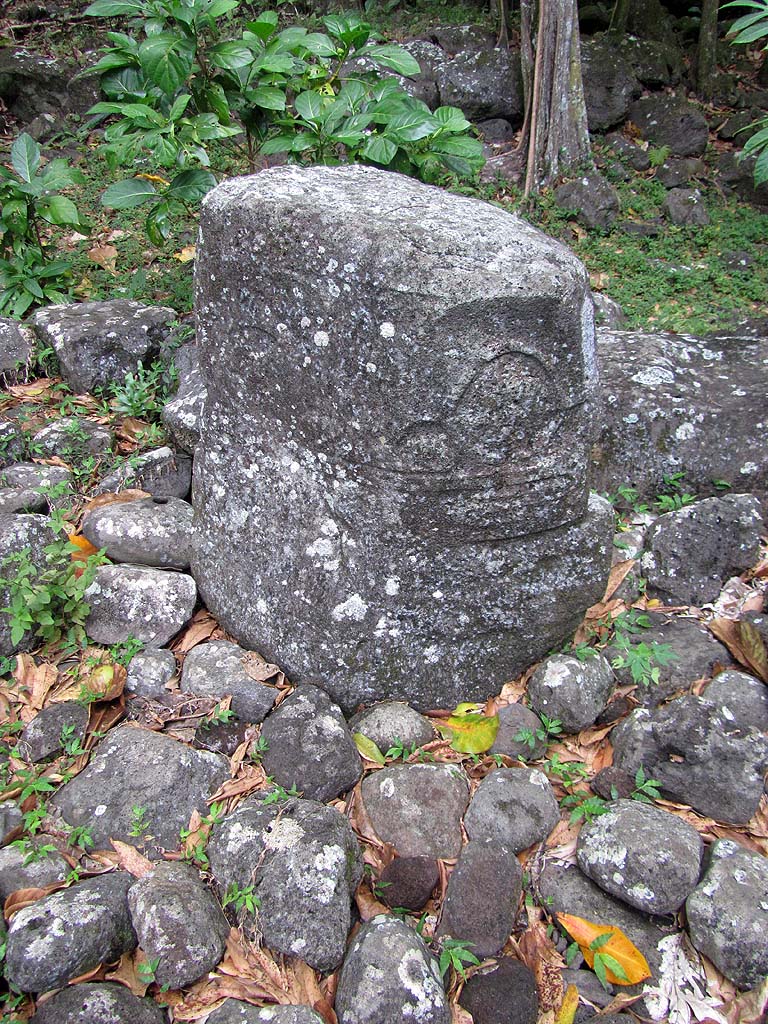
We had to admit the Easter Islanders outdid their Marquesan contemporaries in statue carving.
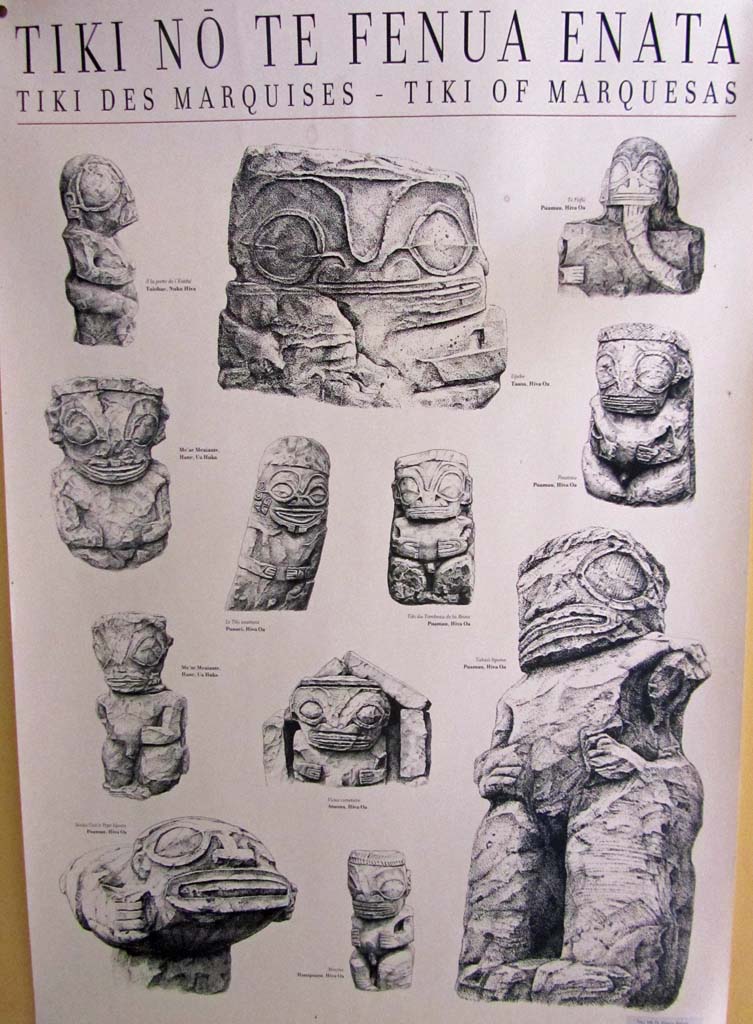
Half of the tiki´s face seems worn away from erosion. The style is typical of a Marquesan tiki. You can see what it must have looked like on this poster. It is the big one in the middle at the top.
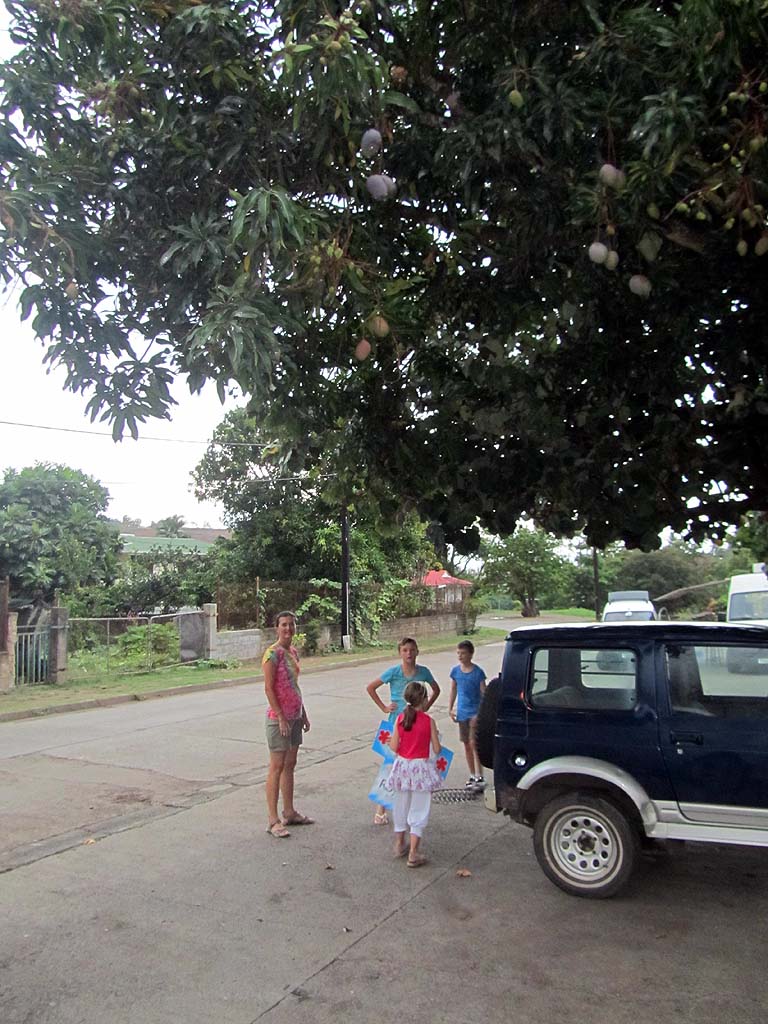
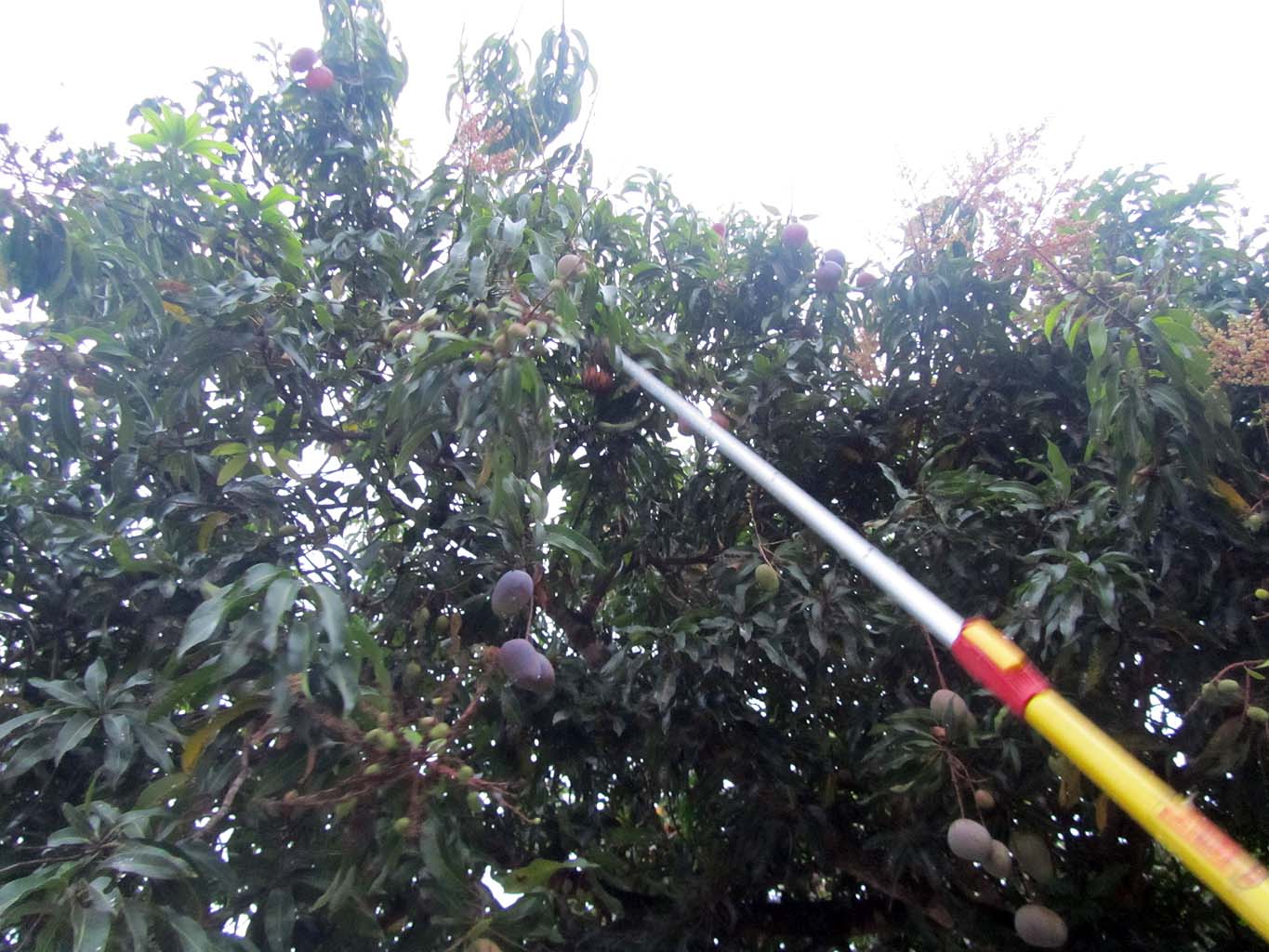
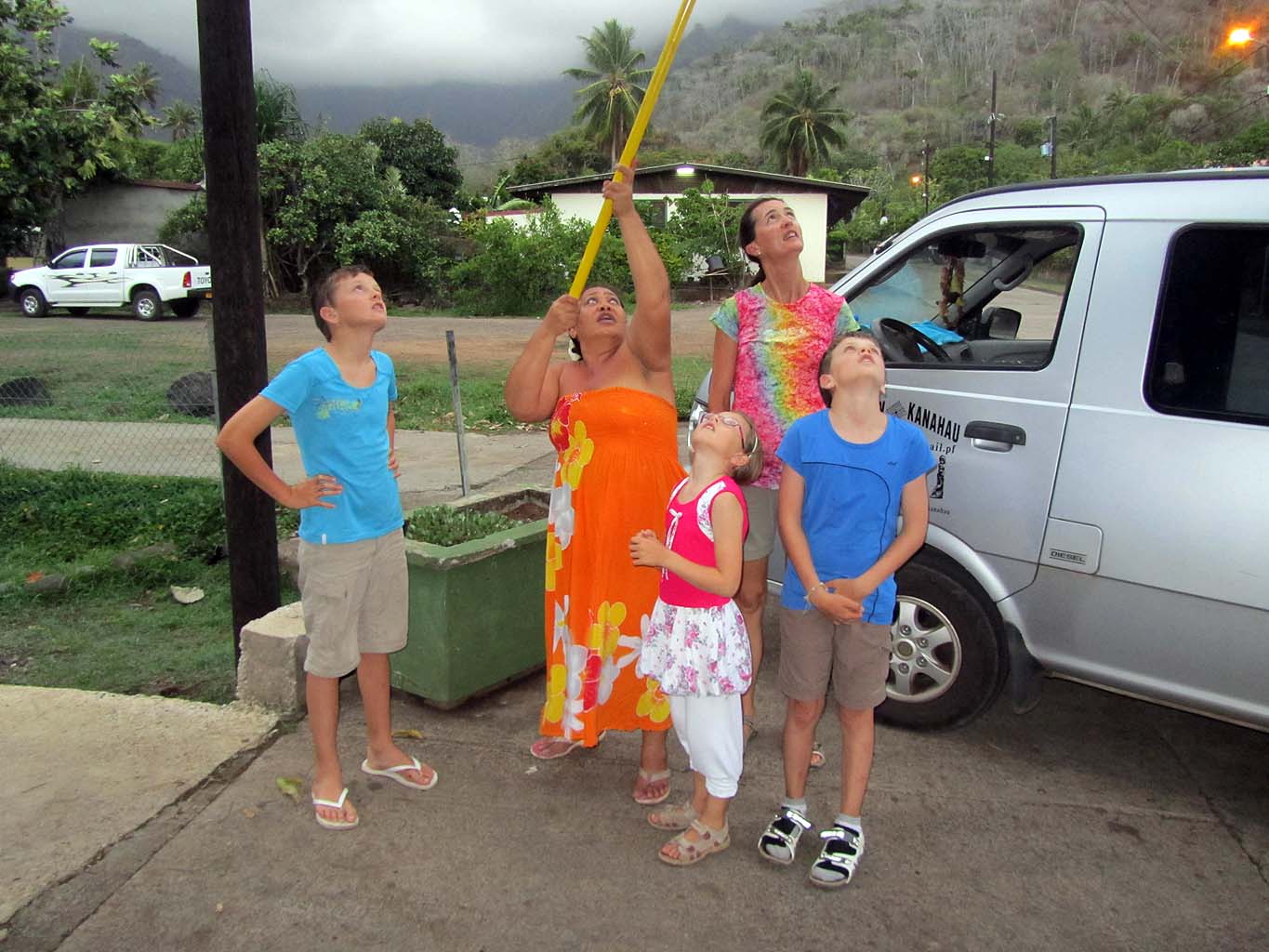
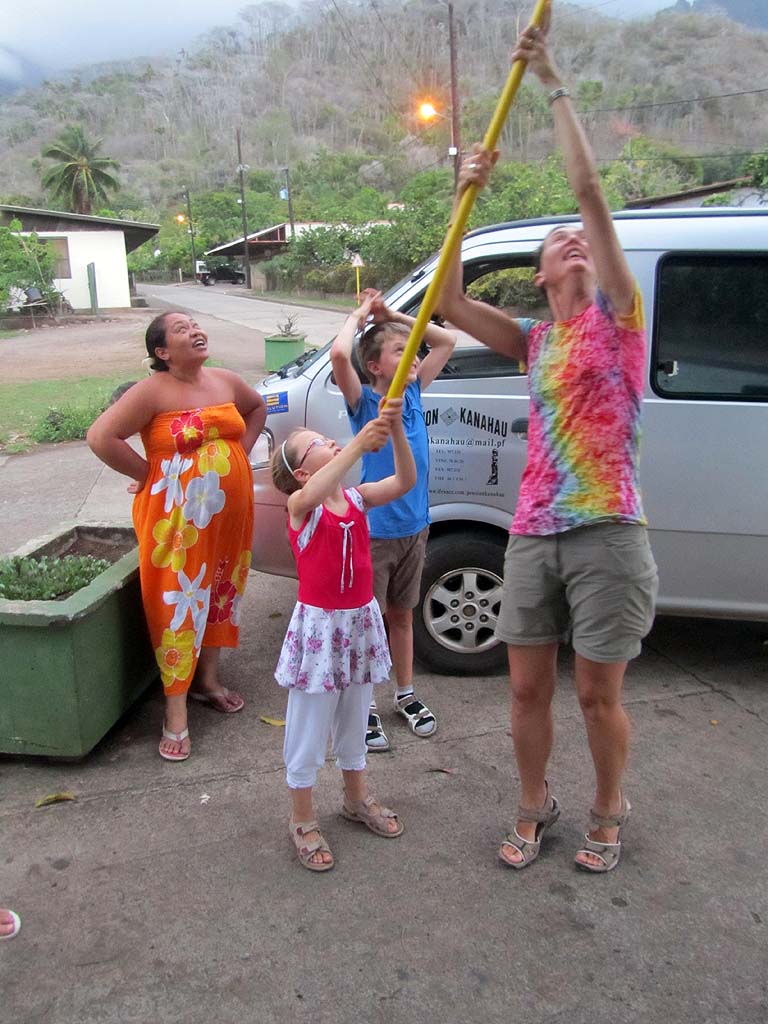
When we came back Tania took us into Atuona to go mango picking. She explained that mangos are everywhere here and that the locals do not eat them. She knew that most tourists loved them, though. Tania seemed to know everyone in Atuona and said “hi” in all directions. She had an agreement with the local police that she could come pick mangos off a tree on their property.
Tomorrow we will discover more of the island and both the French and Polynesian history that goes with it.
Eirik
—–
