




NZ North Island – Day 7 – White Island
February 15, 2011
The time had come for our second helicopter trip during the voyage. Just north of Rotorua, 48 km (30 miles) from the coast, lies a volcanic island called White Island. The Maotri name is “Te Puia o Whakaari,” which means “the dramatic volcano.”
White island’s highest point rises 321 meters (1053 feet) above sea level, while the volcano itself has its base 1300 meters (4265 feet) below the sea, making it the largest volcano in New Zealand.
It was Captain Cook, aboard the Endeavour, who gave the island its English name on October 1, 1769, because it was always covered in white fog. The ship did not go close enough to discover that the fog was actually volcanic gasses.
The island is mentioned in several Maori legends and the Maori used to go there to fetch sulphur deposits which they used as fertilizer.
The first non-Maori to set foot on the island was a certain Rev. Henri Williams on December 1, 1826. Records of eruptions have only been kept since then but it is thought to have been active for a very long time.
The volcano is about 150 000 years old and 16 000 year old ashes have been found inside the crater.
The most active period of eruptions was from 1976 to 1982. The last minor eruption was in 2001, and the last major eruption was on July 27th, 2000, when a new crater formed.
We were going to be helicoptered over to the island and then be able to walk inside the crater of an active volcano for about an hour. Now how cool is that?
Of course there is risk involved when you visit an active volcano. The eruption in 2000 could easily have killed many tourists, but it luckily happened at night. The volcano is being intensely monitored 24/7 with webcams, microphones and seismographs., so only an eruption without any warning would be dangerous to us. It was a calculated risk and statistically probably much safer than driving around in a car, or was it?
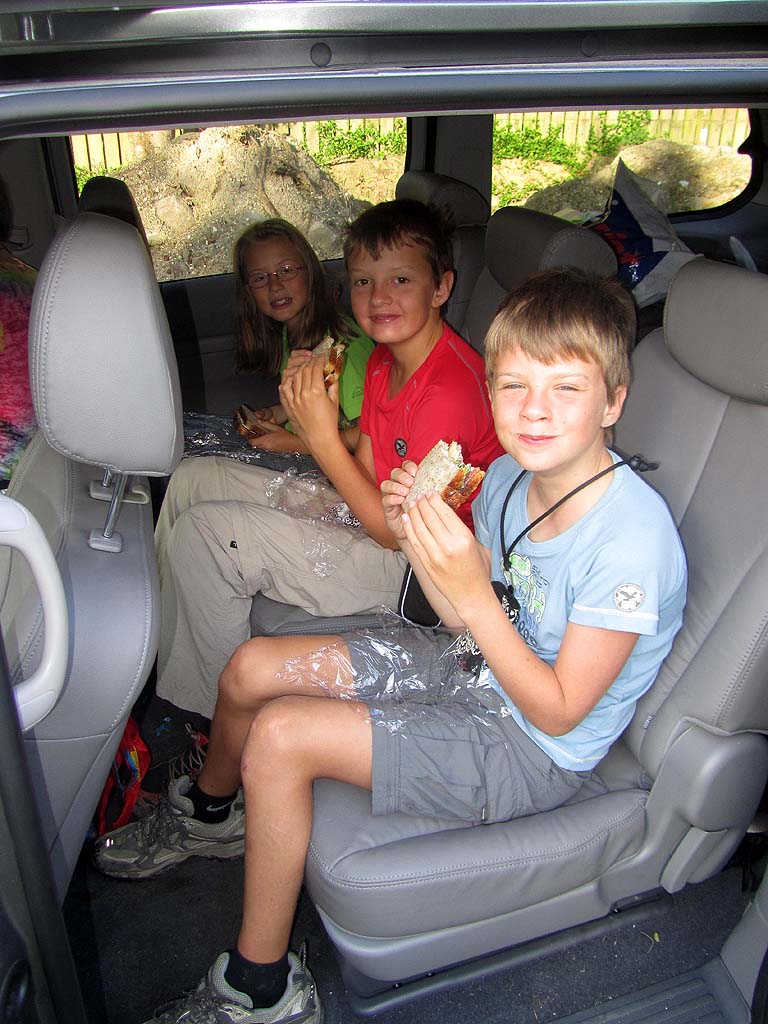
We got up early and had breakfast in the car:
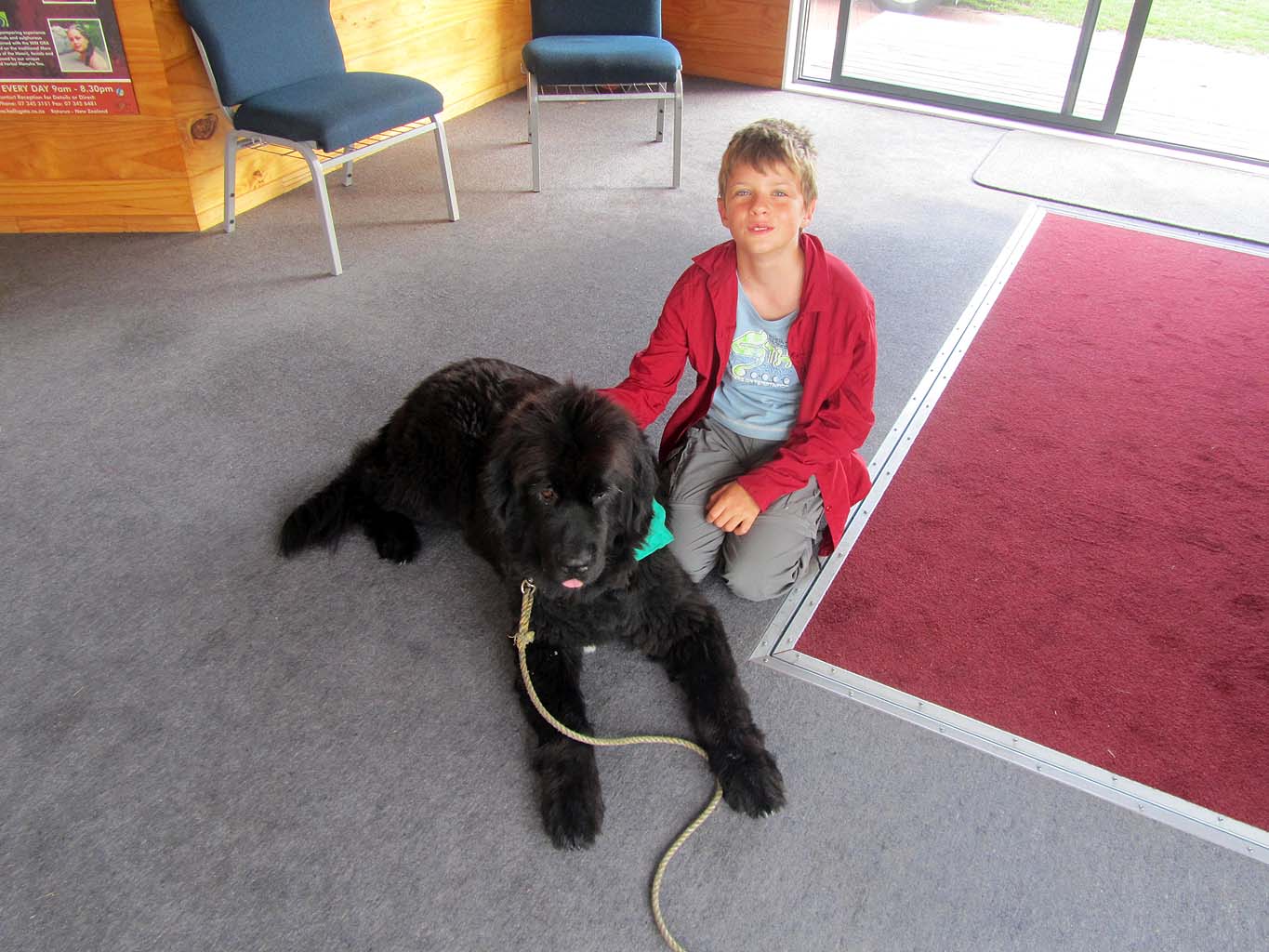
We did an easy 10 minute drive into Rotorua where we checked in at the office of the helicopter company. Just as in the States they were very focused on weight. I had to give them the combined weight of everyone when I ordered the trip on the web. With Helenes help I had estimated the combined family weight to be 280 kg. (617 pounds). I was fearing getting information I didn’t necessarily want when we were now going to be weighed. To my surprise the weighing in was done on a large scale integrated into the floor. We were all asked to stand on the same colored carpet and the woman behind the counter cried out: 282 kilos (621 pounds). Neat. I will never get to know how many percent of that came from me.
There was a very nice dog in the office. The scale is hidden under the colored carpet just next to Viktor.
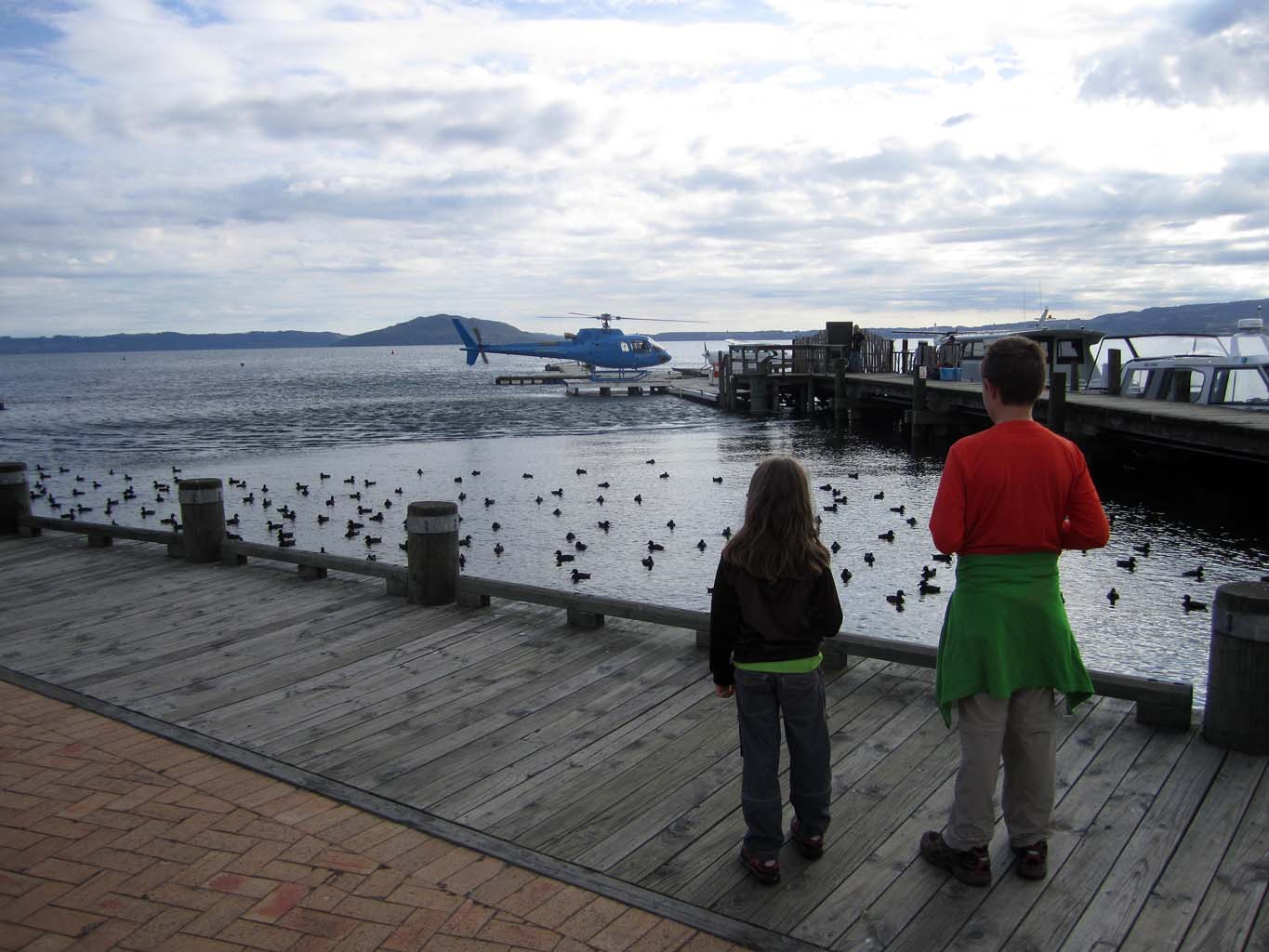
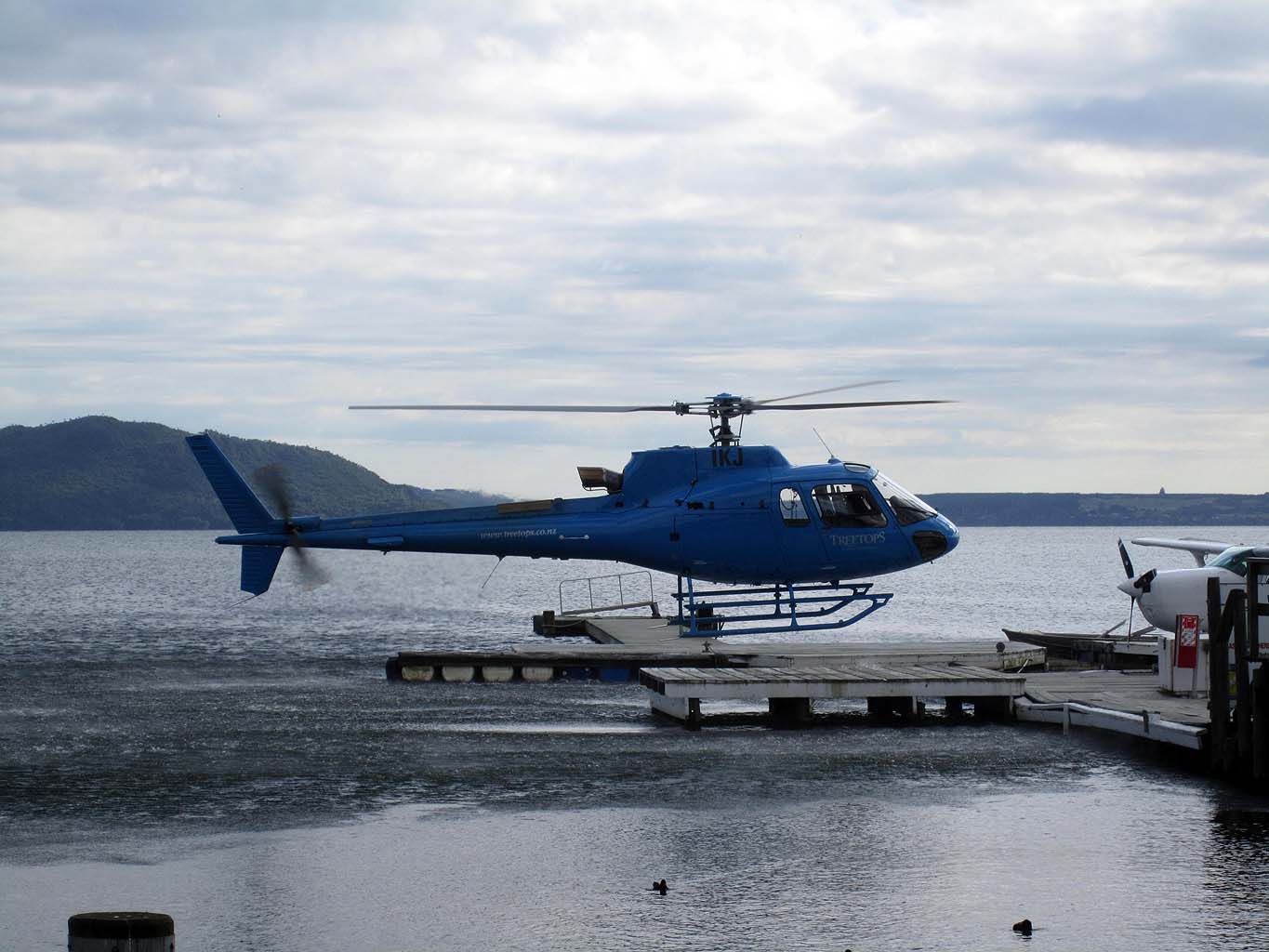
We were told to wait outside. The office was right on the beautiful Rotorua lakefront and we were scratching our heads wondering where the helicopter was going to land. We didn’t see a single logical landing site as far as the eye could reach.
Soon we could see the helicopter coming towards us. It landed on a small floating pier, which seemed impossibly small for a helicopter. Impressive:
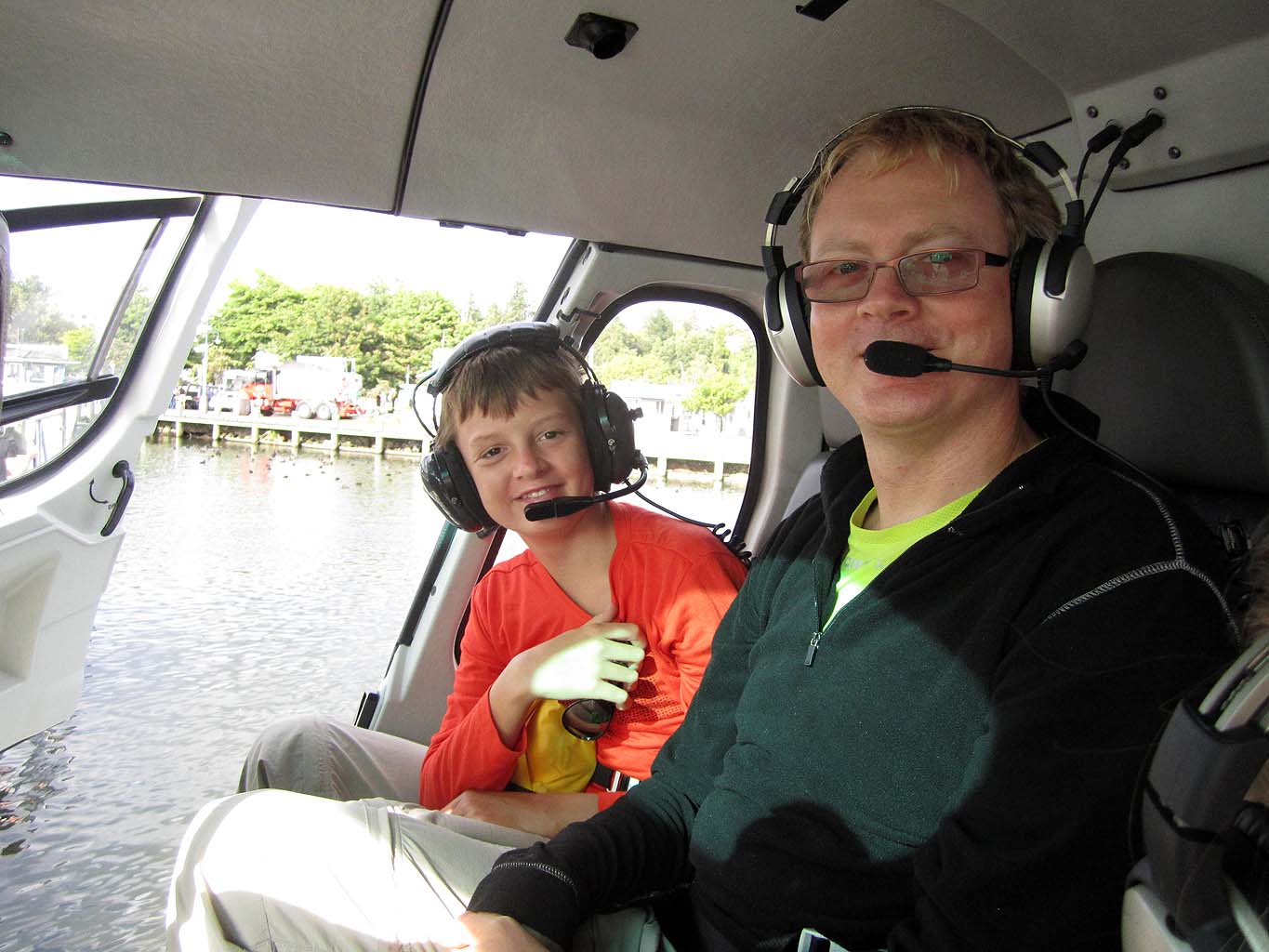
All aboard:
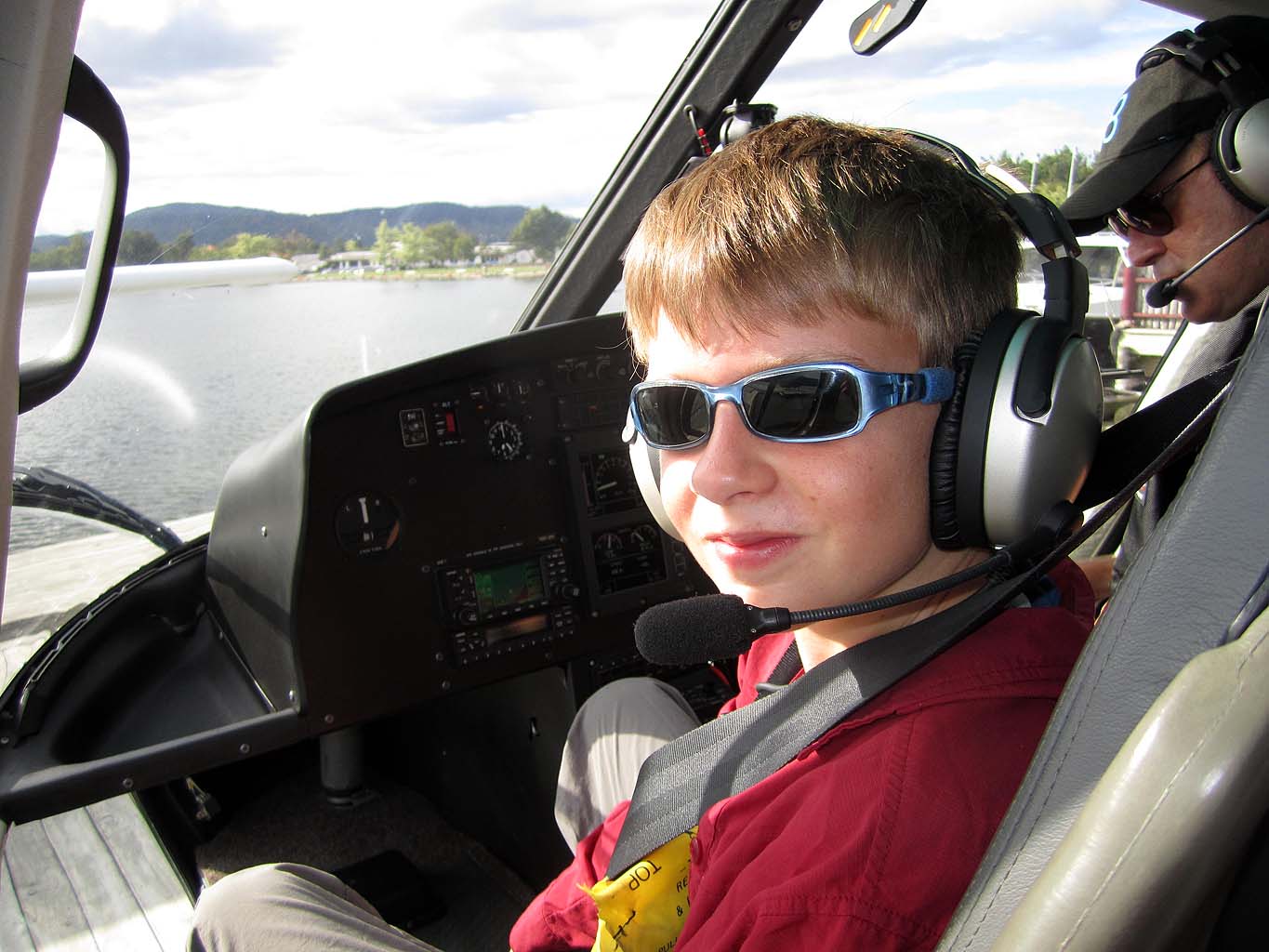
Viktor got the front seat:
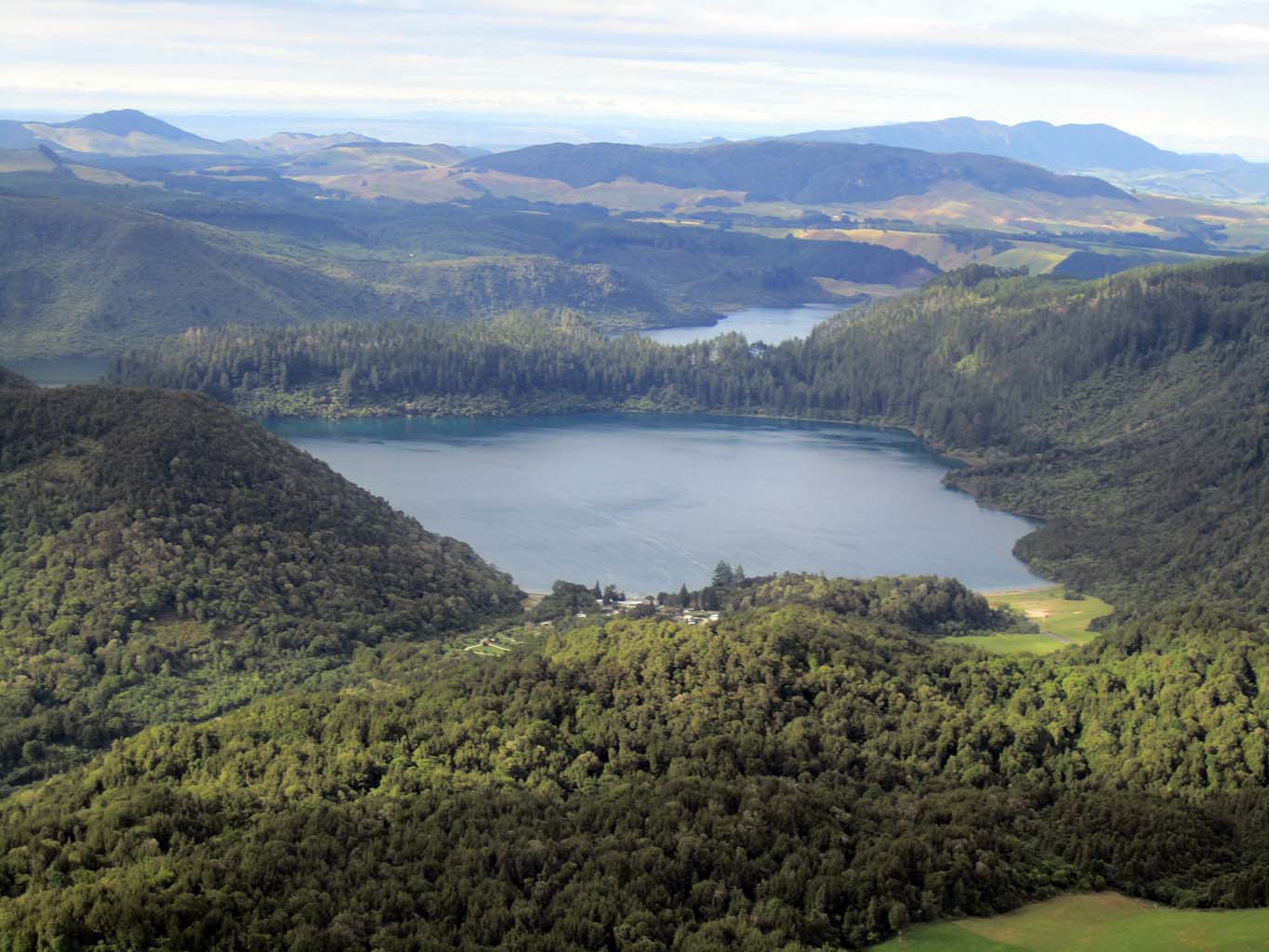
We got some great views of the surroundings of Rotorua:
before we circled the volcano Mount Tarawera. There was a vey large eruption here on June 3,1886, it was in fact the largest recorded eruption in New Zealand. The mountain and the terrain around it cracked open that day, in a 17 km (over 10 miles) rift that spewed out hot mud, red hot boulders and immense amounts of ash. Several villages were buried and over 100 people died. The eruption also destroyed what had been New Zealand’s most famous tourist attraction, the pink and white terraces. These were beautiful terraces with natural pools created from the pink and white silica deposits of a geyser. Heated water poured down the terraces, so people could bathe in them. Even at a time when New Zealand was very hard to reach, rich tourists travelled from Europe at to see these natural wonders.
We could see the crevasse formed in 1886:
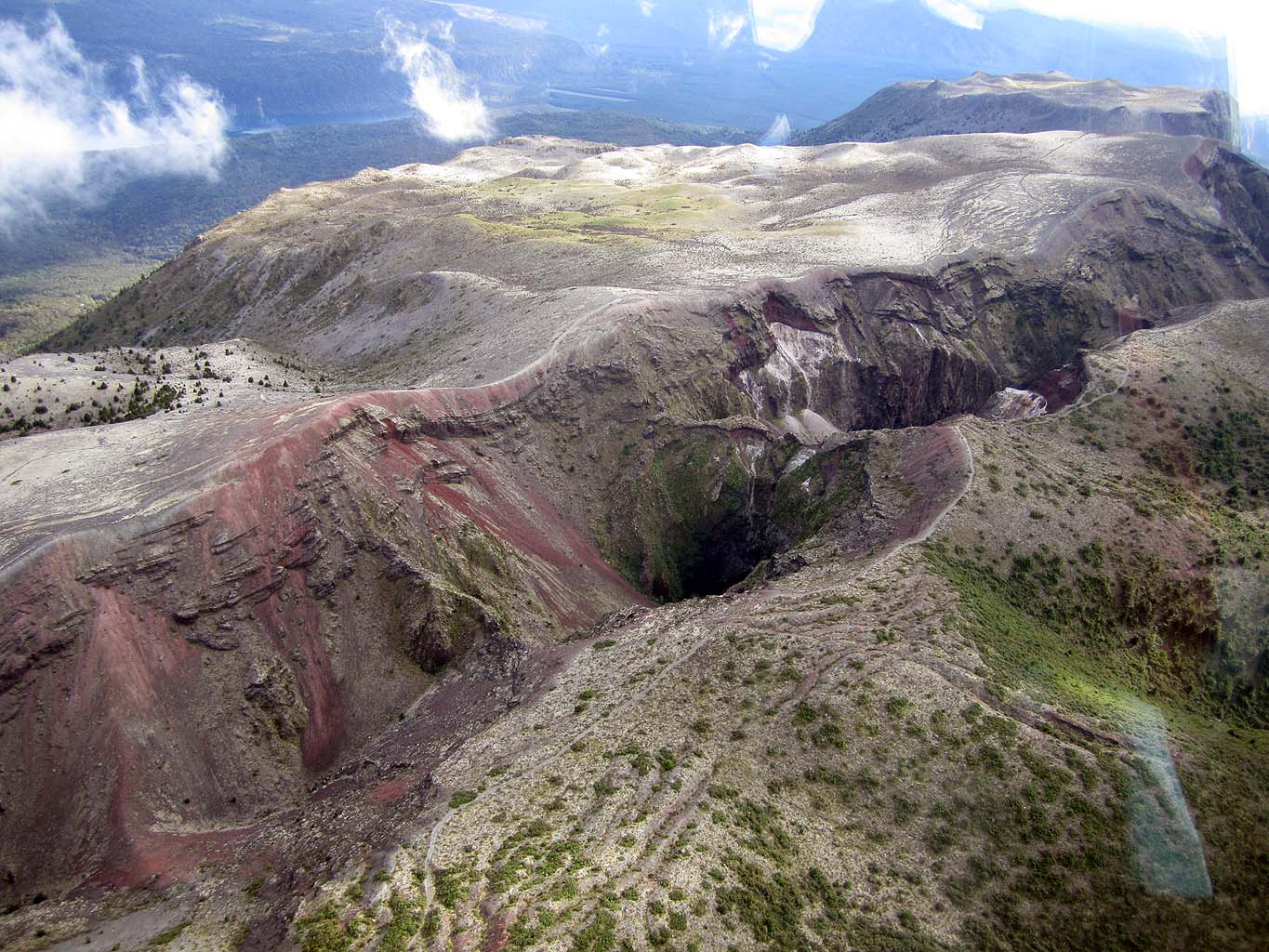
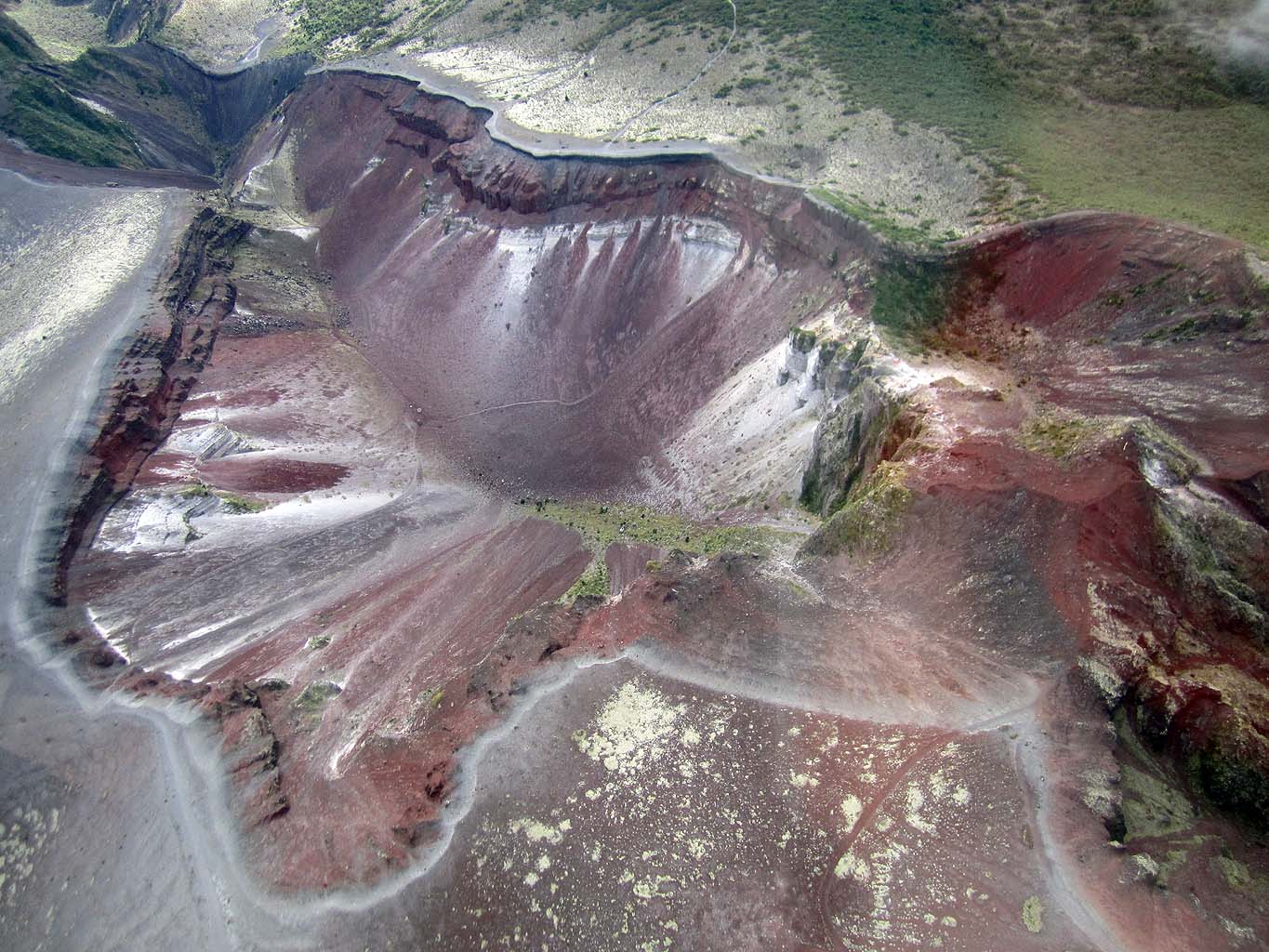
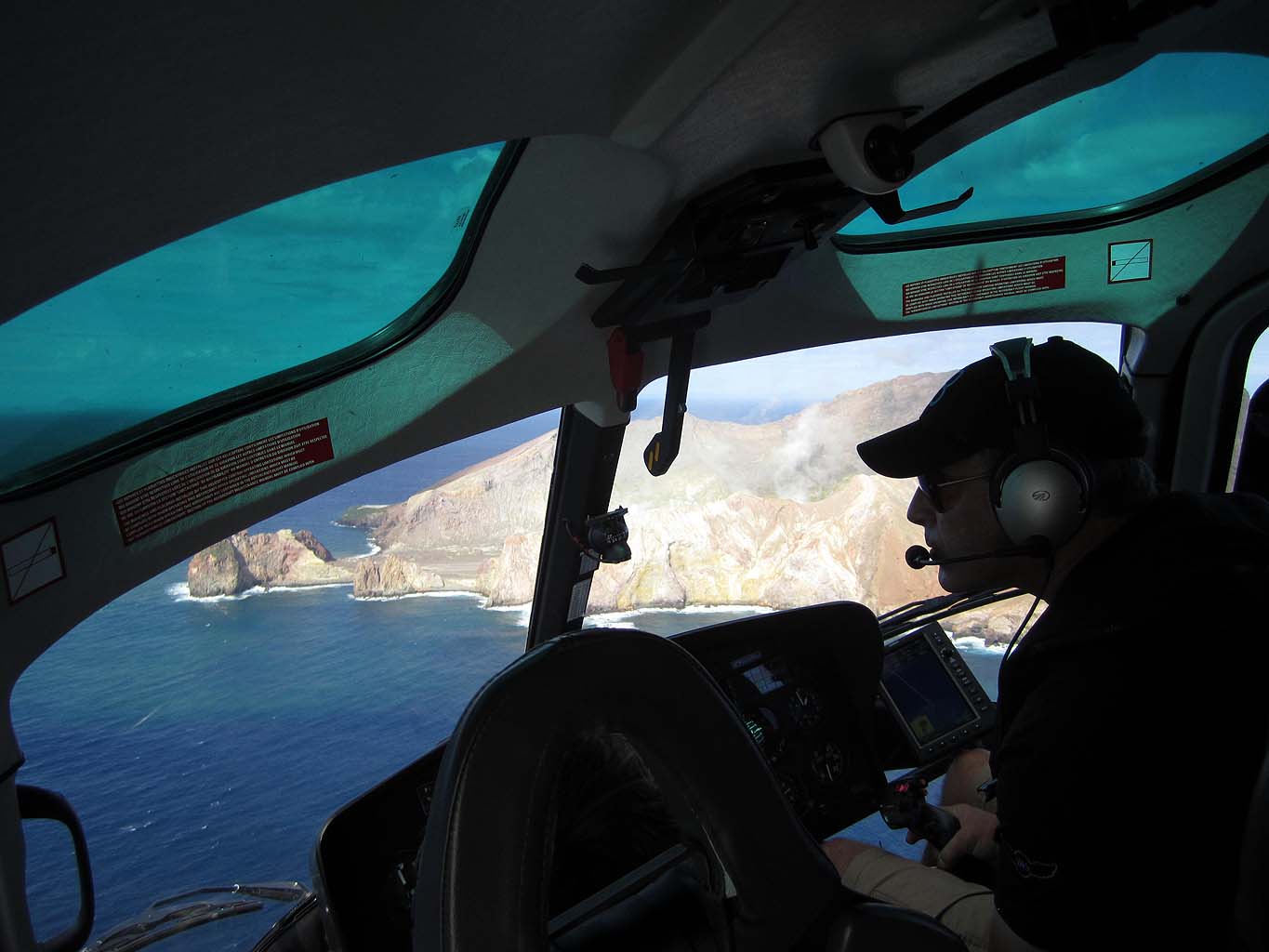
We then headed offshore where we passed some small islands. Our pilot and guide, Dave, was a relaxed and knowledgable fellow.
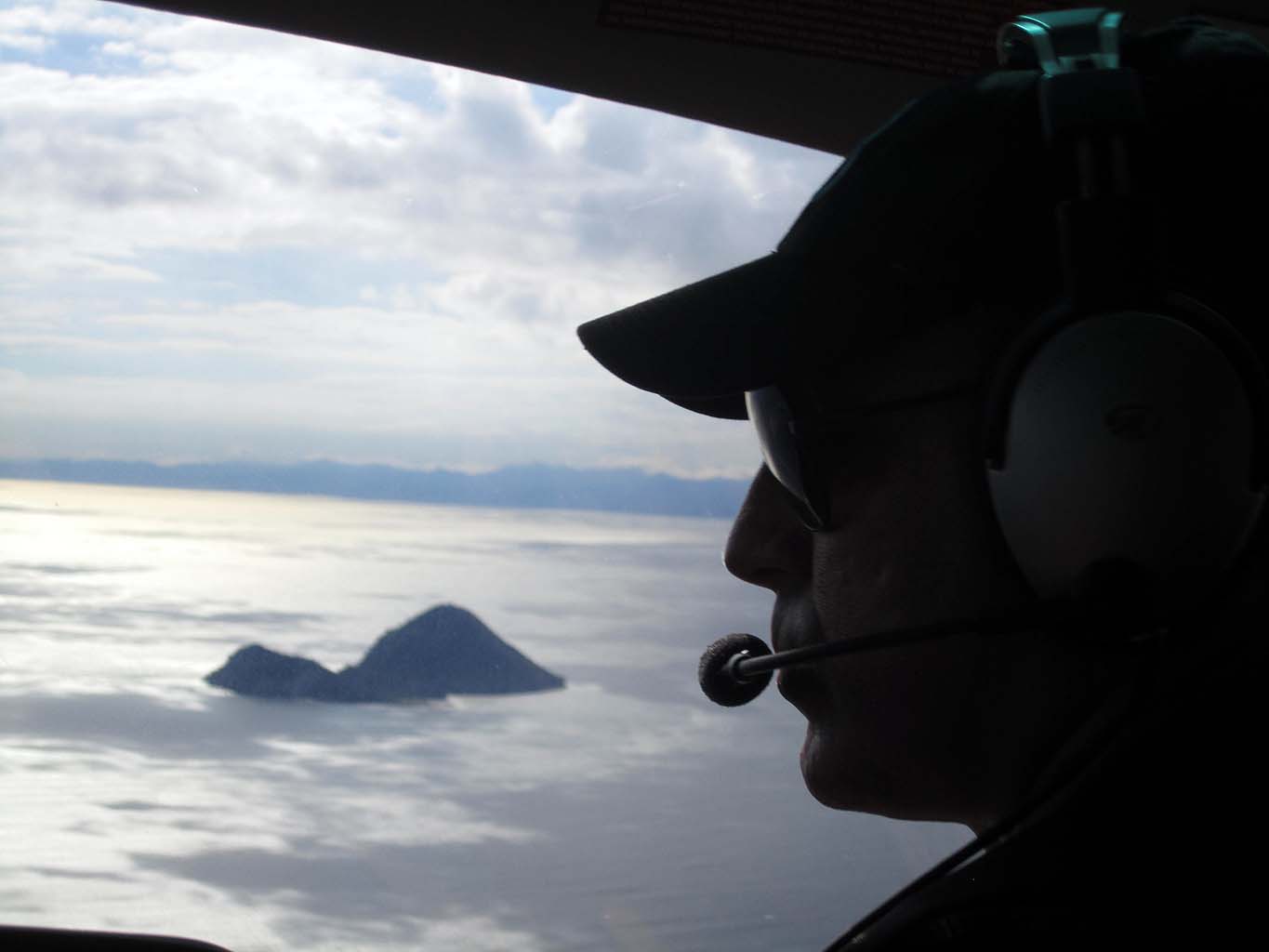
Soon we started to see White Island ahead of us. First it seemed more black than white
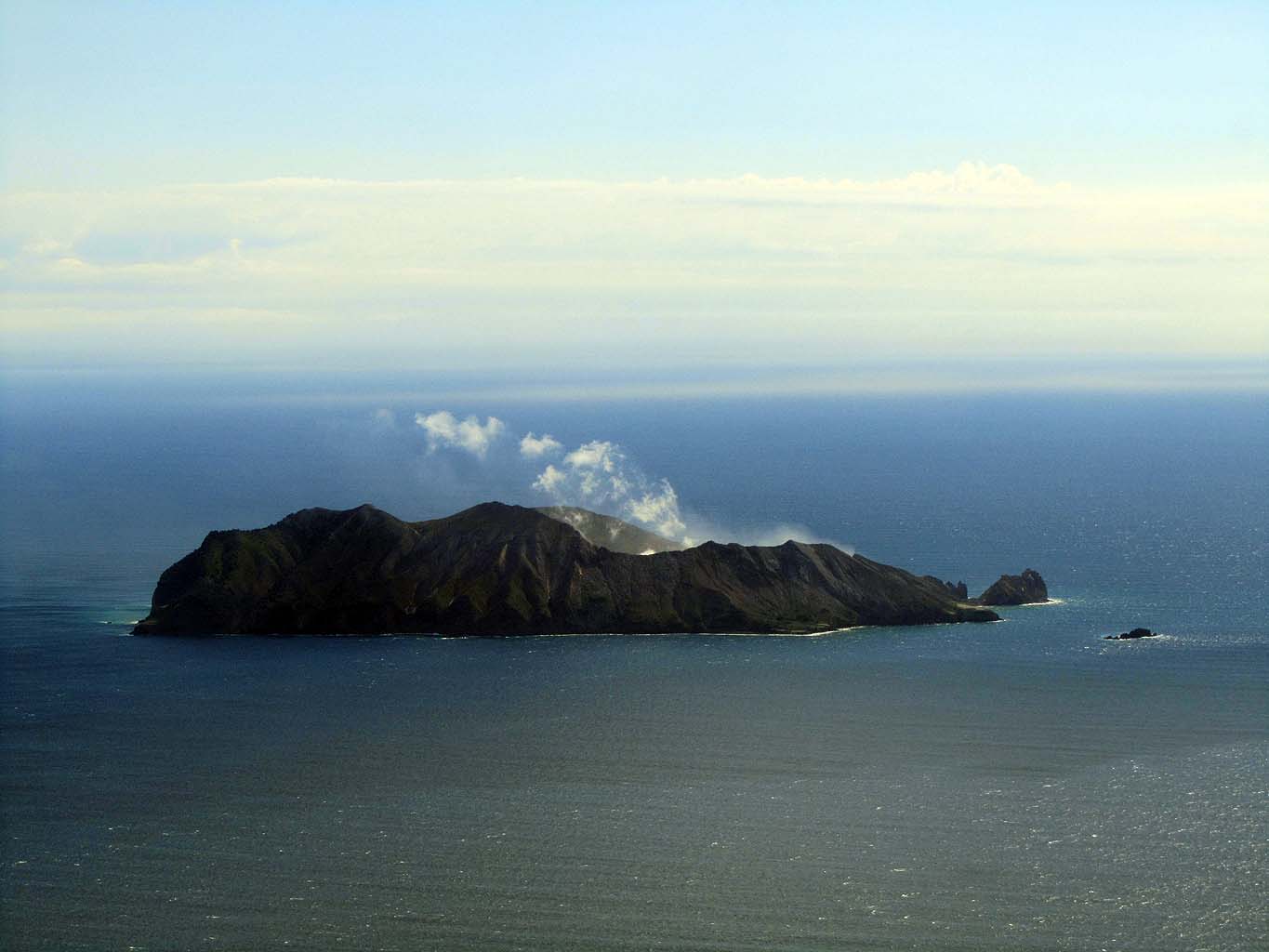
but seeing it closer and at at a different angle changed that perception
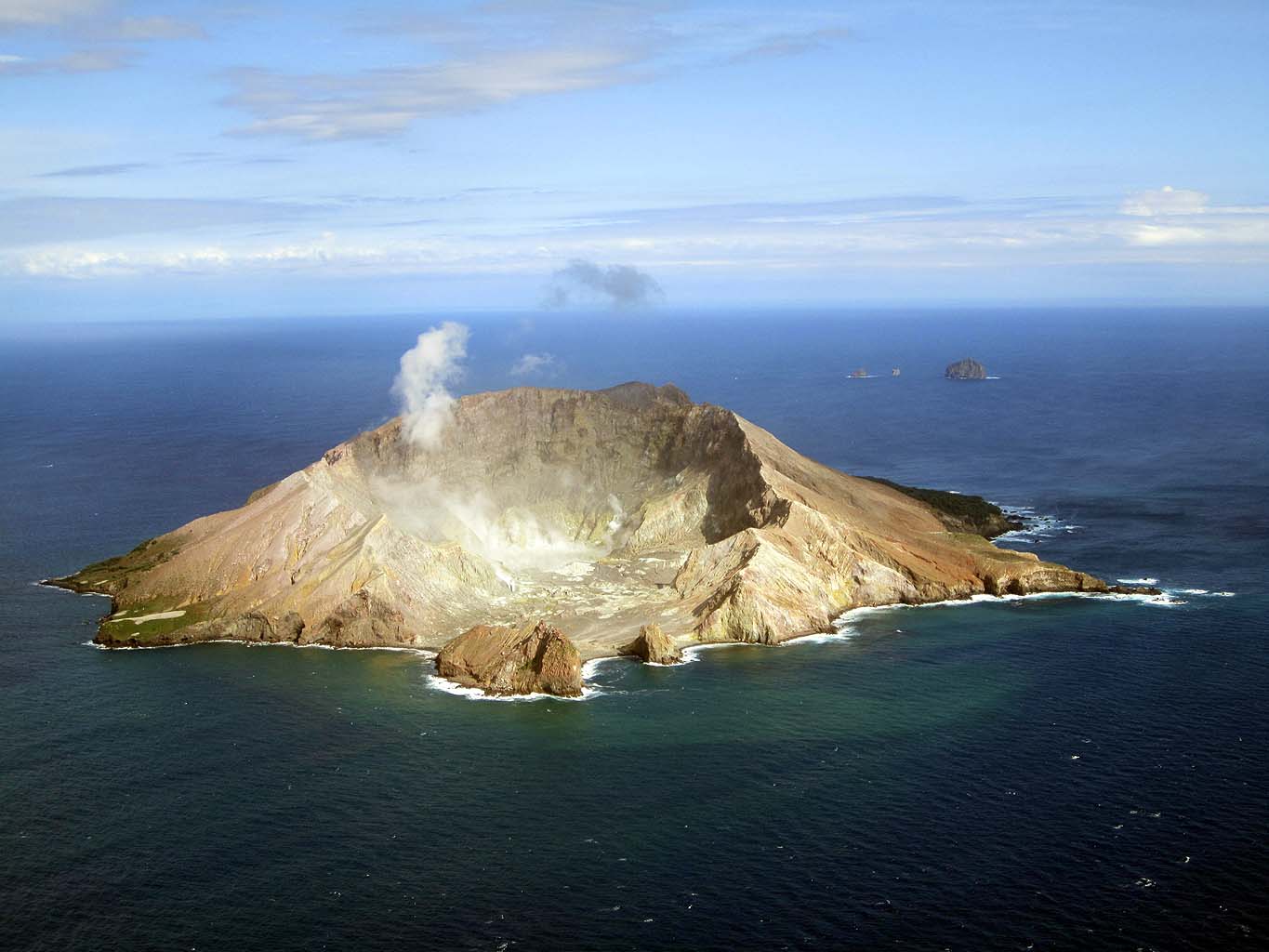
We circled the island
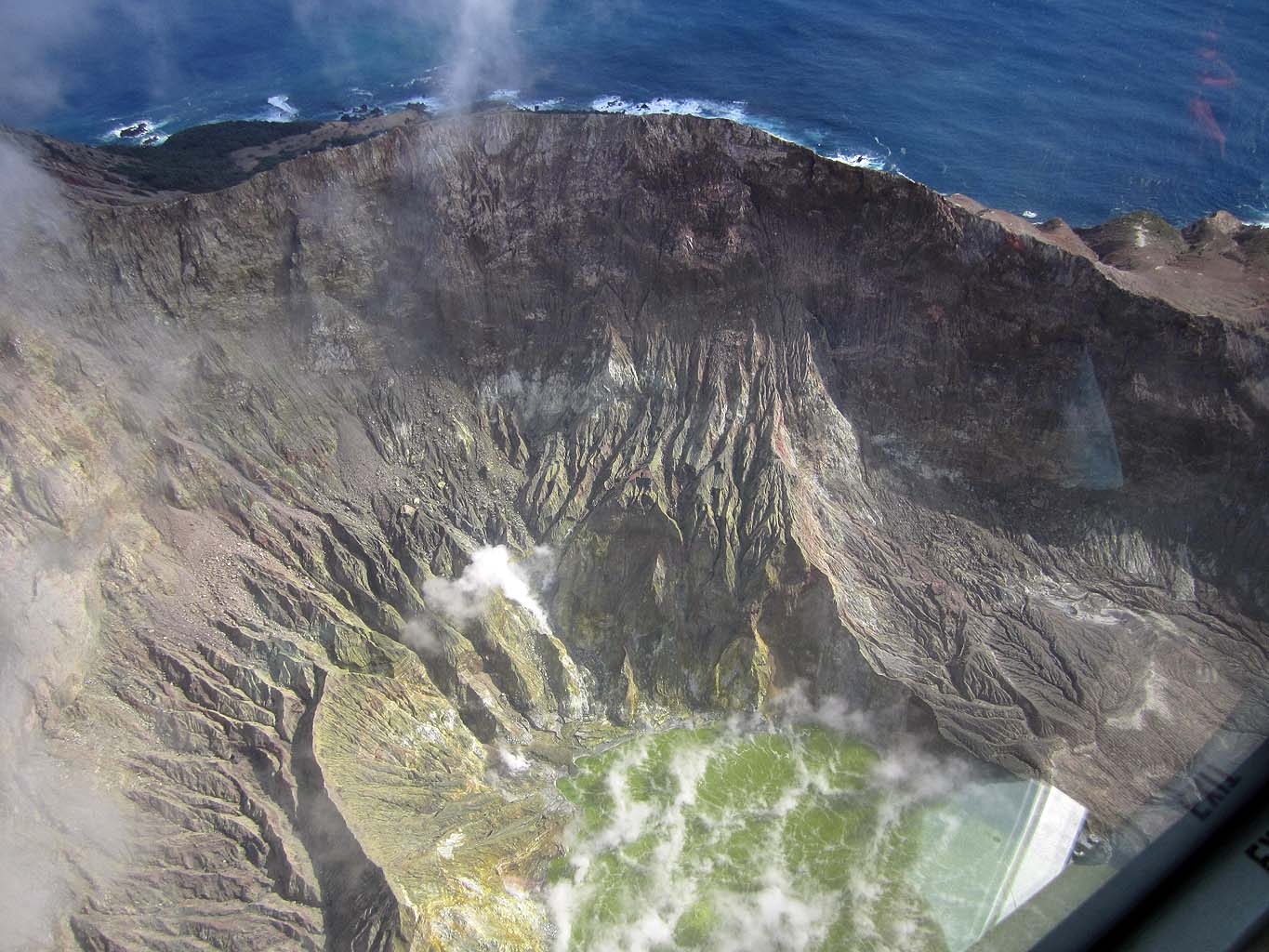
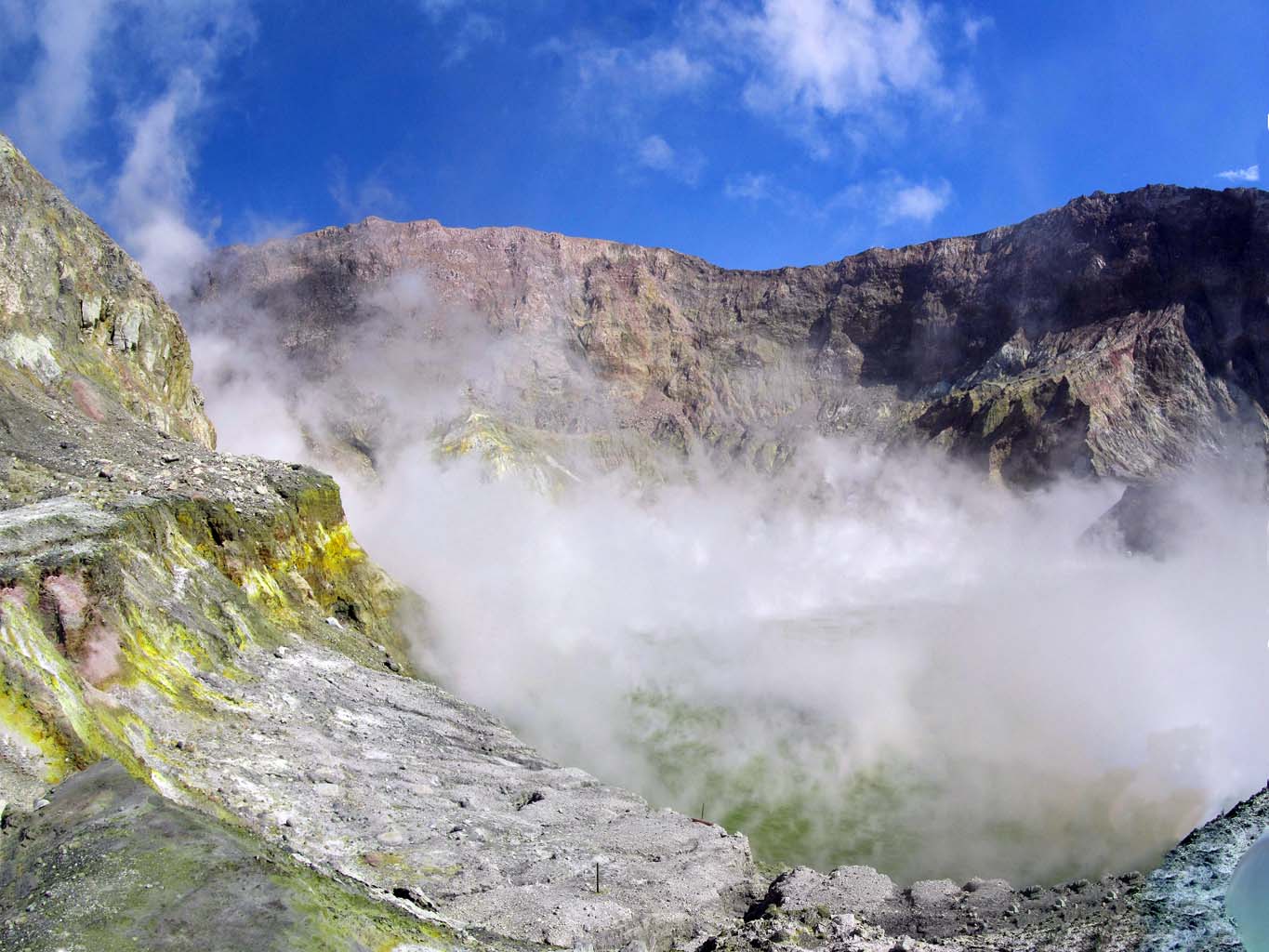
and flew straight over the crater. The green thing you see there in the middle is a pool of boiling water saturated with arsenic and sulphuric acid. It has a pH of around 0.6. If you take a swim you will die from three things at the same time: being boiled, poisoned and having your flesh dissolved in the acid.
We landed in an alien and lifeless landscape:
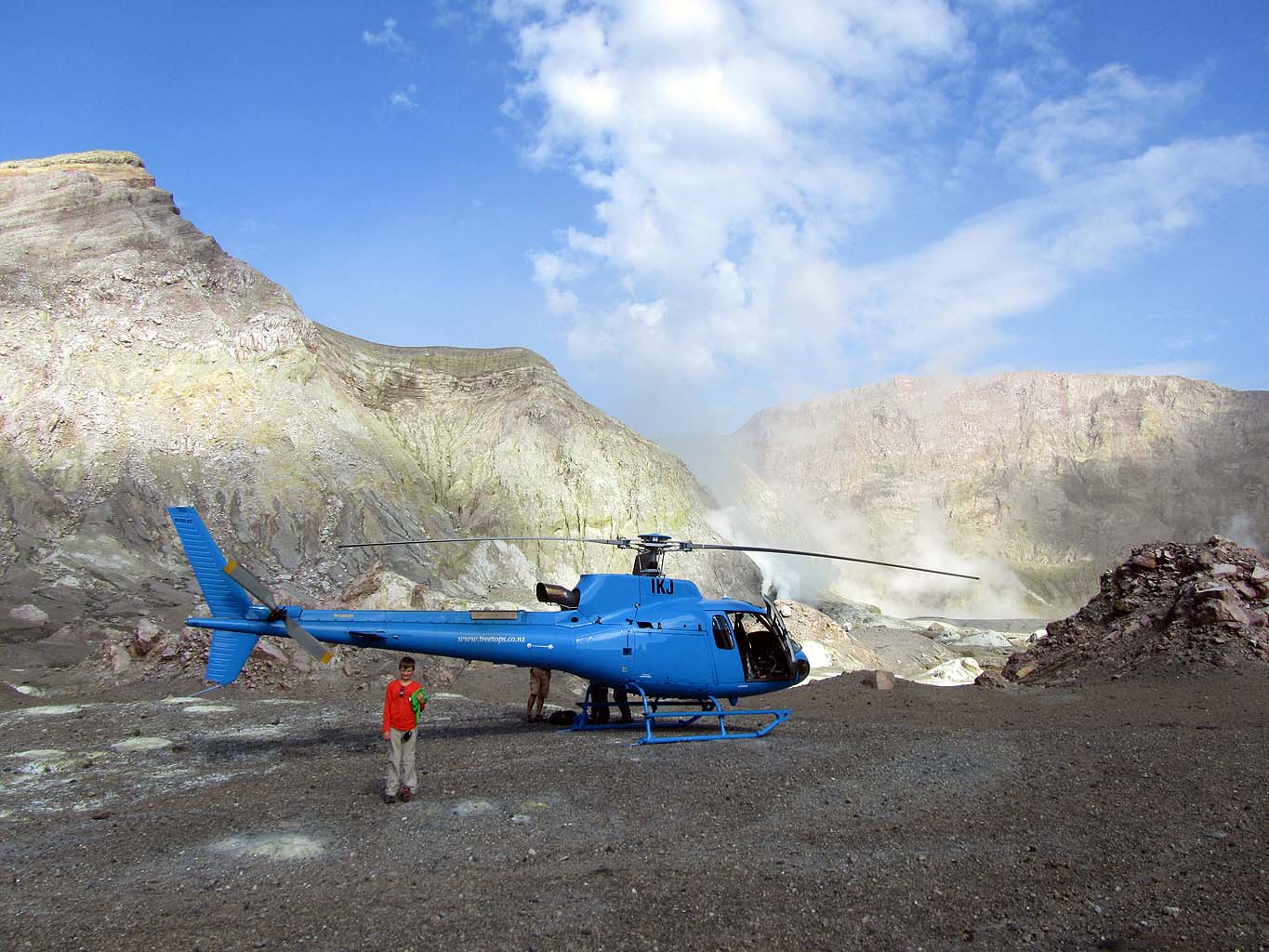
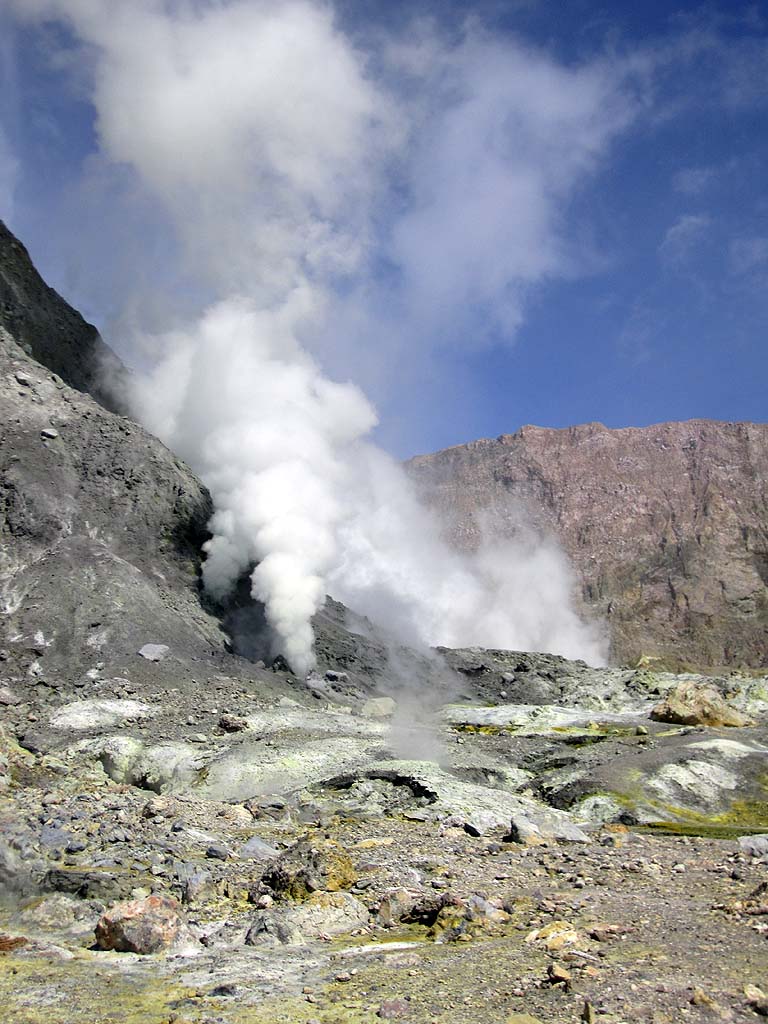
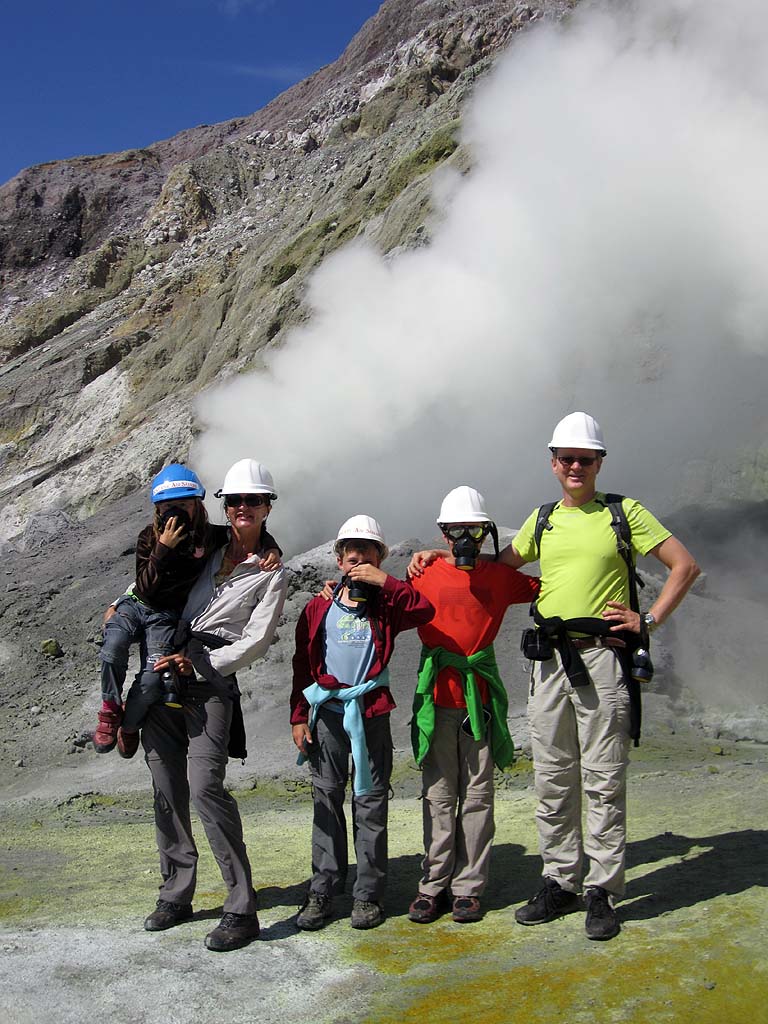
Because of the poisonous gasses constantly venting out of the volcano we had to carry gas masks. The smell of hydrogen sulphide, the same gas that develops when eggs rot, was omnipresent.
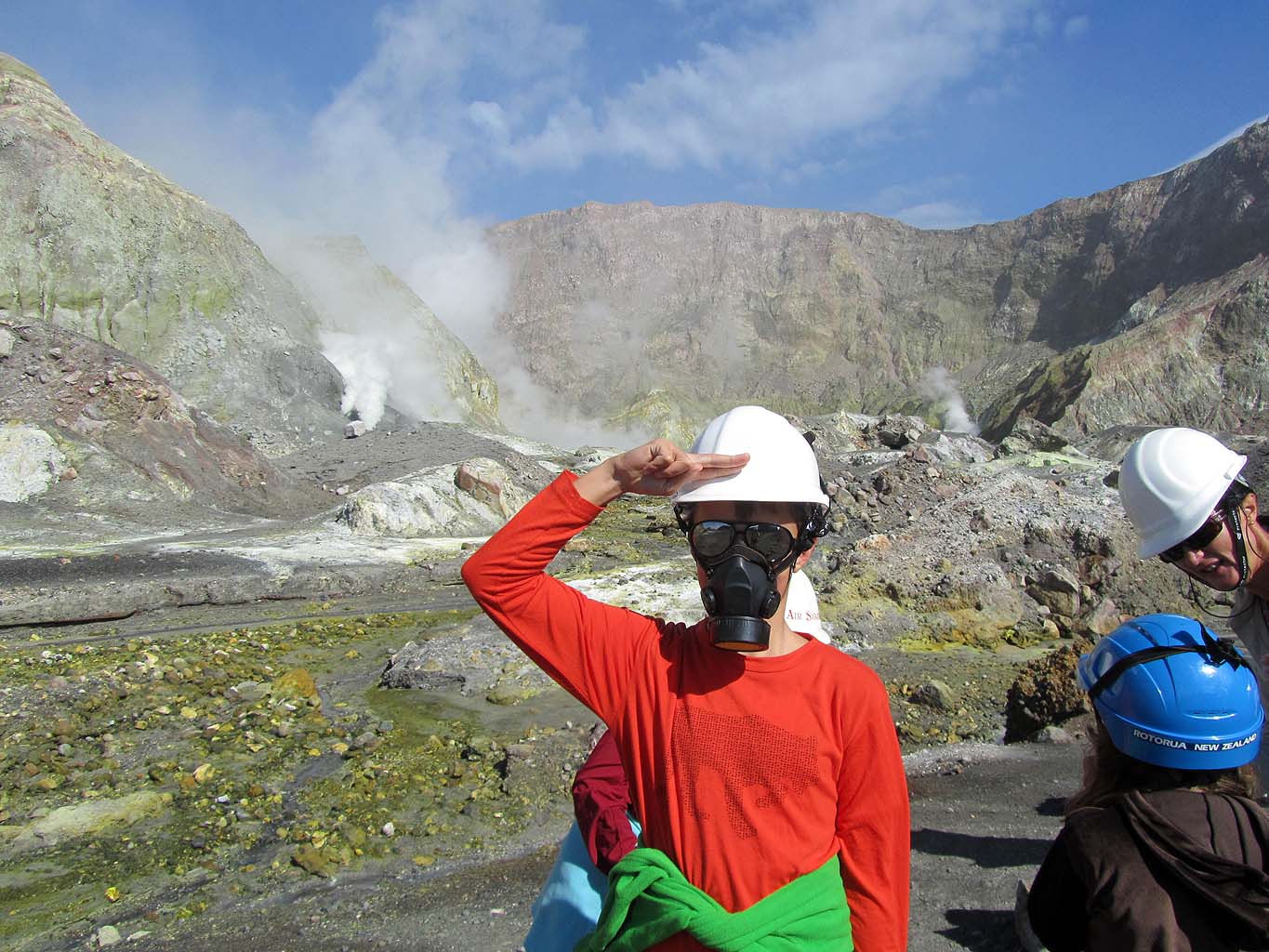
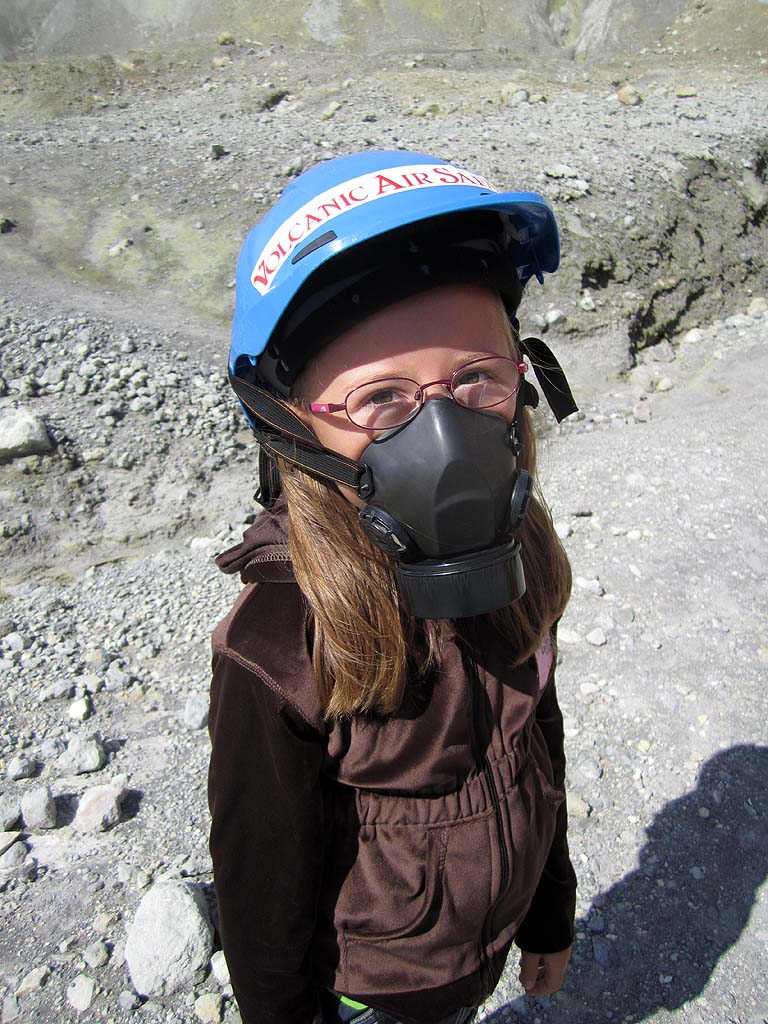
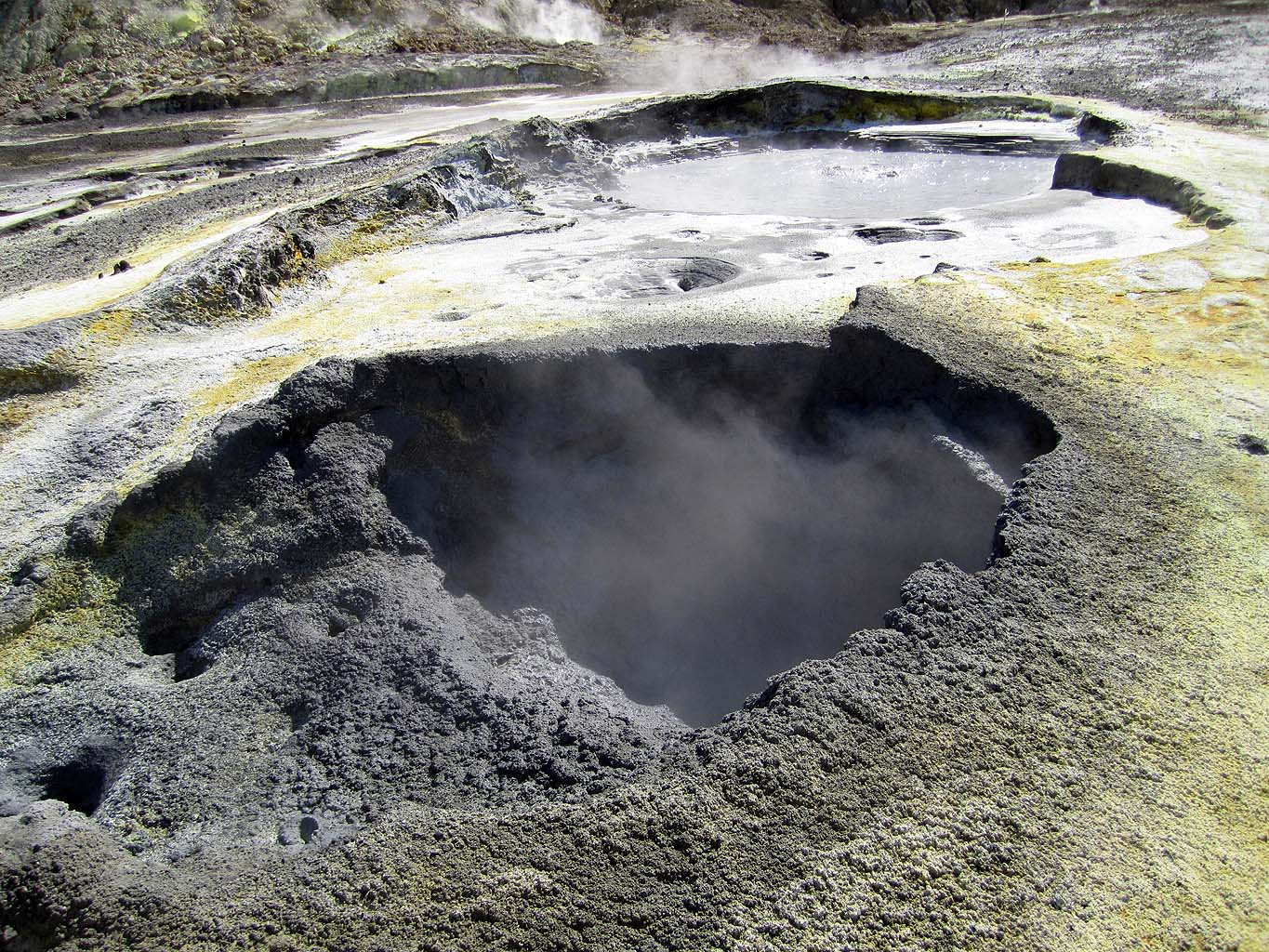
The inside of the crater changes with every eruption. It is covered with sulphur deposits and small streams of hot water that comes up from the ground at various points. There are also hot mud pools, formed by rock that has been dissolved by the acid coming up from the ground. These pools are boiling hot and very dangerous. We had strict orders to only walk where Dave said it was safe.
We followed Dave into the crater
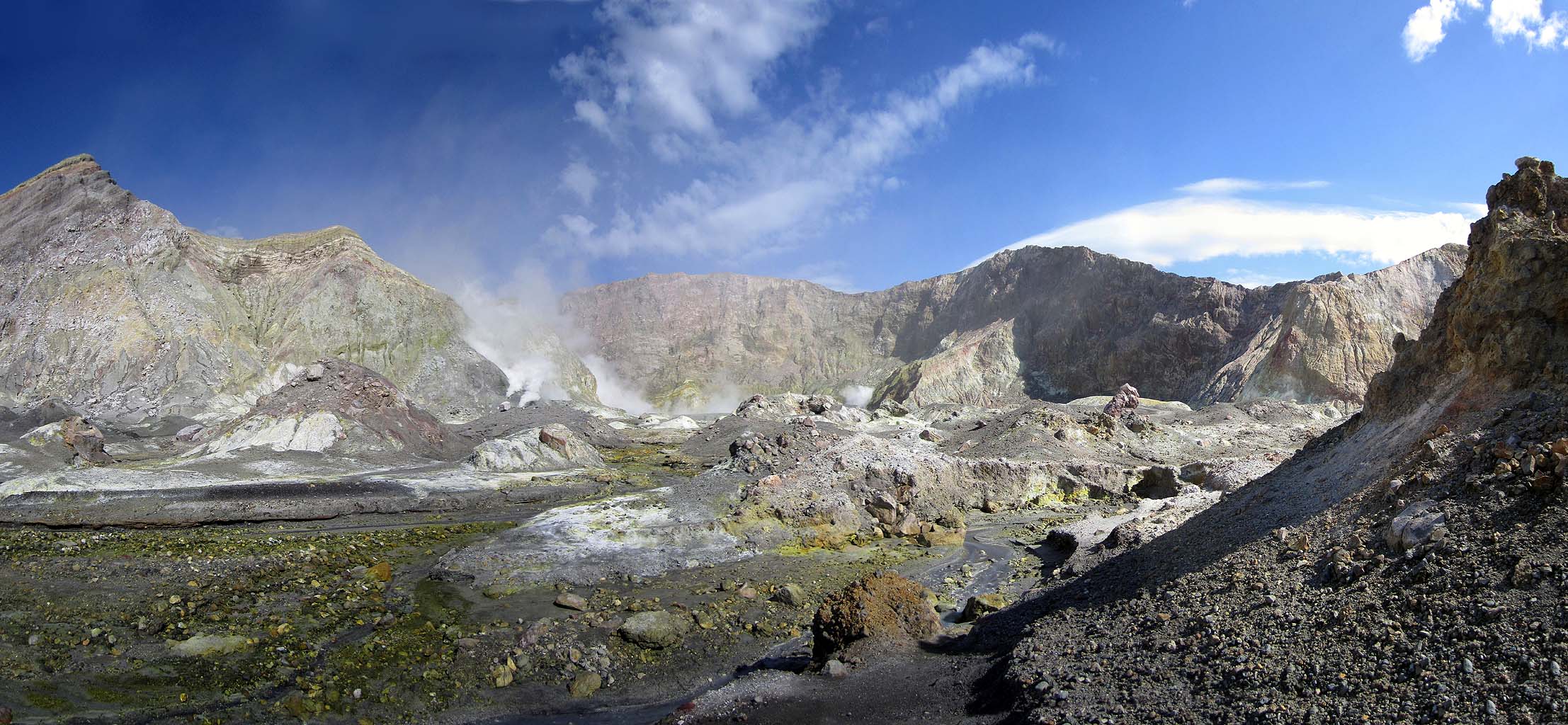
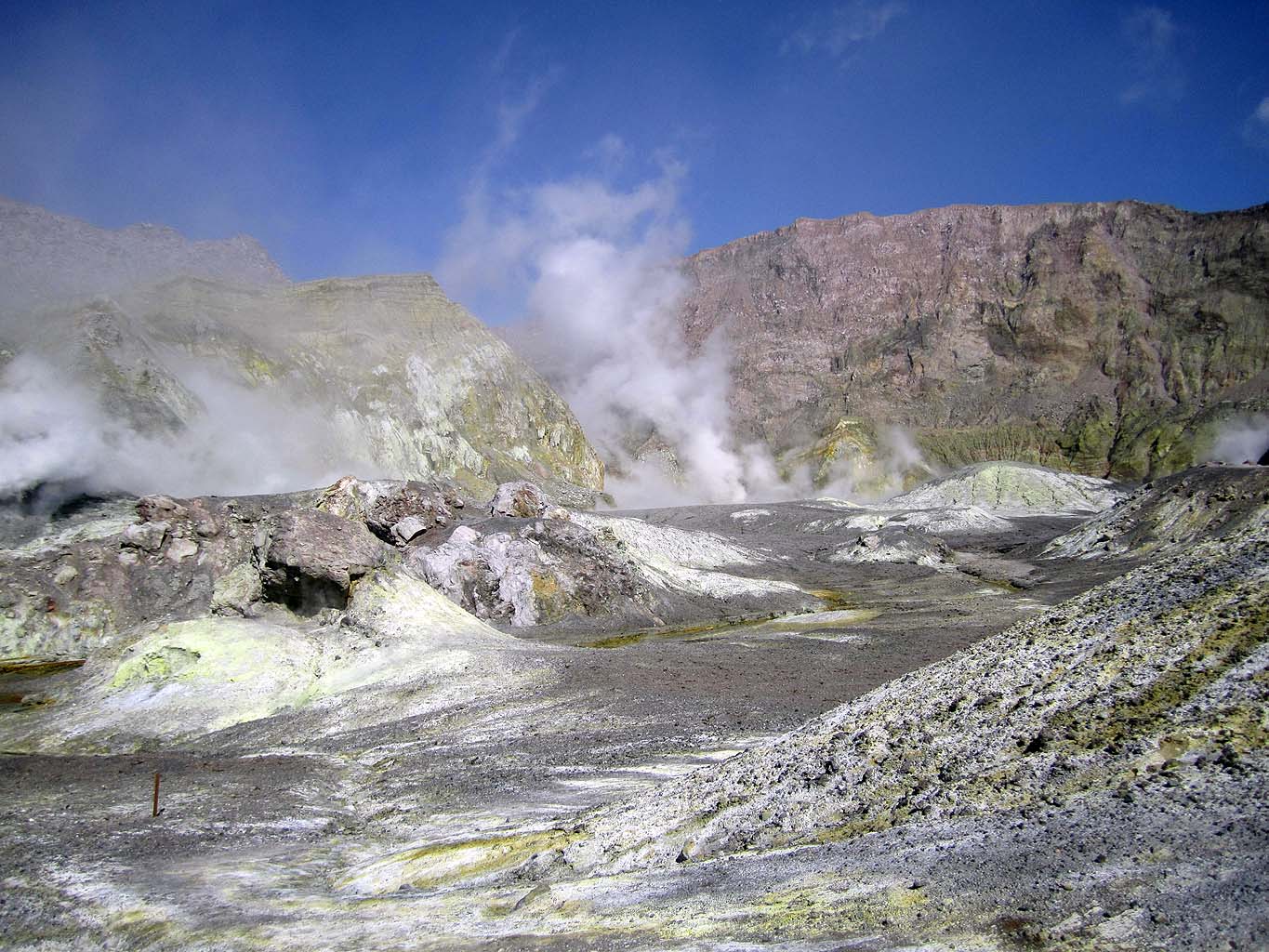
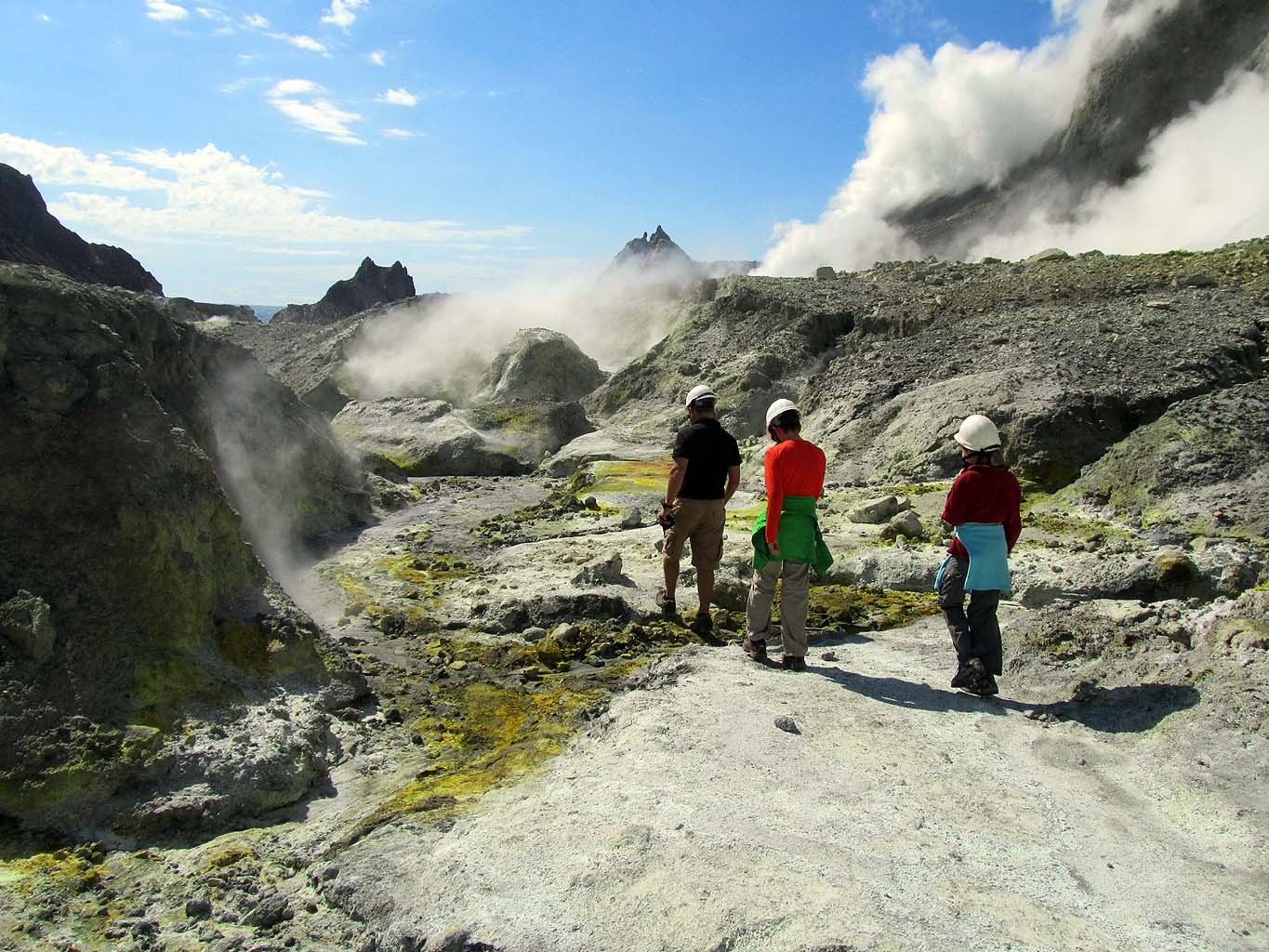
Sulphur gas is constantly coming out of these vents:
Don’t walk too close to those mud pools, Viktor!
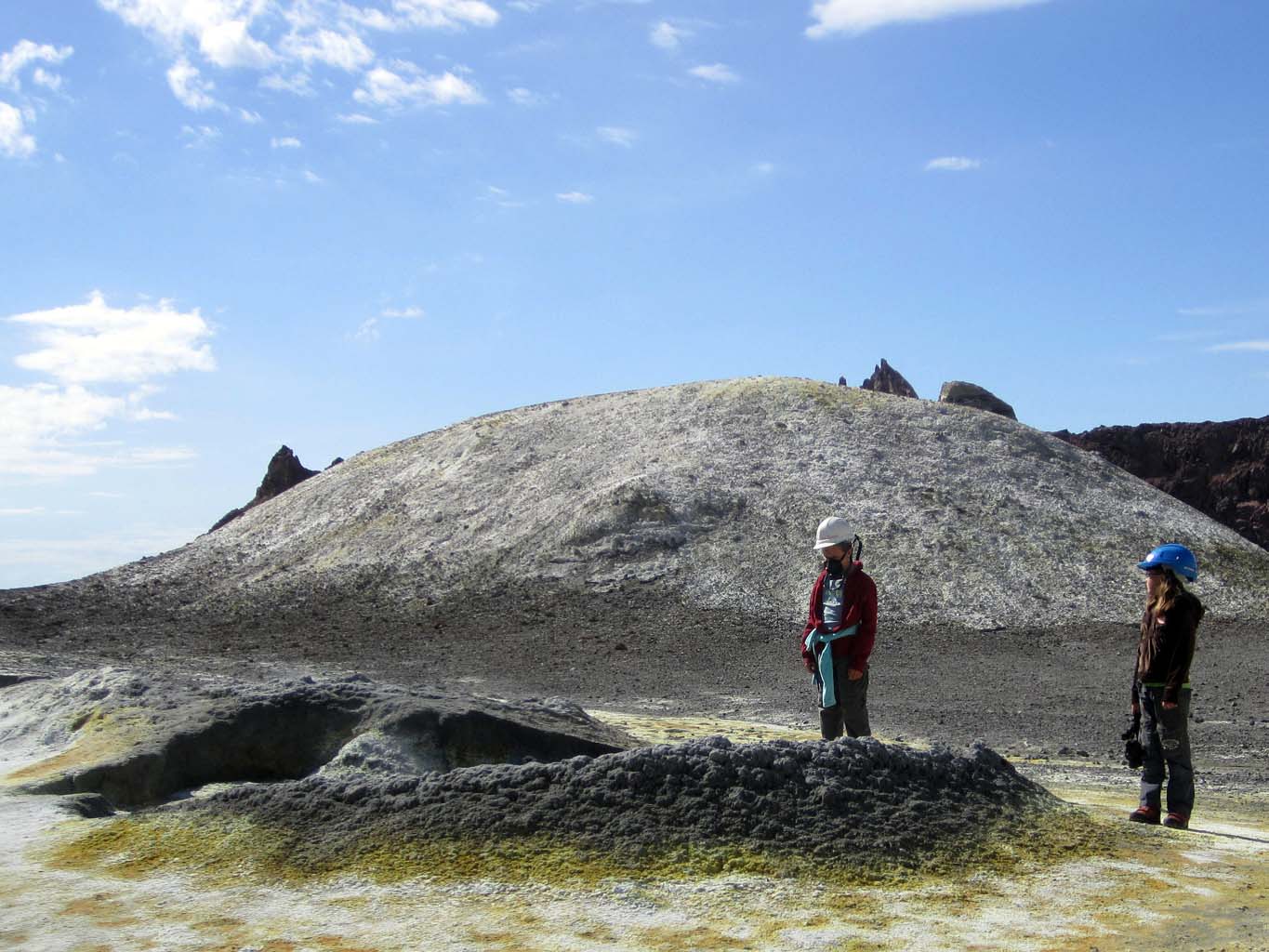
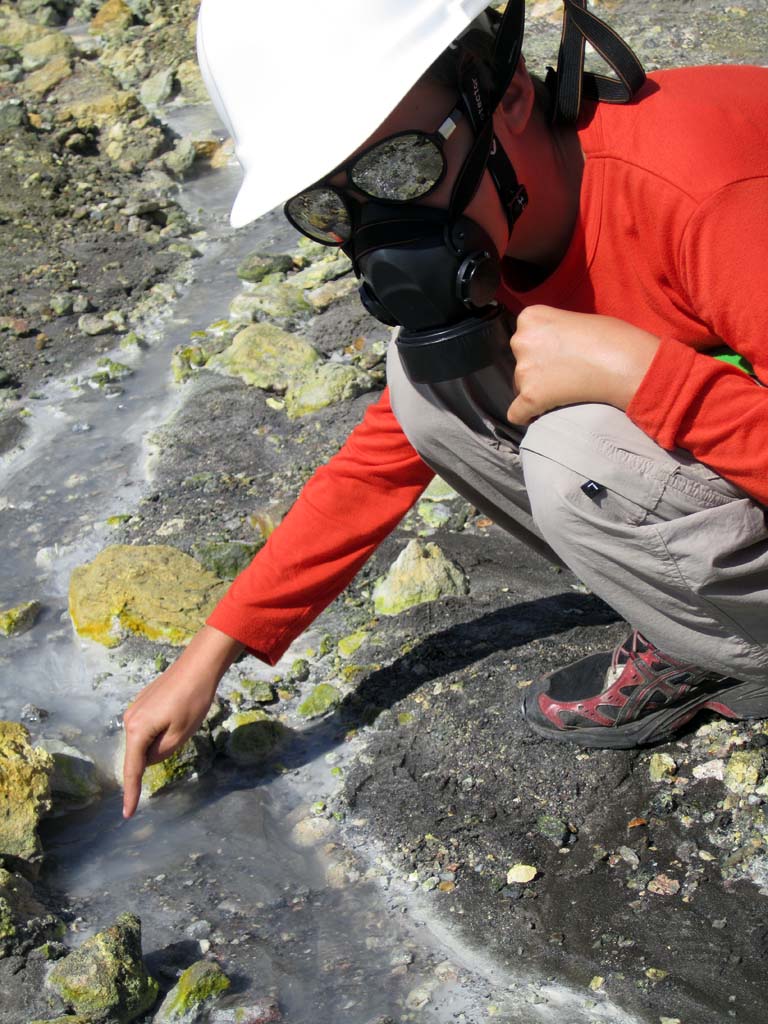
Adrian getting ready to put his finger in boiling hot water:
We walked over to the edge of the crater hole with the lethal pool. Must… resist… urge to jump in…
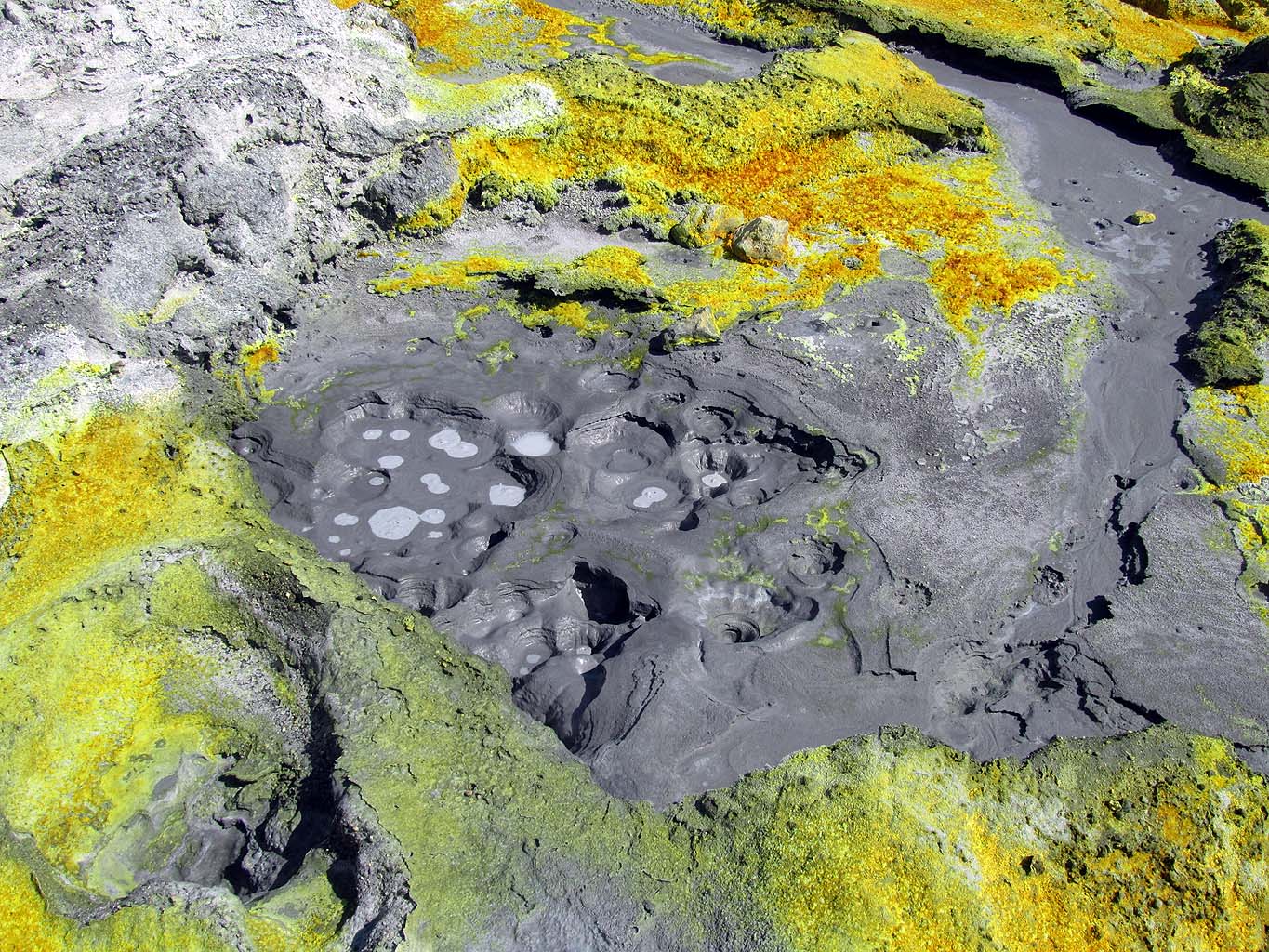
The sulphur and other rare chemicals created natural works of art on the ground
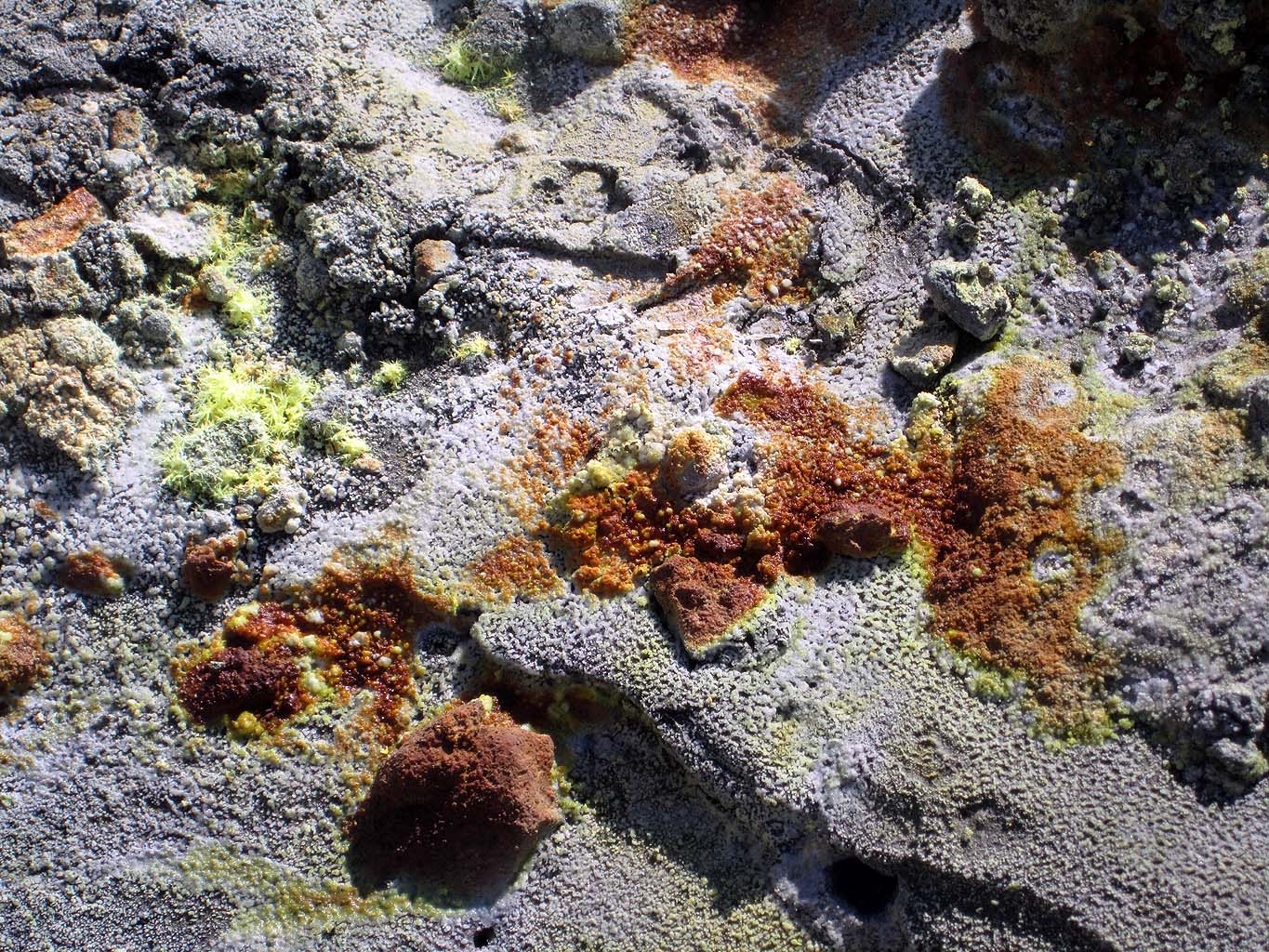
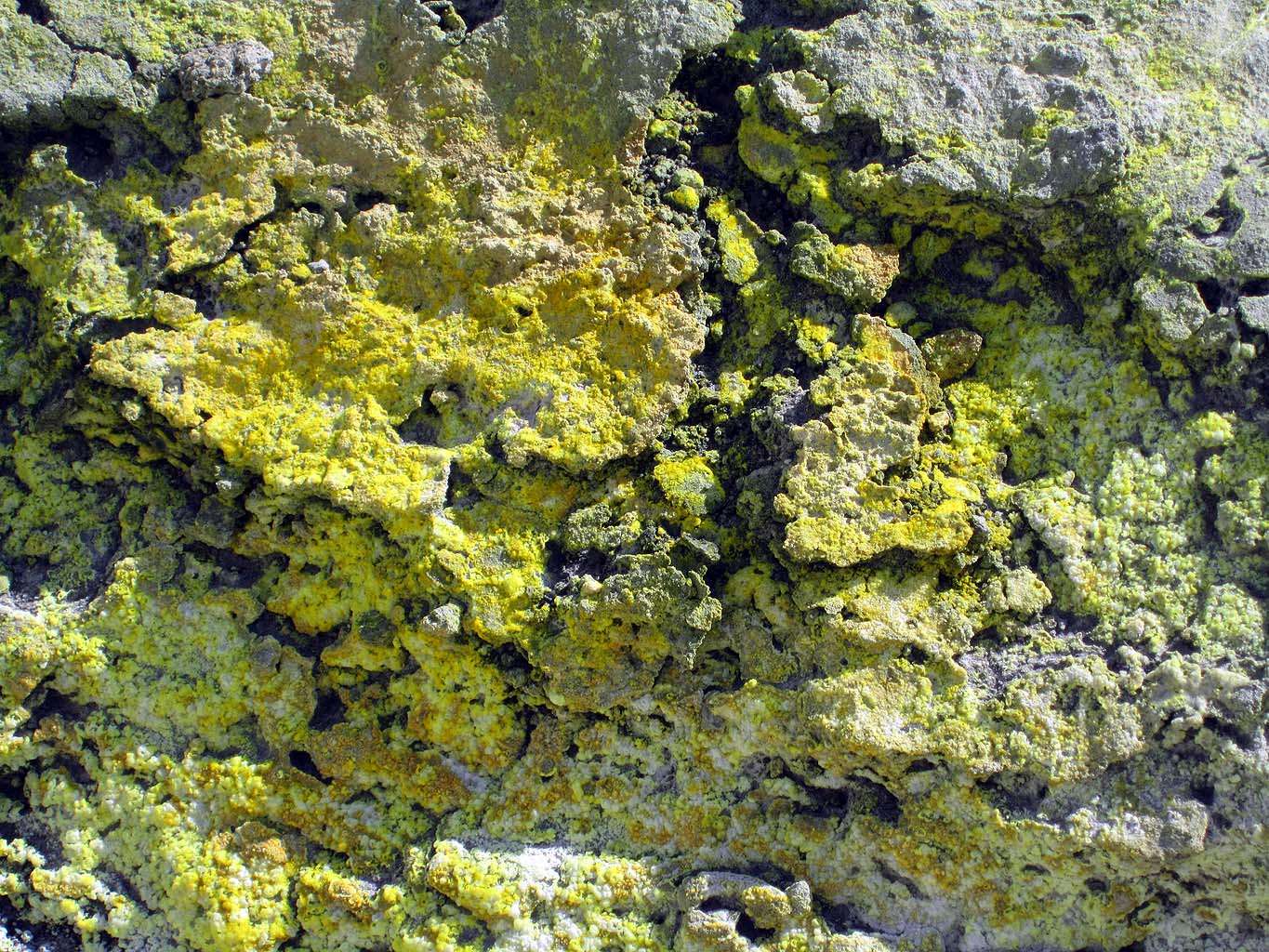
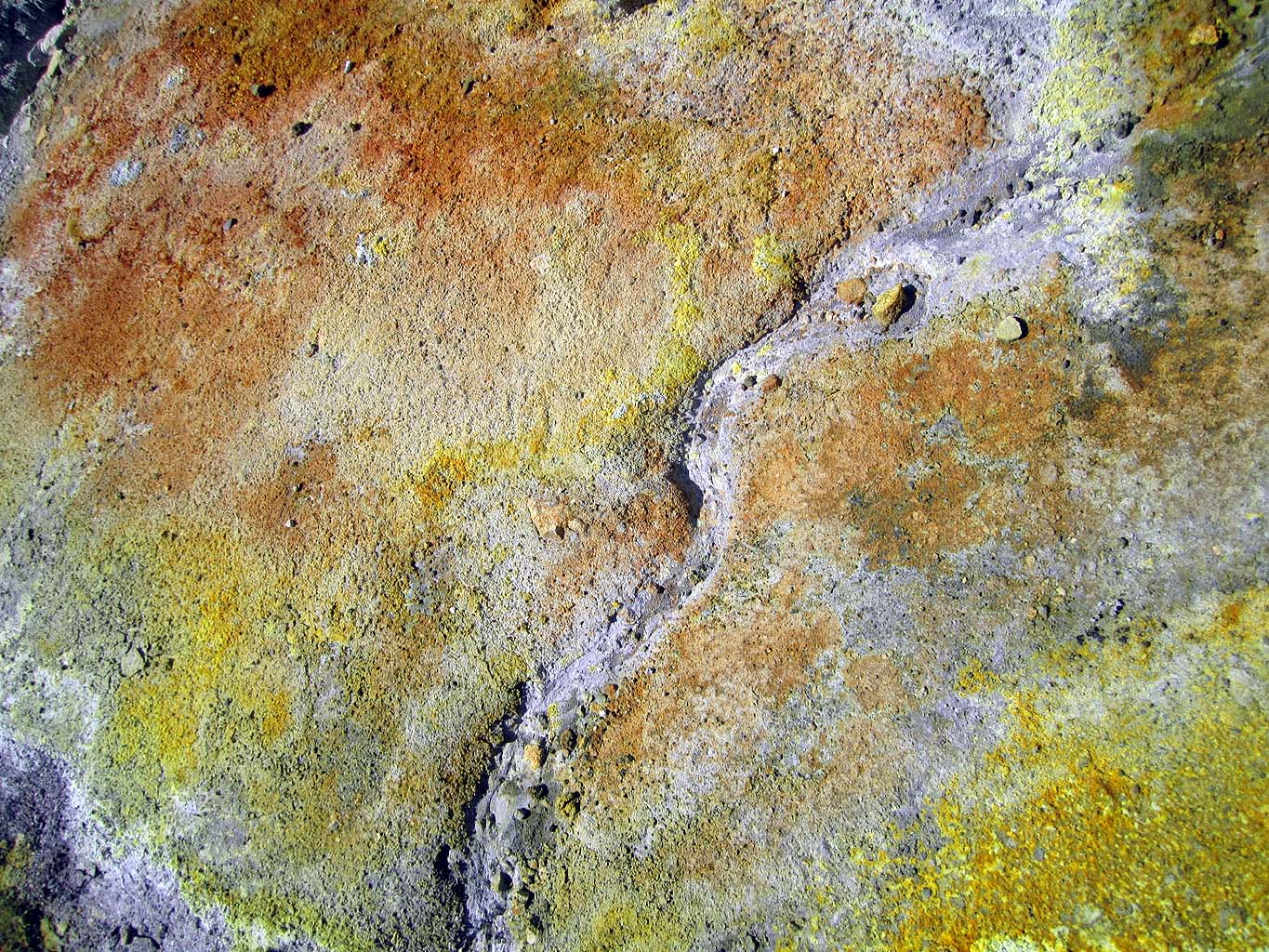
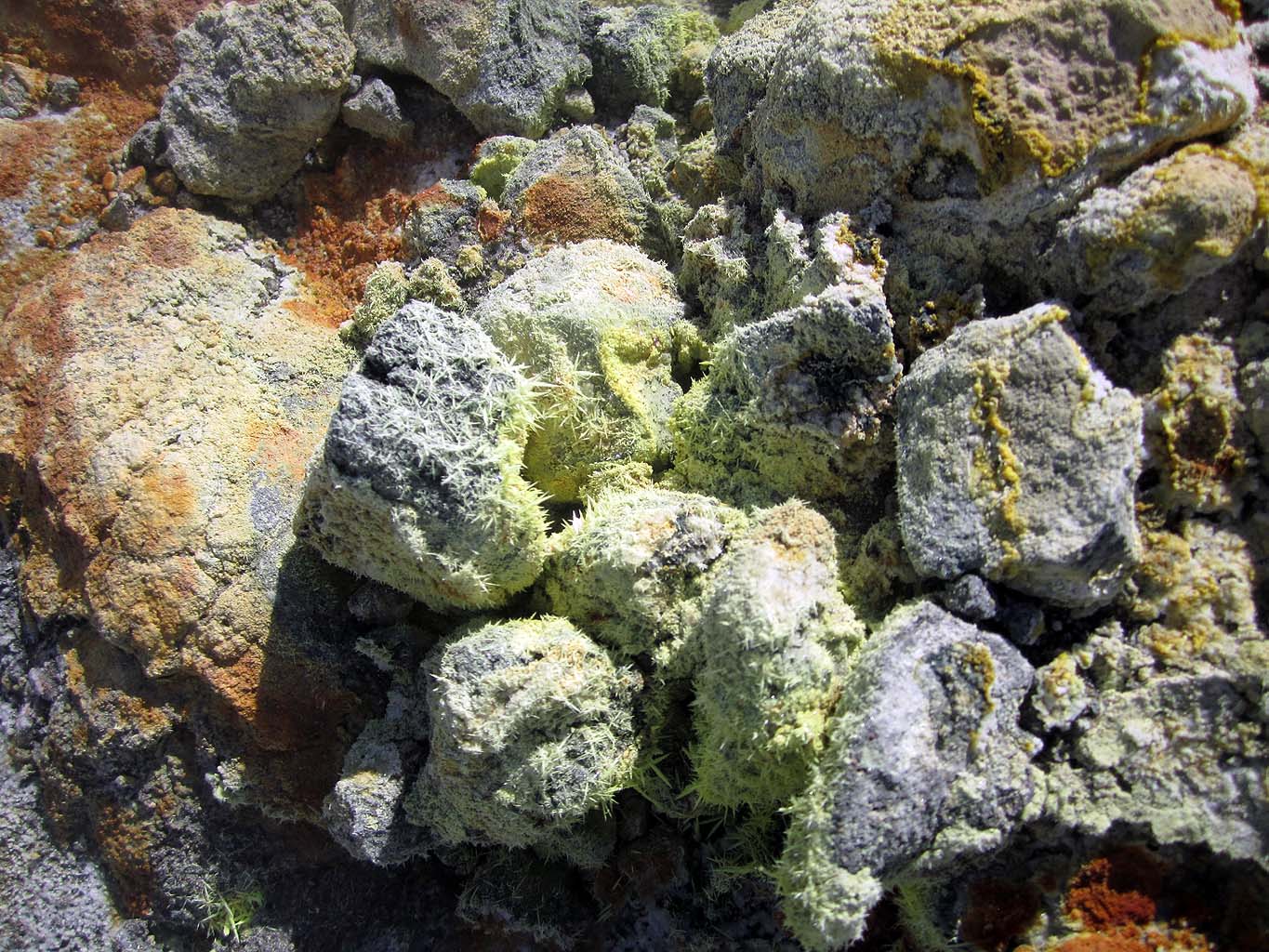
We walked over to the open end of the crater and the ruins of the sulphur mining operations which operated here a long time ago. In 1914 part of the crater wall collapsed and the resulting landslide killed all 12 workers. Only the cat survived. The operation was restarted in 1923, with workers coming in by boat every day. The company running it went broke during the great depression and everything was abandoned in 1933 and left to the forces of nature.
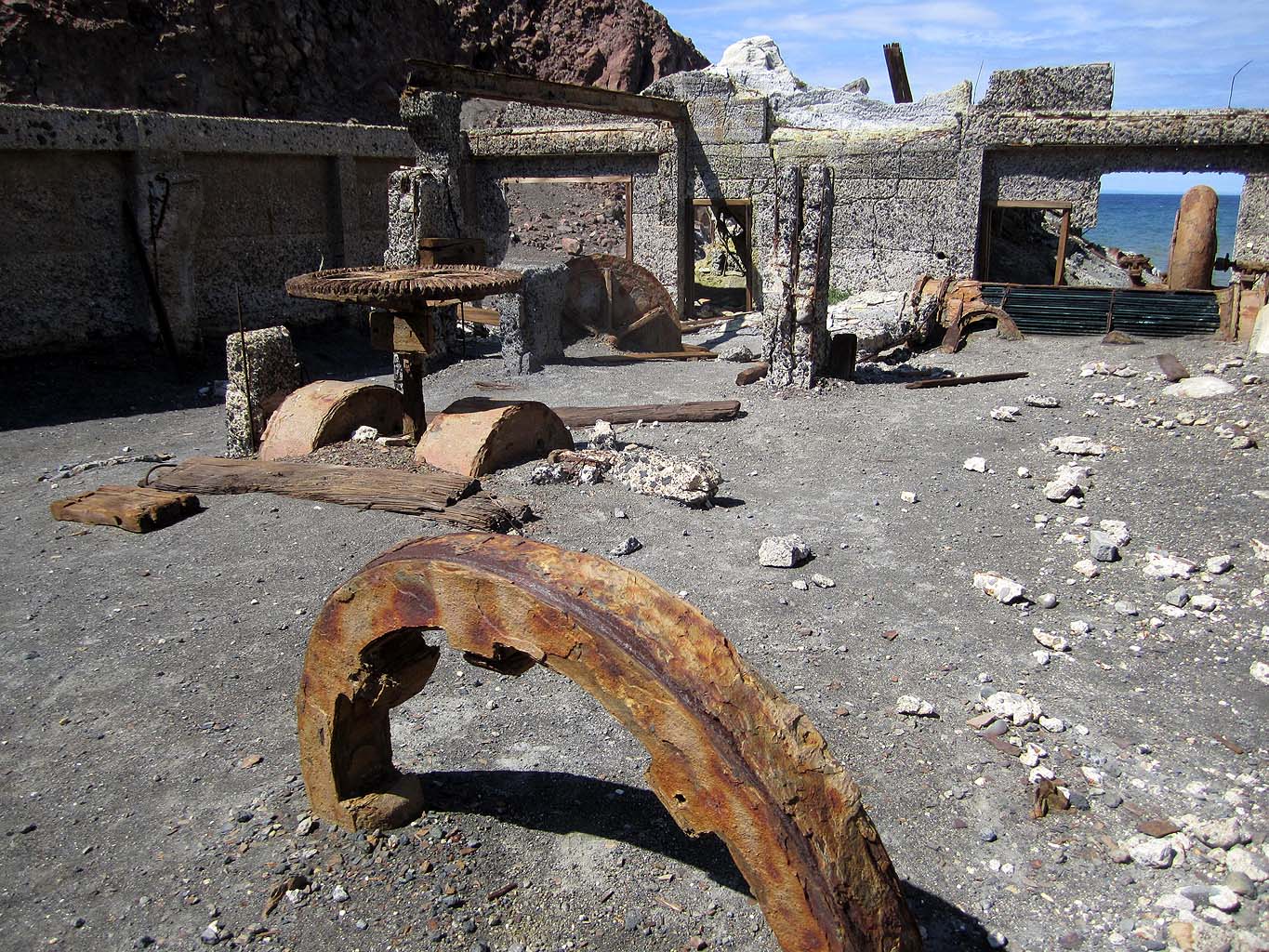
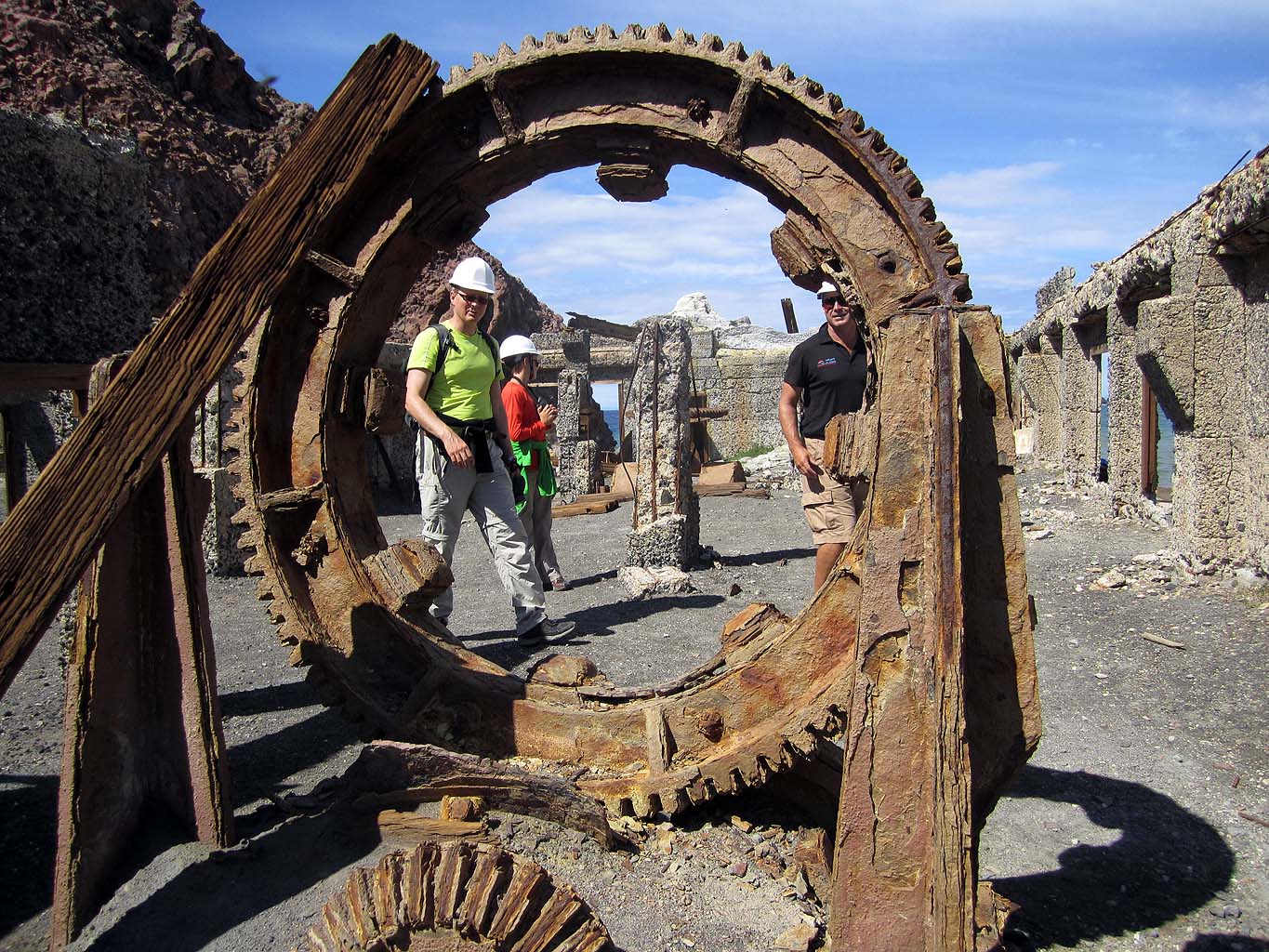
It was time to leave this fascinating place. Dave had been a great guide. He was relaxed and let us take our time. Walking to the helicopter I realized we had been in the crater for almost an hour and a half, even though the tour description said one hour.
He took a photo of us before we left:
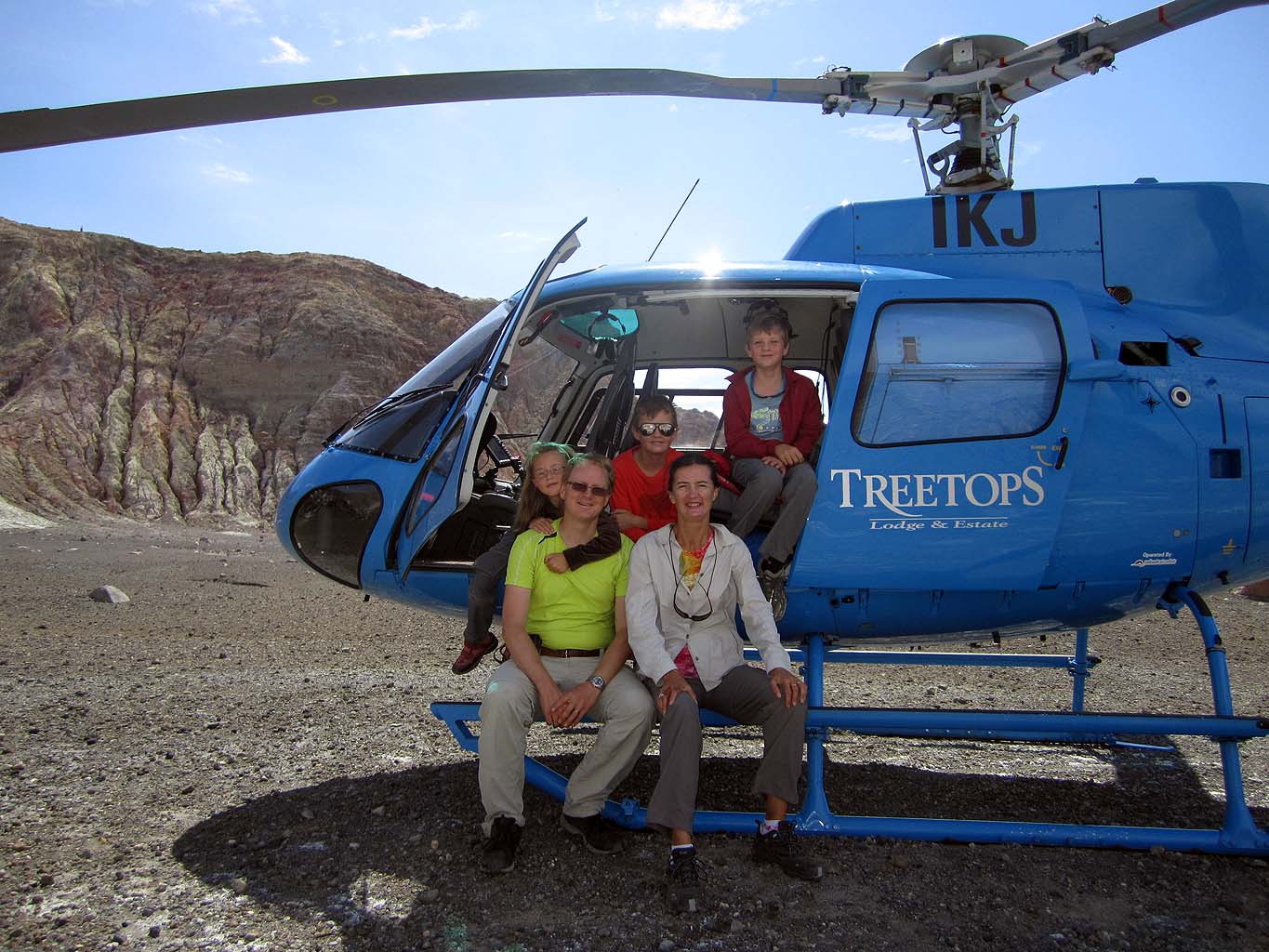
And here he is with his helicopter:
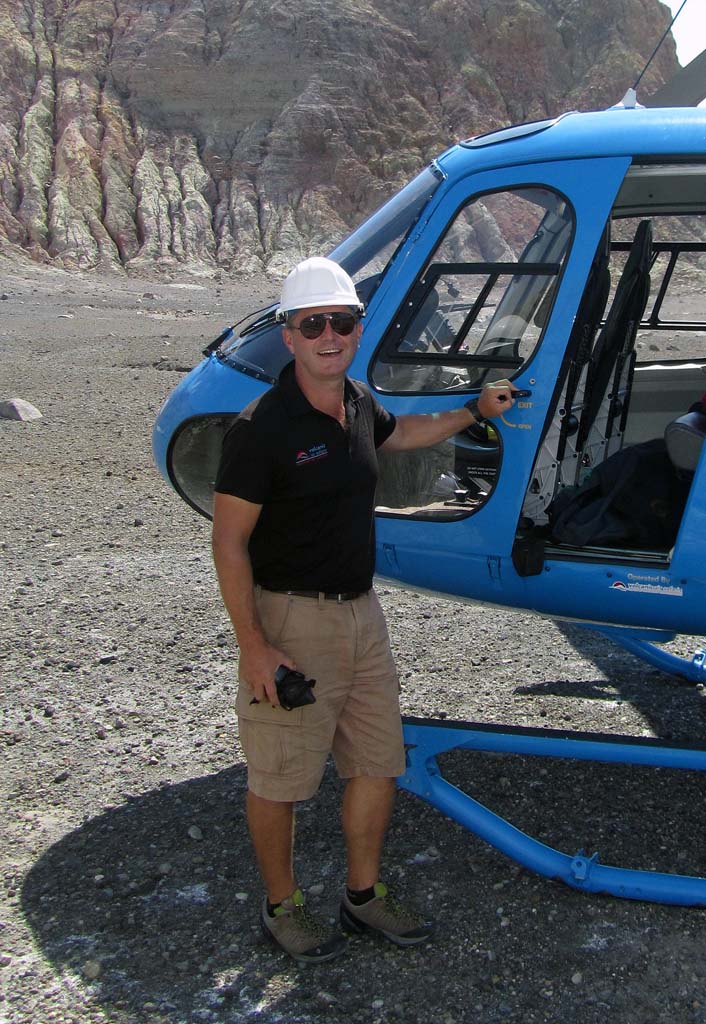
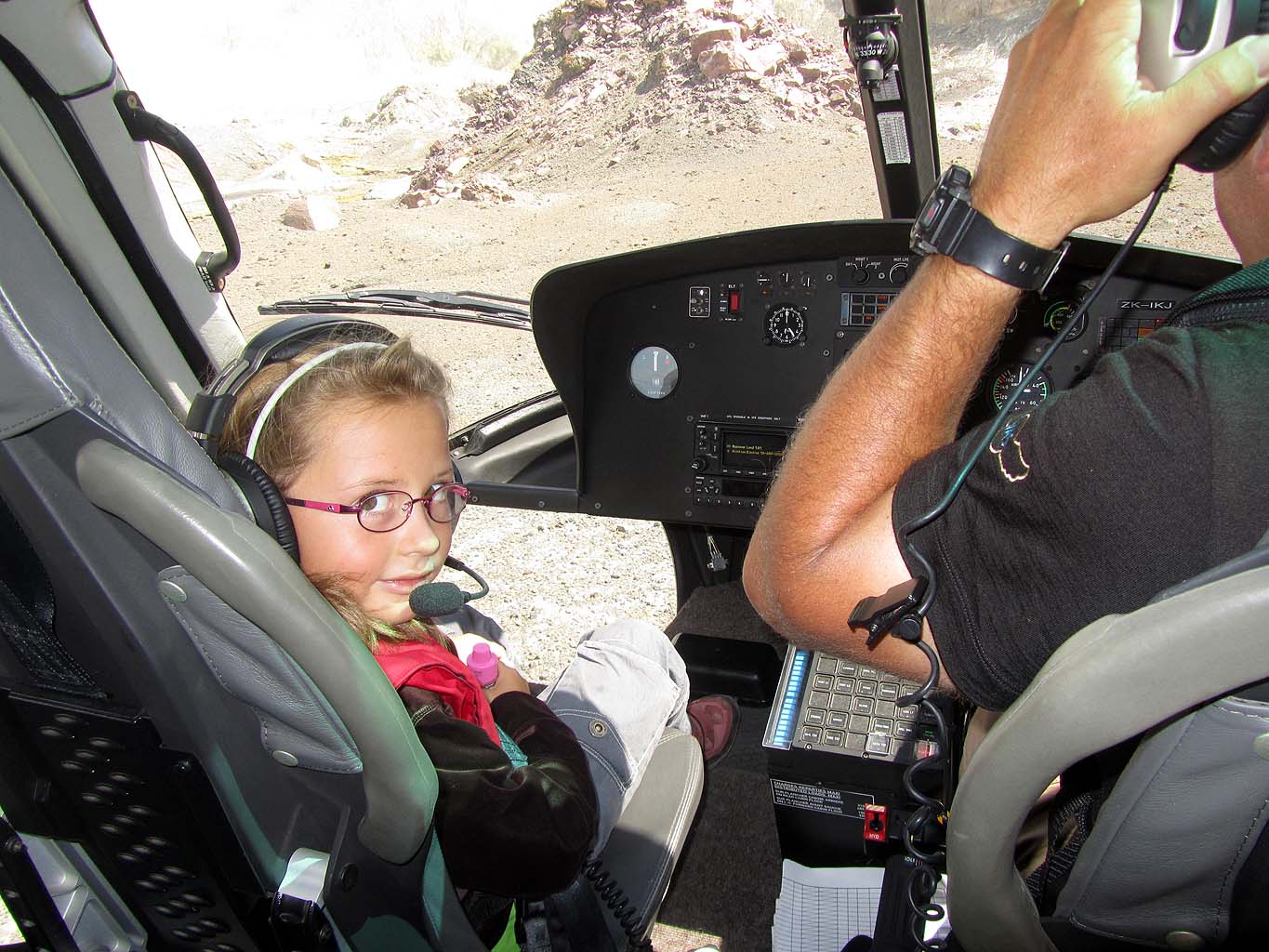
On the way back a proud Iseline got to sit in the front.
Good-bye, White Island, it was a privilege to visit you:
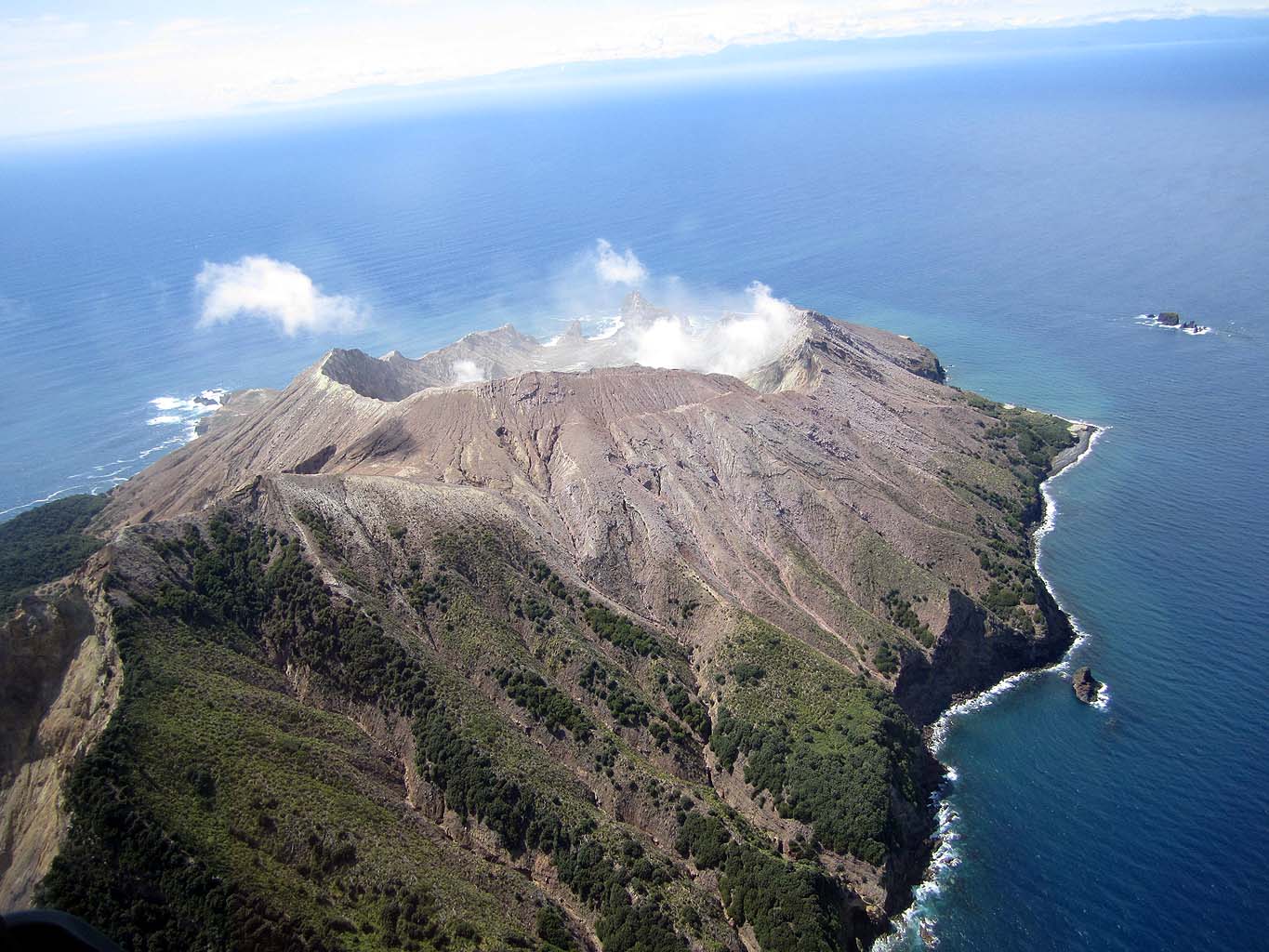
It had been an adventurous and memorable morning.
Back at the shore of the lake we had a few more sandwiches and the kids played on the playground before we headed south into more volcano country. New Zealand, like Iceland, is placed in between two moving continental plates. The north island has an active volcanic zone cutting more or less through the middle of it.
After a while we could see lake Taupo, New Zealand’s largest lake (surface area: 616 km2 (238 sq mi)), and the second largest lake by surface area in Oceania (after Lake Murrey in Papua New Guinea):
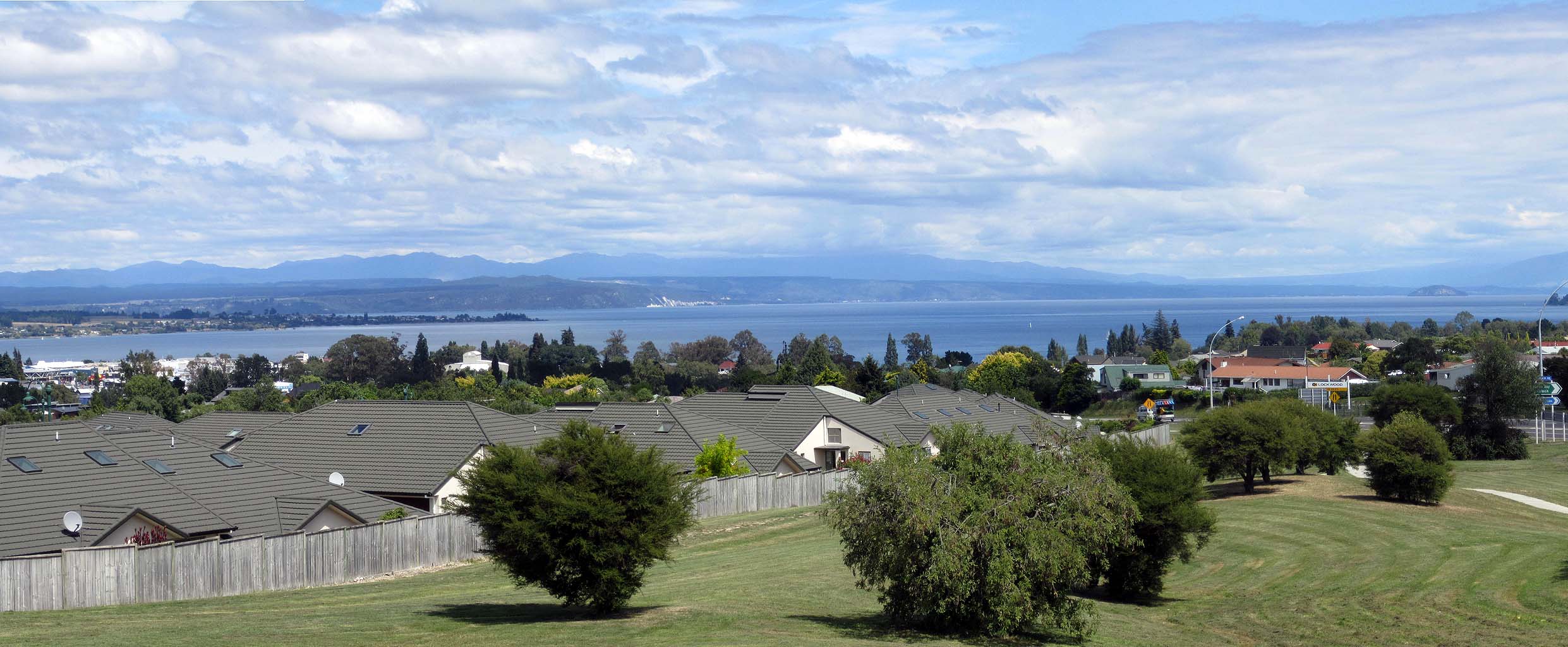
This lake is actually a volcanic crater initially formed by a gigantic volcanic explosion roughly 26 500 years ago. This eruption is the largest known volcanic eruption to occur in the last 70 000 years. An estimated 1170 cubic kilometers (280 cubic miles) of material was ejected. 1170 cubic kilometers is about 75% of the estimated volume of mount Everest. Yup, 75% of the entire volume, from sea level to the summit, of the world’s highest mountain, ejected in one single volcanic explosion. That must have been some fireworks display, folks!
Since then there have been 28 eruptions here.
New Zealand was settled some time in the 13th century, so no humans were here to witness the latest major eruption which ejected a mere 120 cubic kilometers and devastated more or less the entire north island. Still we know that it took place in the year AD 186. Both the Chinese and the Romans recorded that the sky turned red from the ashes of the eruption. This eruption was probably the largest eruption to occur globally over the last 5000 years.
There is still volcanic activity beneath the lake and one day it will almost certainly explode again.
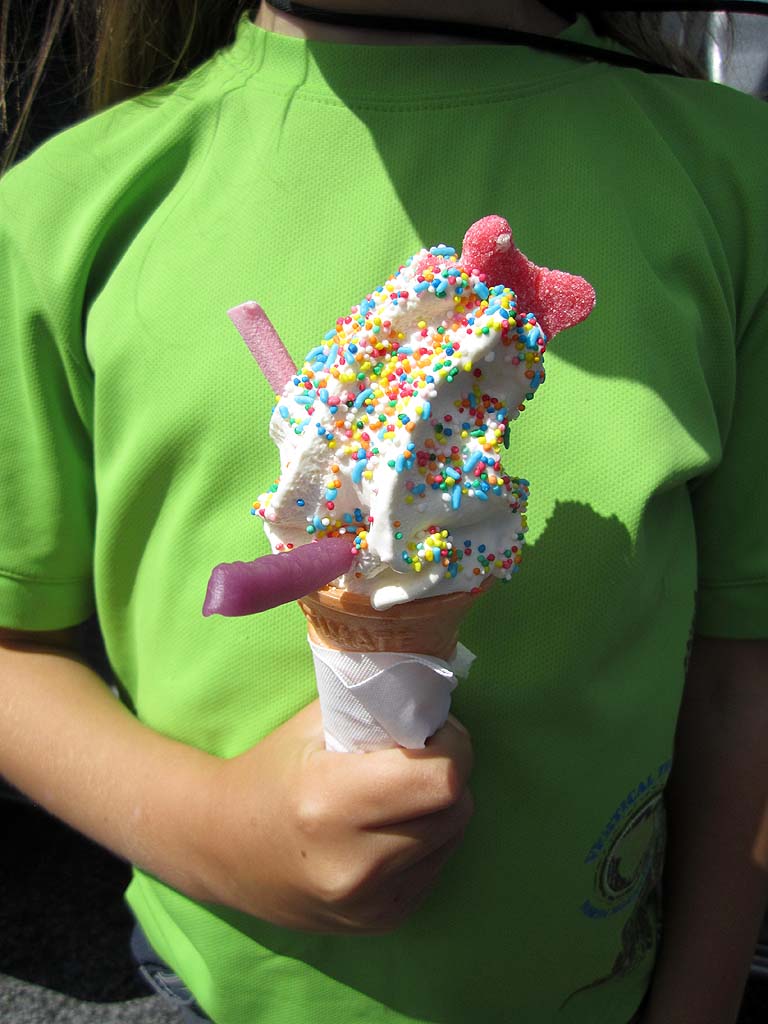
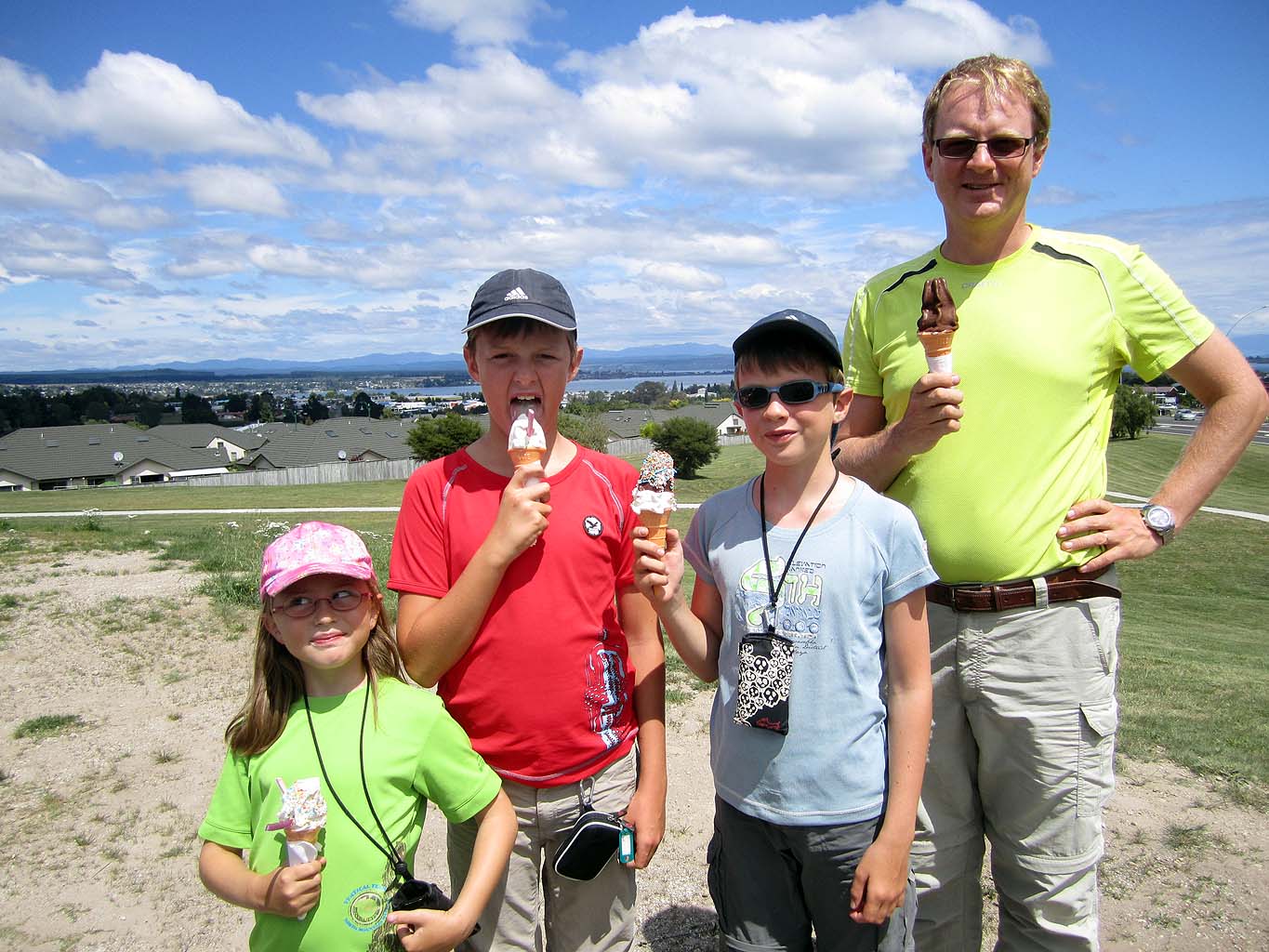
At the vista point, where the photo above was taken, there was an ice cream stand selling really cool ice creams:
We continued on until we reached Tongariro national park, where we would do a famous walk between volcanoes.
Eirik
—–

Spennende !!!
WOUHAA! je n’avais meme pas entendu parler de cette ile mais elle a vraiment l’air magnifique! j’espere que votre voyage se deroule pour le mieux?
Au plaisir de tous vous revoir en Norvege 🙂