




NZ North Island – Day 9 – Tongariro Alpine Crossing v2.0
February 17, 2011
It was Viktor and my turn to do the famous Tongariro Alpine Crossing. The 19 km hike would be a new record for Viktor.
Since Helene has blogged about this trail already I’ll try to focus on the areas she hasn’t focused on.
The Tongariro National Park was the 4th national park established in the world (1894) and is on UNESCO’s world heritage list, and one of only 25 locations being protected both as a natural and as a cultural site. The three volcanos and mountain tops here, the Ruapehu, the Tongariro and the Ngauruhoe, are all tapu (holy) and very important to the Maori.
There was a sign at the beginning of the trail explaining the origins of the park:
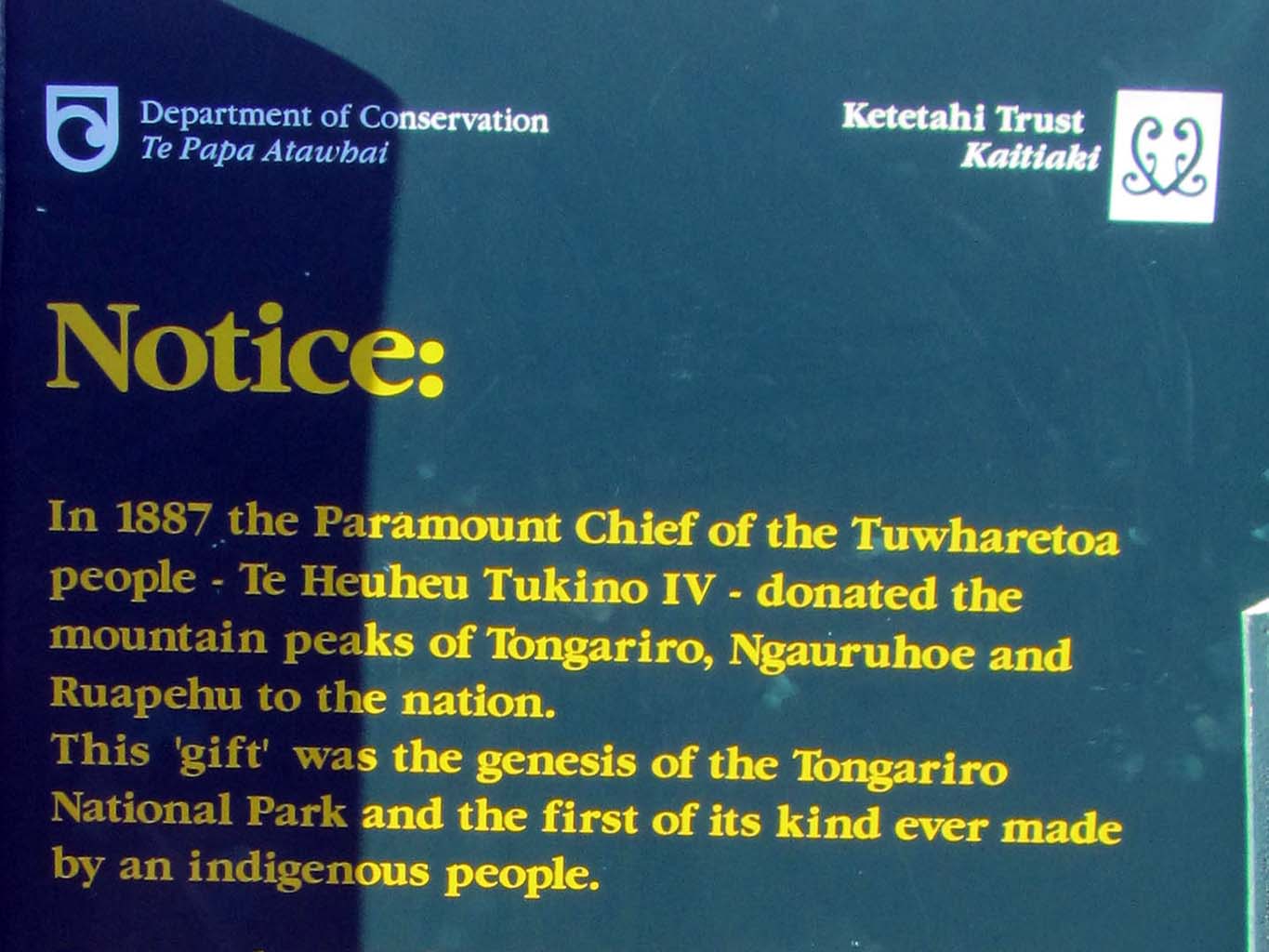
It sounds like a very nice gesture, but it was actually a desperate attempt at saving these sacred mountains from European exploitation. The Maori understood what was happening to their land and the three mountains were donated under the condition that the area would remain untouched. It worked. The national park was established and the area protected from exploitation.
We are now still in the Taupo Volcanic Zone which also includes White Island and Rotorua. The volcanos here are active and the latest eruption occurred in 1975.
Adrian, Iseline and Helene joined us in the morning for the first flat part of the crossing. We needed to get Iseline out a little and the other two needed to use their aching legs after yesterdays strenuous hike. The weather was perfect, but a bit chilly and windy. We could notice that we were in a mountain area and not in a tropical climate anymore.
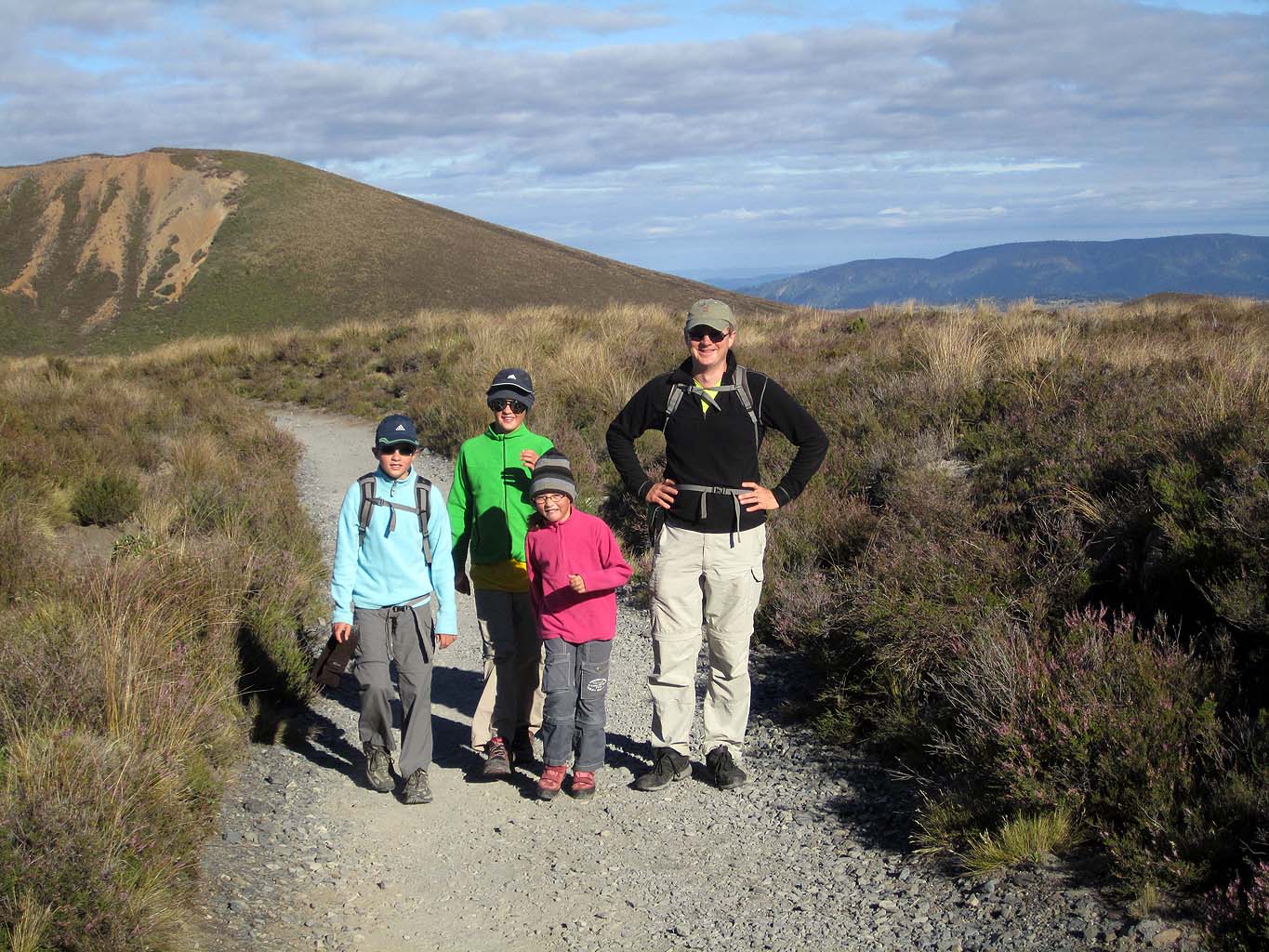
Then the sun started heating us up:
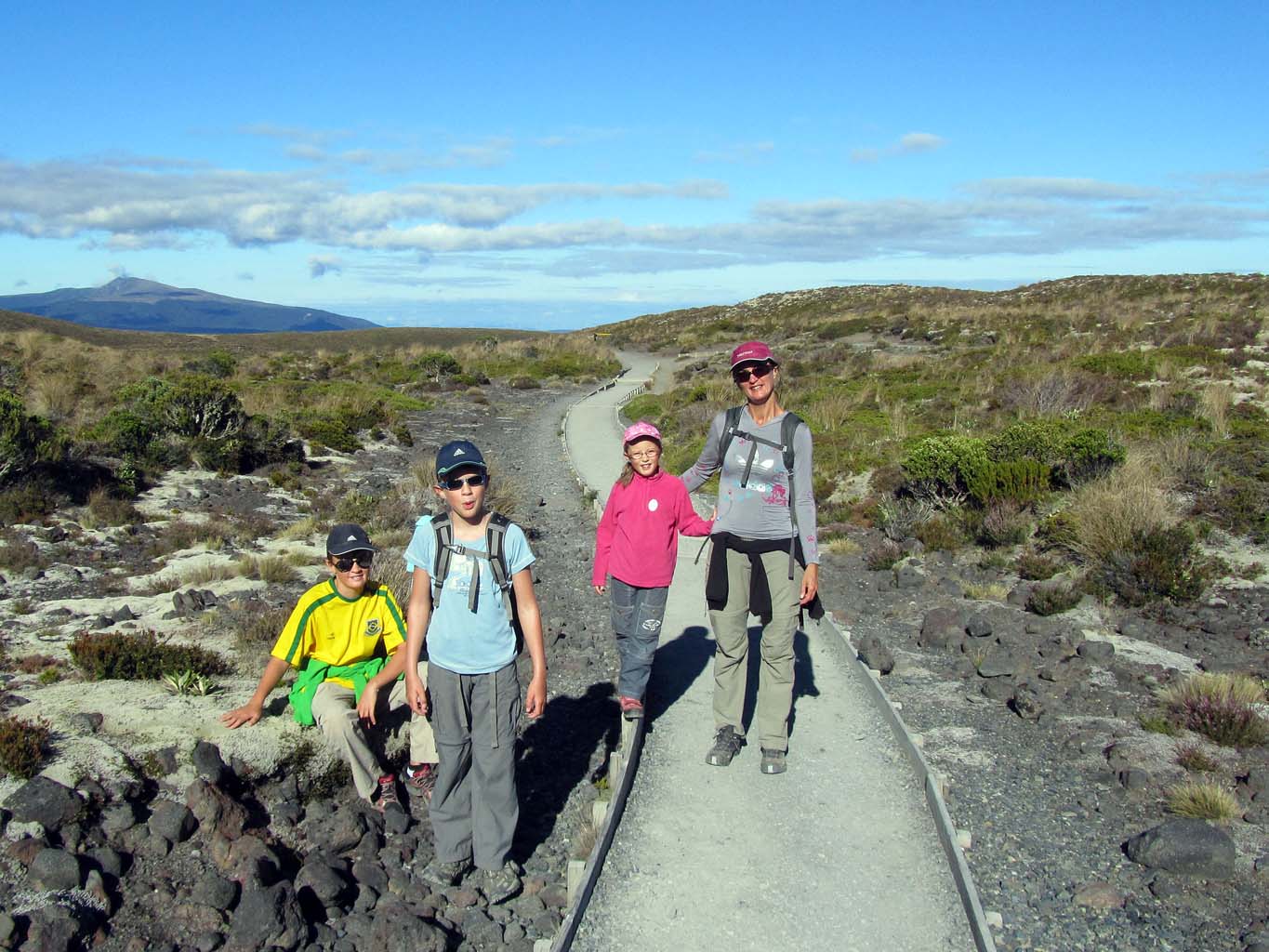
After a few kilometers it was time to say good-bye to the others. The sky cleared as we started our ascent:
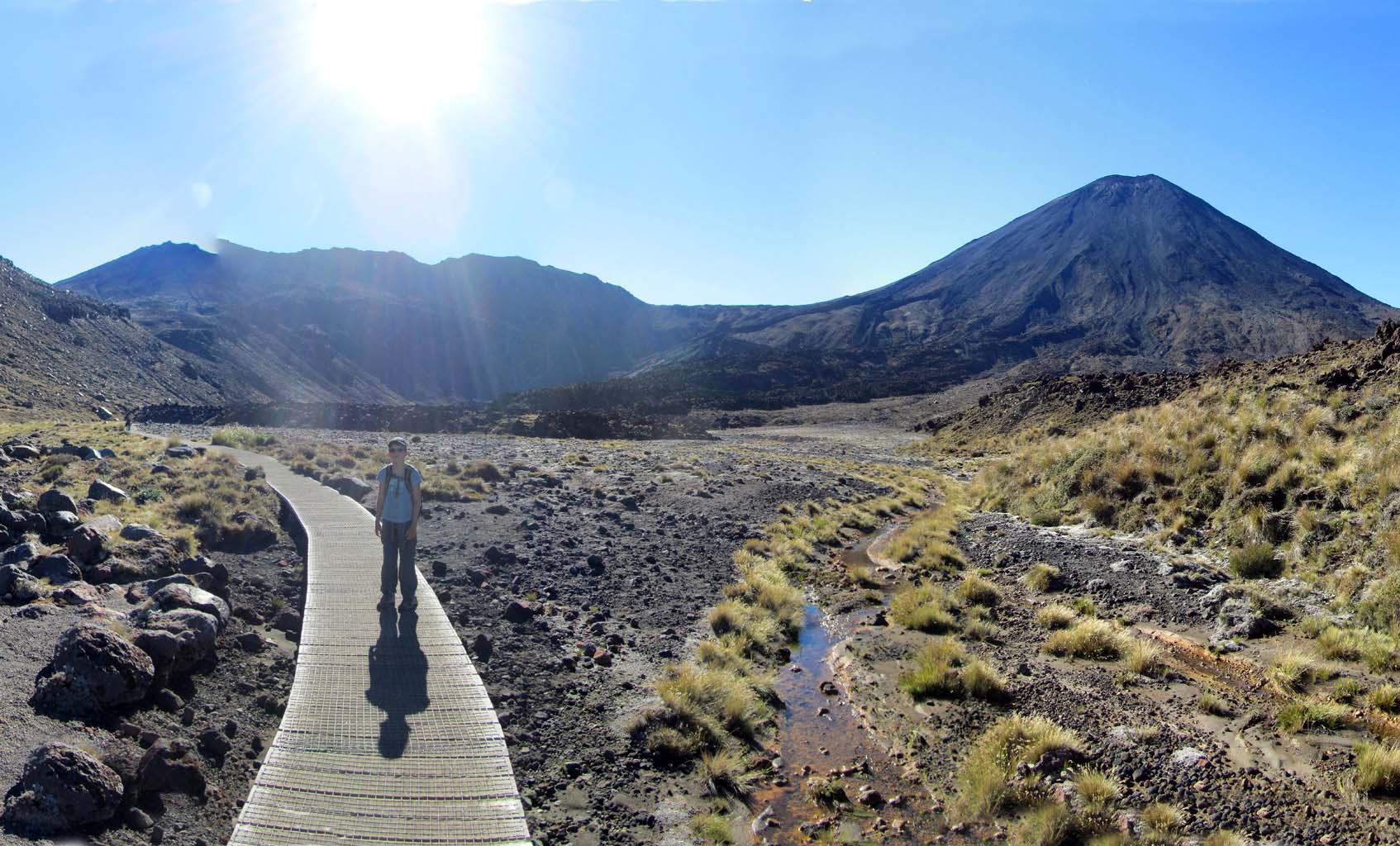
After the first flat part there is a very steep climb. We couldn’t complain about the quality of the trail, This was a highway compared to walking in the Norwegian mountains:
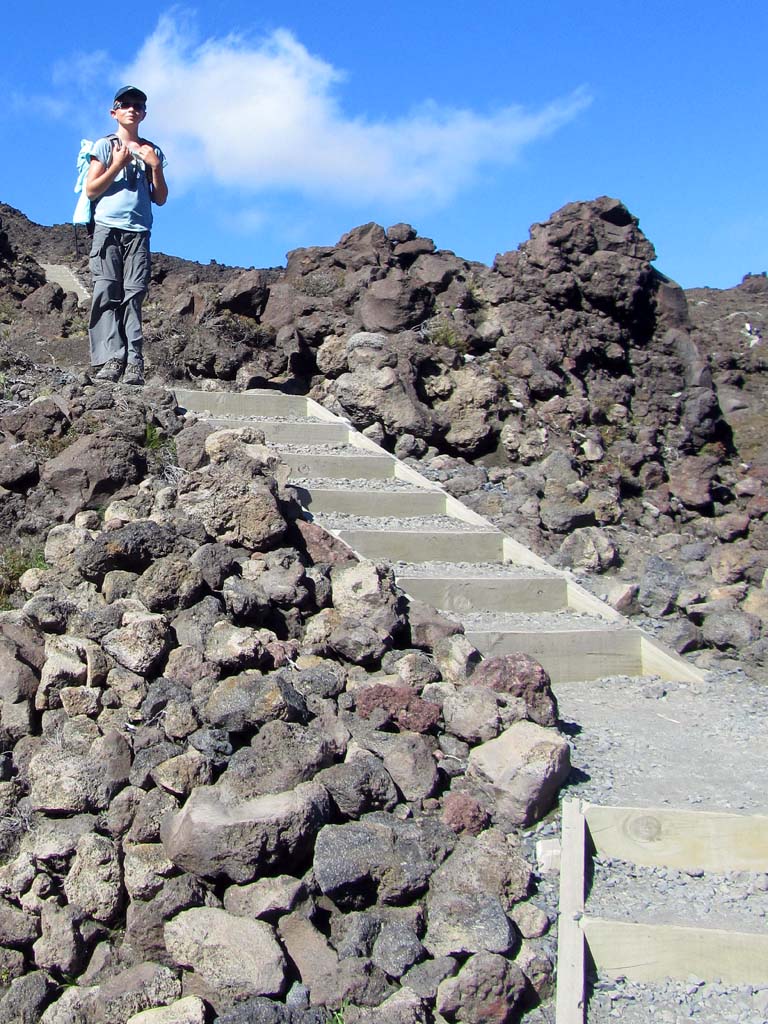
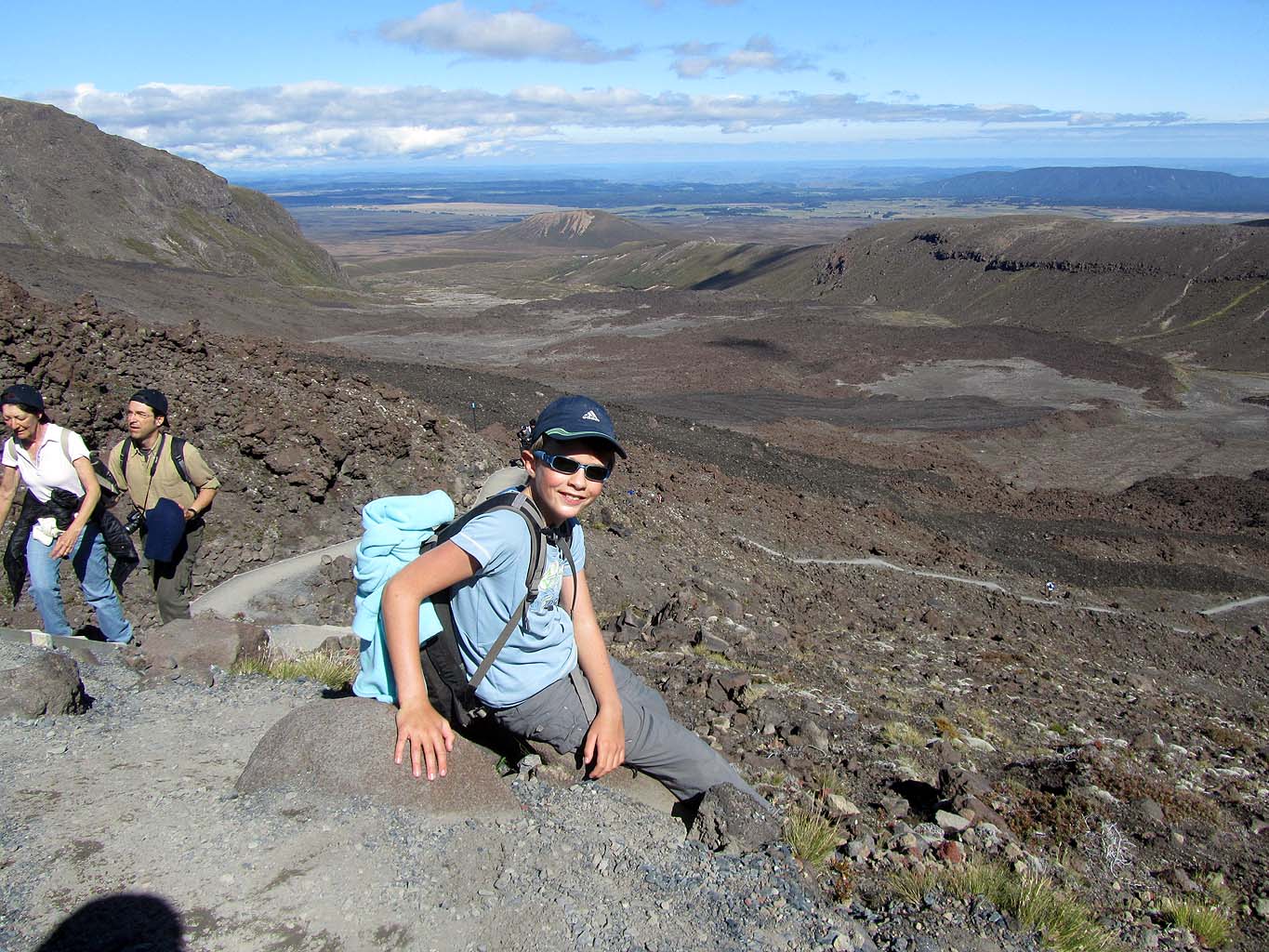
Well deserved break. Did we just walk all the way up that path?
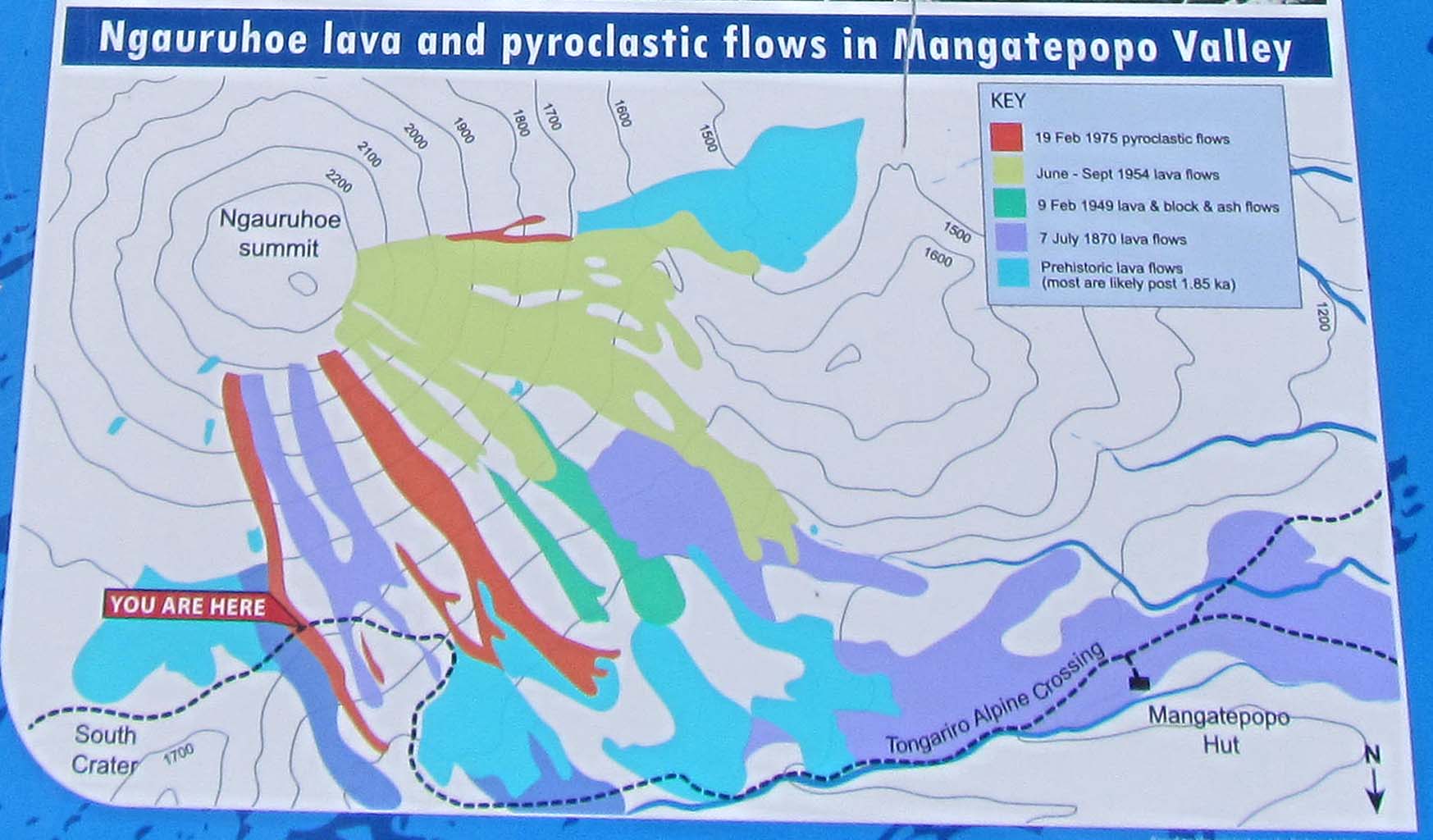
When we reached an altitude of 1600 meters (5250 feet) there was a very informative sign showing the lava flows of previous eruptions and giving advice for what to do if one or more of the volcanos should decide to erupt. “Stay away from the valleys” Sounds like good advice if lava is flowing.
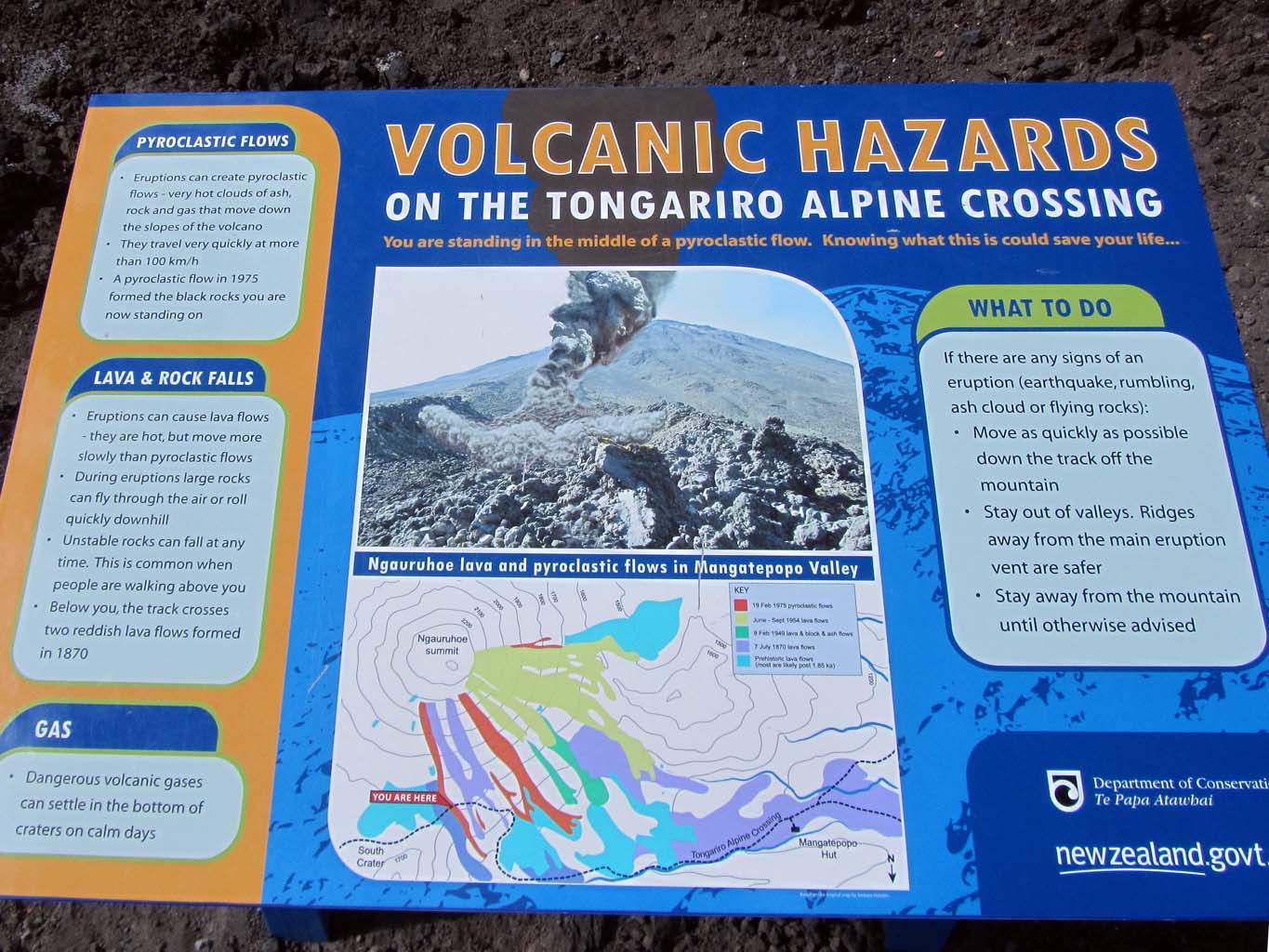
The part showing the lava flows was interesting. We were standing on lava rock considerably younger than me when we read the sign:
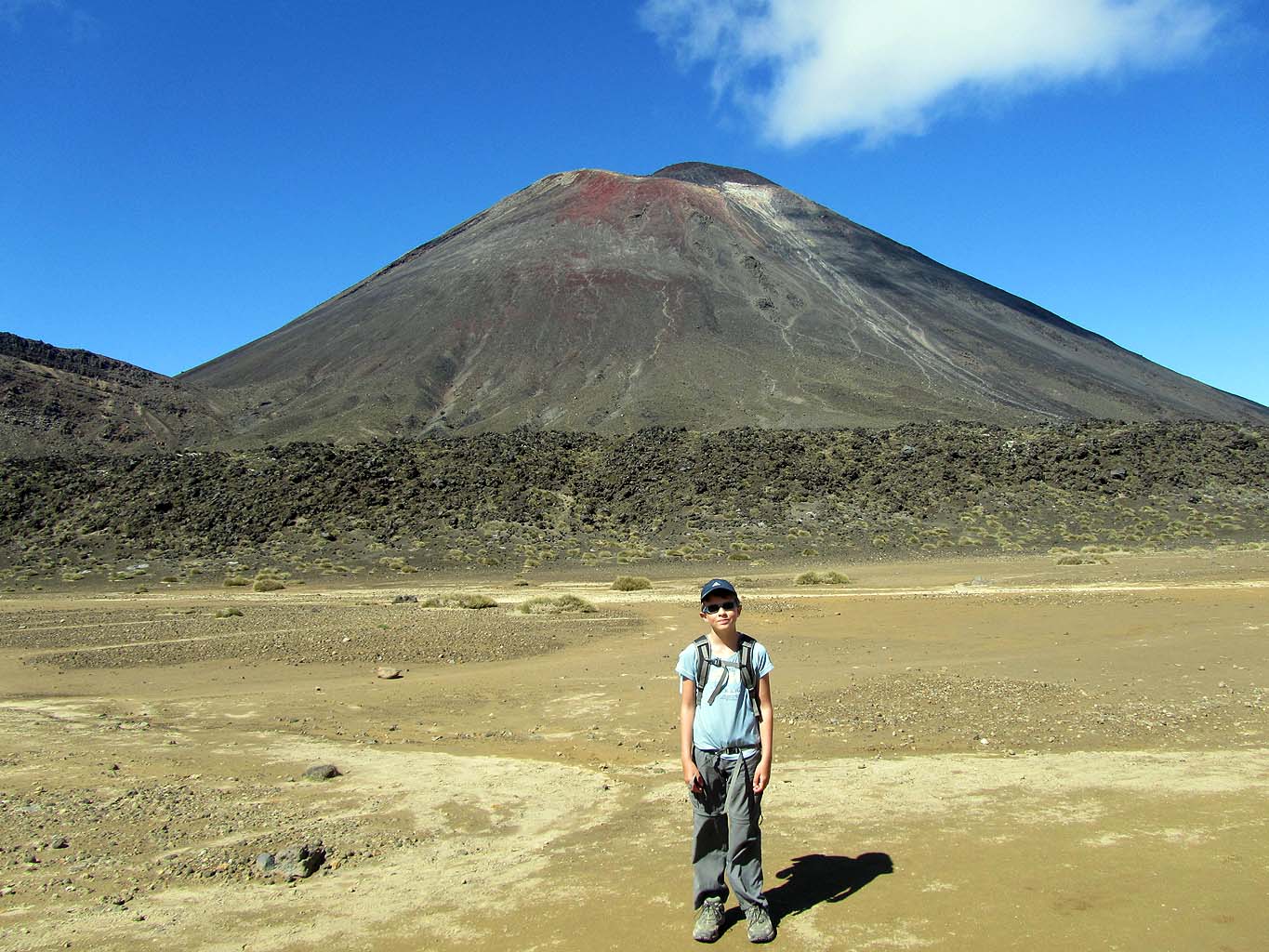
After a further climb we reached the flat crater and finally got the side-view of Mt. Ngauruhoe where we could recognize it as Mt. Doom from the LoTR movies. In our famous series of photos called “Viktor and…,” her is “Viktor and Mt. Doom”
After a while I developed serious blisters on both of my heels. I had forgotten that my walking shoes had been bought in Argentina when we thought we had lost our luggage. I have been using sandals on the islands in the Pacific, so the shoes hadn’t been worn in yet. Proud of being well-equipped and a seasoned trekker I got out the compact first-aid kit from my back-pack. Now, where were those band-aids? Full stop. Grumble, mumble, I now remembered that I had taken them out when Iseline needed a band-aid and I had forgotten to put them back in again.
There was no way I would be able to finish the trek without some sort of protection for my heels. I had a second look to see what was at my disposal. I found some strips (thin strong tape, used when you cannot stitch a serious wound) and some sterile wound pads. I cut the strips even thinner with my knife to make more pieces. Presto, heel-saver:
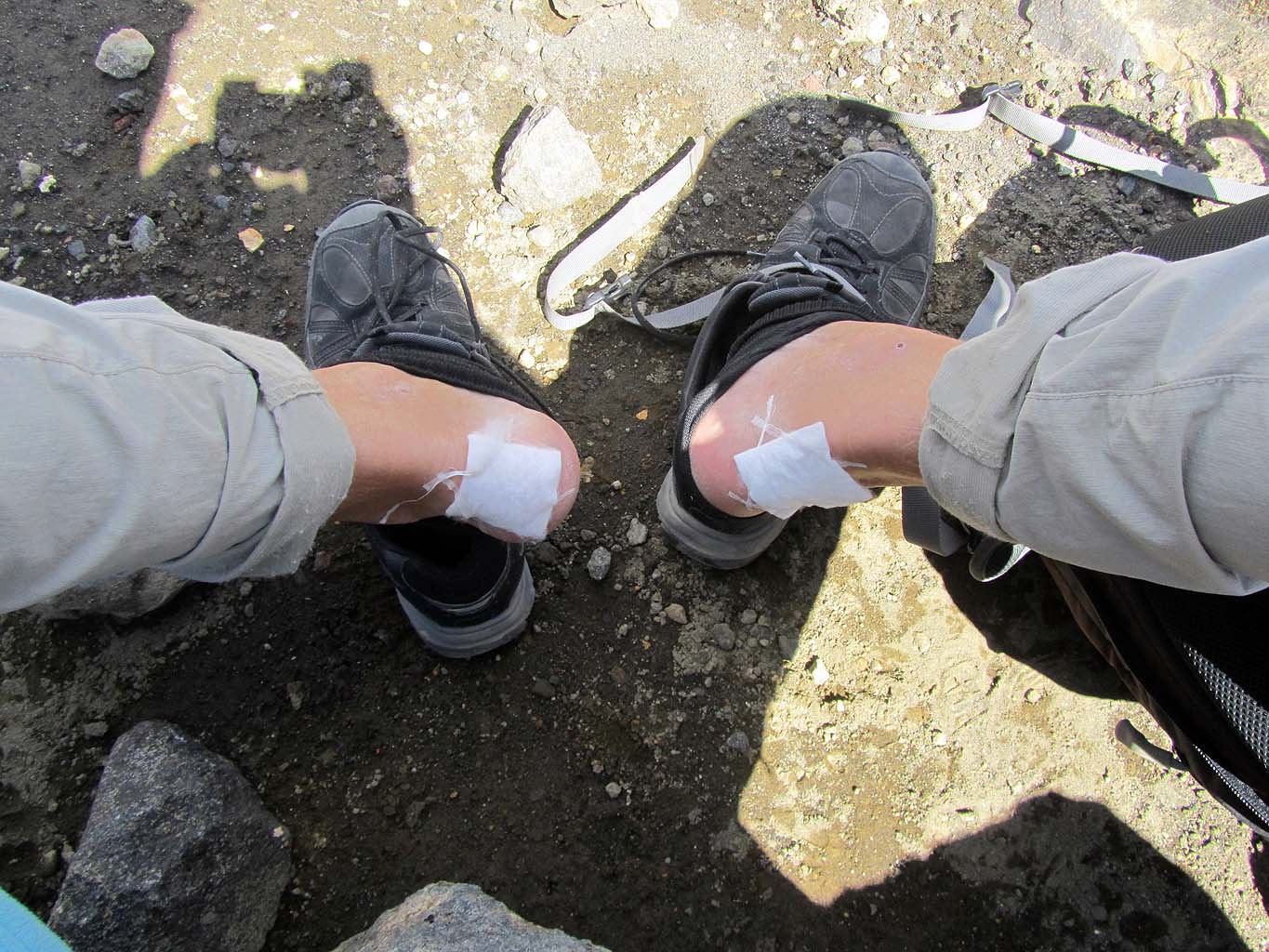
This is incidentally the only photo taken of me during the trek after we left Helene, Adrian and Iseline behind.
The next day Helene searched through the same kit and found some Compeed; specialized band-aid for foot blisters. No further comment.
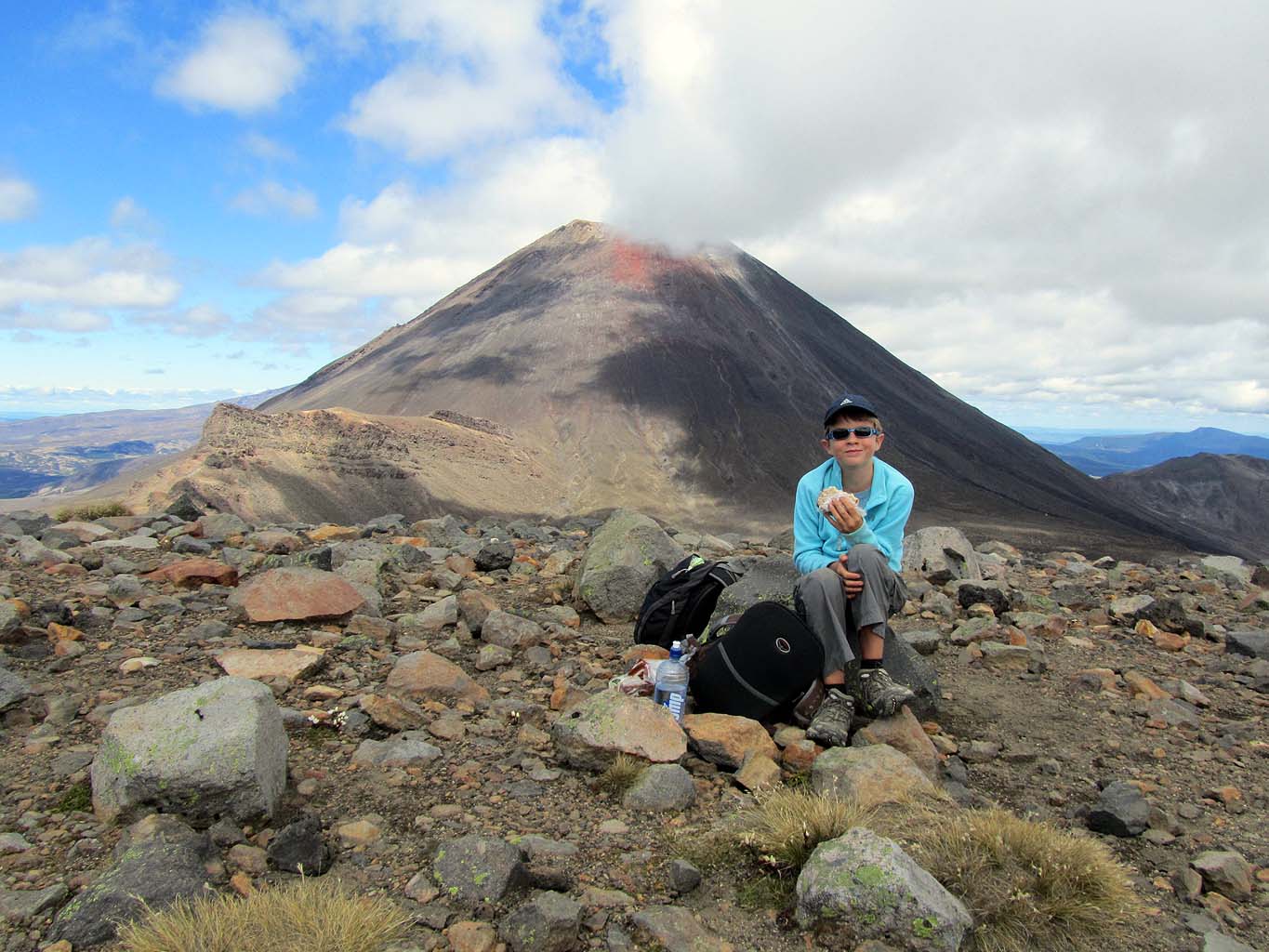
We did our lunch break at 1900 meters (6200 feet) altitude:
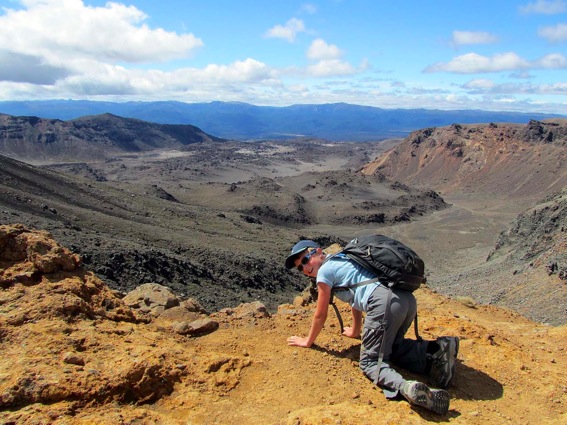
It’s better to crawl when you have a cliff on the other side :
We climbed down the steep gravel road towards the colored lakes:
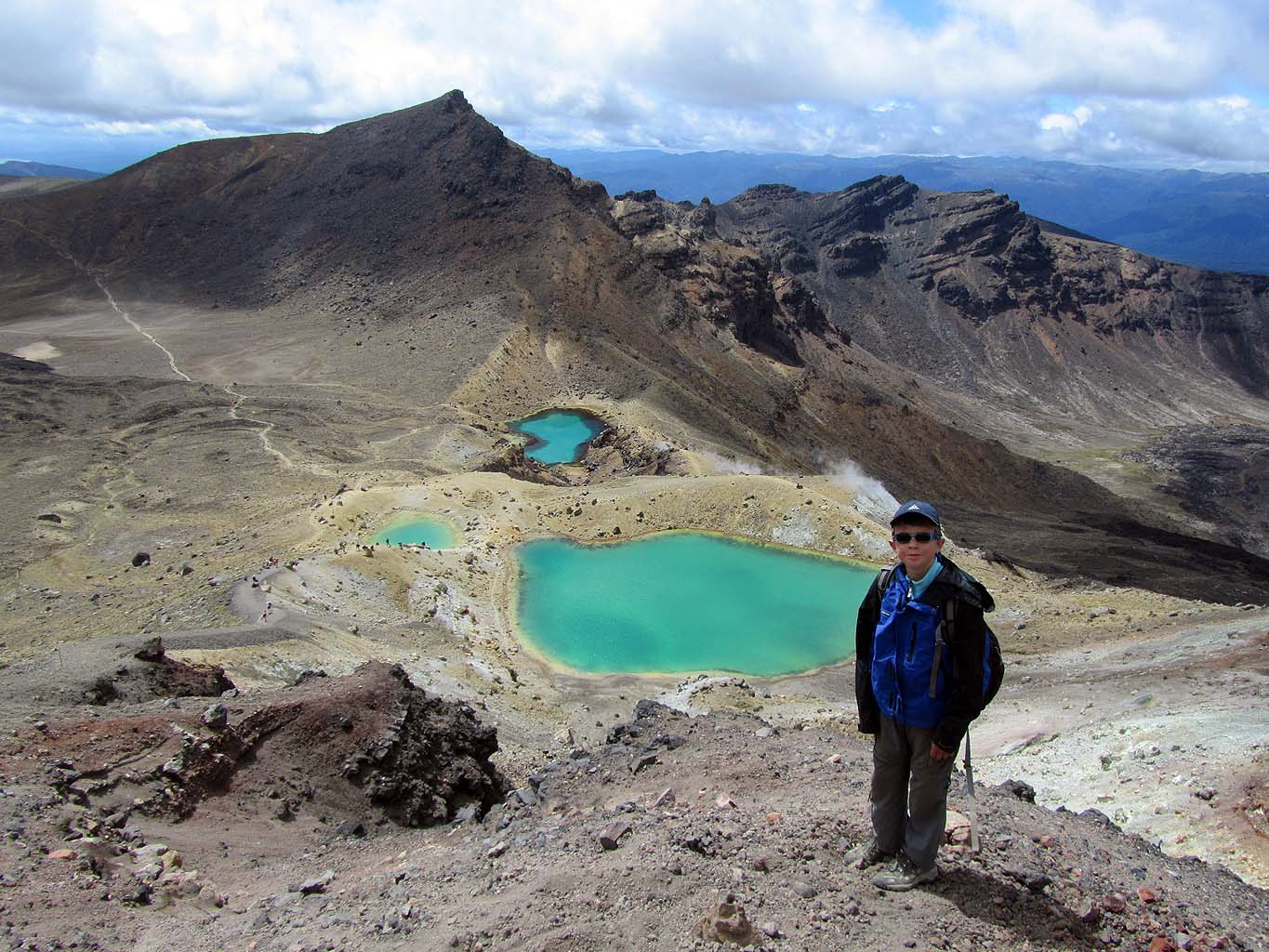
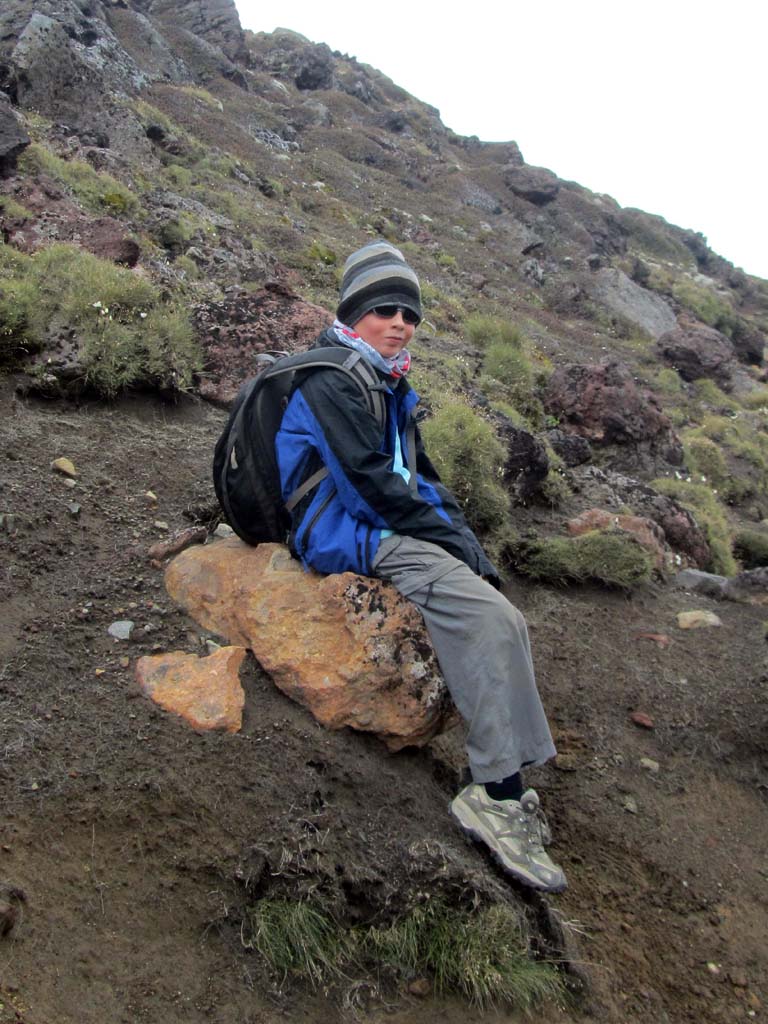
When we passed the blue lake the weather changed in a few minutes. Clouds covered the sun, a strong wind set in and a few drops of rain fell.
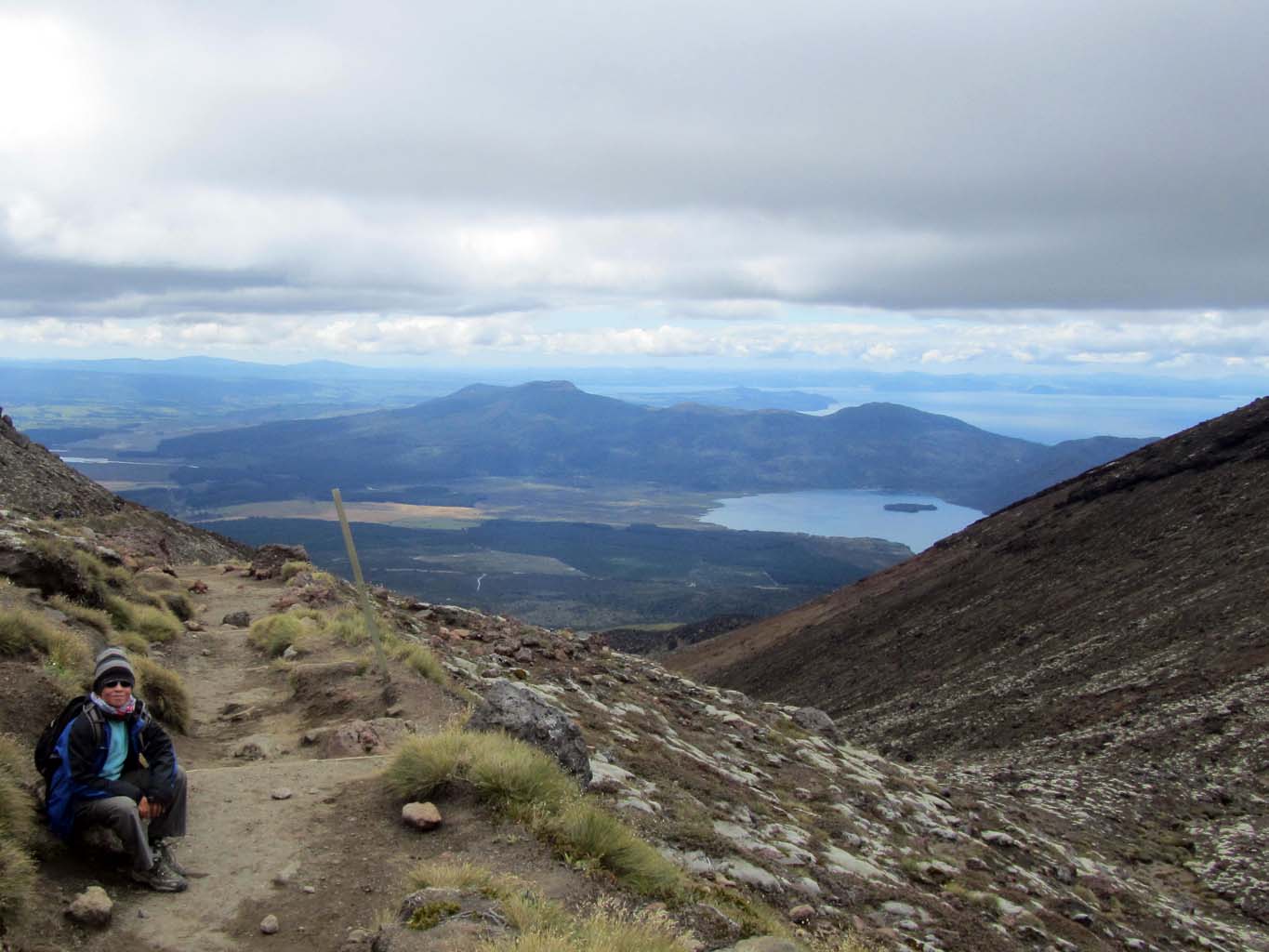
But soon we could see lake Taupo far away. The worst was over and we knew the rest of the trek would be a very long descent.
On our way down we passed close to the Ketetahi Hot Springs and were met by this sign:
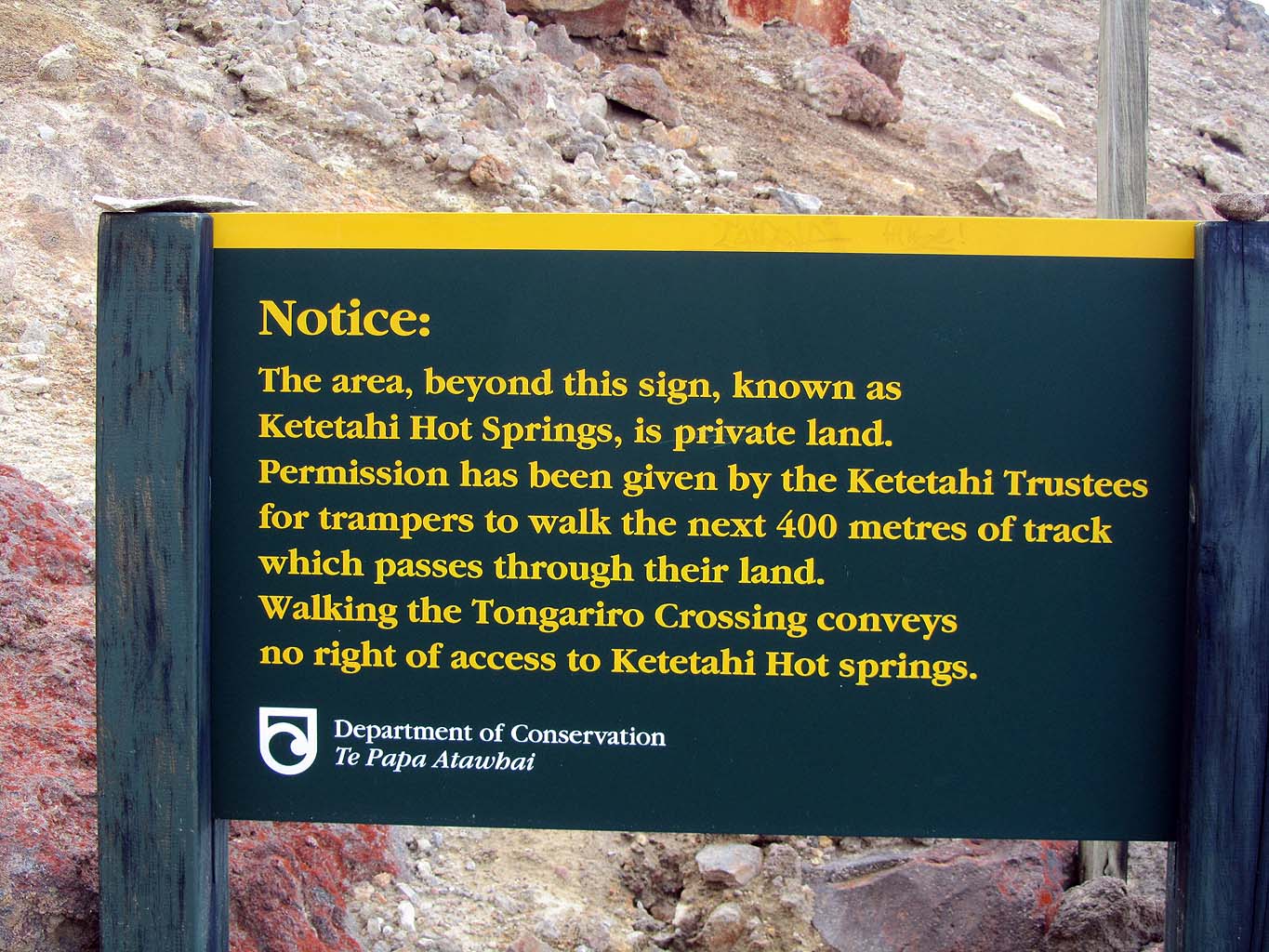
So, it seems we should be very grateful to the Ketetahi Trustees that they allow us to pass their land, even though we are in the middle of a national park and the land we are talking about is just plain wilderness.
We have seen it several places, the concept of owning land here seems to be very close to the one that also exists in the US. For someone like me, who has grown up in Norway, the idea that you can legally forbid someone to walk on wilderness land, just because you own it, is a strange and sad one.
How can you have a free country when people cannot use the land?
In Norway the right to use anyone’s land is spelled out in the law. If land is not cultivated or inhabited anyone has the right to walk, ski, bike and ride a horse on it, camp on it and collect berries and mushrooms that grow on it. This right is called “allemannsretten,” often translated as “The freedom to roam.”
Somewhere along the descent we were overtaken by two other wanderers. They were curious about what language we were speaking and what we were talking about.
Since the very beginning of the trek Viktor and me had been playing the game of 20 questions. The rules are simple. One person thinks about a concept or object, and the other person asks yes/no questions. You have 20 questions to find out what the other person is thinking about. It is fascinating how often it is possible to find out.
We were playing a simplified version where the target had to be an animal and we only got 15 questions.
When the two wanderers heard about our game they joined in. They were Kim and Julia. Both were Dutch, but Kim had moved to New Zealand when she was just a few years old. Julia, her cousin, was now here to visit and they were doing a road trip together.
They became our walking and talking companions for the last hour and a half of the trek. Here they are:
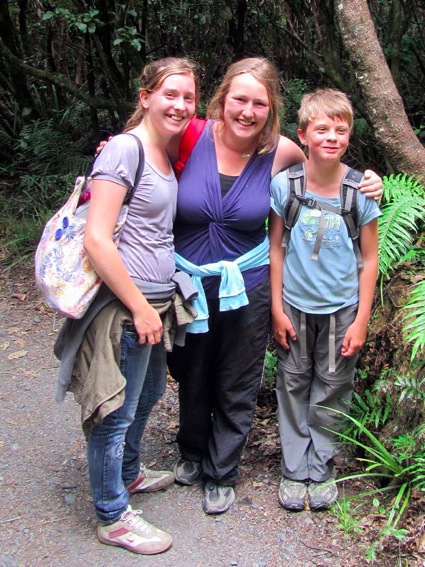
Kim had worked for 3 months at an orphanage in Rwanda, because she wanted to make a difference to at least some of the children who are suffering in this world. She was planning to go back and stay longer this time. Her hope was to be able to start her own orphanage.
I could sense her young enthusiasm and non-disillusioned idealism. She really wanted to change the world to a better place and was doing something about it. This planet needs more people like her.
We finally reached the end of the trek and said good-bye to Kim and Julia. We had used a little under 8 hours and Viktor had been fantastic on his personal record trek. Not once did he complain or loose his energy.
Our feet hurt, though, and Viktor fell asleep very easily and very early in the evening.
Eirik
—–

I like the concept of the right to roam – but in the US you do so at your peril! See American Indians, mid 19th century…