




Machu Picchu – Day 1
November 16, 2010
Another short night. Getting up at 6 was tough for everyone, but we all knew what was waiting for us today: One of the highlights of the voyage.
After a half hour drive we reached the train station at Ollantaytambo, back were we saw the ruins yesterday. We had sort of expected a rough train ride, maybe even with wooden seats and the occasional chicken in a cage brought by one of the locals. Not so. It turned out the travel agency had decided to pamper us and had booked us in on a train called the Vistadome.
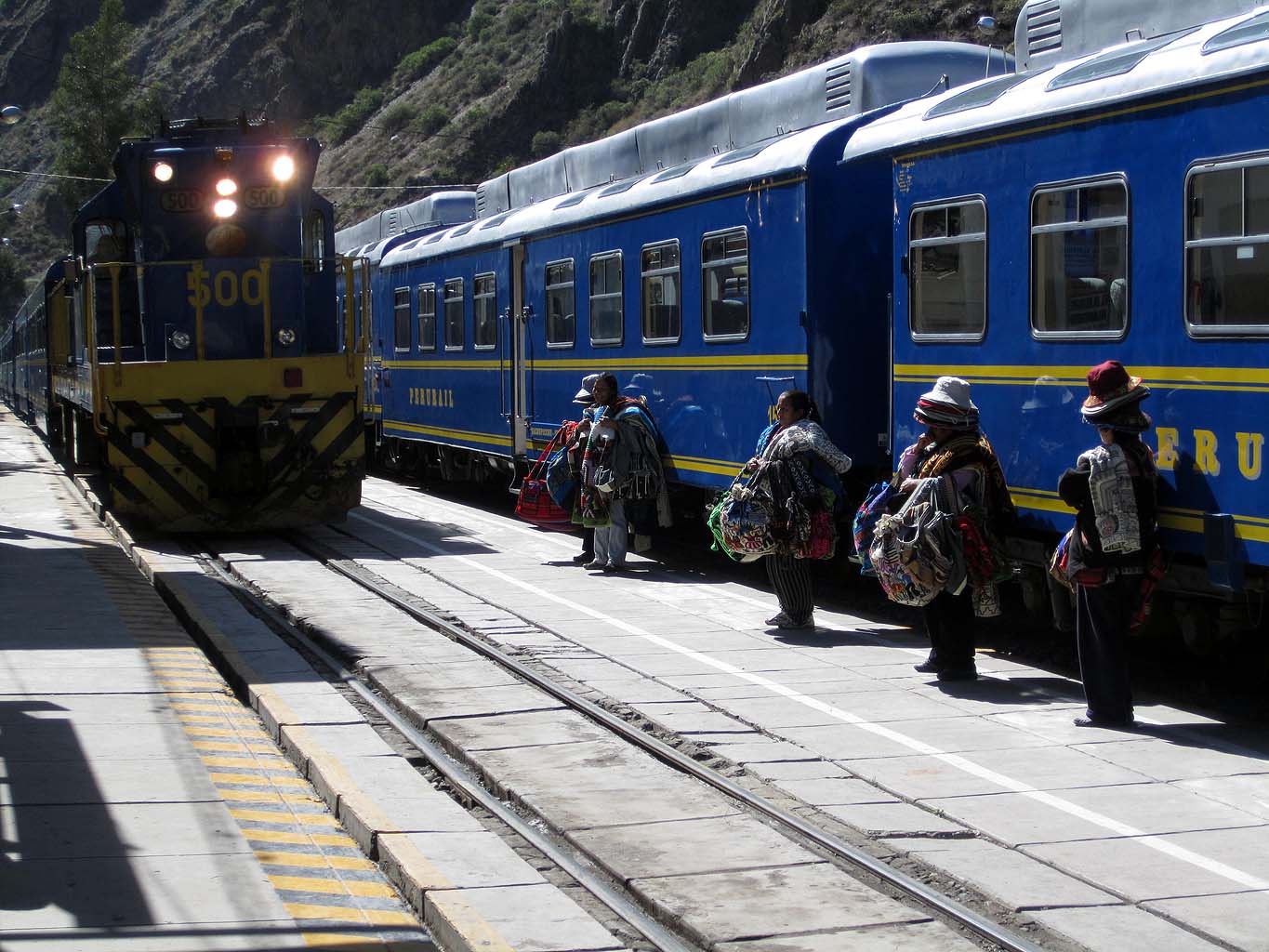
Here is our train on its way in to the station. Sales representatives with am impressive mobile storage capacity to the right. Notice the number of hats.
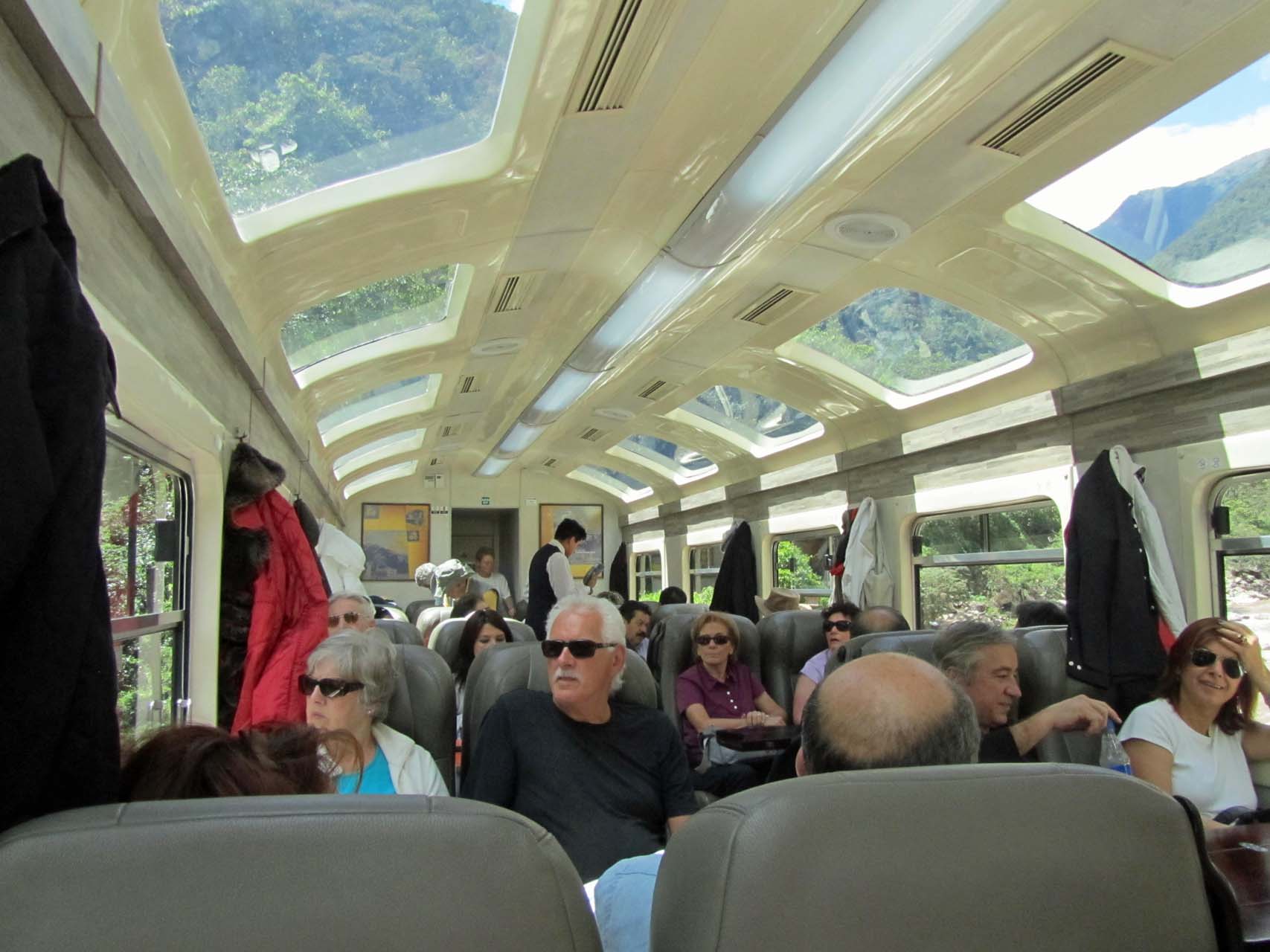
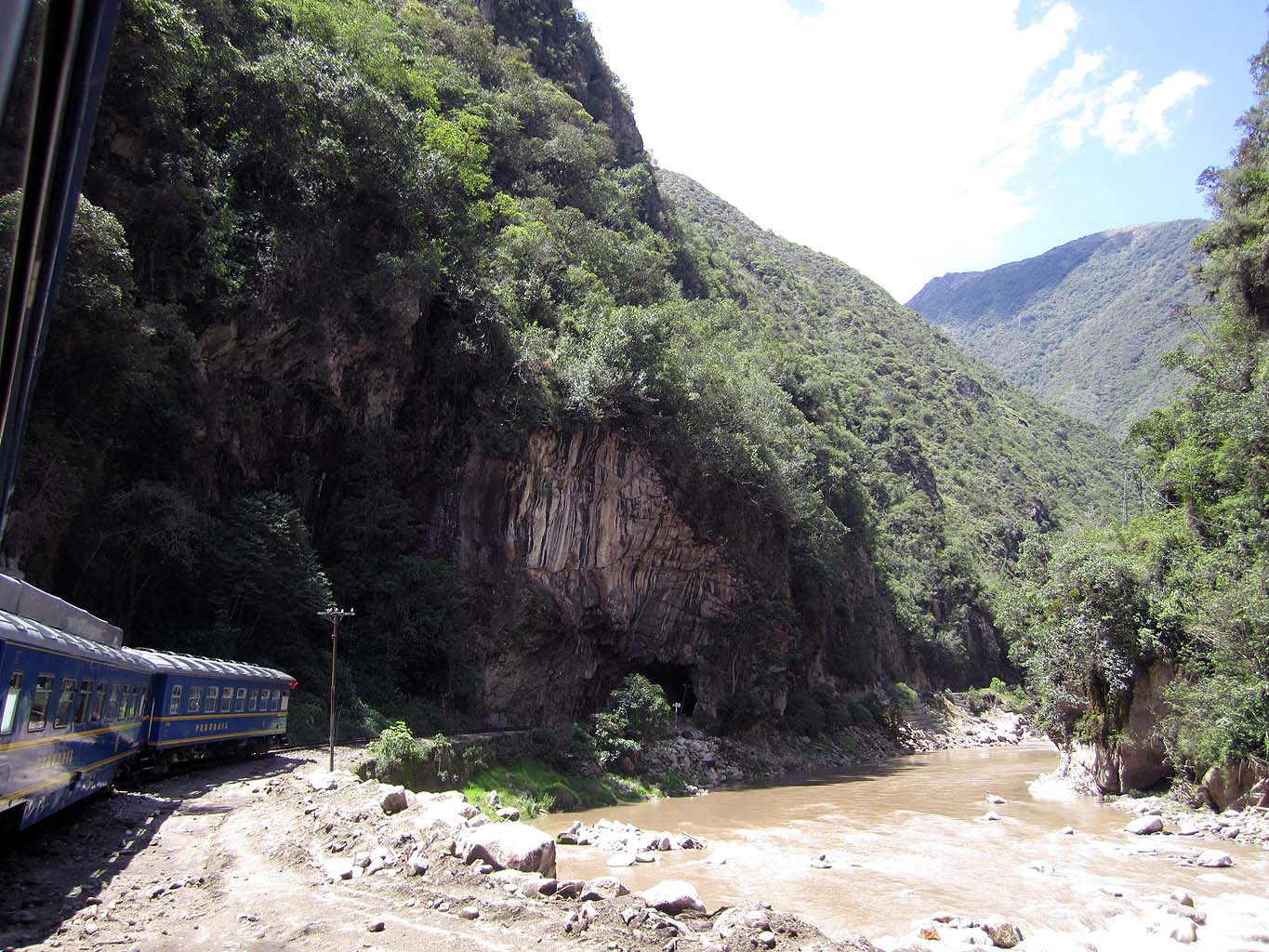
There were windows all along the ceiling. This is probably one of the few places in the world were such a train really makes sense, The ride to Agua Calientes went mostly through a very narrow canyon and the ceiling windows allowed for some breathtaking views along the way.
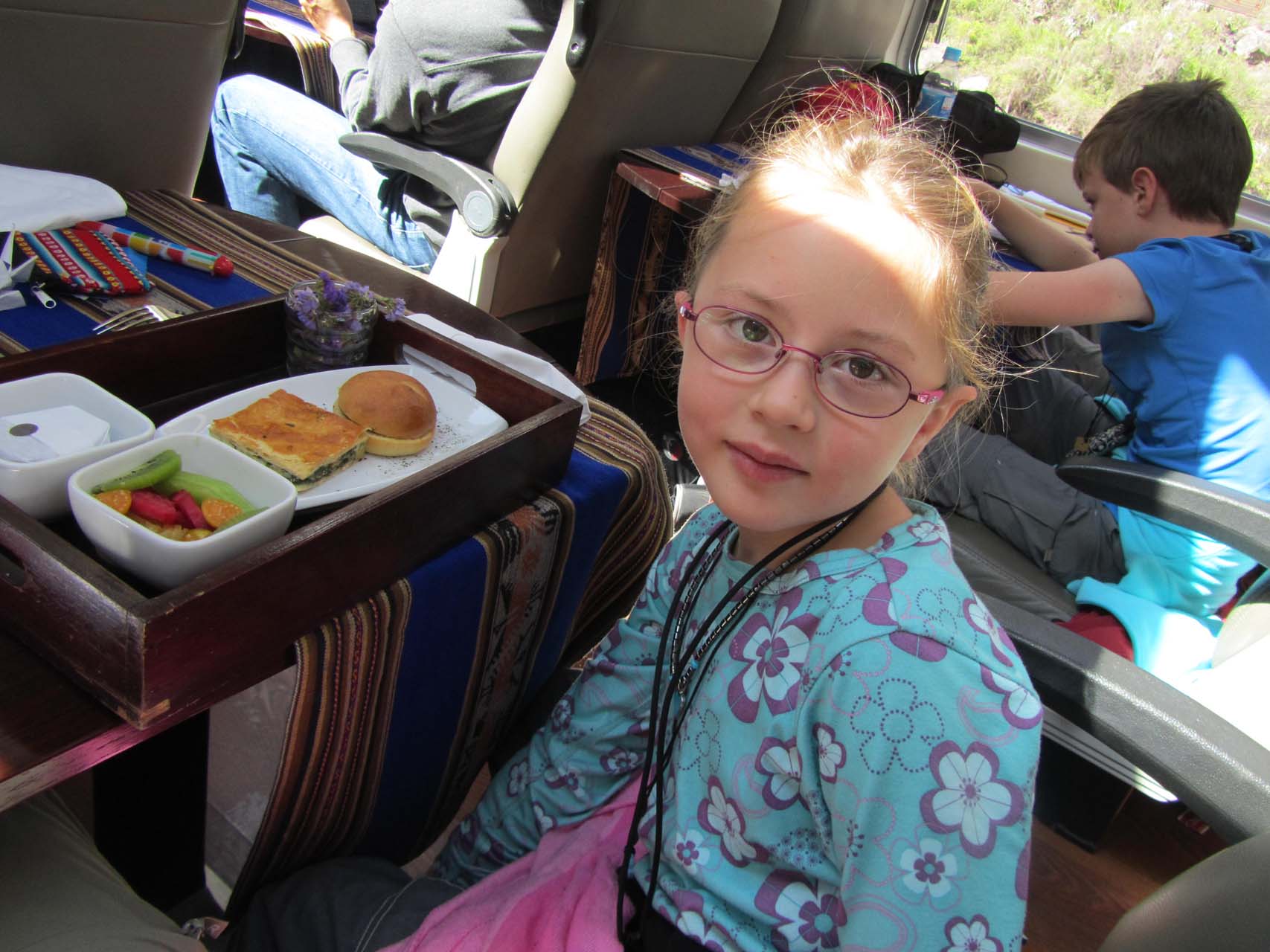
I have never taken a more comfortable train ride. To top it all they served us a breakfast worthy of first class on an airline.
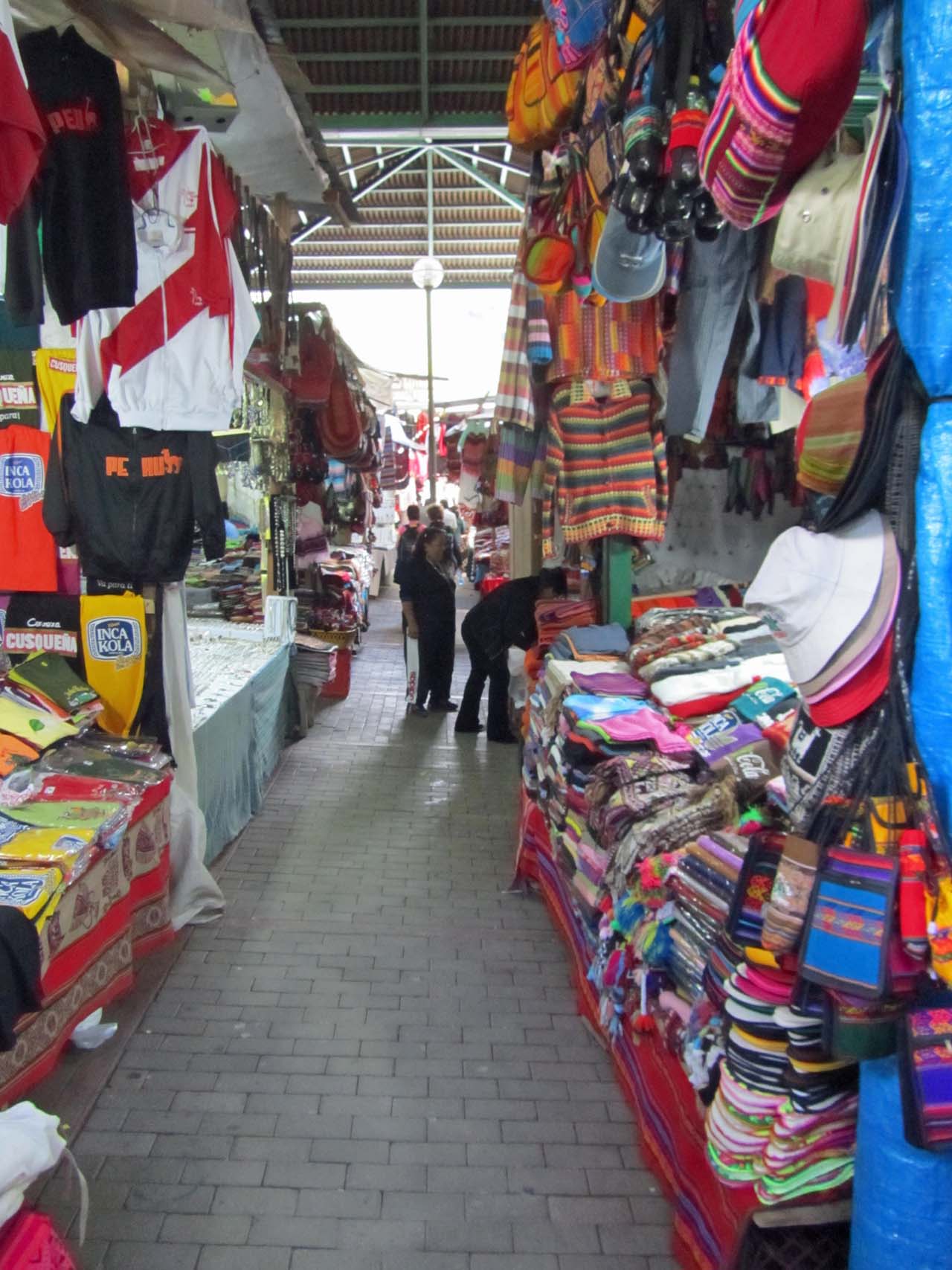
We arrived in Agua Calientes and tourist chaos. The feeling of being part of a flock of sheep was not far away. As we left the train we had to go through a market that seemed to never end in order to reach the bus station. All tourists going to Machu Picchu have to come through here by train and walk through this market. The supply of customers is good in other words, but competition must be fierce. There were not many different kinds of shops, they all sold more or less the same things.
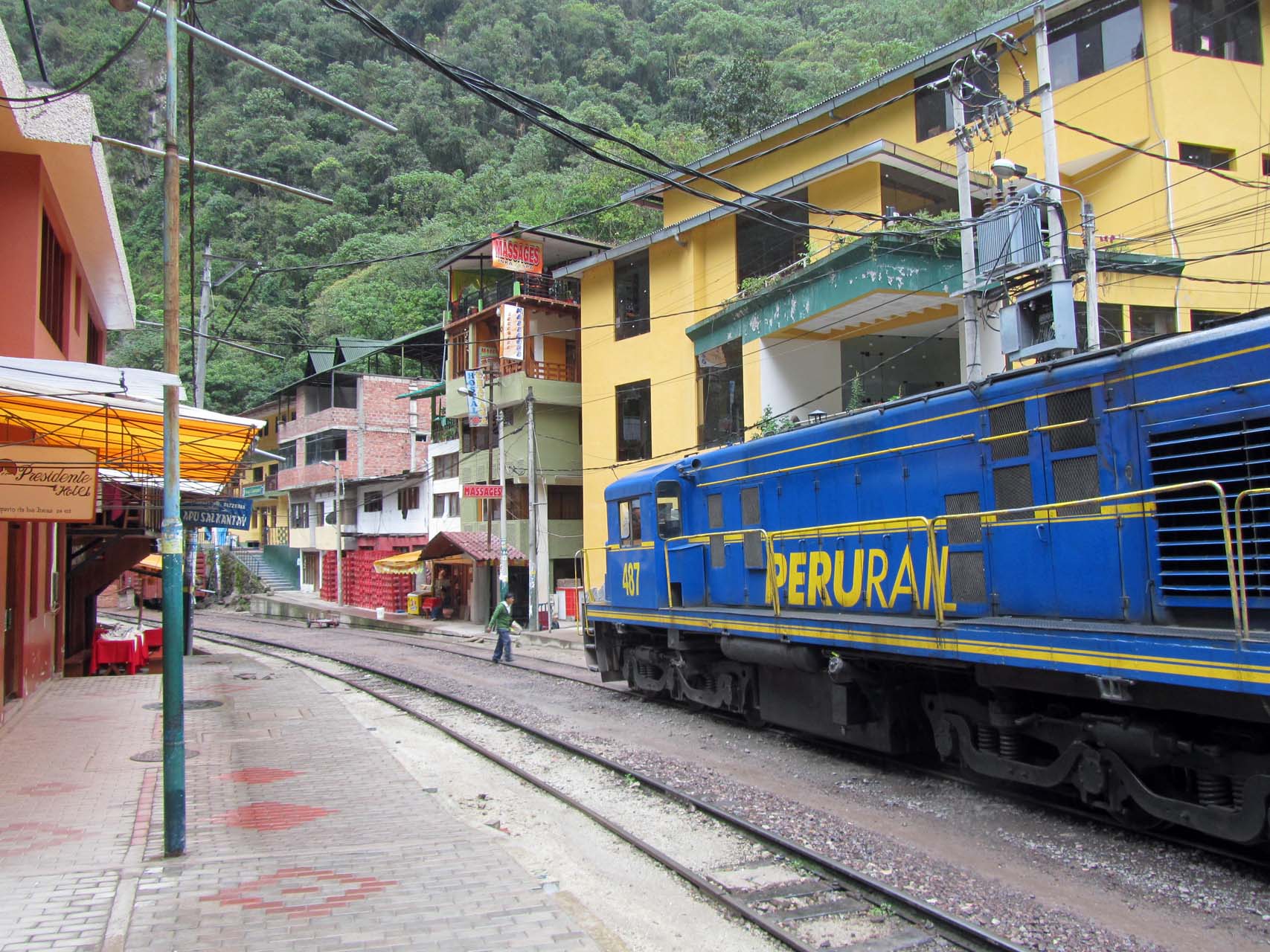
The city itself is unfortunately a messy chaos. As soon as you leave the main street there are thrown away plastic bags and what seems to be leftovers from construction everywhere. There are no cars, since the only way to get here is by train. The main street is a side track of the train line (!) and seems to be used as train parking. I´ve never seen anything like it.
The bus ride up to Machu Picchu was very well organized. There is a bus every 5 minutes and the busses seem almost brand new and are very comfortable. 14 USD round trip for a 20 minute bus trip, There is only one bus company and the alternative is to do the 400 meter altitude climb by foot. The ride gave us some scenic views of the valley:

The bus ride took the term bumpy to a whole new level. It must be impossible to transport cream on this route, since it will all turn into hard butter before you reach the top.
Then, at last, after a restroom break, we could enter Machu Picchu.
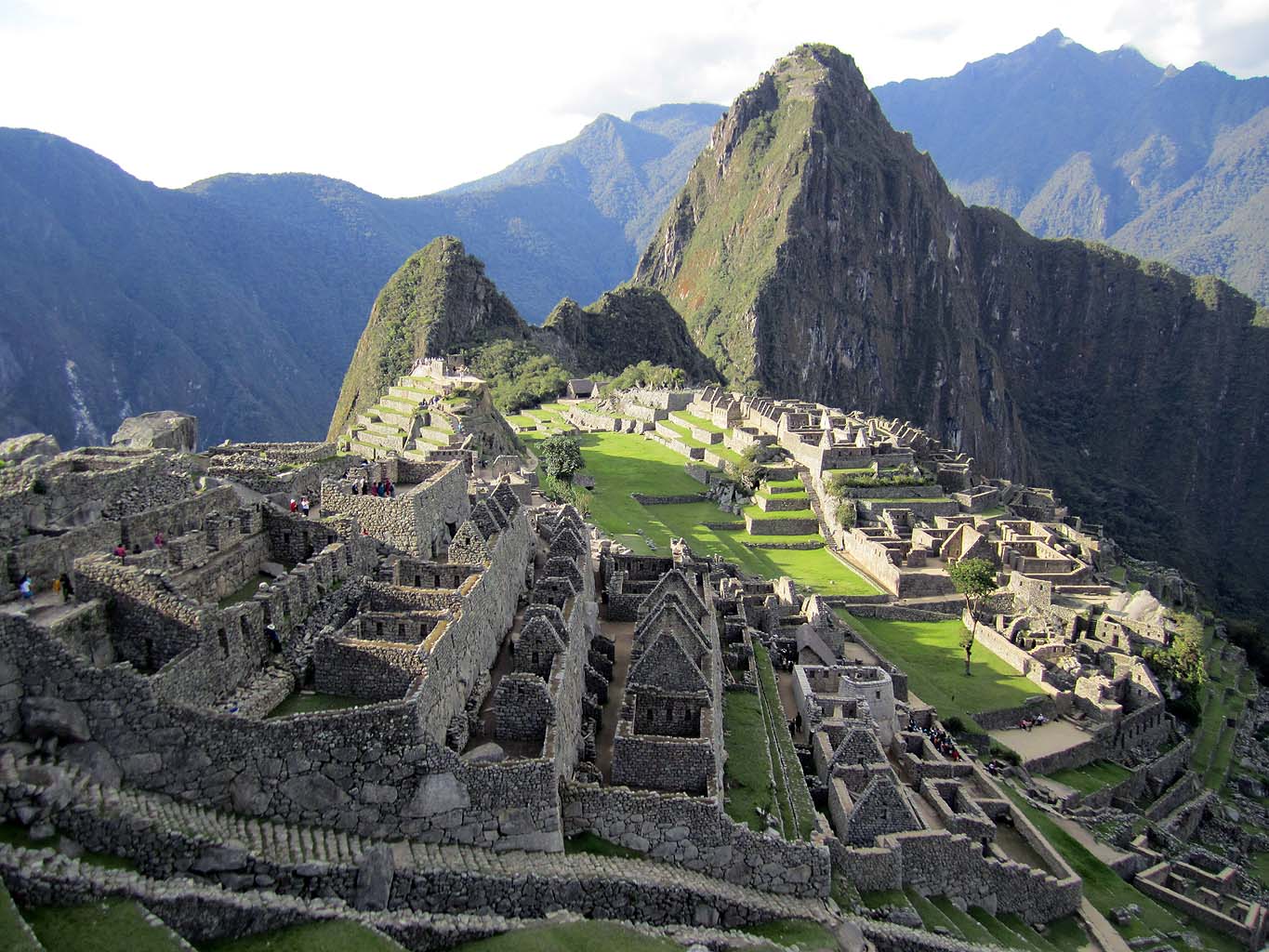
Our guide was a very knowledgable local who knew his stuff. After a moment, at one of the stunning viewpoints of the ruins, he noticed the Disney World logo on Adrian´s sunglasses and wanted to know if we had been there. He was planning to take his 12 year old daughter there and wanted to know about prices and hotel options. I could help. He commented himself that this was a strange place to discuss Disney World. 🙂
Machu Picchu is a magic place. I had a feeling of awe I haven´t had since we went to Pompeii in 1998. There are still many mysteries, but much is also known about the place.
From what historians and archeologists can tell it must have been completely abandoned in the early 1500s. The major theory is that the Incas understood that the Spanish would come some day and destroy it. The only way to save it was to abandon it completely and leave it to mother earth to protect it. This theory is supported by the fact that all 8 entry routes to Machu Picchu had been destroyed at strategic points and the remains hidden.
It is the only major Inca settlement that the Spanish never found. It was never destroyed or raided and most of it is intact, except the wooden roofs who have decayed and vanished. Nature had taken its toll on some of the walls when it was rediscovered in 1911. About 15% of the site has been restored (fallen rocks put back into place, basically) and 5% has been reconstructed (new stones put into place). The state of the site is nothing but impressive On a couple of the houses traditional roofs have been put in place to show what the houses must have looked like. The roofs were covered with a type of straw the Incas would bring here from the mountain plateau, about 1000 meters (3300 feet) further up. Machu Picchu is at 2400 meters (7900 feet) altitude.

We were very happy to have a good guide and he taught us a lot during the day.
It has been calculated that maximum 500 people could have inhabited Machu Picchu and that the probable population was about 400. There is an inproportionate number of temples, so it must have been a holy place. It is the only mountain surrounded by the holy Urubamba river on 3 sides, which is one explanation for its relatively remote location from Cusco. It was also probably a summer residence for the emperor.
70% of the area of Machu Picchu was made for food production. The city could have been completely self supplying with no need for imports. The agricultural part has been meticulously constructed from the ground up in terraces. The bottom layer is rock, then there is sand and on top about 50 cm (1 1/2 foot) of soil. The soil was brought here from different places to make sure different crops grew as well as possible. There are also different areas with different amounts of sunlight and degrees of slanting (to create differences in soil humidity). Here is the agricultural area.
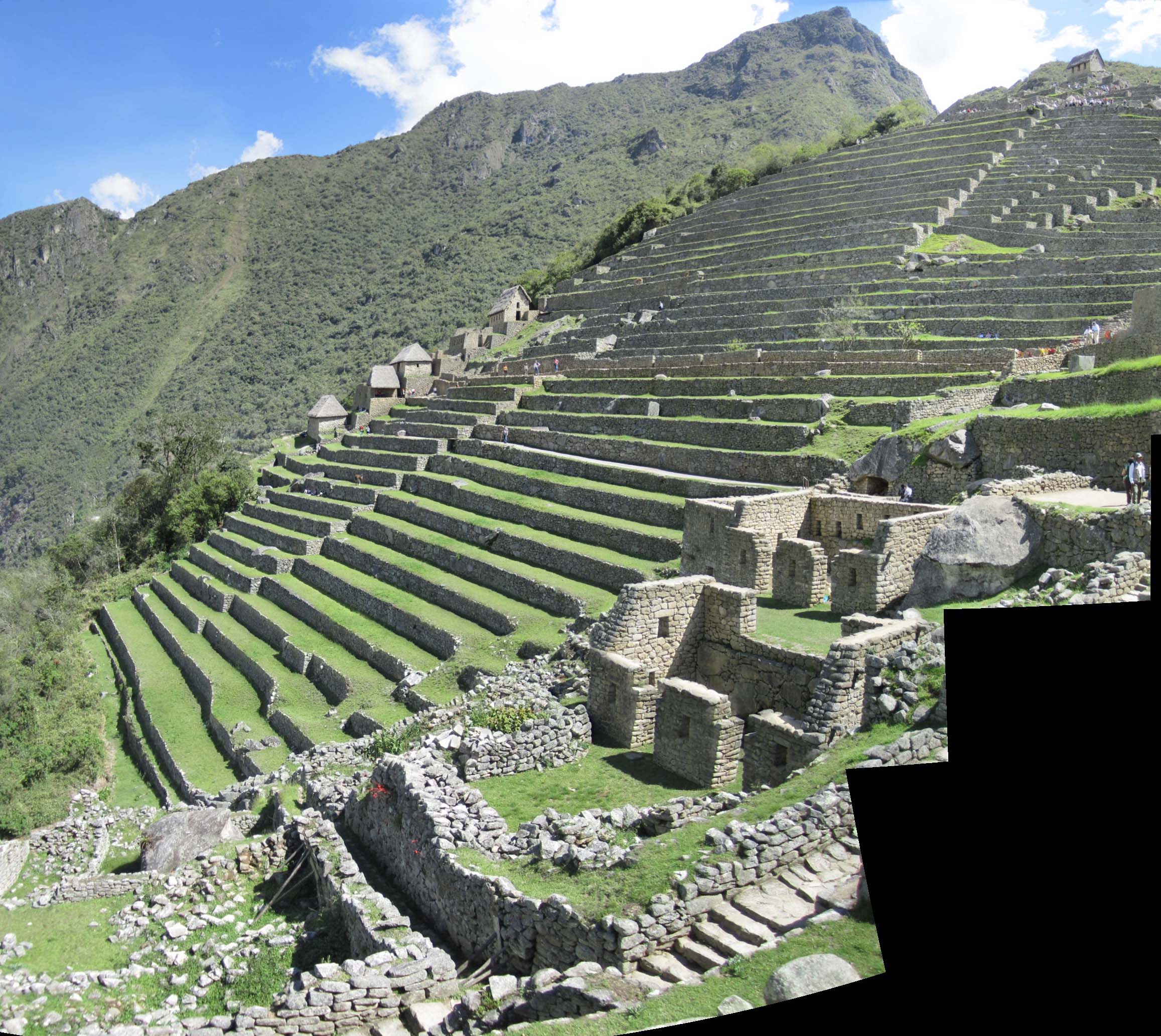
Only part of it is visible today. The area continues further down the mountain but is now covered with trees.
There is also a canal from a spring higher up in the mountains that supplied the city with water. The canal still works and water runs on it and through Machu Picchu. Water was only needed for humans and animals since the moist climate took care of the plants.
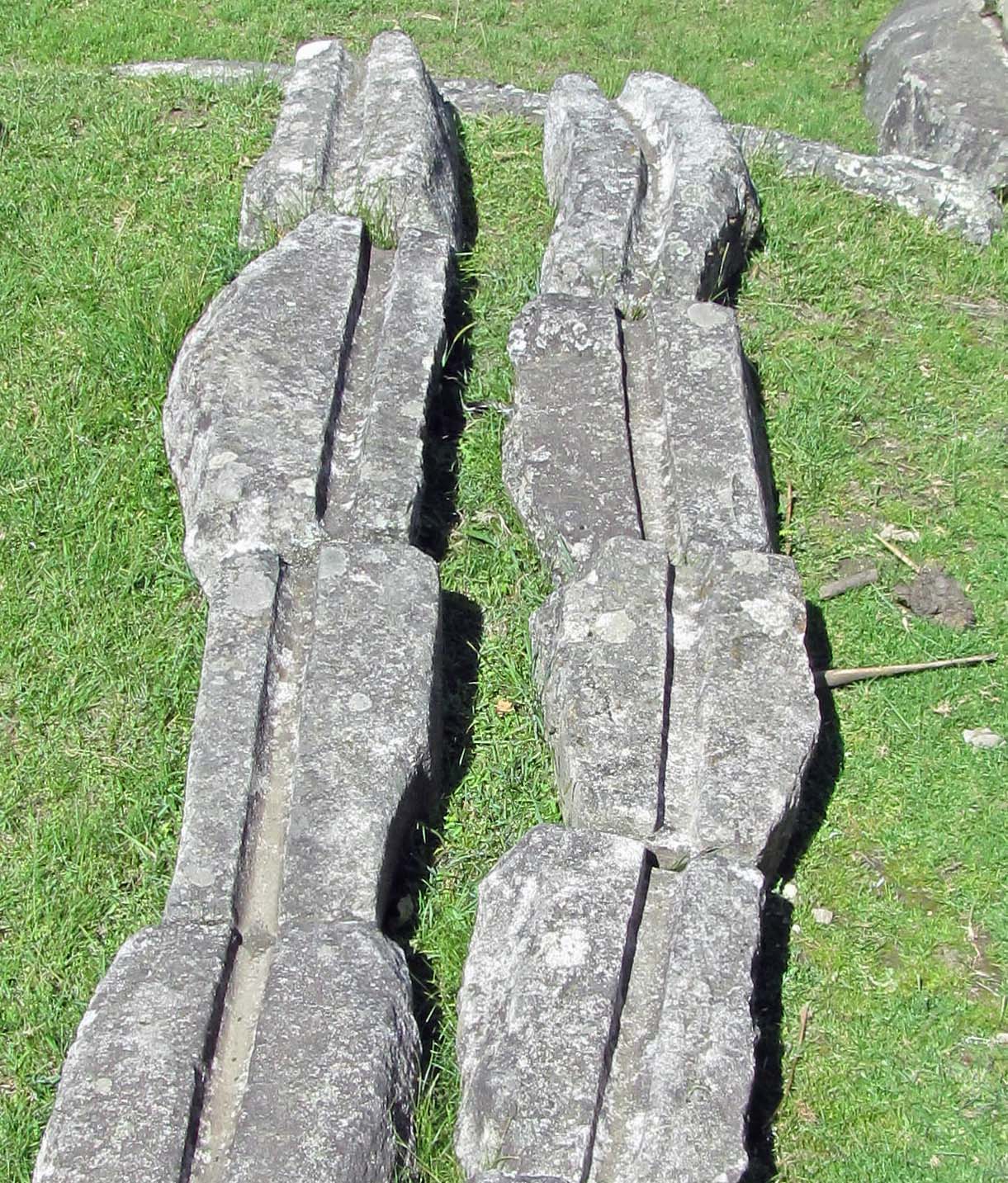
The Incas did not know hard metals, so they could not make metal pipes. They did, however, have superior rock carving technology. Their water pipes consisted of two stone blocks put on top of each other, each with one half of the pipe. This speaks loudly of their precision work. You cannot afford much deviation when you have to make sure water leaks are kept at a minimum. Here are some that have been opened to show the technique. The Incas made underground water pipes this way.
There were so many cool things in that place for a geek! I could go on and on and on. Which I will do, since no one is here to stop me.
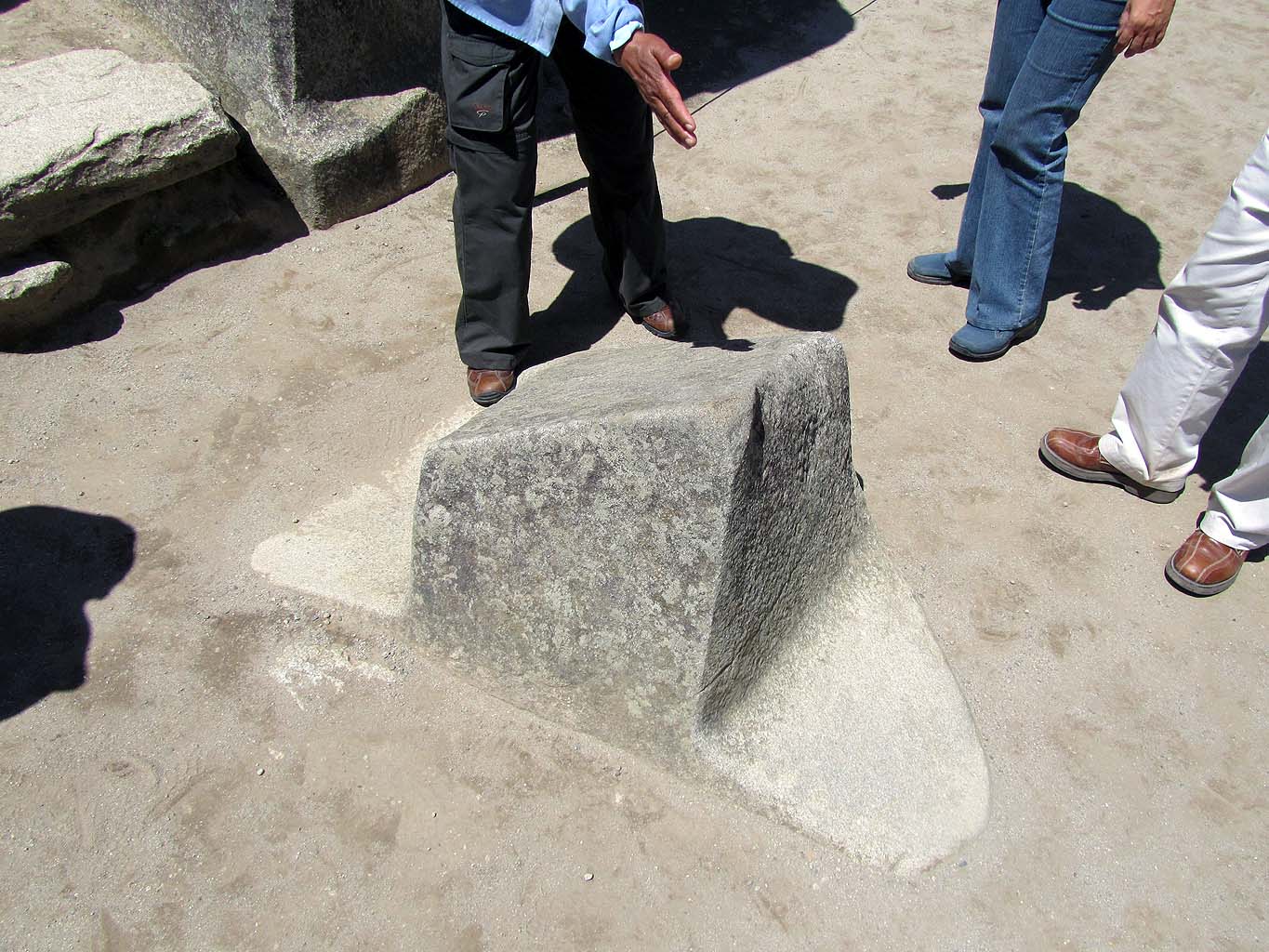
There were plenty of calendar rocks using the sun to tell the time of day and/or time of year, There were also rocks telling the bypasser where the 4 compass directions were. Here is a compass rock with a corner in each of the four compass directions:
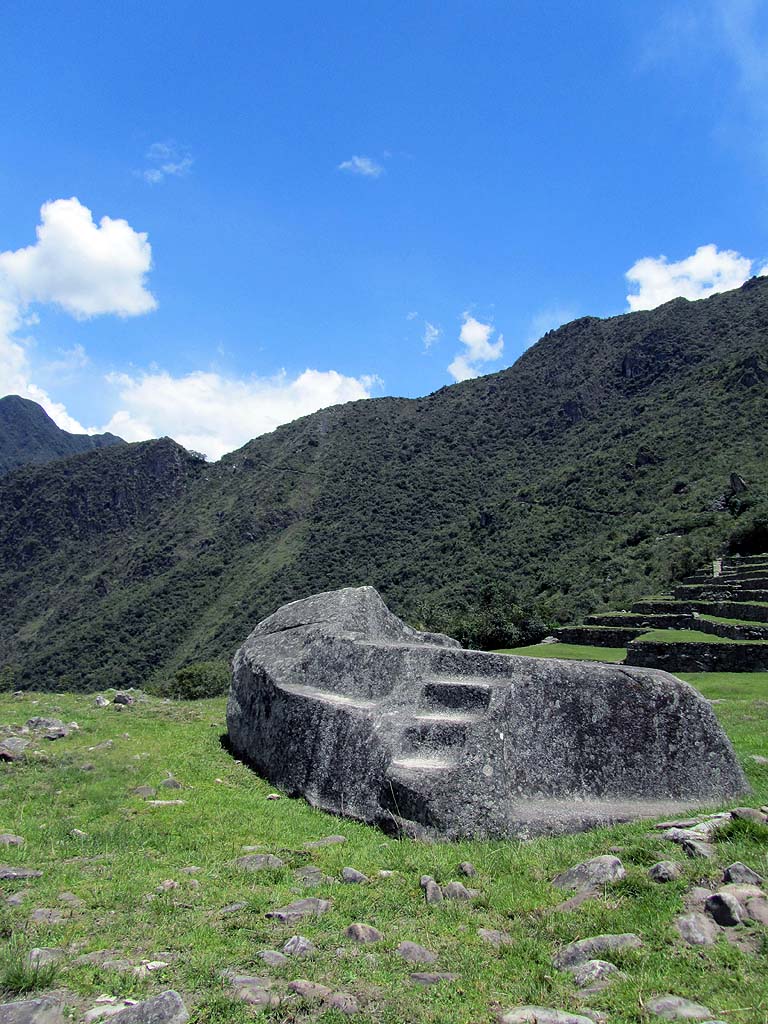
At the summit of the main access route a gate, called the sun gate, was constructed. Exactly once a year, on summer solstice, the rays of the rising sun shine through the gate and hit this rock placed in a central location in the city. On winter solstice the sun shines through an opening at a different location and also lights up the rock at sunrise. Cool, eh?
At he lowest point of the mountain silhouette you can see where the sun gate is located.
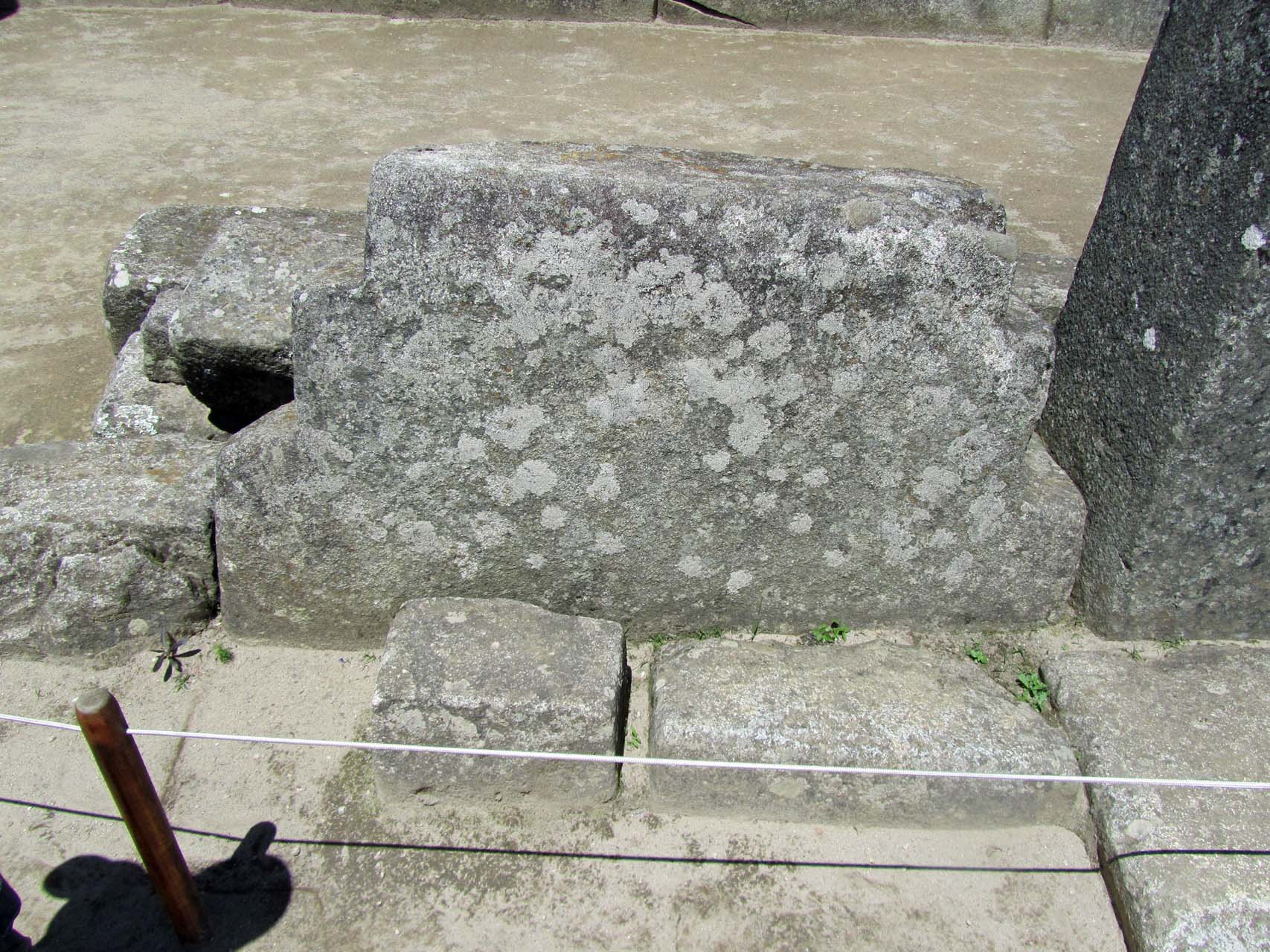
Notice that the rock has 3 steps carved into it. The numbers 3 and 2 can be found everywhere in Machu Picchu. 3 represented the 3 worlds (gods, us, the dead) and 2 represented the duality of masculine and feminine.
This rock is shaped as half of the Inca cross. Only on winter solstice will its shadow perfectly make up the other half.
This is the main entry to the city, and also the end of the Machu Picchu Inca trail. The trail is a paved trail, built around 1400, that goes from Cusco to Machu Picchu. The full trail is a 6 day hike.
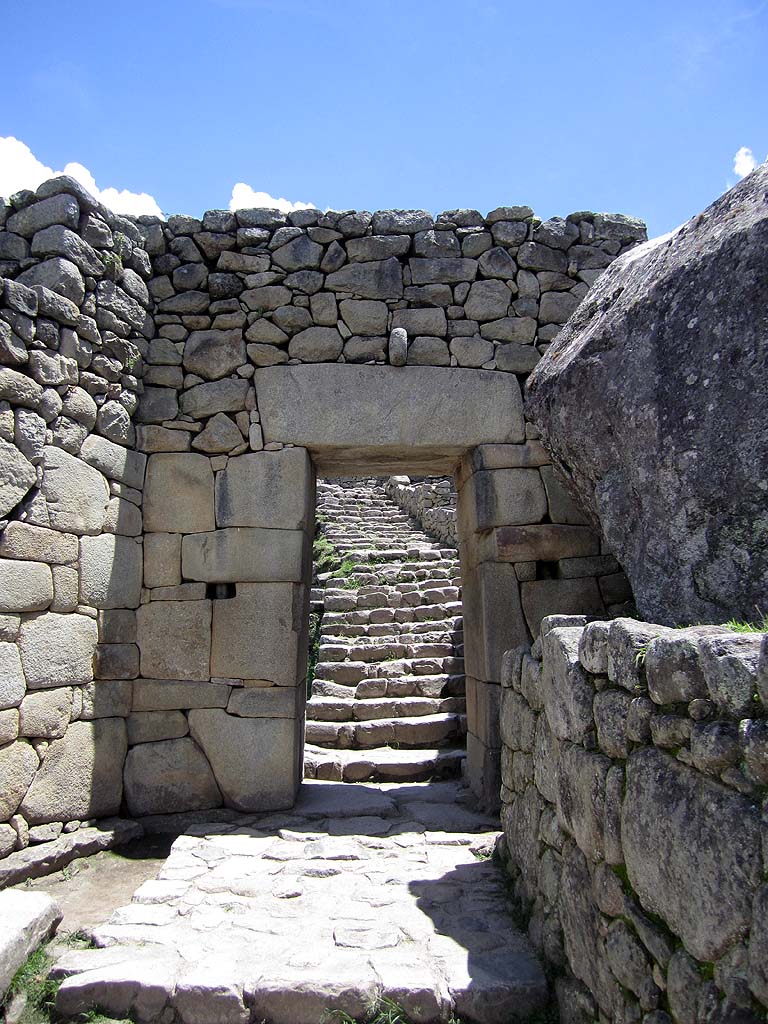
Notice the support at the top and to the two sides. These were used to attach the wooden door with ropes. Inca ropes were made with the same kind of straw that was used to cover the roofs .
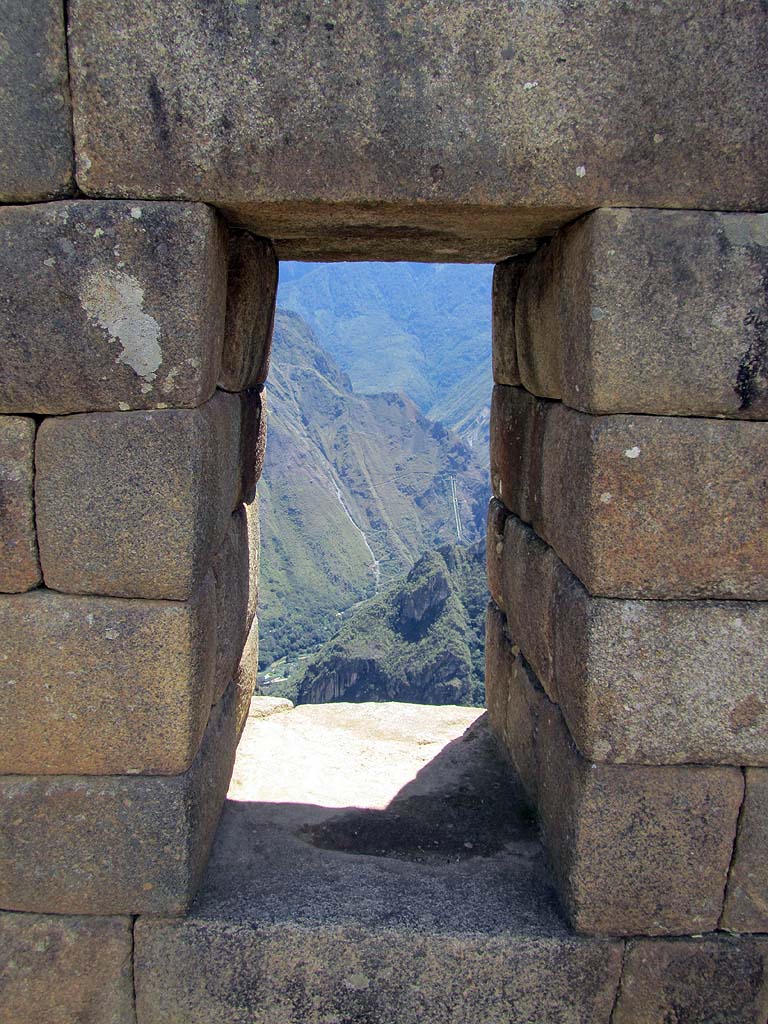
One of many windows in Machu Picchu. Notice the earthquake resistant shape. Stone blocks are not flat on the surfaces that connect them, but contain pegs and holes, much like lego, to stabilize the structure. Machu Picchu has been built with granite, a very hard type of rock, (7 on the Mohs hardness scale from 0 to 10), making the constructions even more impressive.
This picture shows one of the clear indications that Machu Picchu was never finished. The three other sides of this hill form a pyramid, but on this side half of it is missing.

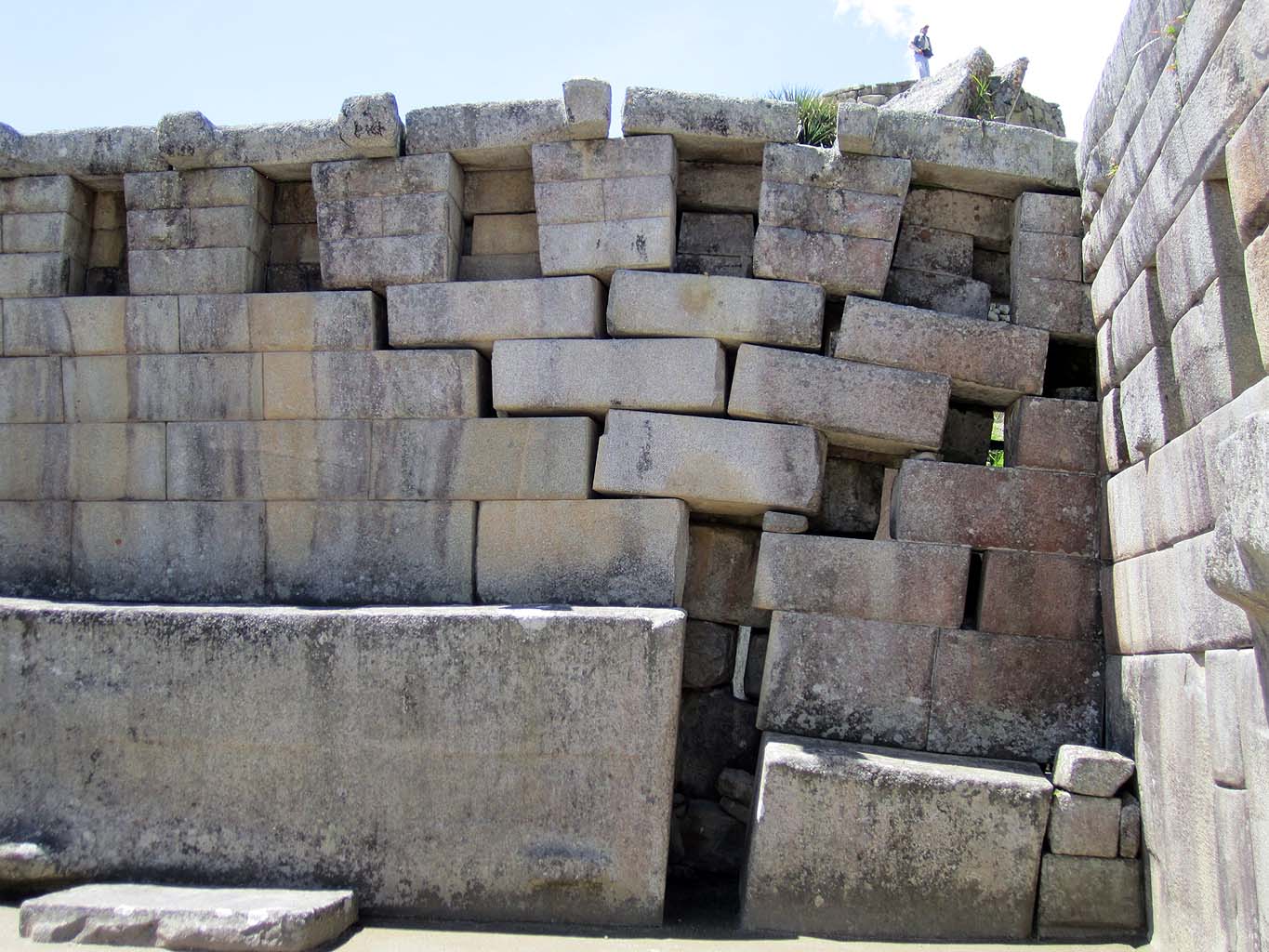
Machu Picchu is constructed on a fault line and one half of it is sinking. Buildings made on the fault line are slowly falling apart. An alternative theory for its abandonment is that the Incas saw this as a message from the gods.
Estimates vary, but it´s probable that the well organized Inca empire had 16 million inhabitants at its height. The Incas were the mountain specialists and conquered most of the Andes. When the Spanish arrived they ruled what was probably the largest nation on earth. And they did it without money, a writing system or the wheel.
Machu Picchu is a breathtaking monument of the capabilities of the Inca culture.
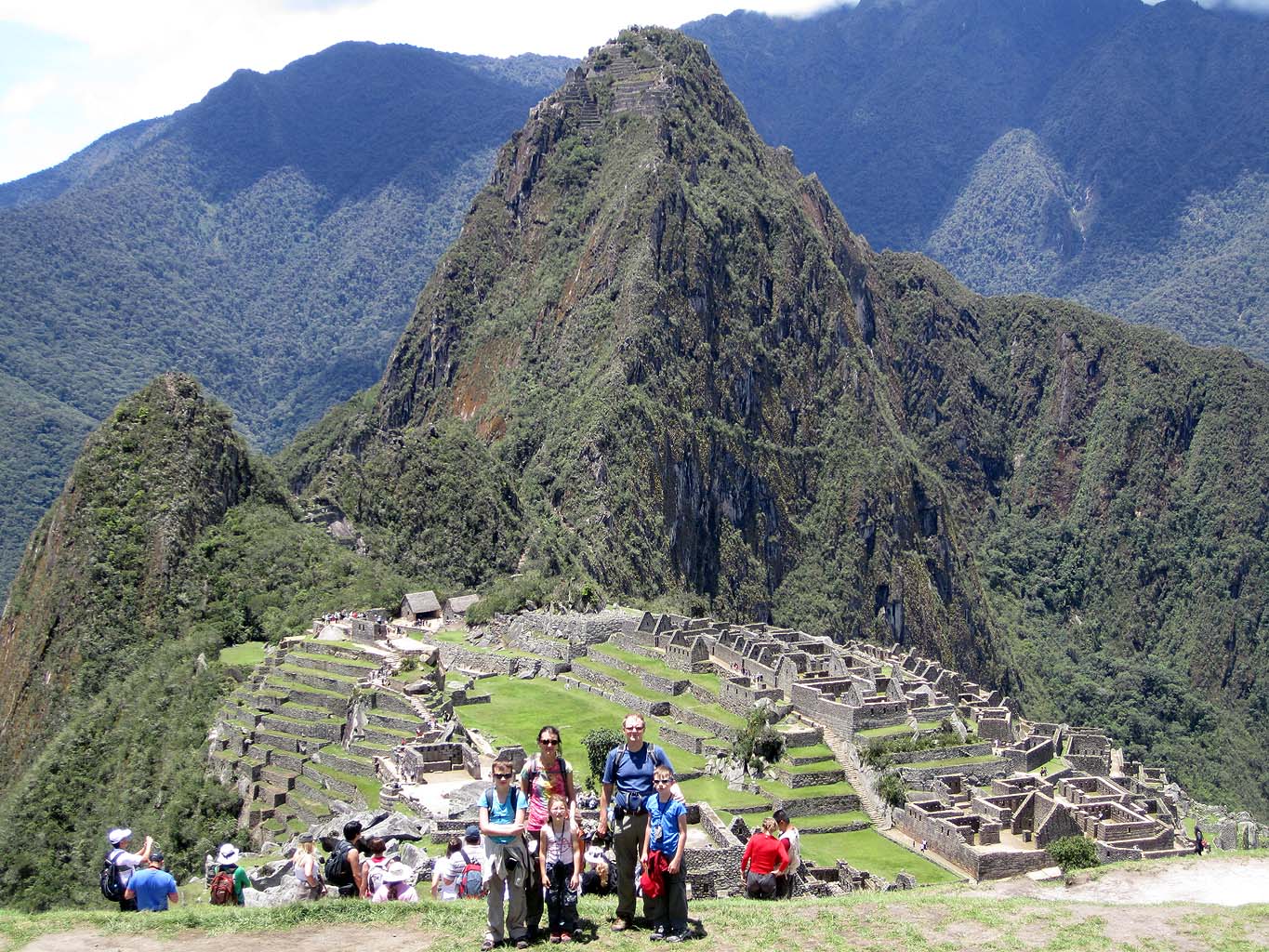
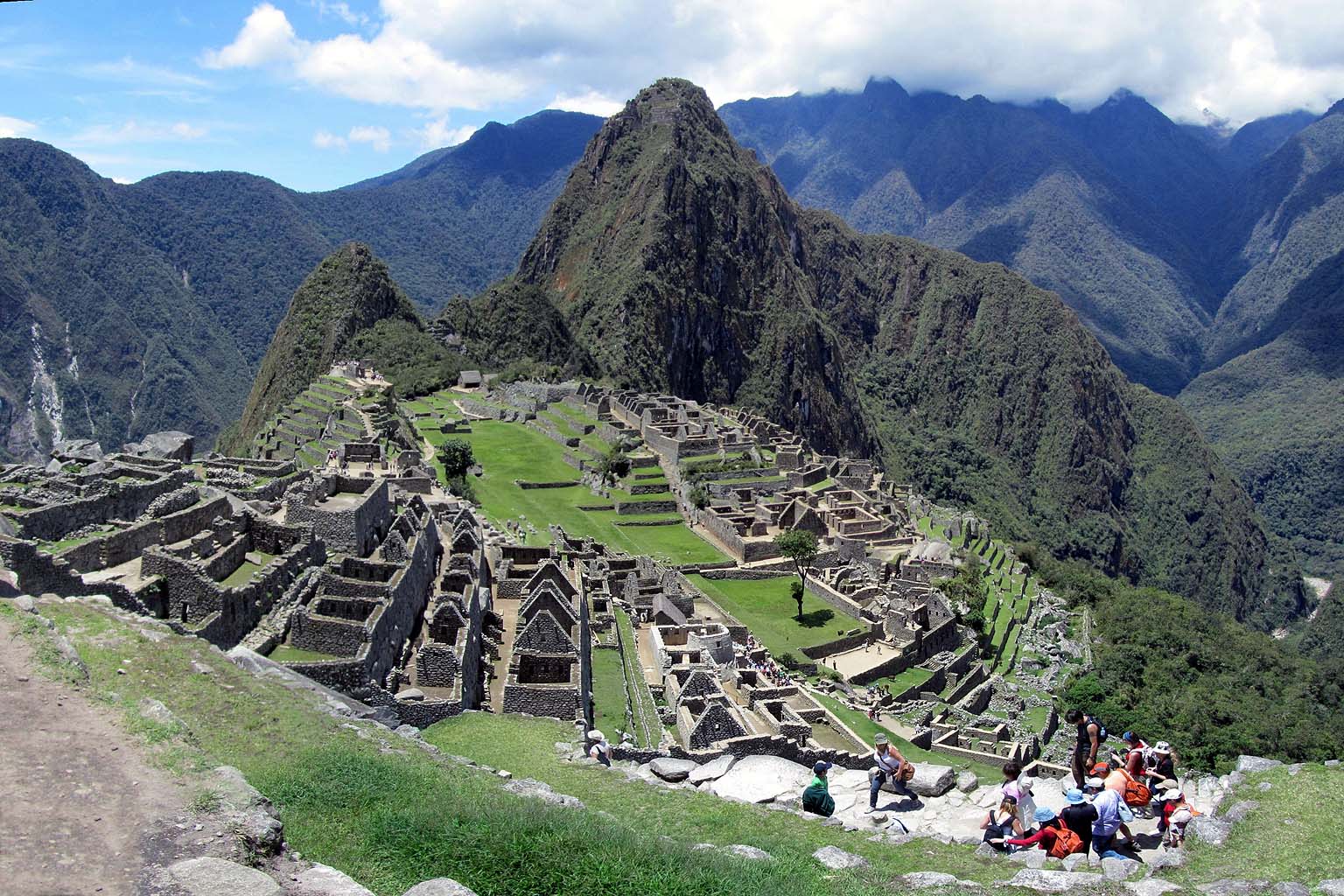
What a privilege to be able to walk in this place.
We humped and bumped our way down again to Aguas Calientes and found our hotel. During the day it became clear that I was the first in the family to get a good old fashioned traveling diarrhea. I was not feeling well. The rest of the family went to a French/Peruvian place to have dinner while I stayed behind to relax, blog and force myself to eat some pringles.
Eirik
—–

What an adventure – it is amazing what they achieved! And don’t worry about geeking-out – I LOVE IT! Can you imagine how they cut and fit stones? Just astounding. And WHAT A VIEW! Hope you feel better.
Great reading, Eirik! I want to go to Peru soon, with Anya, Thomas and Hennie.
My father and I experienced the total eclipse of the sun just south of Florianopolis, November 1994. I understand that you will visit that city later.
Snowfall in Horten today, 3 degrees below zero. Enjoy South America, all of you!
Breathtaking place! Amazing story and culture!
Great photos, amazing adventure. The kids will never forget it. I’ve been to this place in 1986, my first trip abroad, with 23 y/o. Your descriptions bring me good memories. By the way, when I was there I had to save every cent, so I climbed the hill to the old town (it took me about an hour), and discretely followed the guide of an organized group. Aguas Calientes was just a tiny pueblo, much more charming at that time, but already a mess. 🙂
I love the pictures and the whole story but especially the history/science lessons.
You have such a great talent for informing and entertaining us.
Thank you.