




Easter Island – Day 3 – Horseriding
January 5, 2011
We had seen all the most important archeological sites on the island and gotten an excellent explanation of it all from Christophe, Wikipedia and Steven Fischer (author of the book I read about the island´s history). We had therefore decided to use our last day here on something Iseline had been asking about for a long time: horseriding.
Before I tell you more about the day I would like to tell you just one more cool thing about the Polynesians. Just one more, OK?
The turtle symbolized home for the Polynesians. The reason for this was that they used turtles for navigation. Yes, turtles. Turtles have the same extraordinary navigational capability as pigeons. If you bring a turtle into the vast open ocean, tie a cord to it, and drop it in the water, it will immediately start to swim in the direction of its birthplace. If you remembered the part with the cord you can now drag it back on board and keep it there until the next time you need to know the direction.
Experiments have proven that the earths magnetic field is used by the turtles, but that they also must use other ways of navigating. Turtles which have had a small magnet attached to their head get very disoriented and cannot find the right direction immediately. However they do manage to find their way home in the end, despite the magnet.
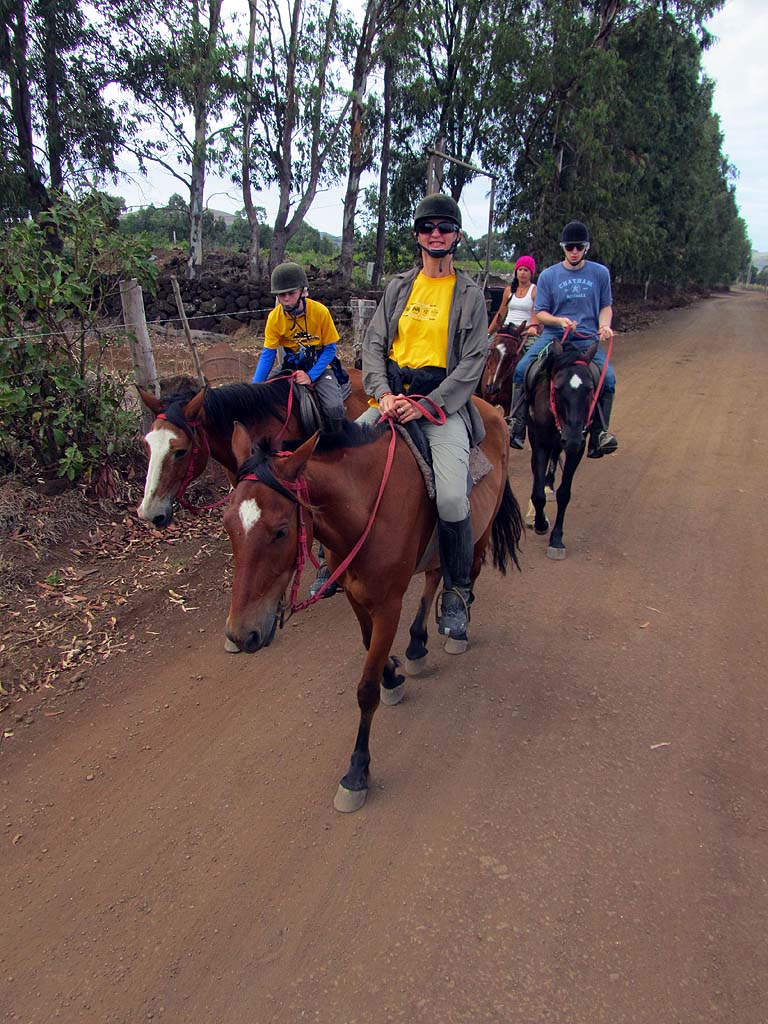
We were picked up at 8:40 by the horse owners. On our way over to their farm we also picked up three Americans from New York who would be our companions for the day. They were Margie, her son Daniel and her daughter Katie. Unfortunately none of the photos we took of them during the day were in focus or showed much more than then a few pixels of a face or their backs. Sorry. But they were great people.
We put on our gear and got ready.
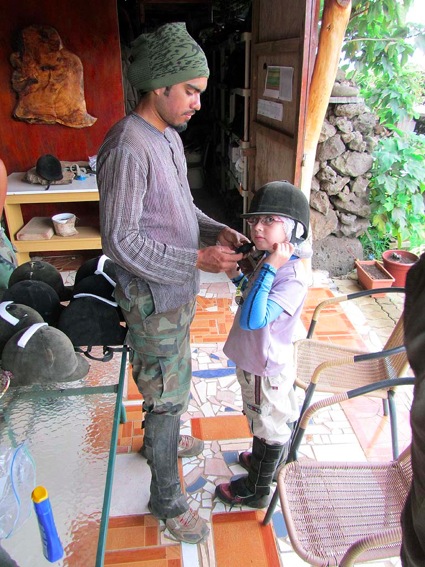
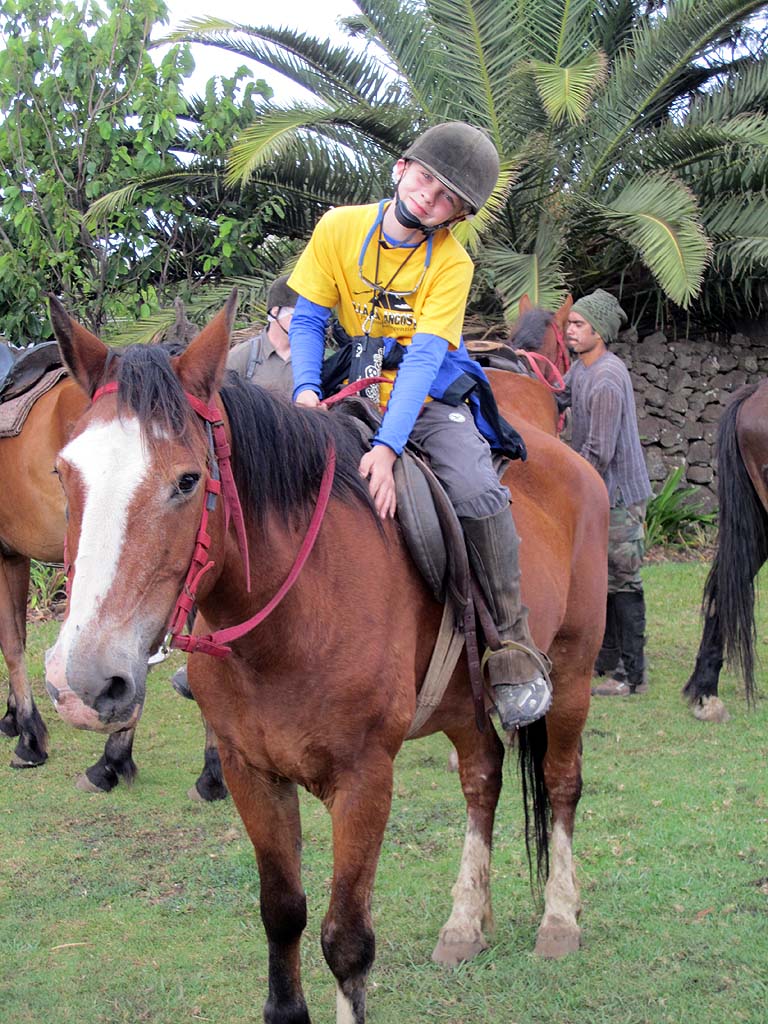
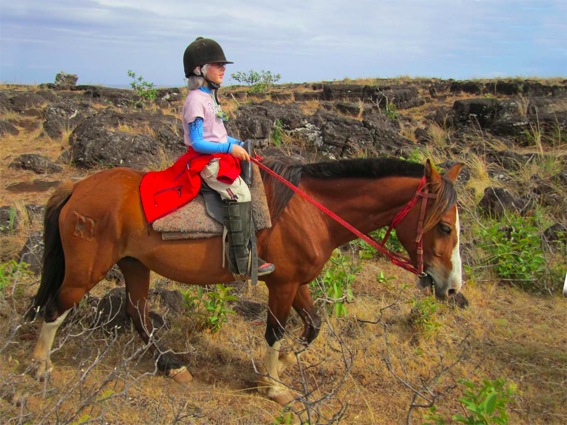
Is that a glimpse of Katie? I think so:
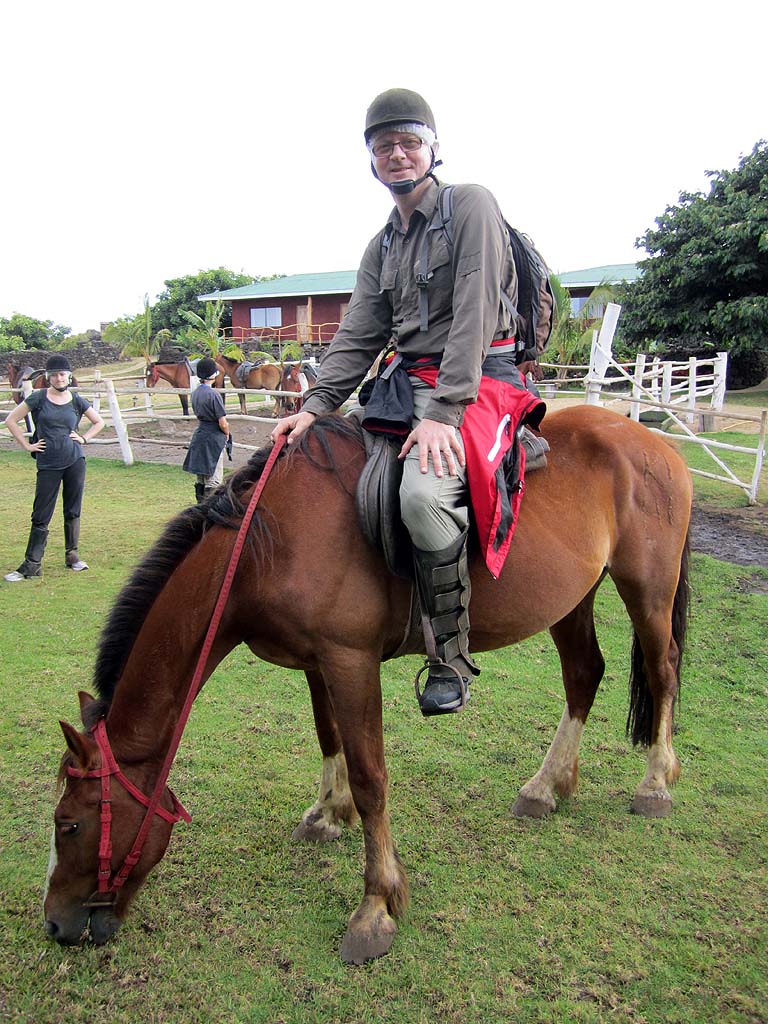
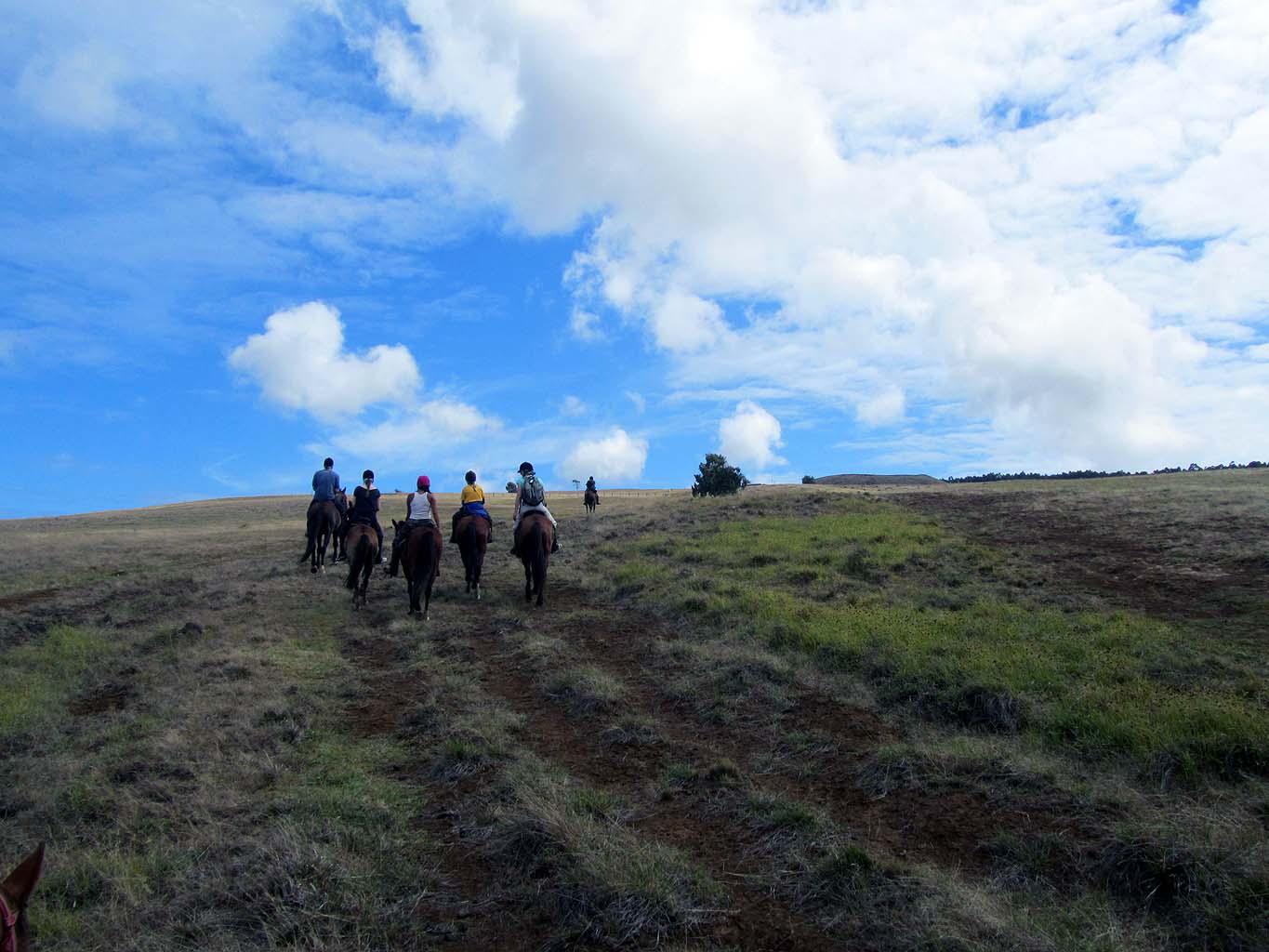
Our goal was the Terevaka summit and the islands highest point at 511 meters (1680 feet) altitude. It took us about two hours to get there and we got very good views of the island. Daniel to the right.
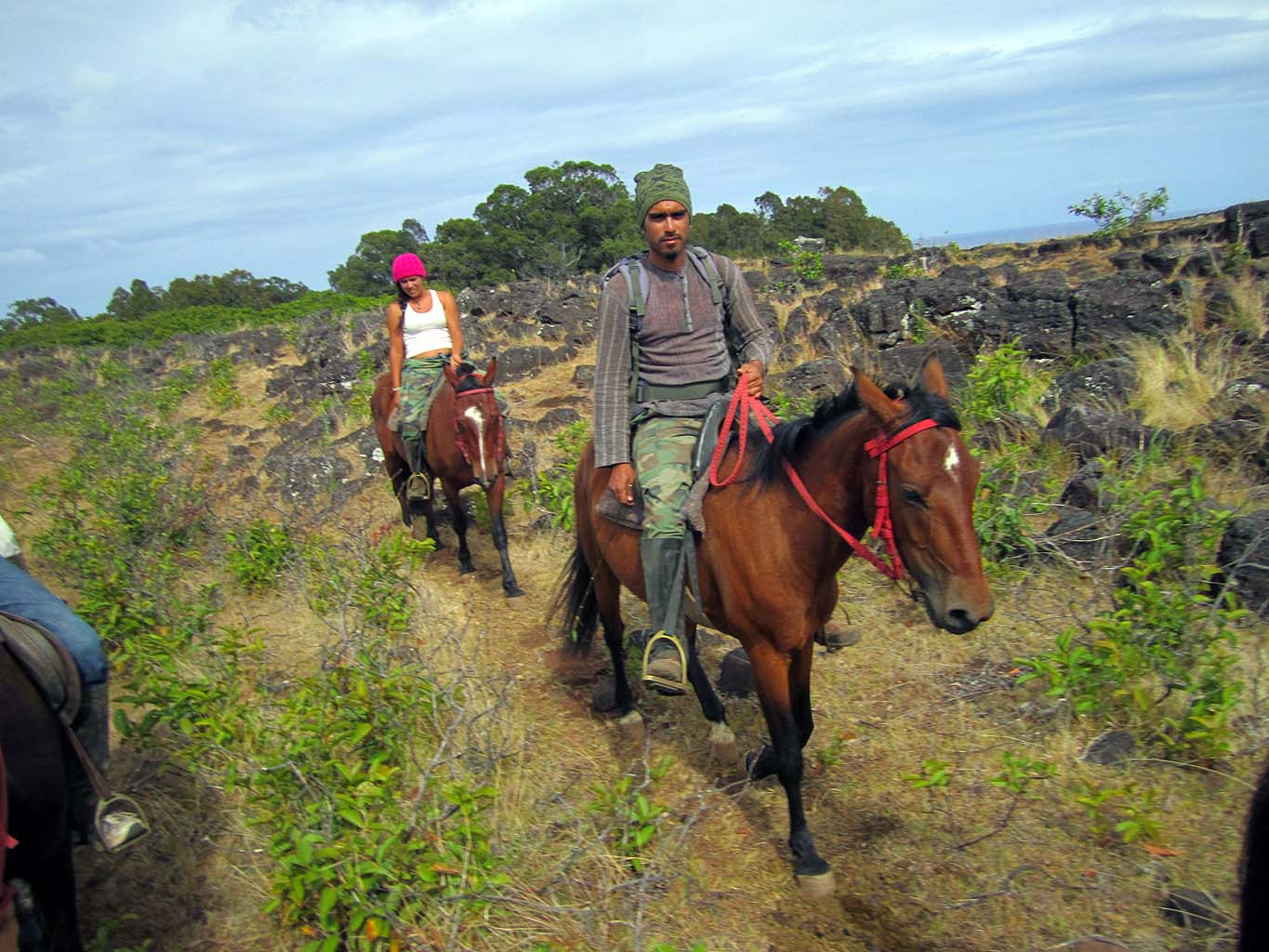
Our guides, whose names I have unfortunately forgotten. They were both students studying in Santiago and came home to help the family business during breaks. They were very clear on the fact that they would return to the island when their studies were finished.
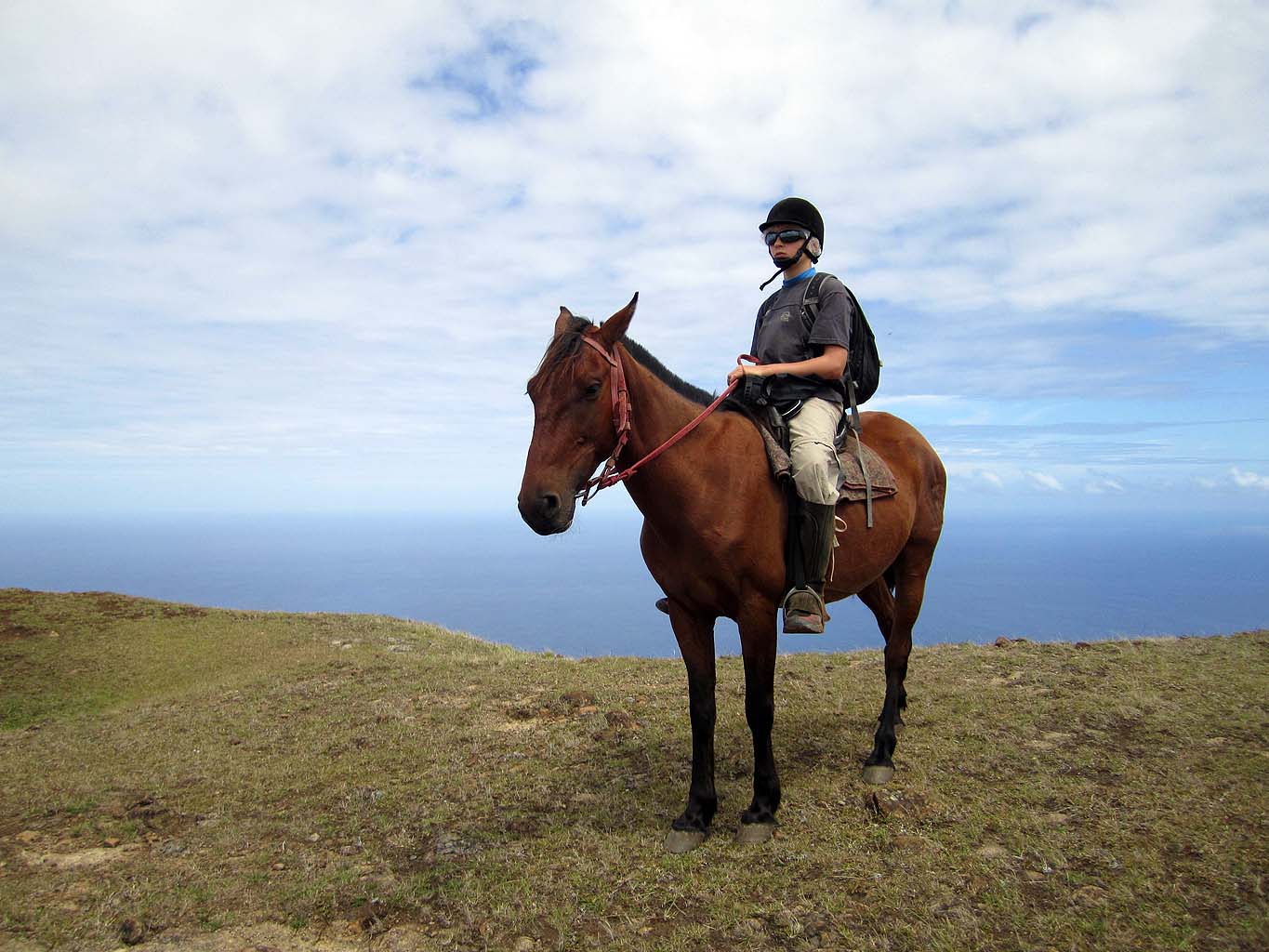
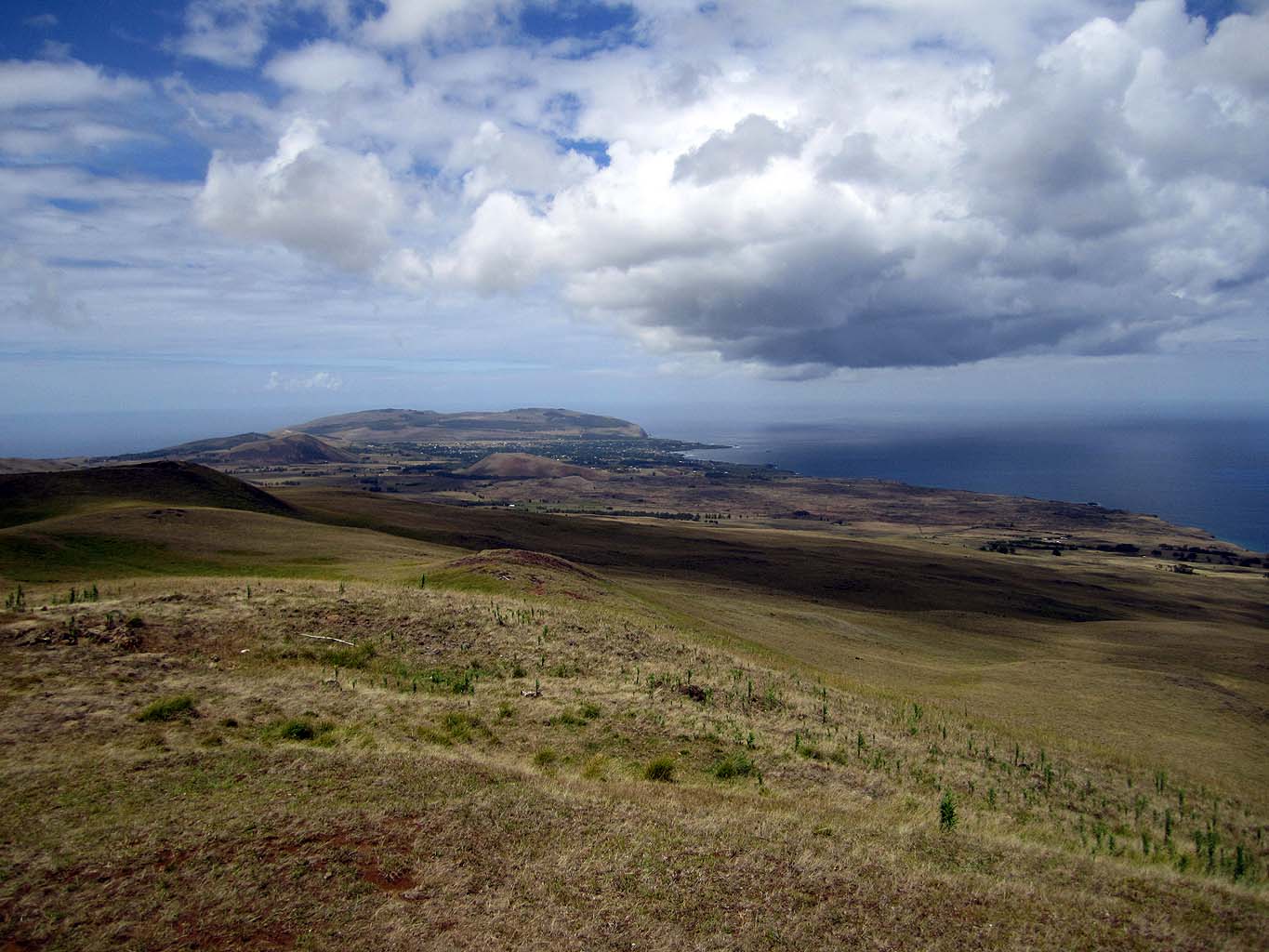
Terevaka is the northernmost part of the island. To the south we could see Hanga Roa and most of the island:
There are a few trees here and there on Easter Island:
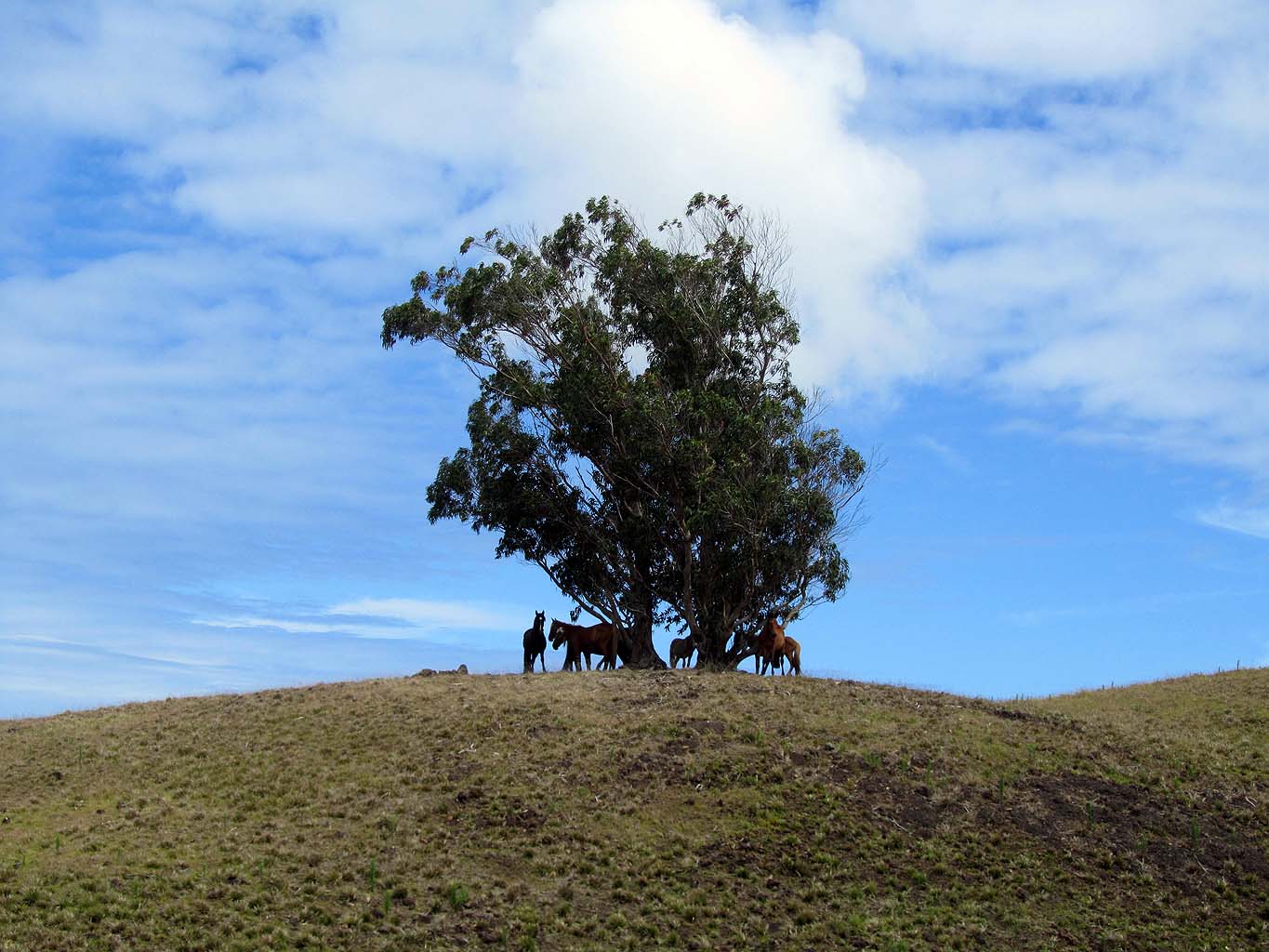
Our guide told us there is an ongoing project to try to get more trees to grow on the island. He said it´s unfortunately not well run and followed up. The problem is erosion from the common heavy rains here. He said that most planted trees get their roots displaced and die the first rain season after they are planted.
The horses you can see on the picture are “wild”. Horses in general are a starting to become a problem. There are no restrictions on owning and letting horses lose. The result is that most people let their horses roam freely. There are now more horses than people on the island and strictly speaking almost all the horses serve no other purpose than being the pets and property of their owners.
In his book Steven Fischer writes that there is really only one great mystery left on Easter Island, and that is why the Chileans continue to raise cattle there. Two thirds of the island is used to raise cattle. There is no dairy production and the meat is not consumed locally, it´s frozen and transported to Chile. The meat is low quality, since the animals have to walk a lot to get enough food and the whole venture is a money-losing business.
Land-rights has always been a sore issue on the island. Many islanders claim that the Chilean state unlawfully took the land of their ancestors. Not only in terms of colonizing the island, but also in taking land ownership of large parts of the island. Only a few weeks before we arrived there had been clashes and police had fired at demonstrators with rubber bullets. The Chilean state was building a new cultural center on land that some islanders meant they had the right to.
At the top we had a lunch break. I think that is Margie to the far left.
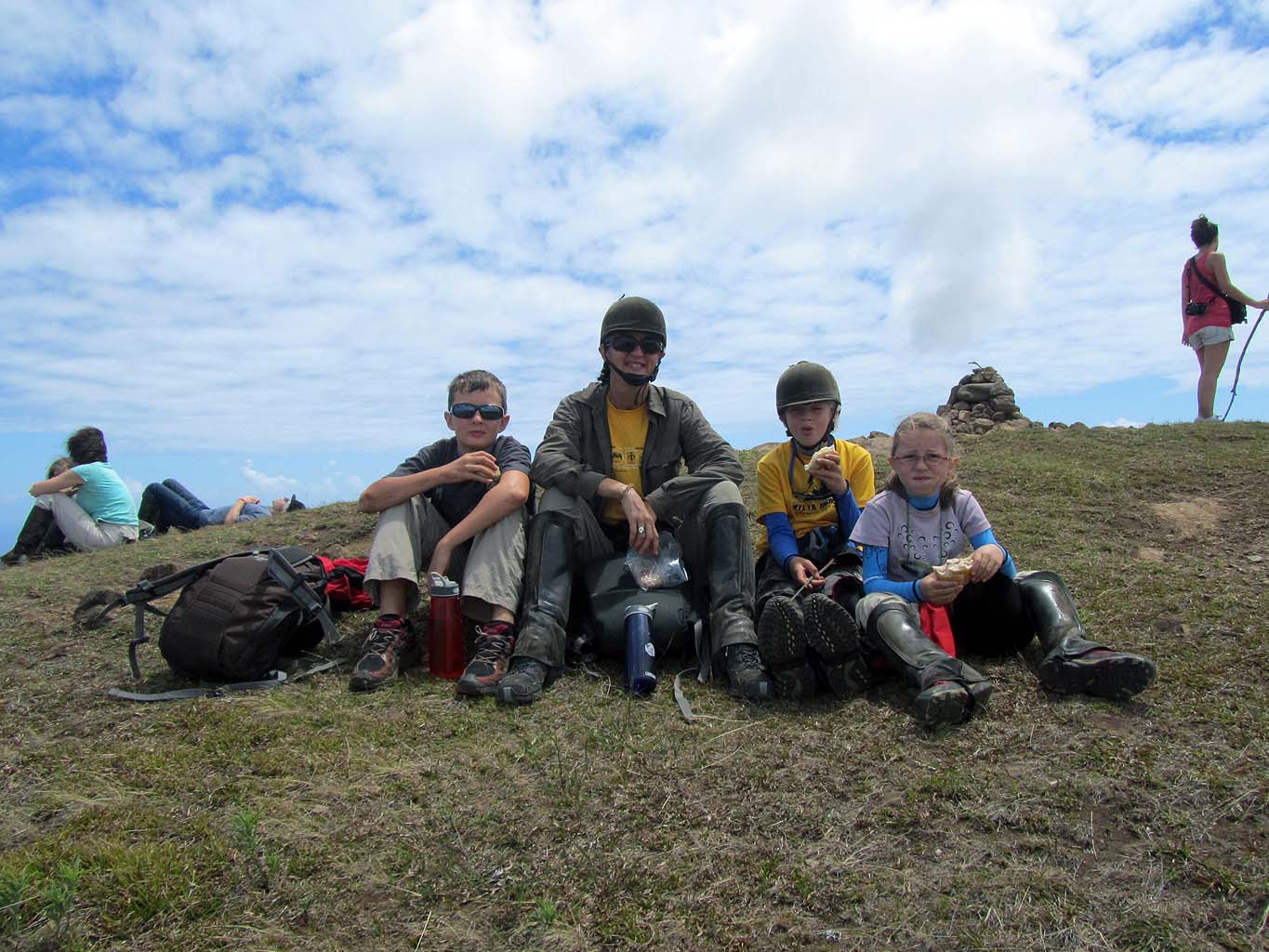
We had our photo taken at the islands highest point. We could see the horizon in all directions.
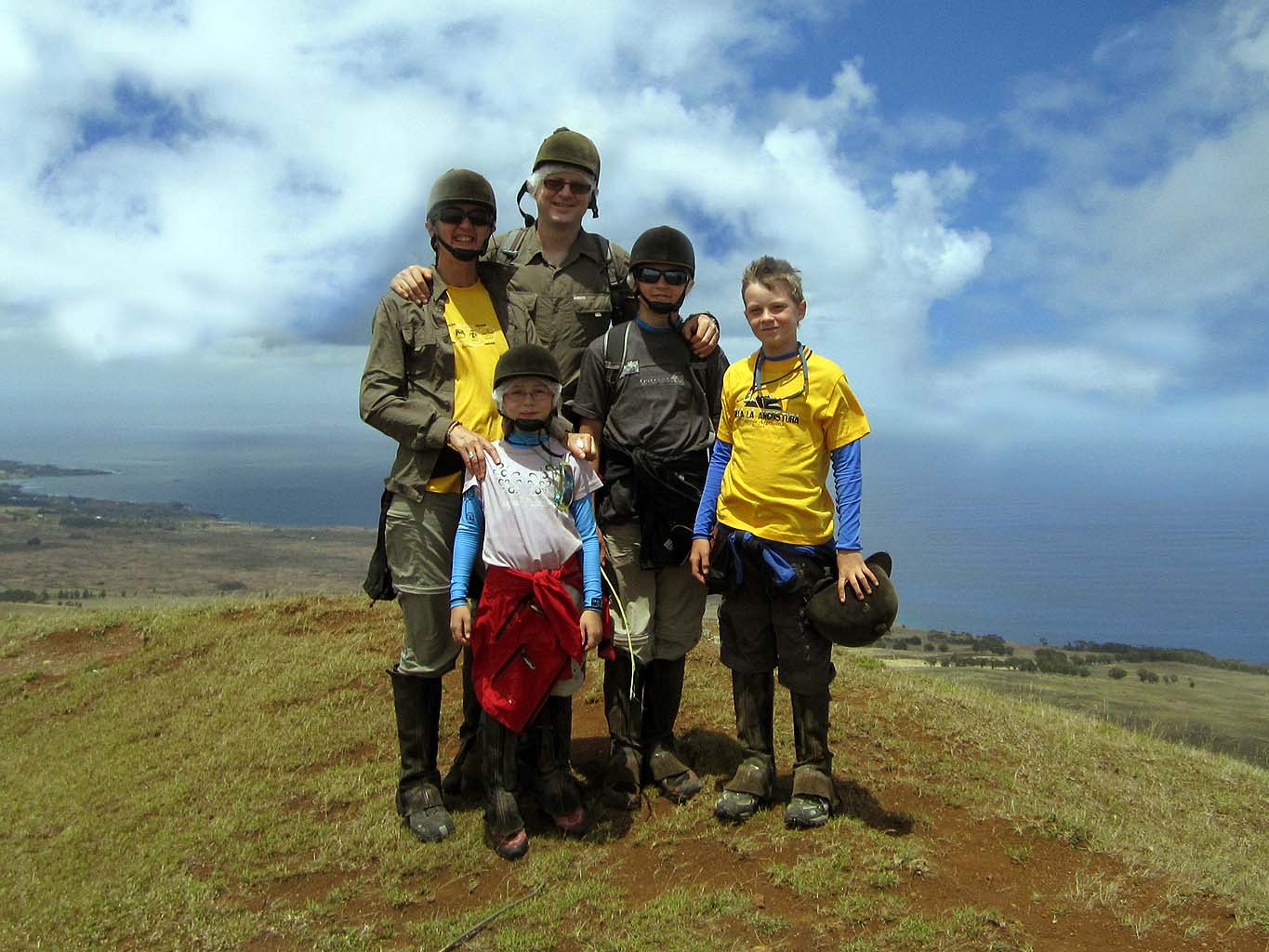
On the way back Viktor started telling jokes in English. His English has improved dramatically during the voyage. He kept us all entertained for a long time.
It was the first time I have been riding any significant distance. It was a surprise to me how hard it was on the knees. When we got back I could hardly walk.
Our stay on Easter Island was coming to an end. It had been intense and fascinating. We felt privileged to have been able to walk amongst the moai.
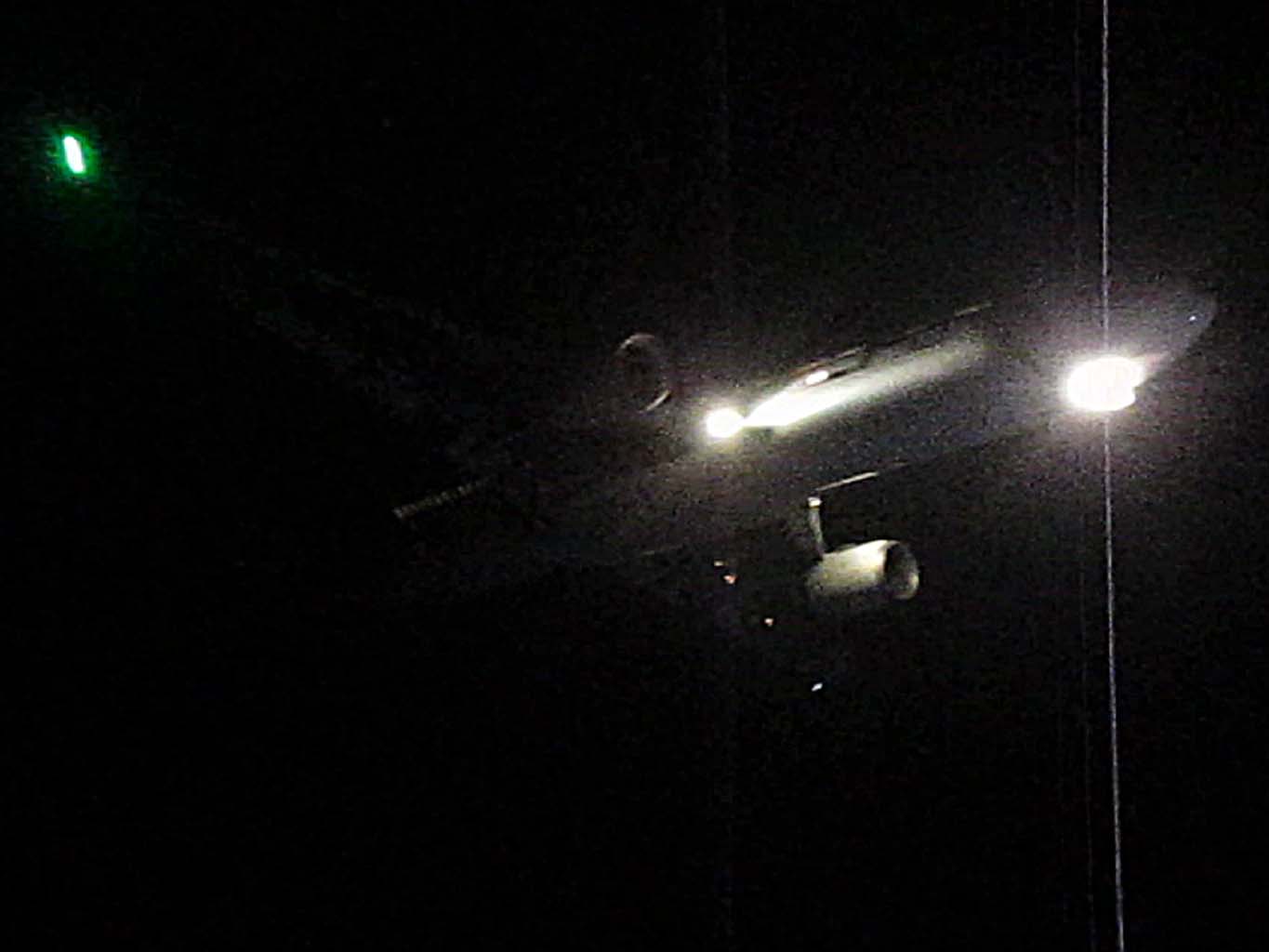
Christophe drove us to the airport, He timed it so we would be at the end of the runway when the plane came in from Santiago. We almost missed it and he drove pretty fast to get us there. We jumped out and I got this shot of the 767-300 as it roared past a few meters over our heads:
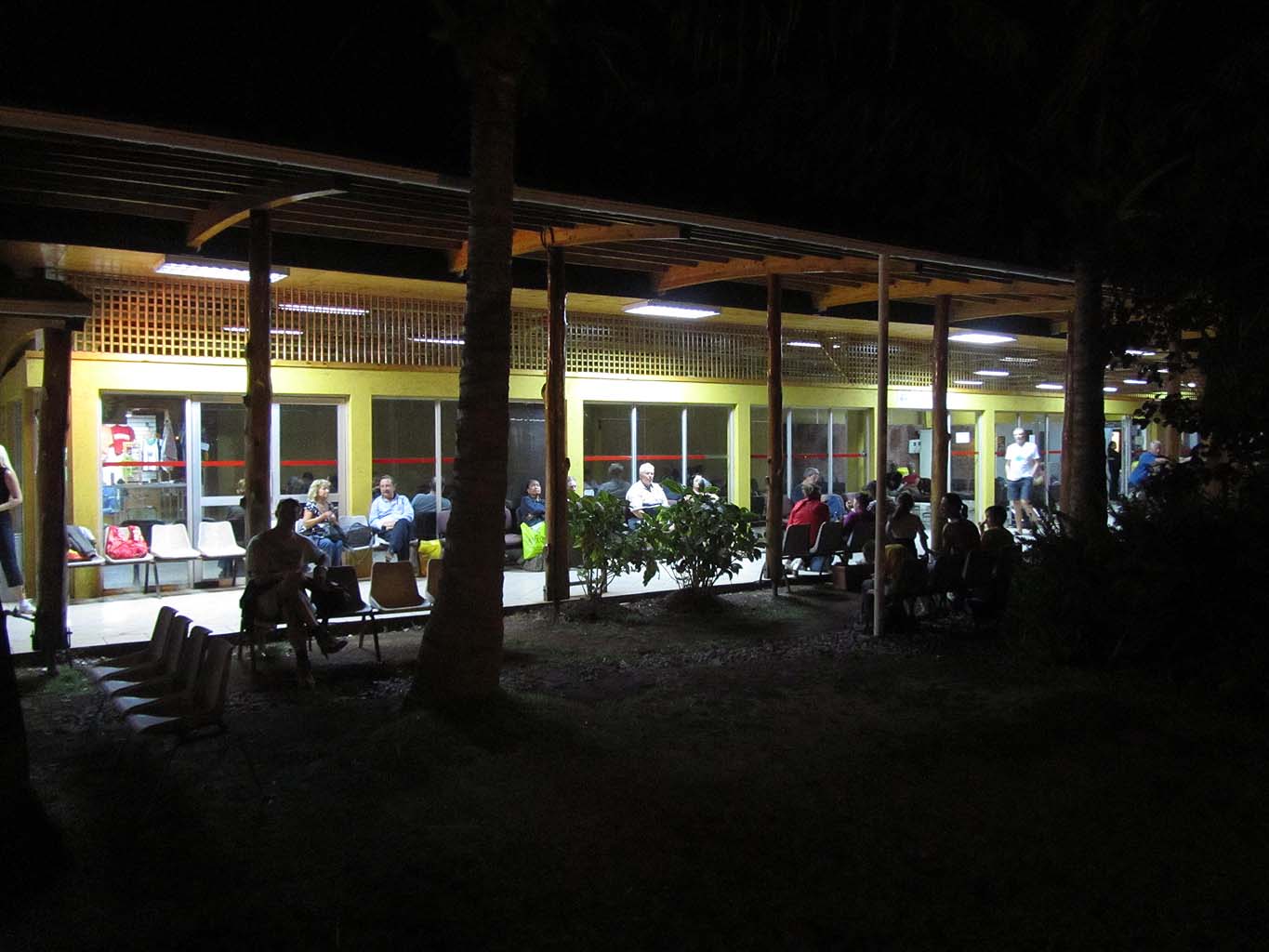
The waiting hall at the airport is outdoors. Exotic.
Another 6 hours with top-notch airline entertainment
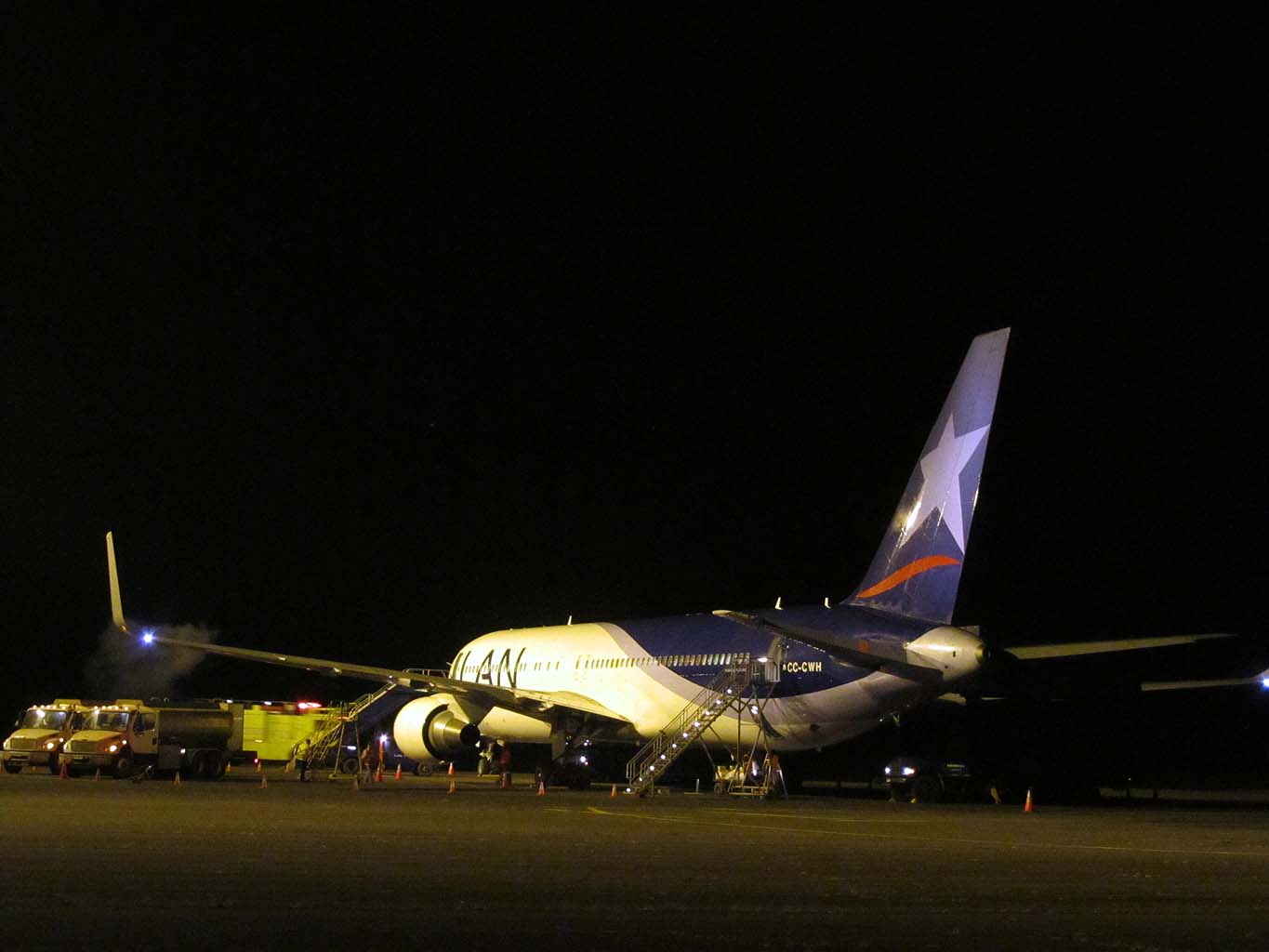
Our flight time was of the non-optimal kind. We left at midnight and arrived in Tahiti at 1am after a 6 hour flight. As opposed to the Chileans the French have done the time zone calculations correctly. Tahiti is GMT -10, while Easter Island is GMT -5.
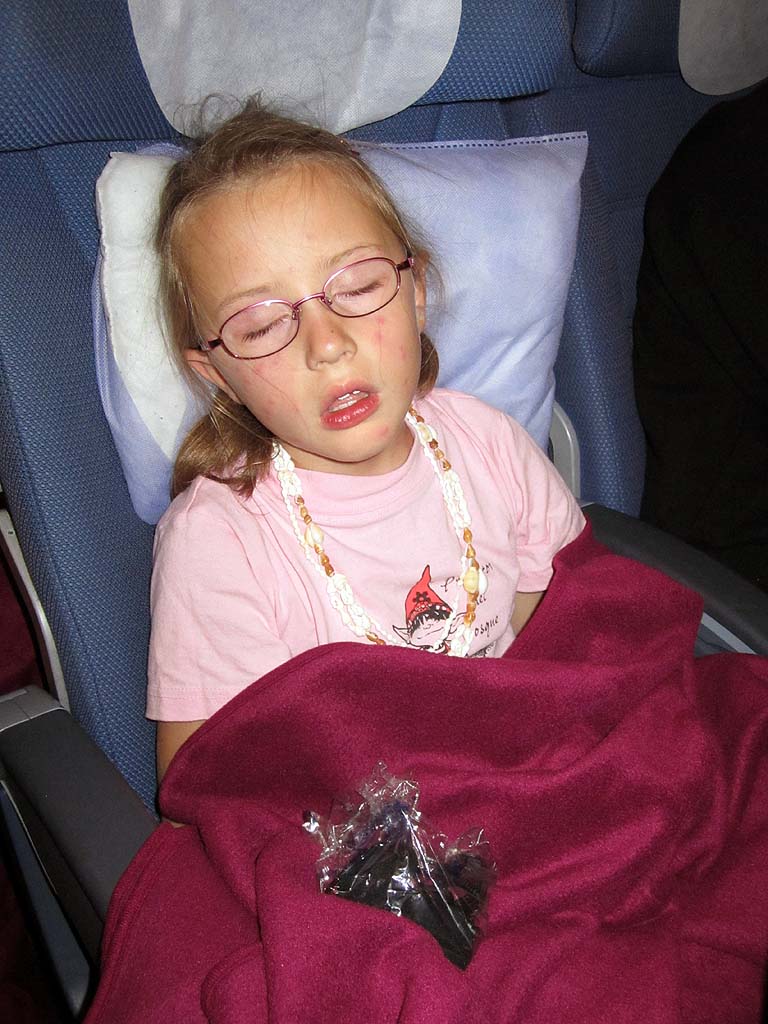
We had told the kids to try to stay awake. Iseline was the only one who slept, but she slept almost all the way.
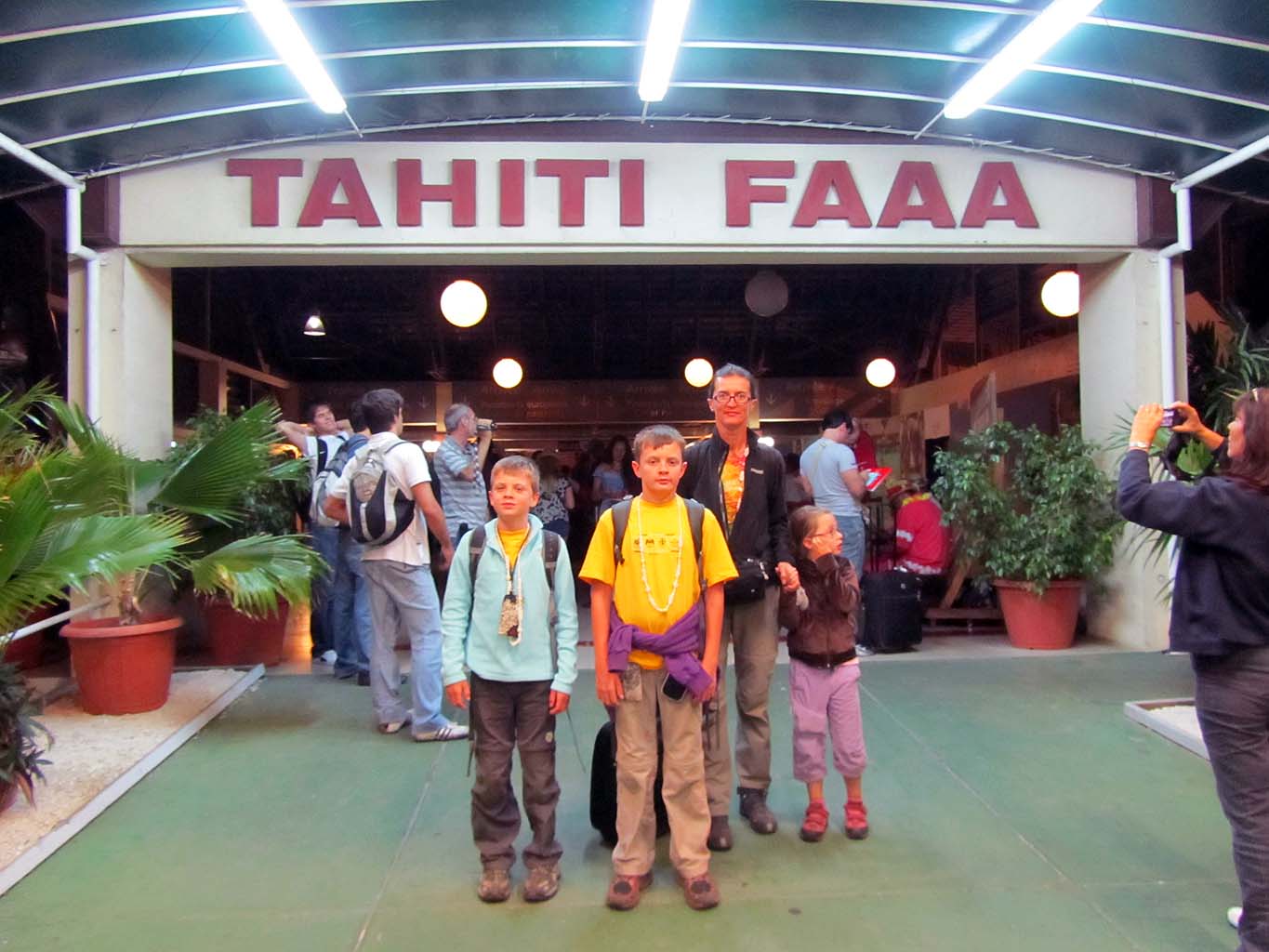
Tahiti, homeland of the Polynesians!
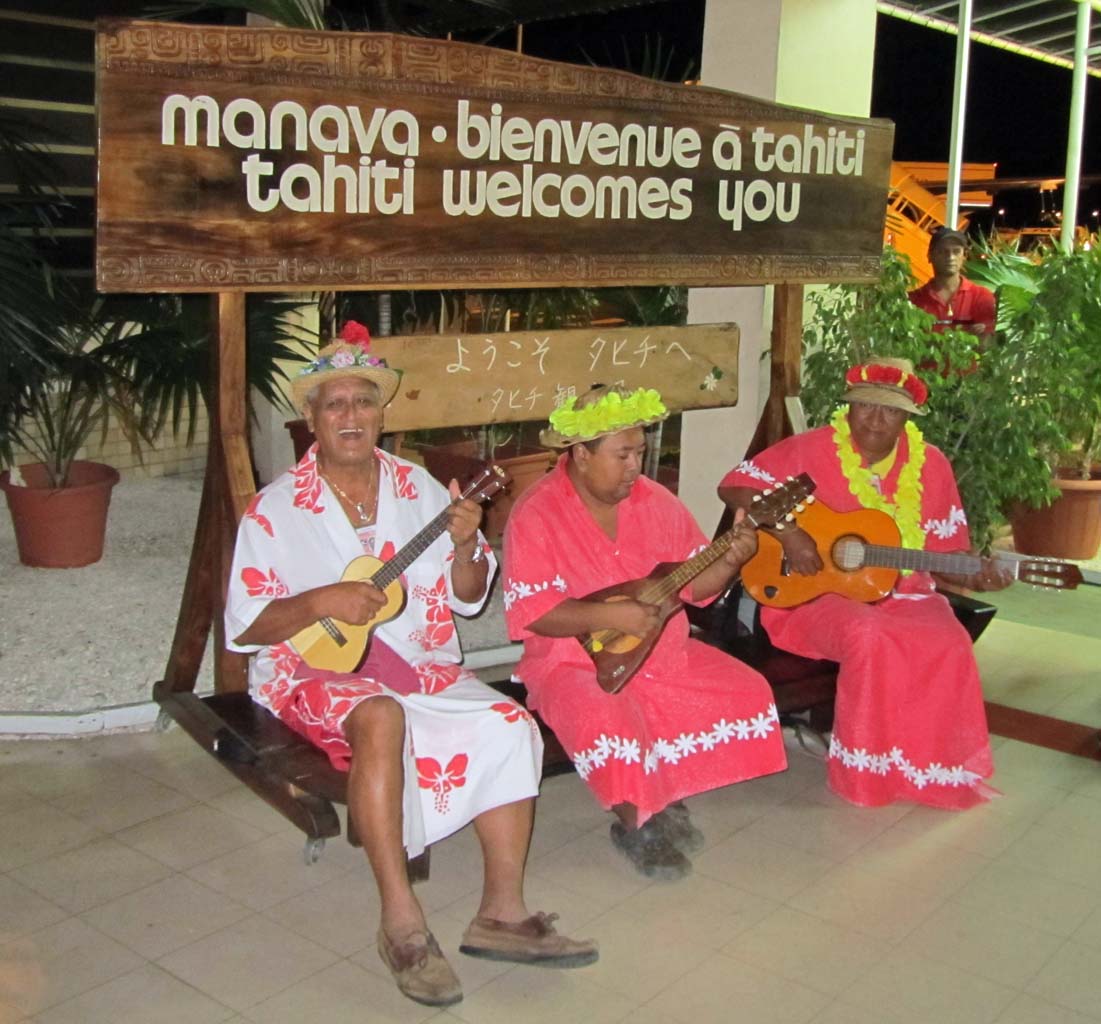
These guys made us feel welcome
We all collapsed at the airport motel. Luckily Iseline also managed to sleep. Tomorow we will fly to Tikehau, an atoll and supposedly a Pacific paradise.
Eirik
—–
