




Easter Island – Day 2 – More Ahu and Moai
January 4, 2011
After a brakfast with baguette, ham, cheese and jam we started our day at 9am again with Cristophe taking us to Orongo.
Orongo was the venue of the tangata-manu, the annual birdman competition. From about 1760 to 1878 Easter Island´s ruler for the next year would be chosen by the man who first could fetch an egg from the sooty tern on an offshore island and bring it back to Orongo.
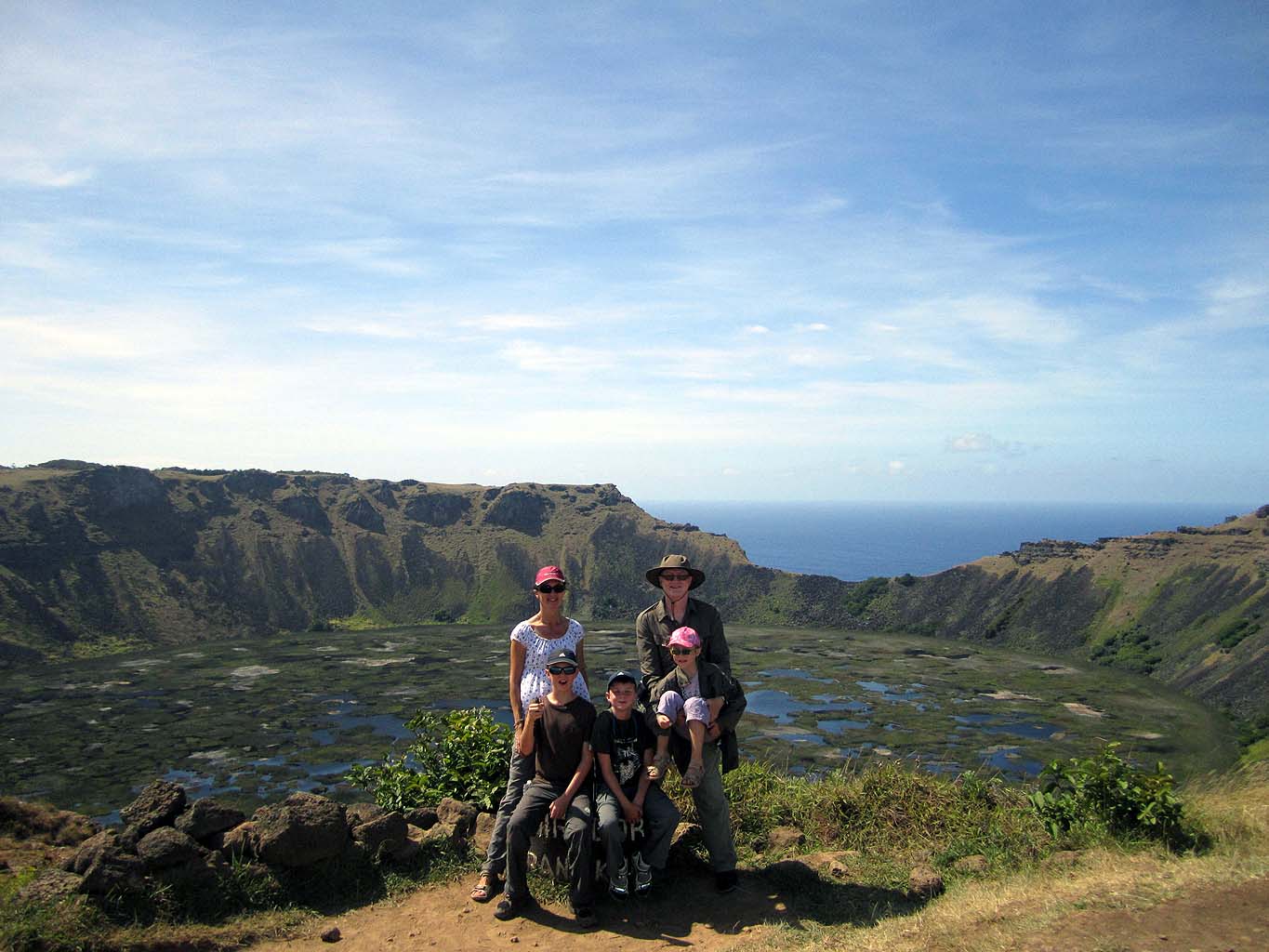
It is situated next to the crater of one of the three volcanoes on Easter Island. The island is actually the tip of a mountain standing over 2000 meters over the seafloor and was created by 3 different volcanic eruptions. Orongo is on the rim of the Rano Kau volcano at an altitude of over 300 meters.
The boys and I thought this looked more like a real volcano crater than the one at Ranu Raraku where we were yesterday:
The fresh water reeds covering the lake in the crater is the same type of totora which grows in lake Titicaca:
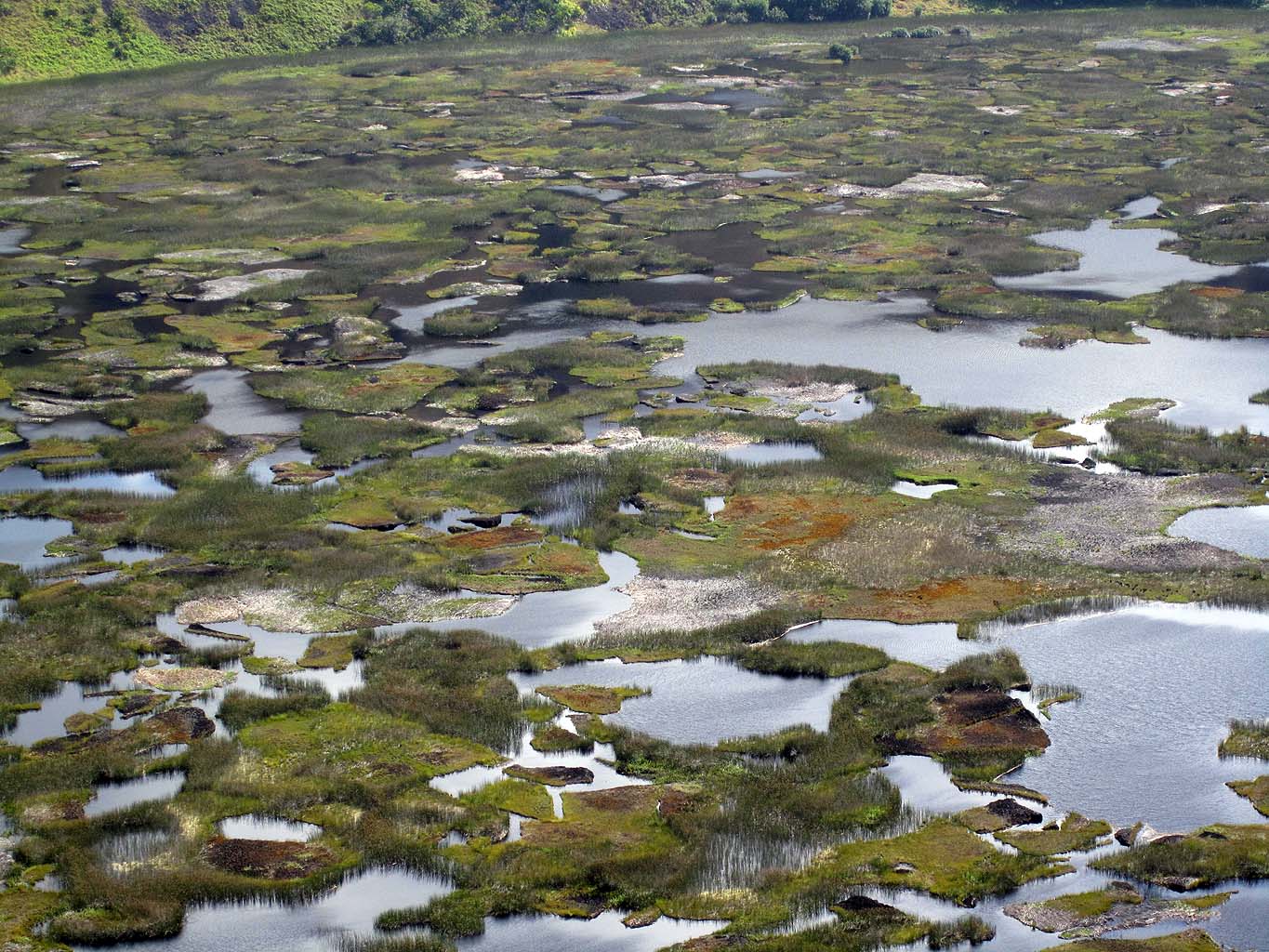
This is one of the reasons why Thor Heyerdahl thought Easter Island had been first populated from South America. However pollen analysis from sediments have shown that these reeds have grown here for at least the last 30 000 years (well before mankind crossed the Bering Strait to populate the Americas). The major theory today is that seeds were carried from South America in the feathers of migratory birds.
Once we entered Orongo we could see the small island where the birdmen-competitors fetched the egg :
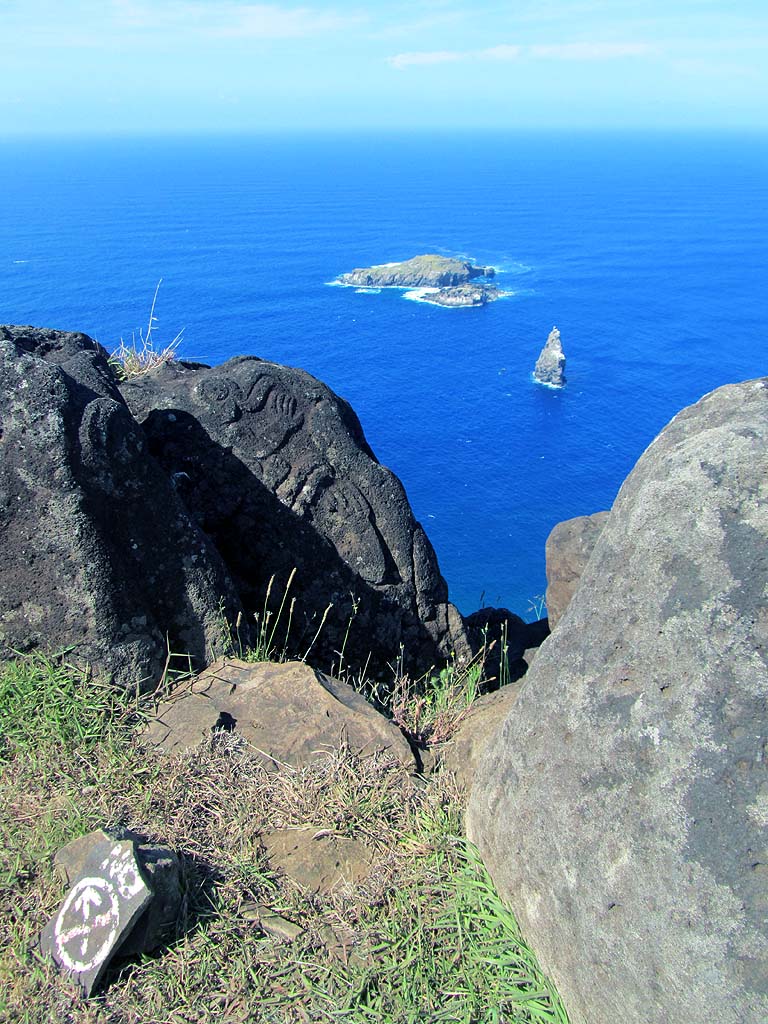
Note the distance down to the water. The competitors had to climb down a 300 meter (1000 feet) cliff before they swam out to the island. Many died, some because they were eaten by sharks. Once on the island they would wait for the first egg to be laid, a waiting period which could last for many days.
You can see a petroglyph on the rock to the left of the center. Here´s a zoomed part of the photo:
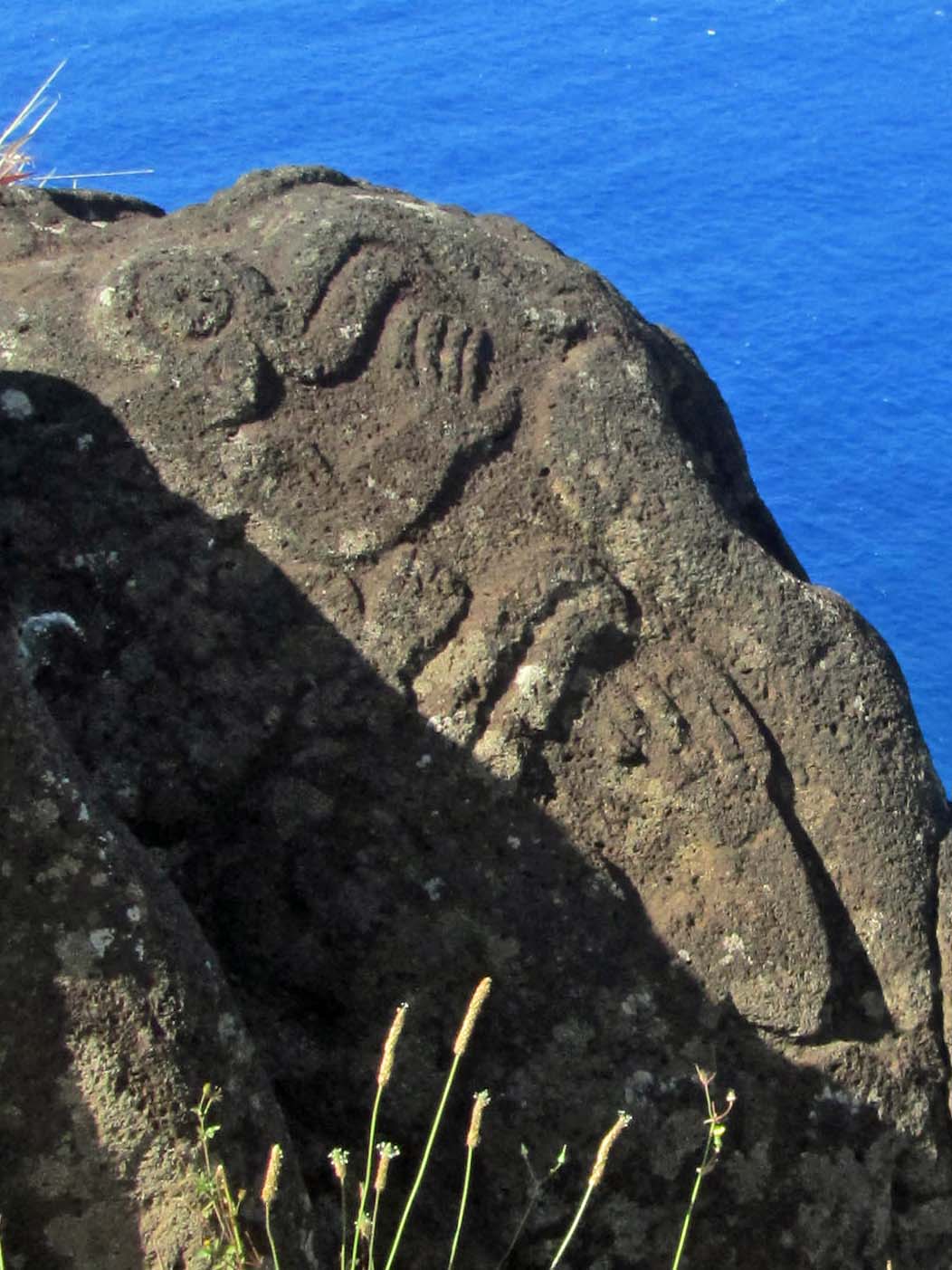
This is the birdman. Orongo has more than a thousand petroglyphs. Here is a sketch of the birdman, half bird, half man:
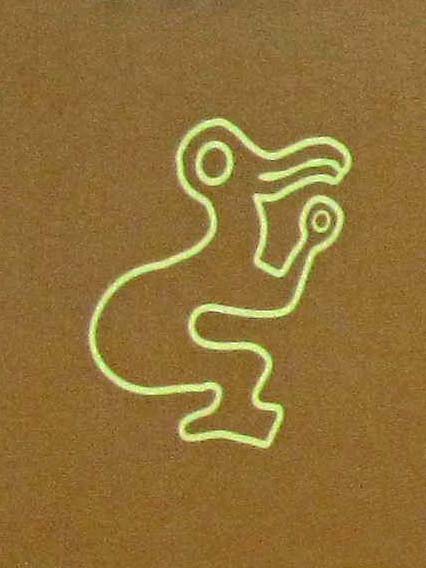
Interestingly enough exactly the same figure can be found in petroglyphs on Hawaii.
Orongo was a sacred village and was only used for a few weeks of the year, during the competition. It consists of 54 huts, one for each clan. The huts are unique and cannot be found anywhere else on the island.
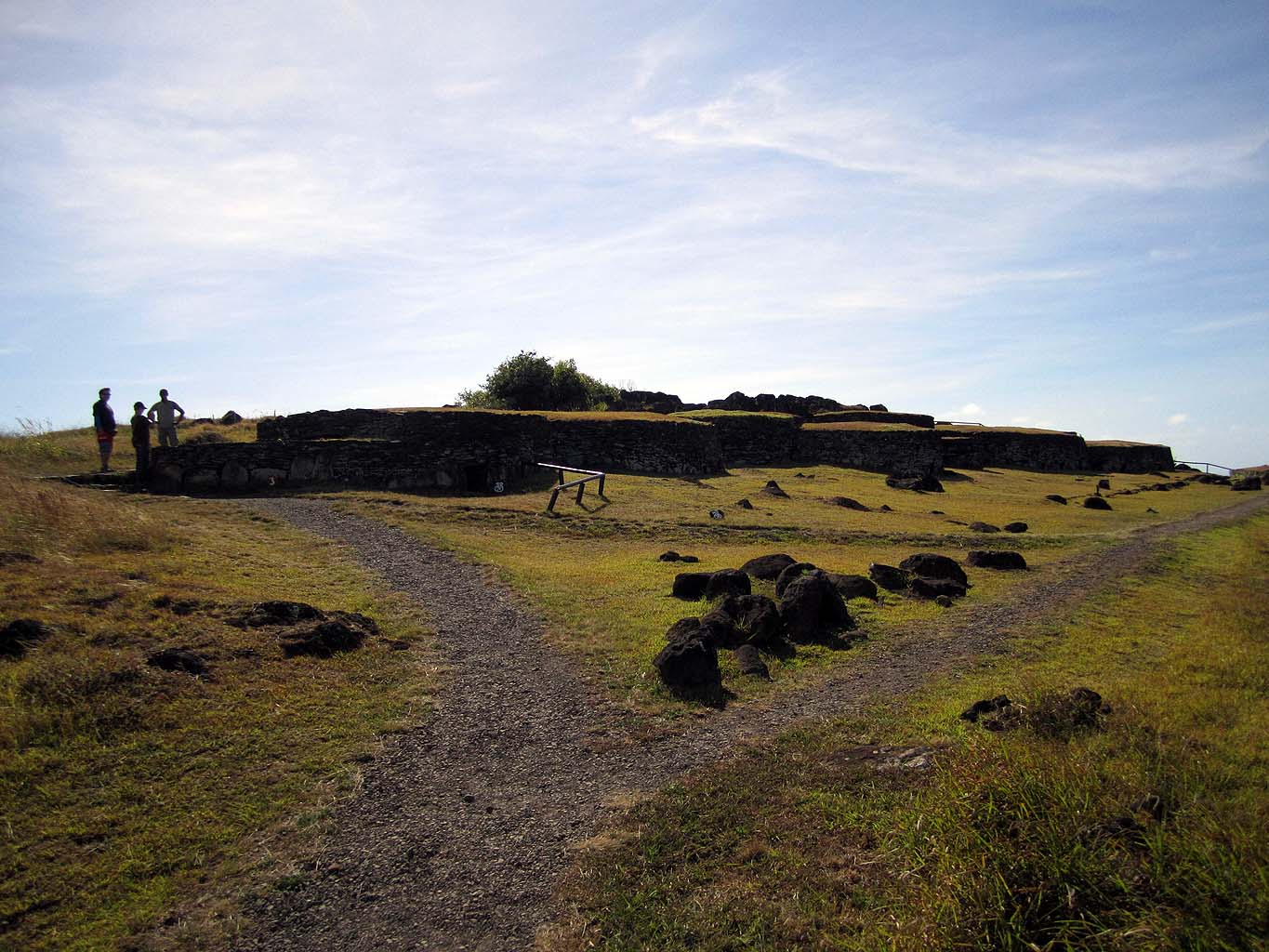
This one has had the roof taken off to show the construction. No mortar or cement was used, just flat rocks piled on top of each other taken from a quarry very close by..
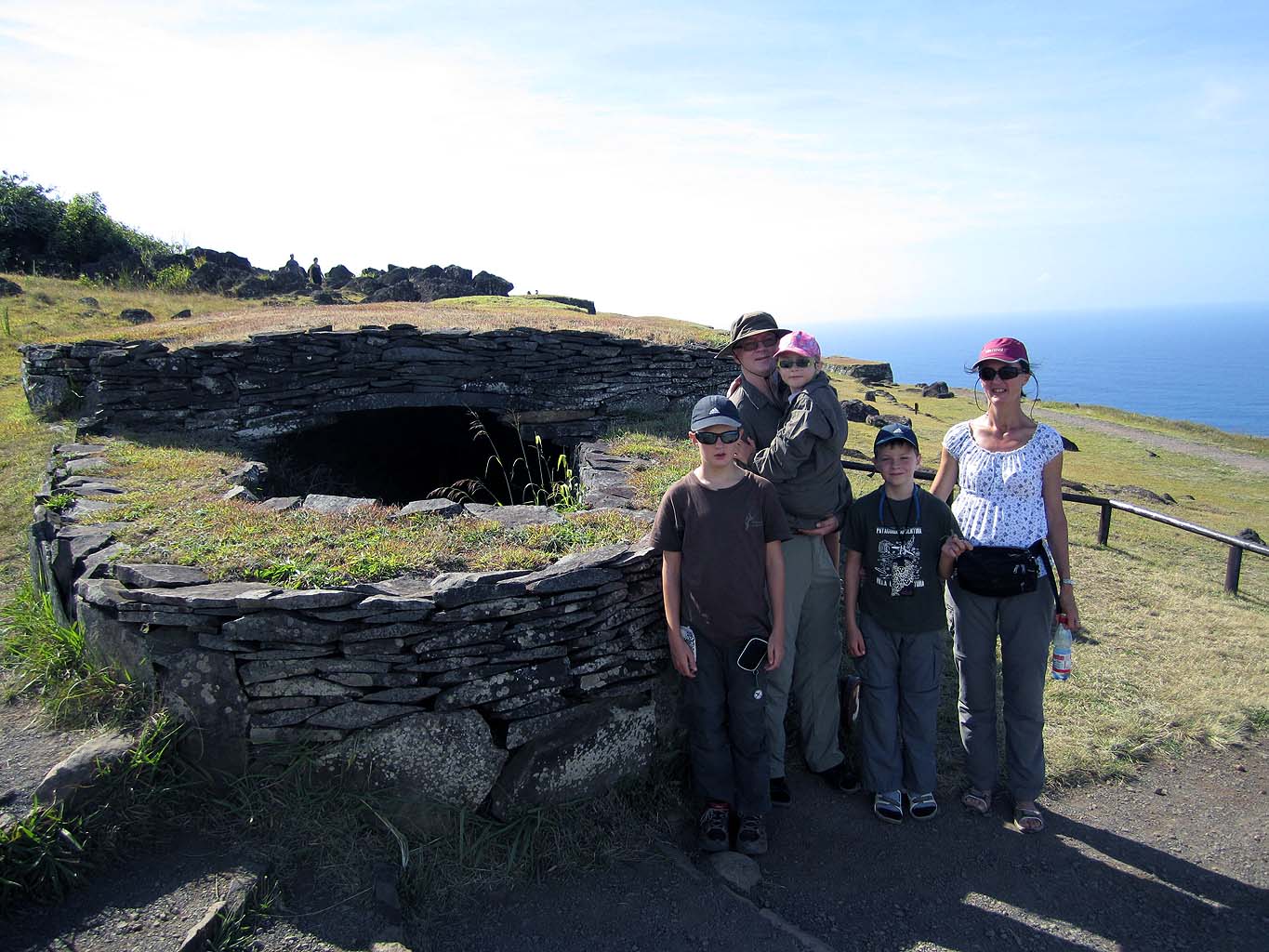
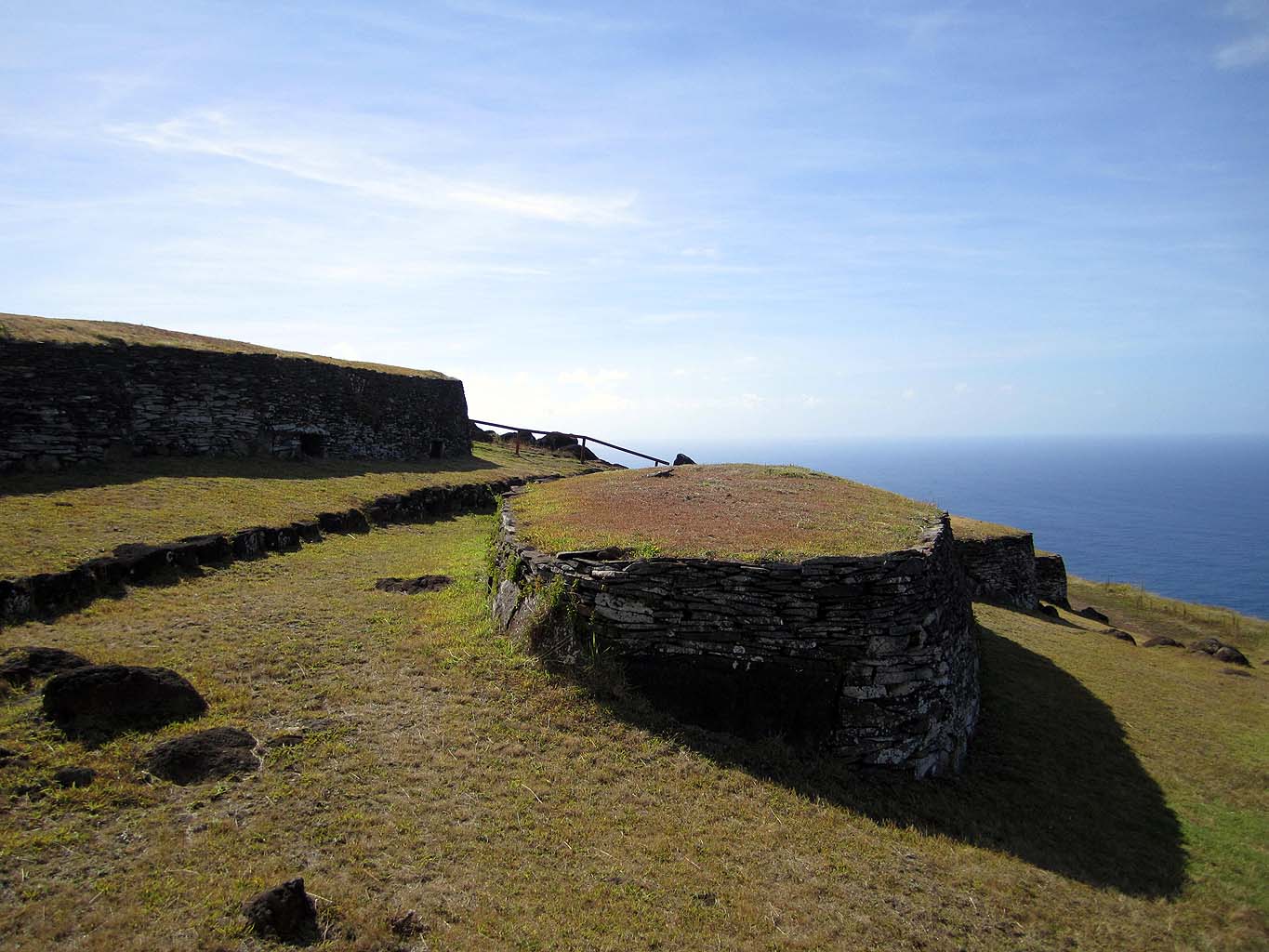
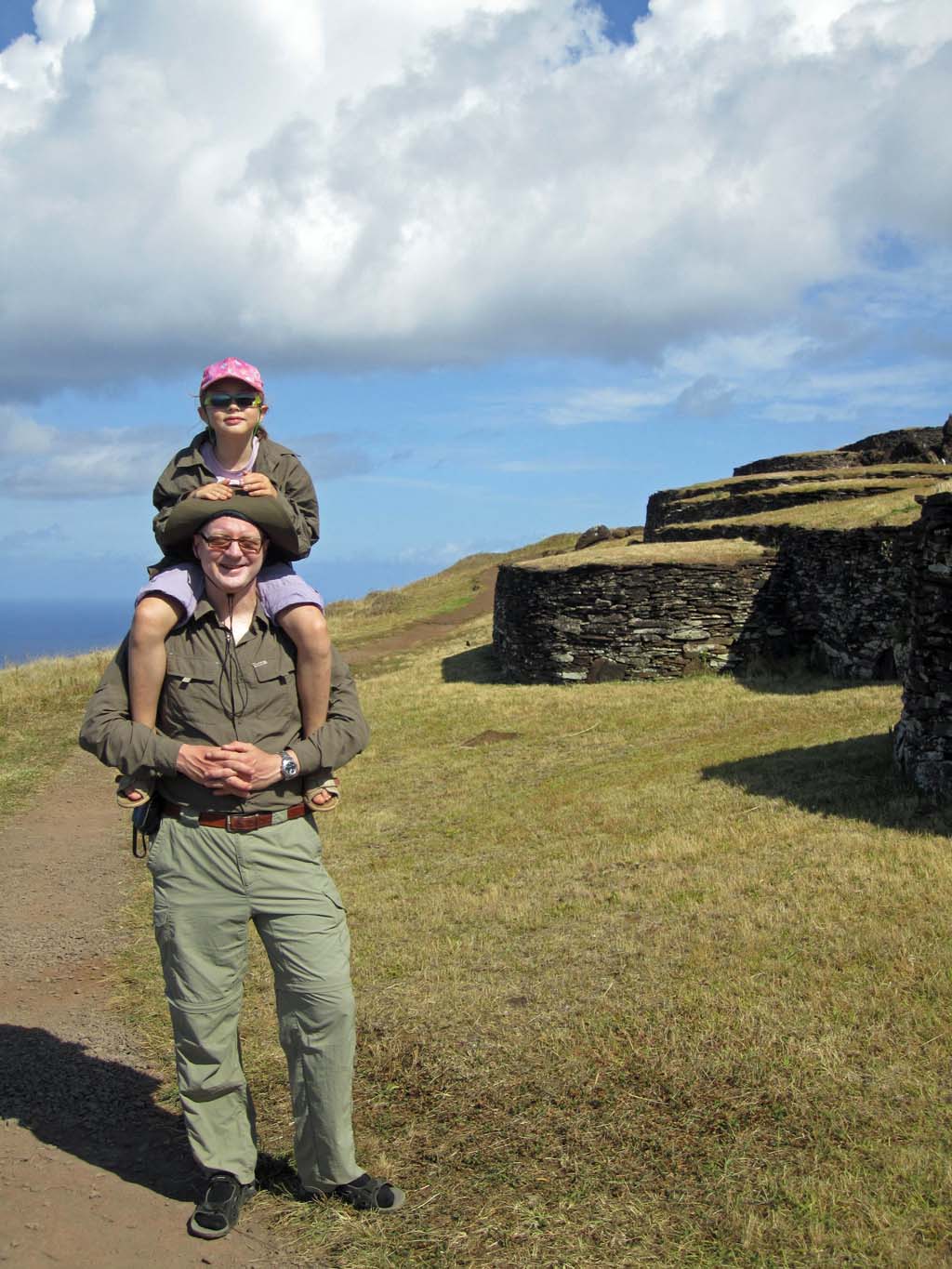
All the entrances are very small. This was a way of making sure enemies could not surprise the inhabitants.
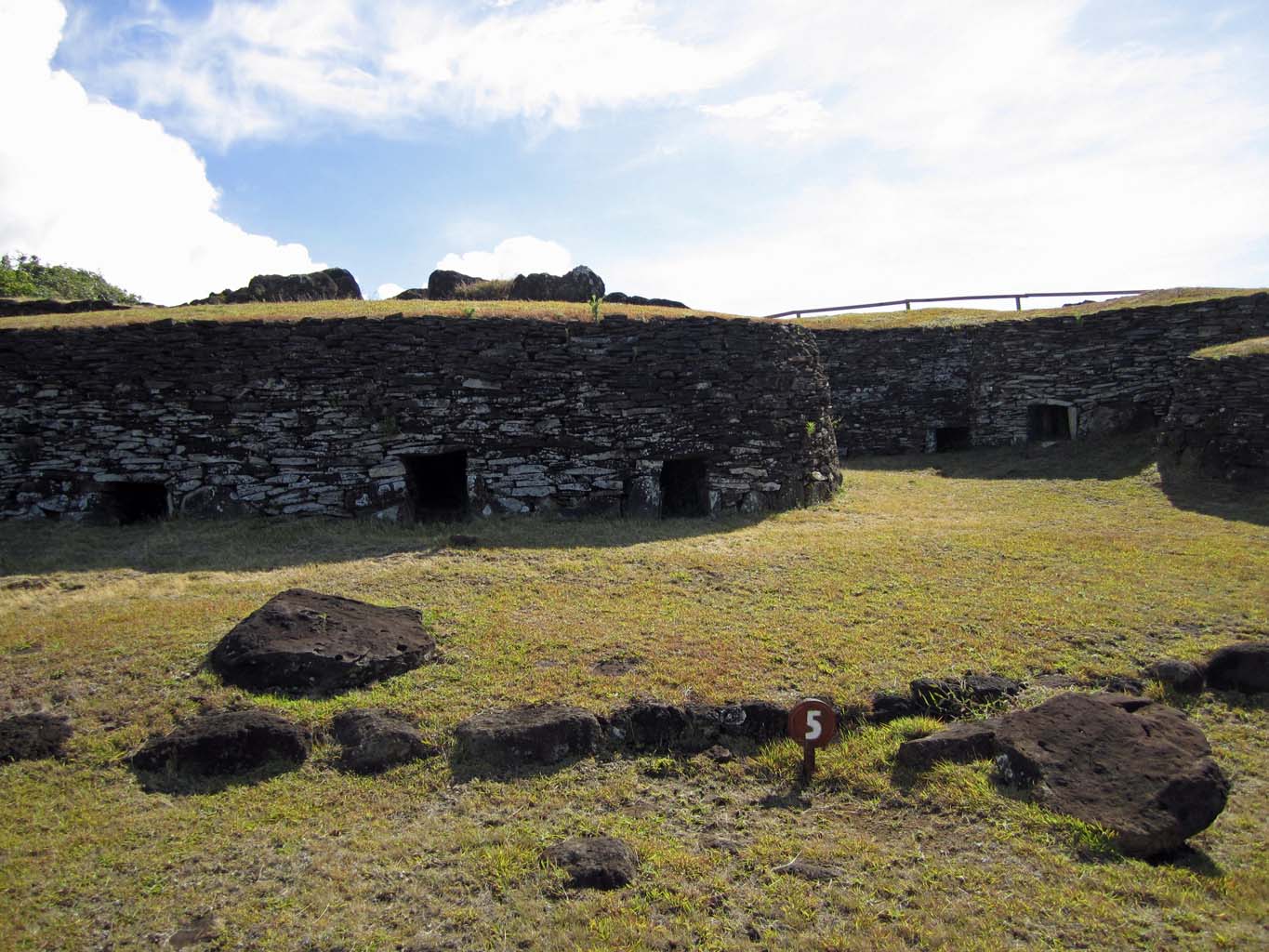
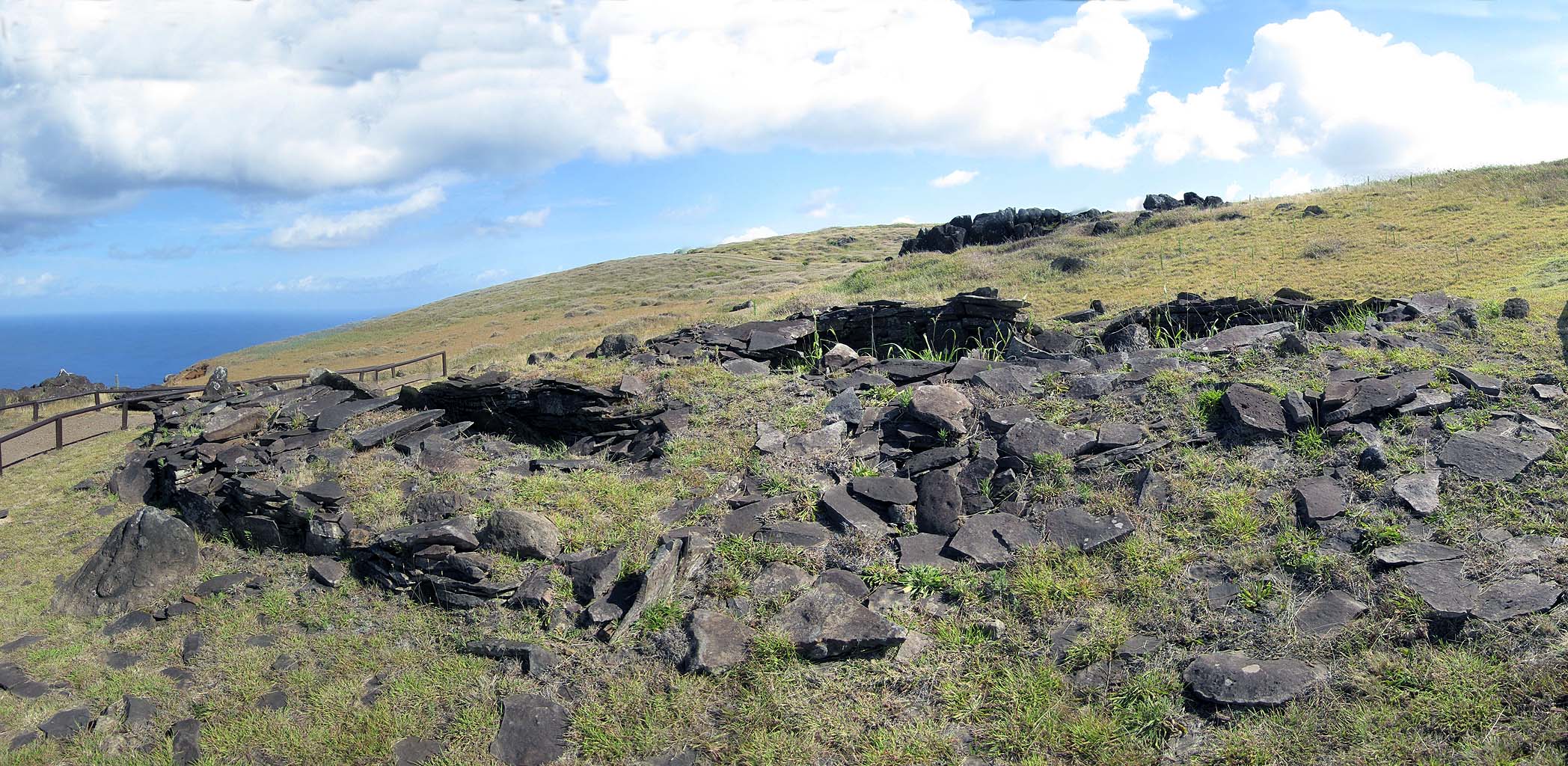
The standing houses have all been reconstructed. Erosion is not kind to flat rocks piled on top of each other. This house has not been reconstructed:
Iseline and a petroglyph:

This is the famous easter bunny petroglyph, which has given the island its name:
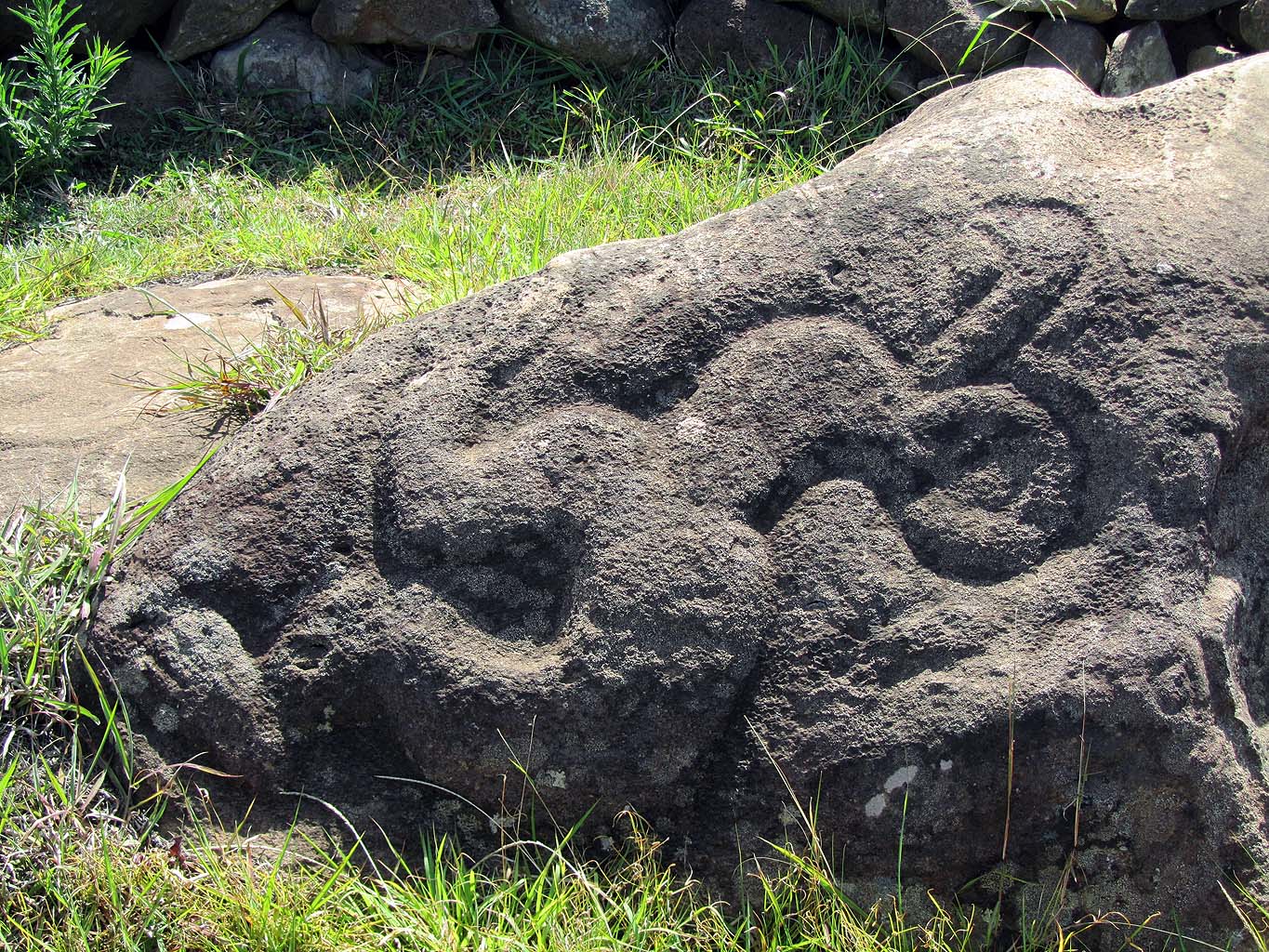
Sorry, just kidding, that´s another birdman.
Next stop was Vinapu, a site with a very special ahu
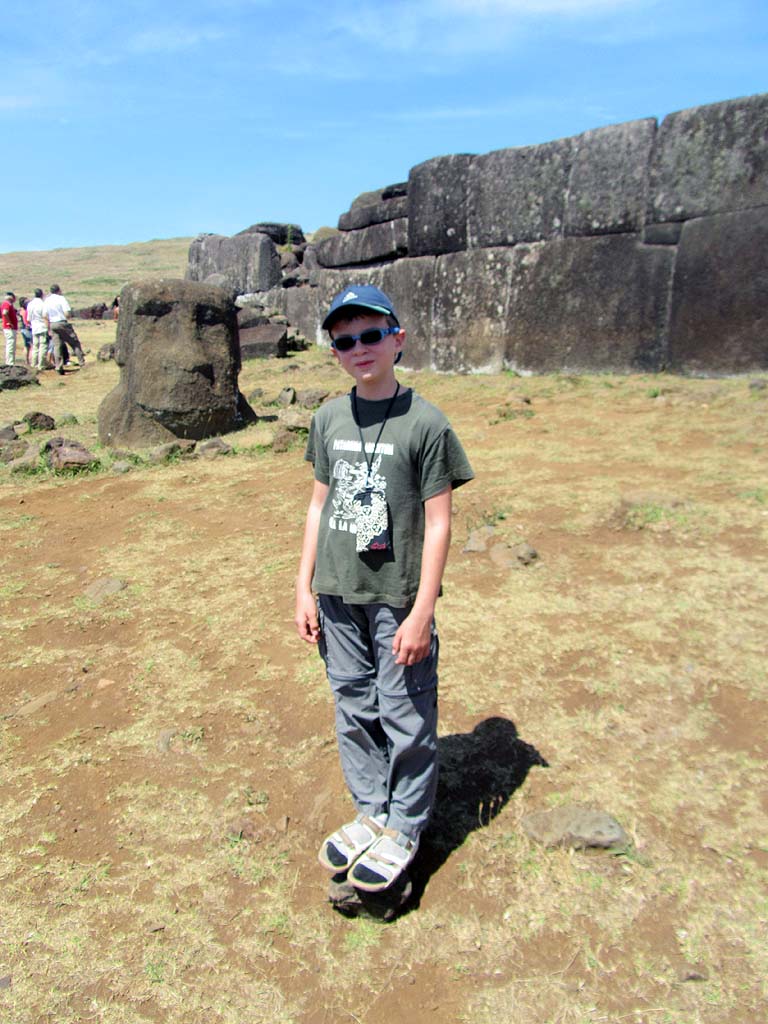
As soon as we saw it both Helene and I exclaimed: “But that looks just like the Inca walls in Cusco.”Thor Heyerdahl had also been to Cusco and this ahu is supposedly the one that started it all. According to Christophe it was here that Thor Heyerdahl got the idea that the ahus and moais could have been built by South Americans.
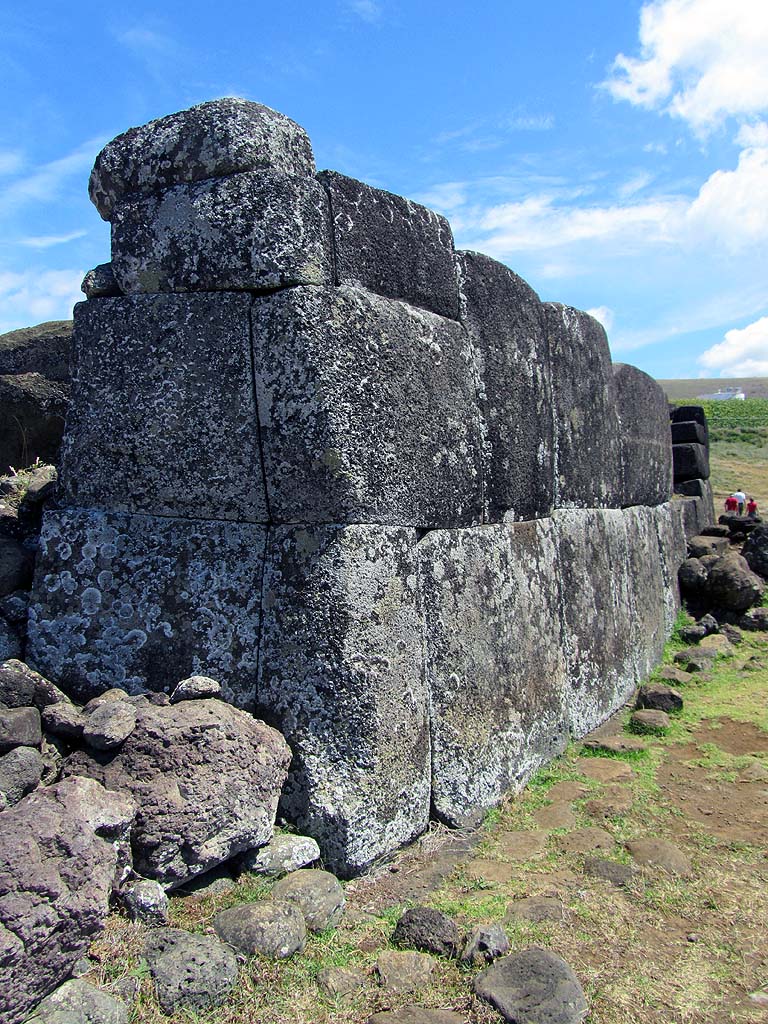
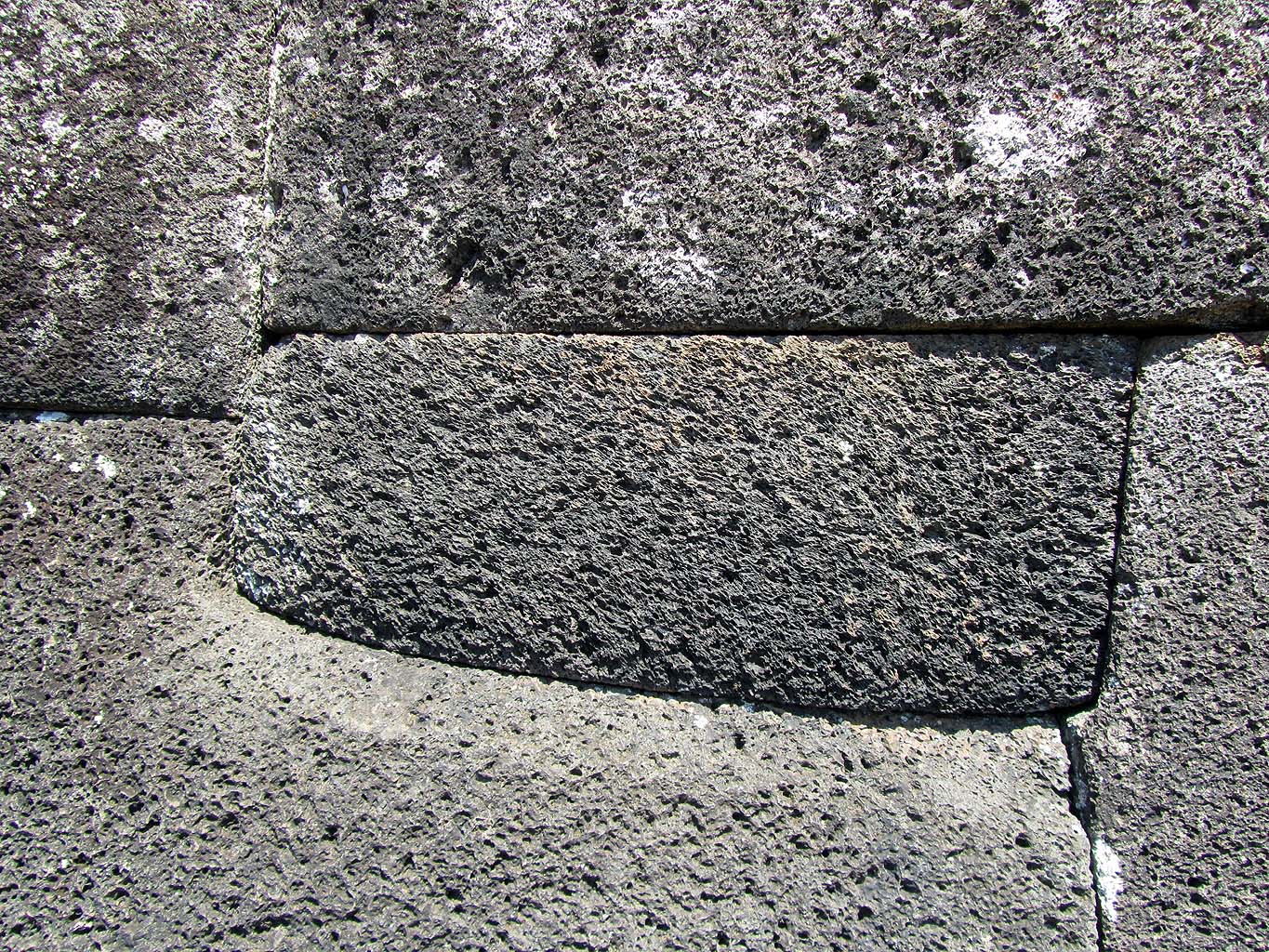
The technique is impressive, but as opposed to the very hard rock the Incas used the Easter Islanders worked with cheese carving in comparison.
Top-knot:
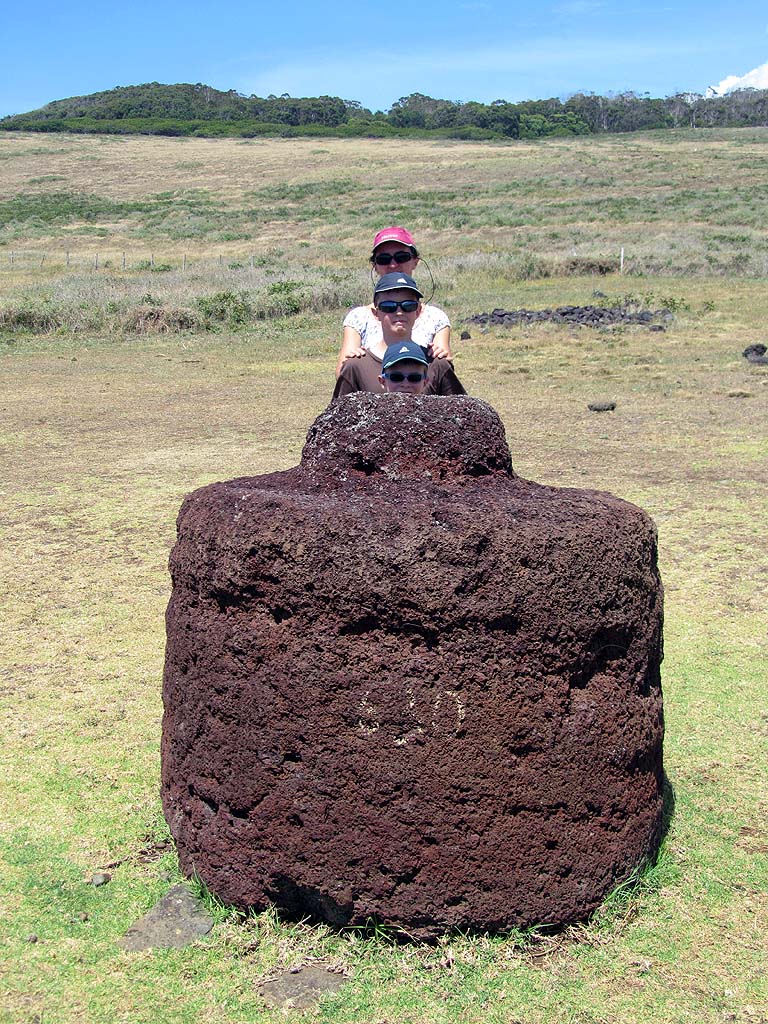
Different angle:
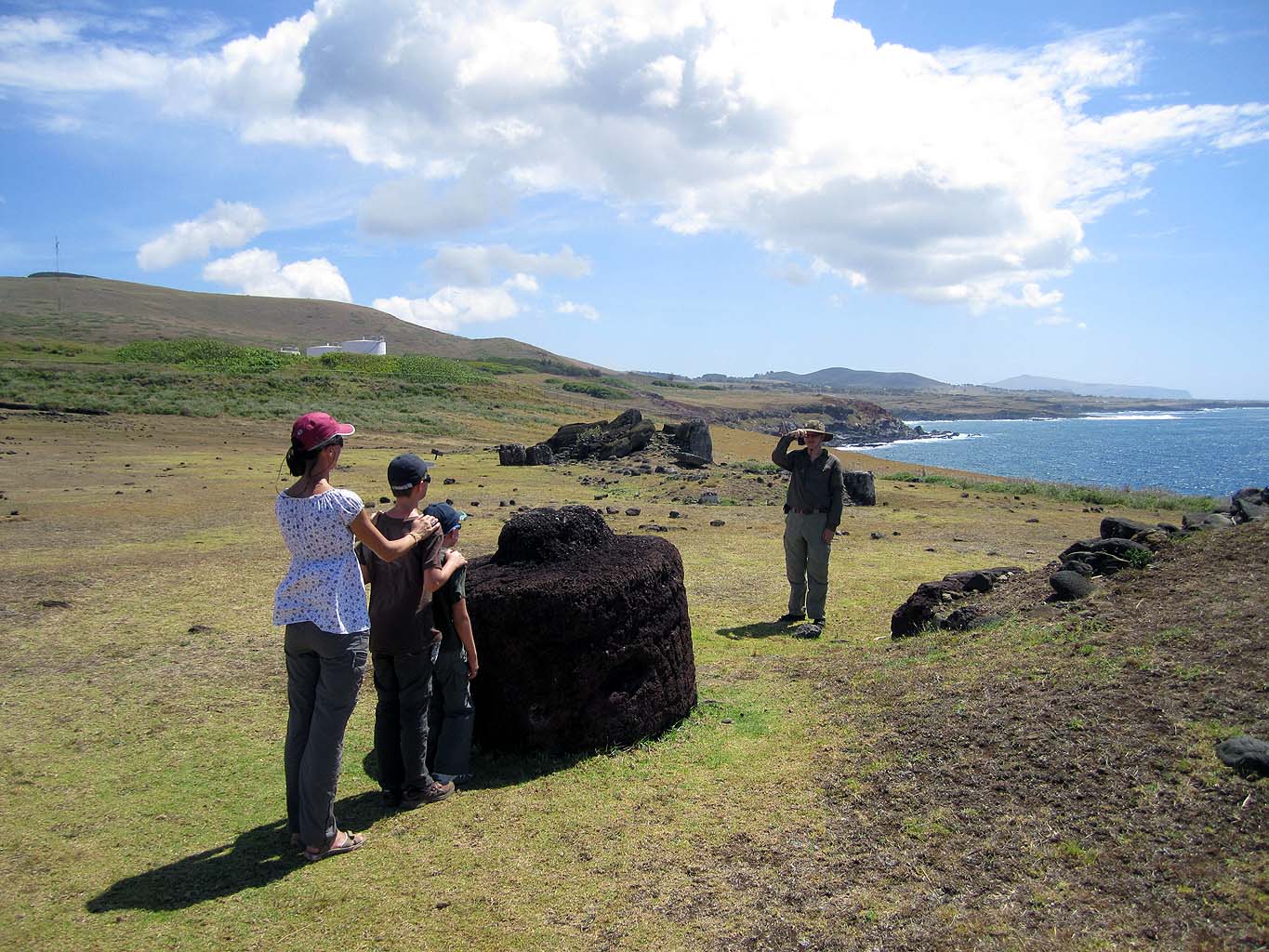
Notice the number written in white on the pukao. The Chileans declared Easter Island a historic monument in 1935. They made it illegal to remove objects from the island, made an inventory of all “stone monuments” and marked them with numbers. This was a reaction to a Belgian expedition which had loaded an entire moai aboard their ship and sailed away with it. The moai is still today on exposition in a museum in Brussels.
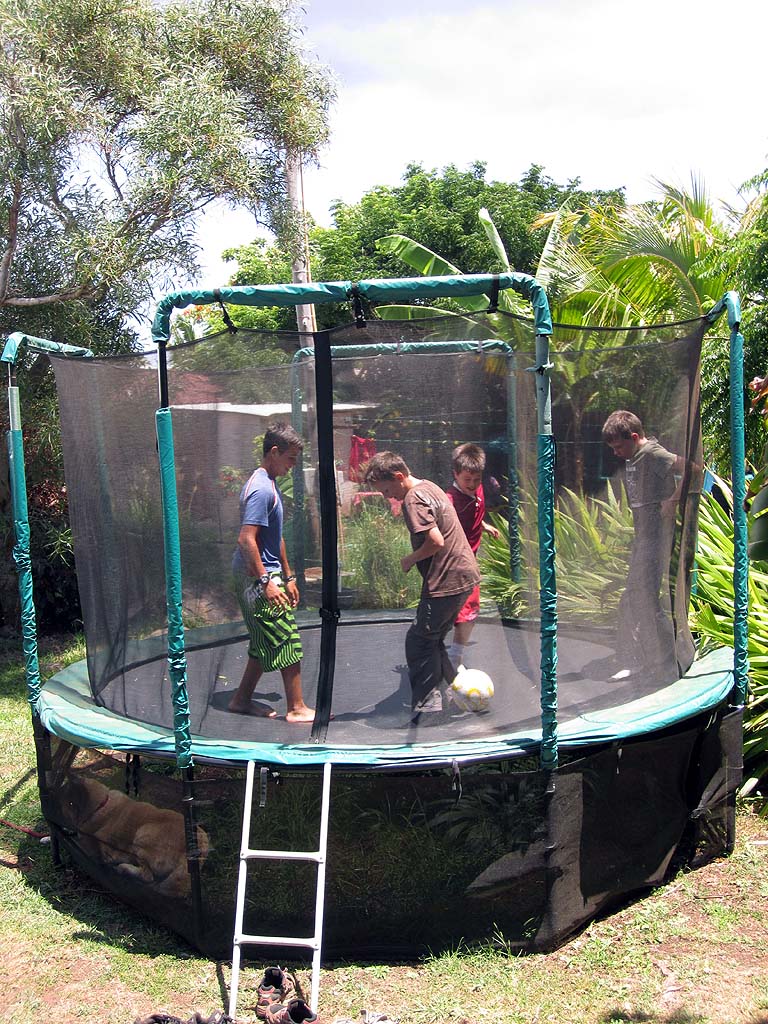
We went back to the bed & breakfast to have lunch and the boys played trampoline football with Christophe´s boys. An extremely sweat-producing sport:
No time to lose, our next stop was Puna Pau, the quarry where all the pukaos were made:

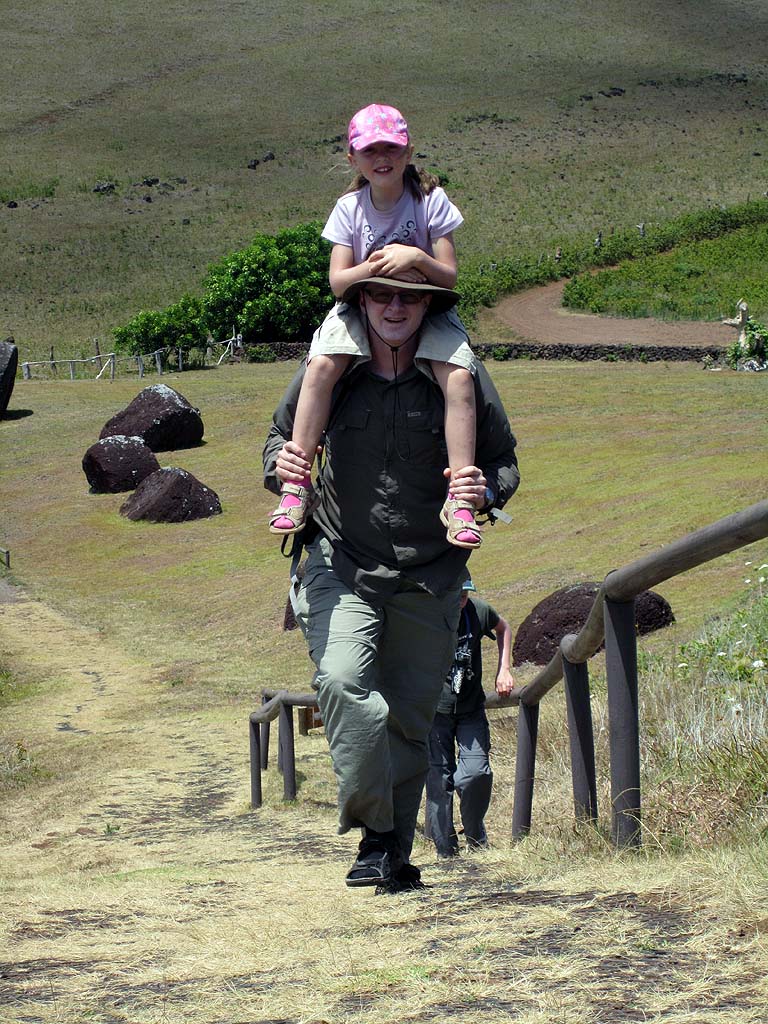
You can see red rock showing through a couple of places.
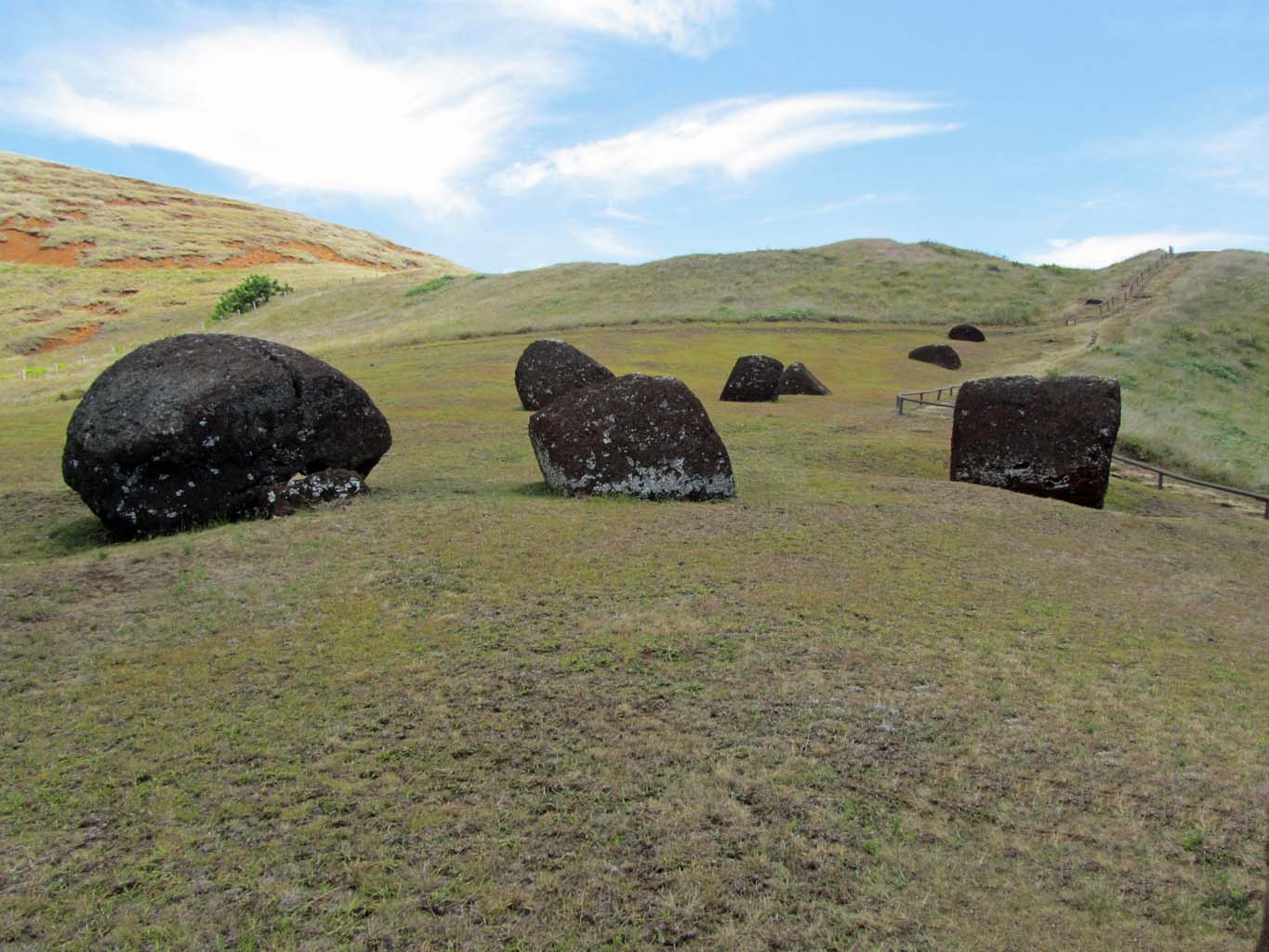
Pukaos who have been waiting to be transported to their moais for at least 500 years:
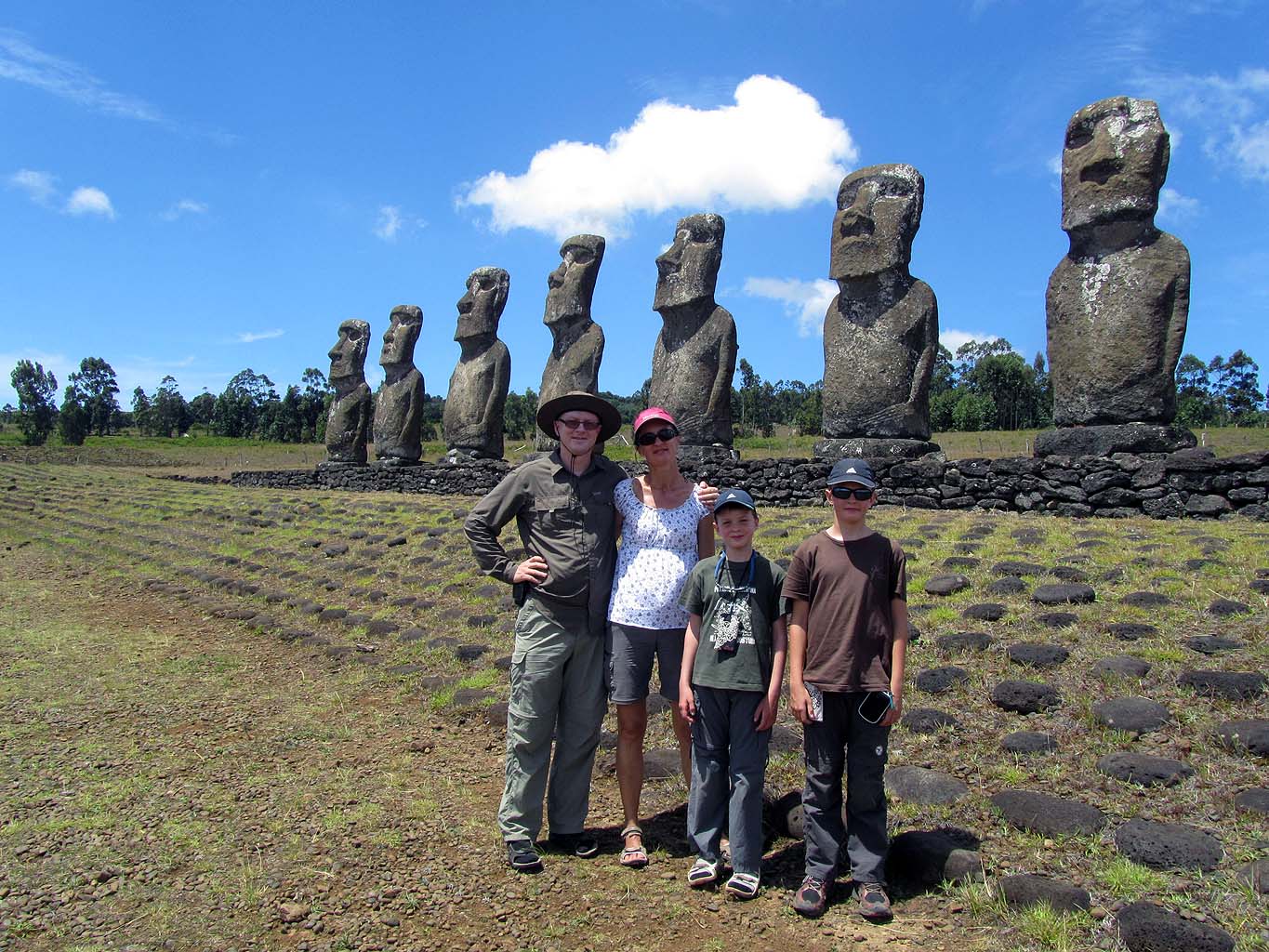
Then followed Ahu Akivi, the only ahu where the moais are facing the ocean. There are 7 of them:
Christophe turned out to have a sense of humour not too different from my own. Here is his hand while I am taking a picture of Adrian:
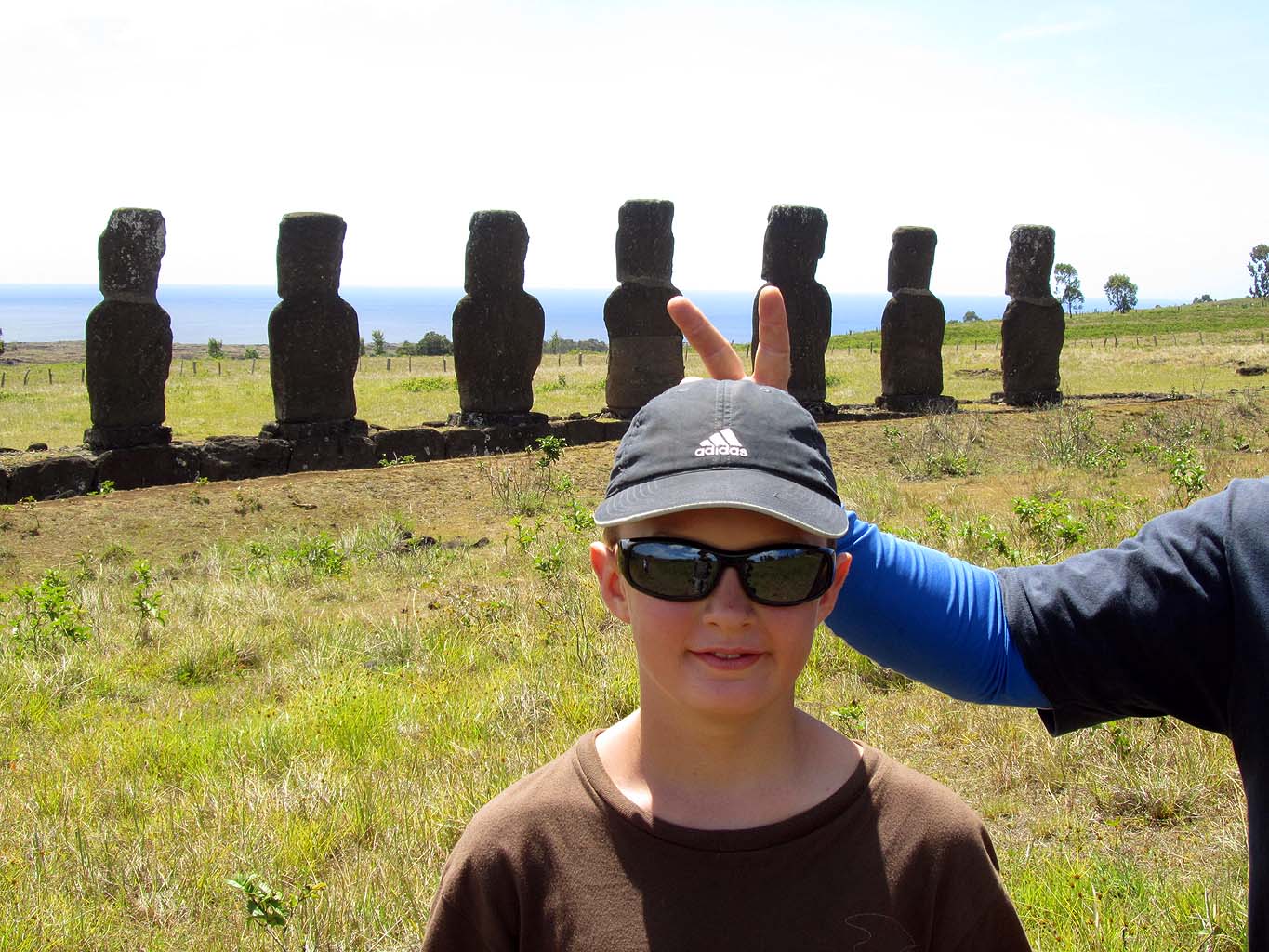
As you can see the moais are looking to the sea. According to oral tradition the 7 represent the 7 scouts who were on boardthe voyaging canoe which first discovered the island. The 7 who went back to Mangareva (probably) and told people there they had found a new land in the east.
However it is very difficult to know for sure if the oral tradition is correct on Easter Island due to the extreme decimation of the population in the 1860s. In December 1862 Peruvian slave traders discovered Easter Island. Through a series of raids they killed or kidnapped 1500 islanders, a very significant portion of the inhabitants, and brought the kidnaped to work as slaves in Peru. When the traders were later forced to return the people to the island by the Peruvian government most of the islanders had already died in mines or during other hard labor. The few who were left were sent back under inhuman conditions. Several died during the voyage and some of those who made it had smallpox. An epidemic broke out and killed more than those who had made it back from slavery. In 1867 an estimated quarter of the remaining population died from smallpox. In an attempt to save the islanders missionaries evacuated most of those who were left in 1871 to the Gambier islands (French Polynesia). They would never return.
Back on the island were a mere 171 people, most of them old men. In 1877 the population hit rock bottom at 111. Only 36 of those 111 ever had children. All native islanders of today are descendants of those 36.
In the slave raids in 1862/63 the entire upper class was wiped out. Obviously with such an extreme loss of people much of Easter Island´s oral tradition and common cultural heritage was lost. Something very important was also lost, the history and decoding of the only known writing system in the Pacific: Rongorongo.
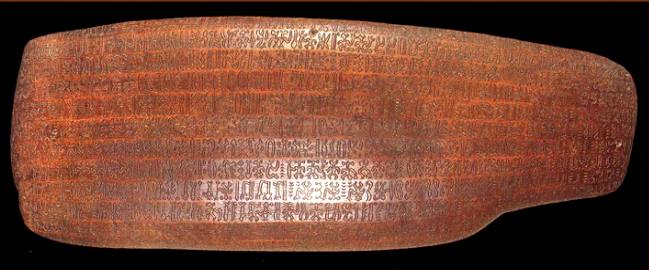
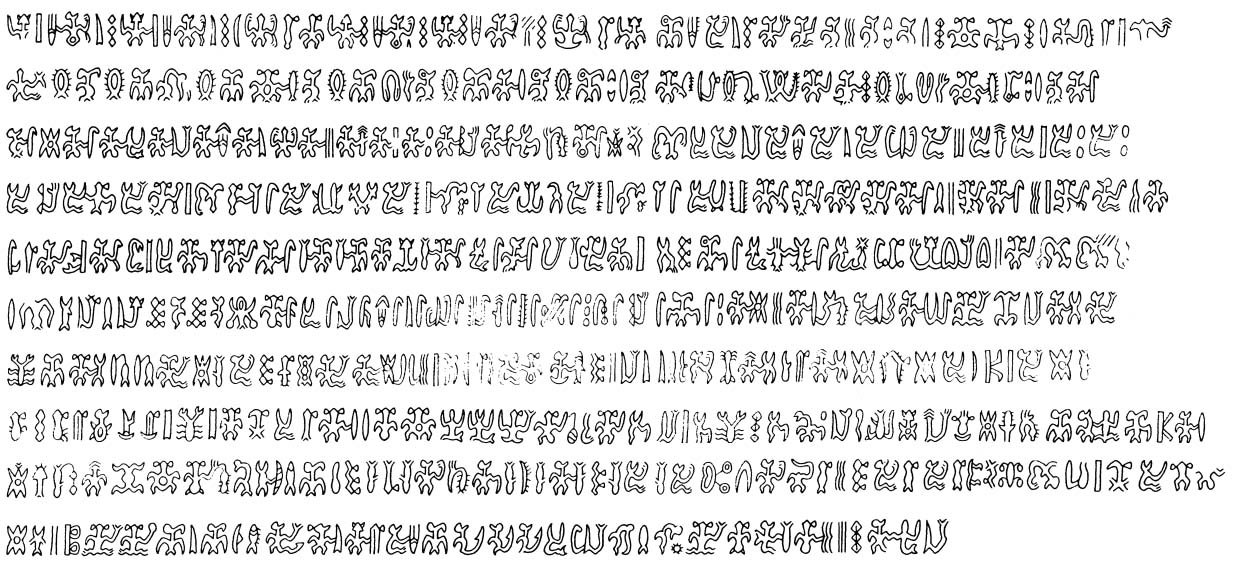
It is still debated wether Rongorongo was invented before contact with the west or not. If it was developed independently it is one of only 3 or 4 times in human history a writing system has been invented independently.
In 1868 the bishop of Tahiti received a gift from catholic converts on Easter Island. It was a line made from human hair, possibly a fishing line. But, most importantly, it was wrapped around a piece of wood with characters engraved in it. The bishop immediately understood the significance and asked the priest on the island to collect as many tablets with inscriptions as he could and also ask the islanders how to read it.
It was too late. Only 6 years before all literate people on Easter Island had been killed or kidnapped by the slave traders. No one was alive who knew the secrets behind Rongorongo and they were lost to mankind forever. Only 4 years before the priest on the island had seen hundreds of tablets with scripts on them, those had now been used for burning, canoe building, etc.
Only 26 tablets with Rongorongo have survived, not a single one of them are today on Easter Island. All attempts to decipher the texts have failed. There simply isn´t enough data left.
Our last goal for the day was the caves at Ana Te Pahu. These caves have been formed by lava flows. Lava has stiffened on the outside but continued to stay melted and run on the inside. When the lava flow has emptied the inside a cave is left, subway tunnel style. The caves at Ane Te Pahu were used by people who fled from the slave traders in the 1860s. They made stone beds, which are still there today, to have something to sleep on.
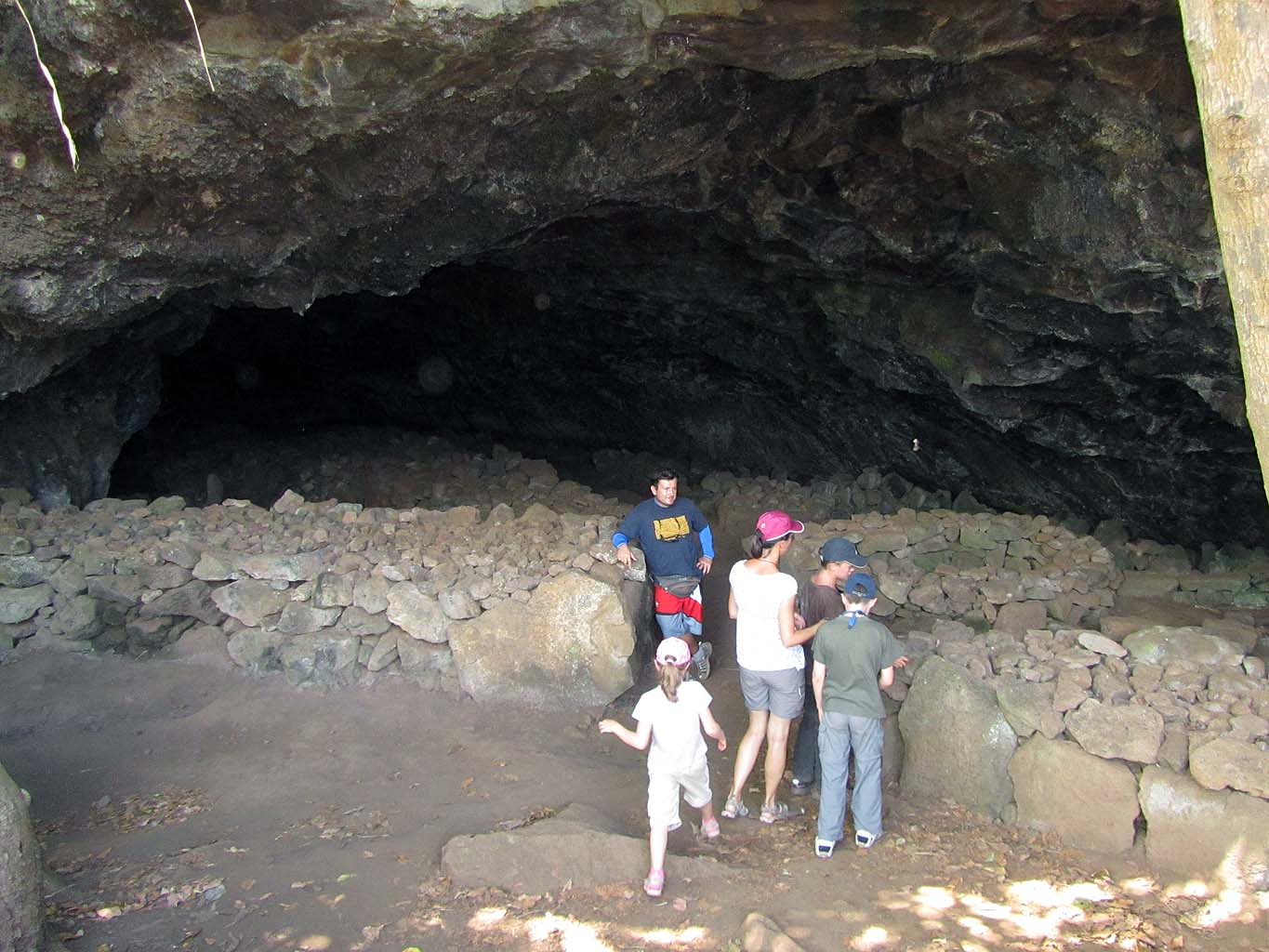
The lava here flowed about 200 000 years ago. In the lava rock many imprints of large tree trunks have been found, like this one:
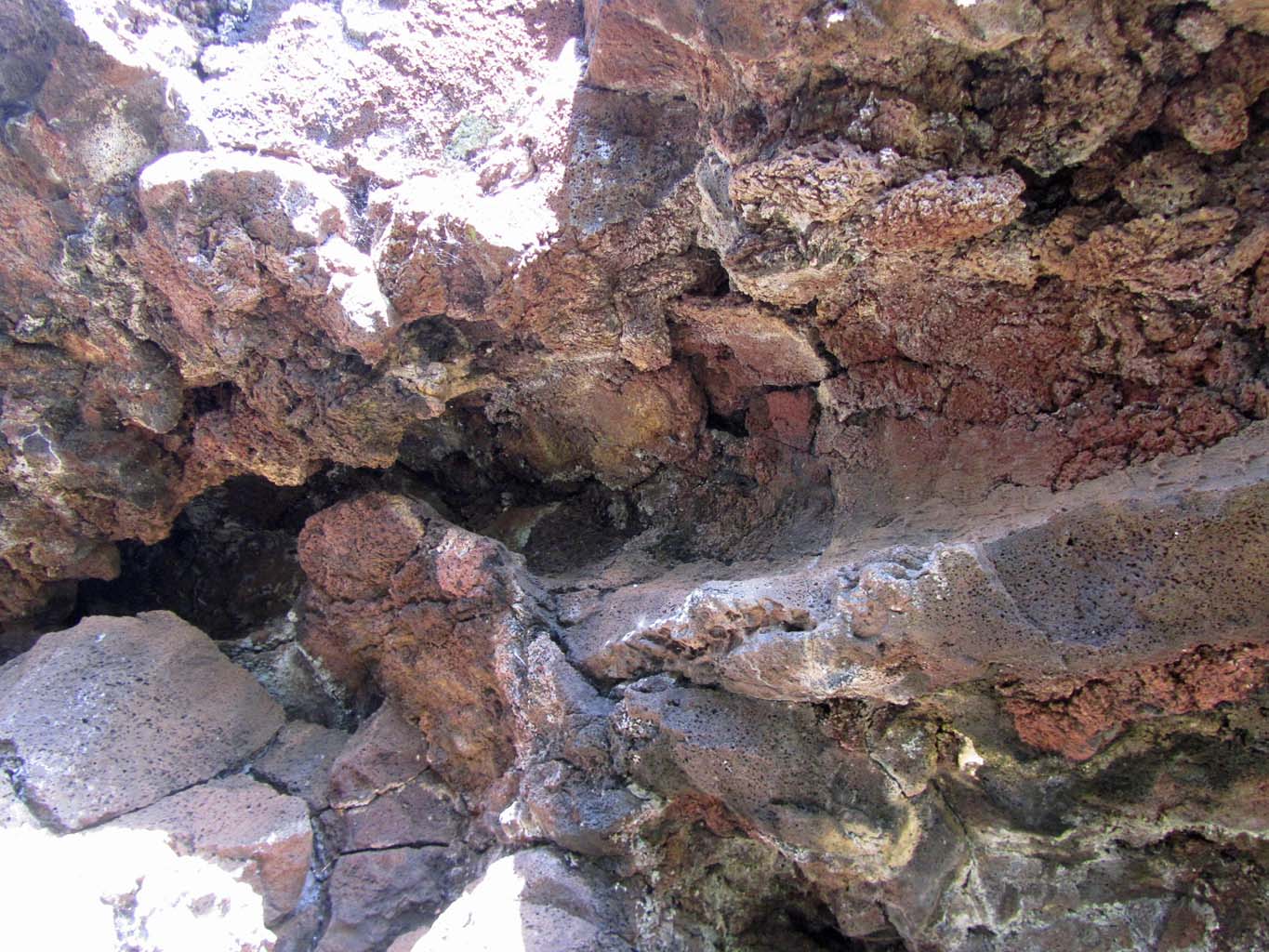
There is no doubt, Easter Island was covered with lush jungle for a at least 200 000 years. It took humans about 1000 years to destroy it completely. This is the landscape around the caves today:
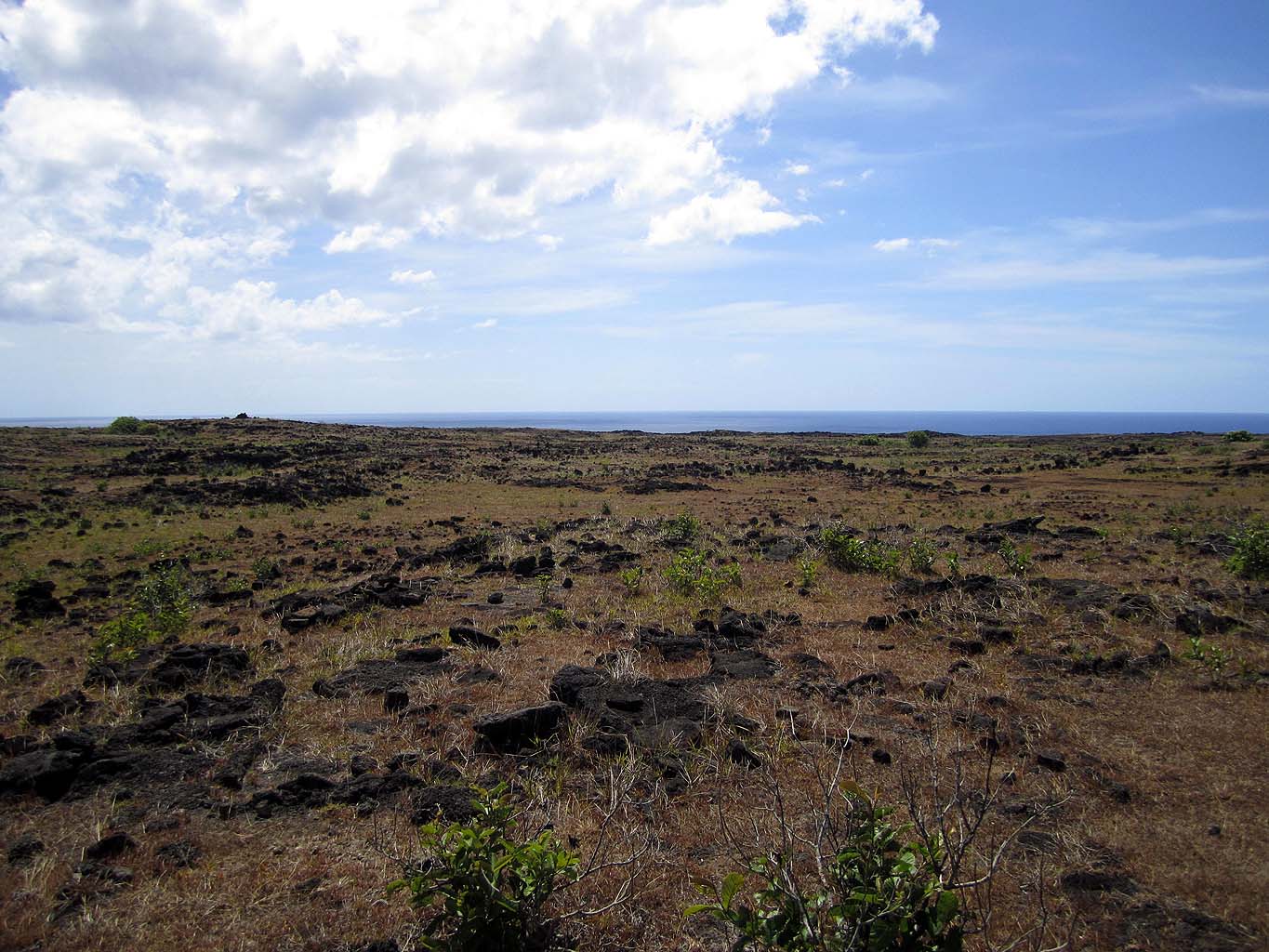
No further comments, your honor.
Eirik
—–

Great blog entry. I read the last couple with such interest. Keep them coming, it is nearly like I have been there …
Passionnant, c’est dommage que la traduction soit un peu difficile mais merci pour les commentaires
Dette ser så spennende ut. Vi har jo lest så mye om øya, så dere er heldige som kan oppleve dette. Her er tankene våre rettet mot vår avreise til Thailand. Savner dere veldig nå ! Kos og masse klemmer