




NZ South Island – Day 13 – Doubtful Sound
March 6, 2011
We got up with the sun again and prepared our home for another move.
We had rain last night and thunderstorms during the night. The morning was cold, very cold, and gray. We feared the worst for our cruise on Doubtful sound.
We were after all now going to enter Fiordland national park, the wettest place in New Zealand, with annual average rainfall of 6-7 meters. There are close to 250 rainy days per year here.
We moved out of the camp ground and a few hundred meters down the road we reached Pearl Harbor, the curiously named harbor in Manapouri, and parked our camper van.
Our adventure started with a boat ride crossing the large lake Manapouri. With its surface area of 142 square kilometers (55 square miles) and maximum depth of 440 meters (1440 feet) it is one massive chunk of water. The lake was dug out by a glacier during the last ice age, some 20 000 years ago. It has an elevation above sea level of 178 meters (584 feet), meaning that its bottom is well below sea level.
The western end of the lake is very close to Doubtful Sound, which being a fjord, is at sea level. In fact, as the crow flies, there are only 10 km (6.2 miles) from the lake Manapouri to Doubtful Sound, with a drop of almost 200 meters. The perfect location for a hydroelectric power station. And, surprise, there is one.
The Manapouri power station, with a maximum output of 730MW, is the largest hydroelectric power station in New Zealand. It is located inside the mountain and the water is brought down to the sound and through turbines in a tunnel in the mountain.
As we boarded our first vessel for the day
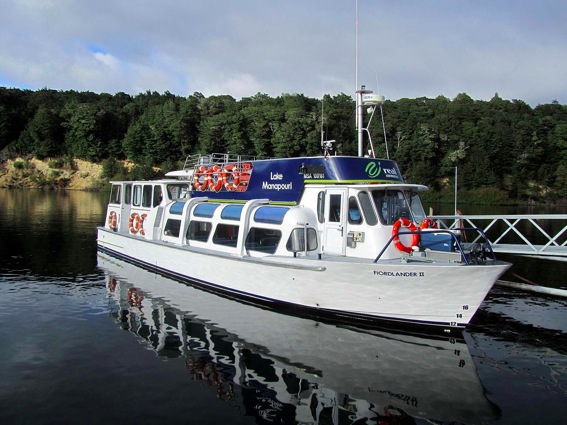
the cloud cover started cracking up
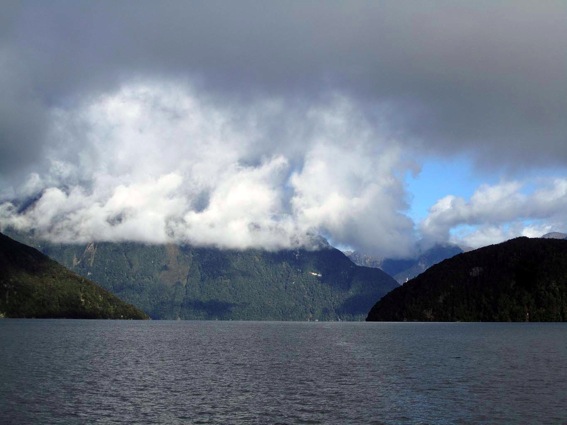
giving us great views of what is essentially a fresh water fjord.
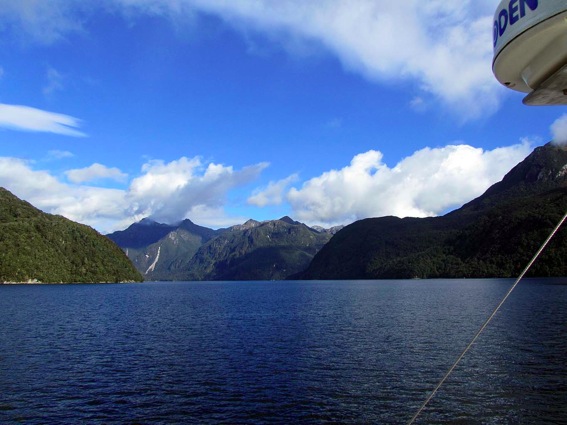
After about an hour on the water we were bussed to Doubtful Sound through a green mountainous landscape
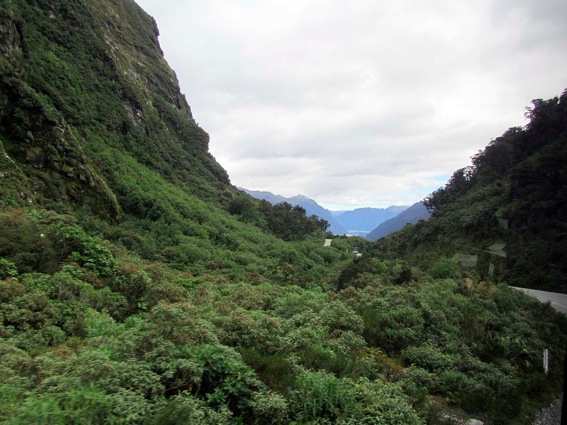
with cool trees
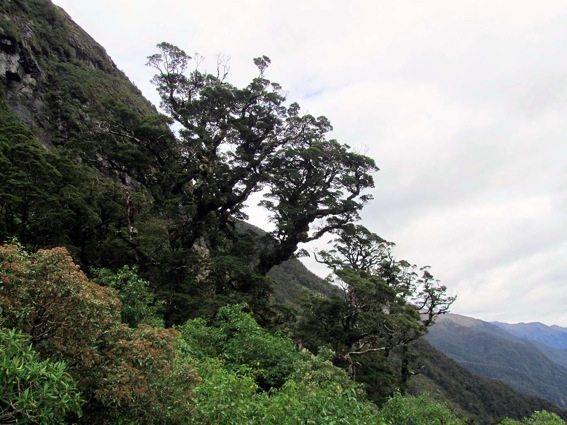
First steeply upwards until we reached a vista point where we could see the fjord.
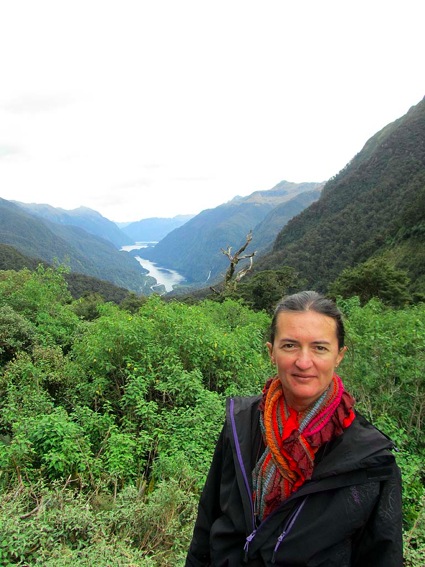
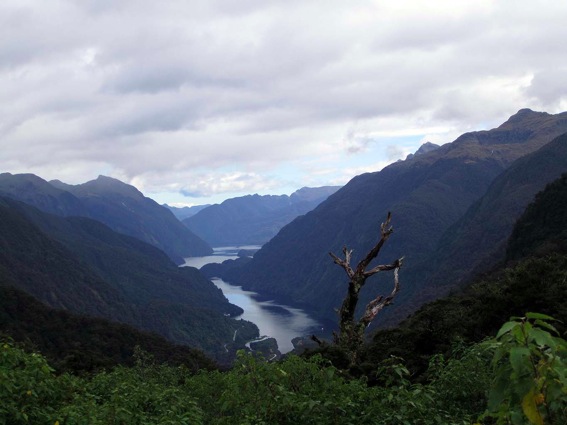
Doubtful Sound, as with all the other “sounds” in Fiordland, is a true fjord; a valley carved by a glacier which has been submerged by the ocean.
John Lort Stokes named all the fjords here “sounds” when he surveyed New Zealand in the 1840s. He was most probably ignorant of their true nature and has been cursed by the New Zealand tourist industry ever since. Instead of fixing his error, by simply calling these fjords for fjords, the Kiwis have opted to call the national park Fiordland and keep the sounds.
Once we reached the fjord, we all got a deja vu. Haven’t we seen this scene somewhere before?
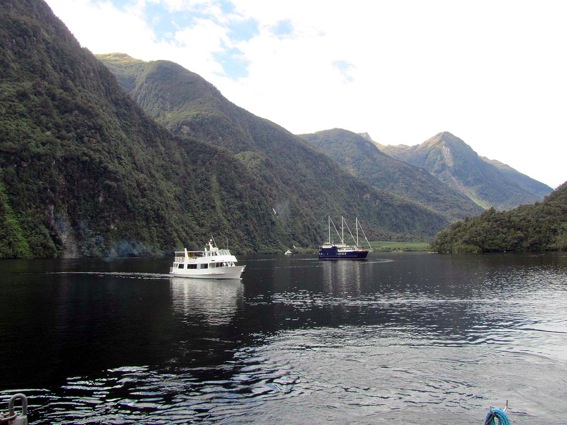
It looked a lot like the fjords of western Norway, with one difference. There are no farms up on the mountainsides. With the extreme rainfall here there is in fact no topsoil. Any piece of soil not vigorously kept on to by the roots of some plant is very quickly washed into the fjord. This is also the reason why there are many tree avalanches here. Sometimes a tree has to give up clinging to the mountainside and in its fall it will take down others until a pile of wrecked trees hit the fjord.
Coupled with the steep mountain sides and thick rainforest this makes the area dangerous and uninhabitable for humans. (Yes, there is rainforest here. Even thought the climate is relatively cold, the ample rainfall is able to sustain one of the earth’s most non-tropic rainforests.) The ancient Maori knew about the fjords and would go here for hunting, fishing and greenstone, but they never lived here.
In fact, Fiordland with its 12120 square kilometers (4680 square miles), had 48 registered inhabitants in the 2001 census. That is roughly 0.004 people per square km and an area roughly equivalent to 40% of Belgium with only 48 people in it.
There are many places in Fiordland where no human being has ever set foot. Fascinating, really, to have such a place so close to large cities in a very developed country.
Many speculate that there might still be unknown species of animals hidden in the jungle here. In 1948 the Takahe, a large flightless bird, long thought to have been extinct, was rediscovered in the Fiordland jungle.
We had chosen to book our cruise with the smallest operator, which seemed professional, that we could find. They are called Fiordland Explorers. One of the things that woke my interest for them was a comment on TripAdvisor that you had to catch your own dinner.
As the flock of other tourists on our bus entered the tourist machine, a large boat called Fiordland Navigator (the website said “sleeps 70”), we waited for our Tutoko II to arrive.
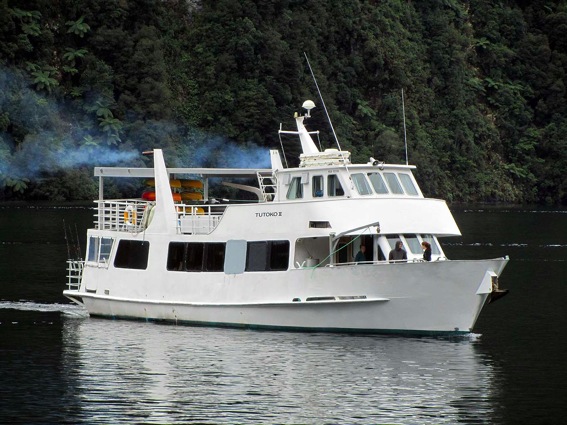
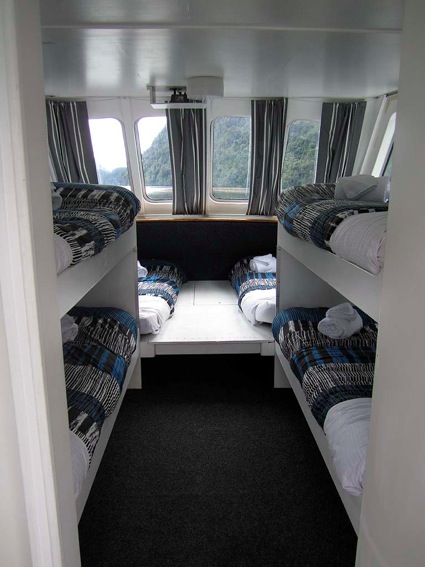
Here’s our cabin, the entire indoor part of the upper deck:
The crew consisted of the couple Jennifer
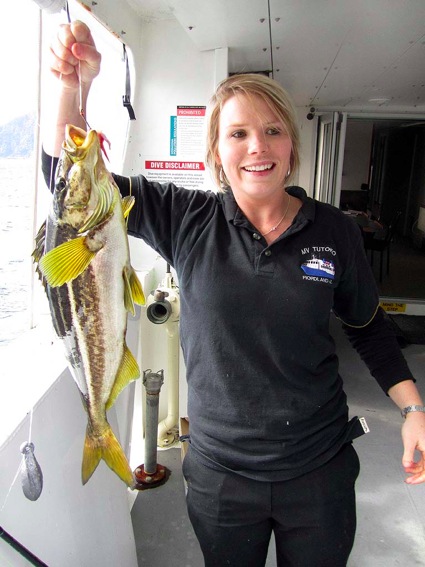
and Fjord:
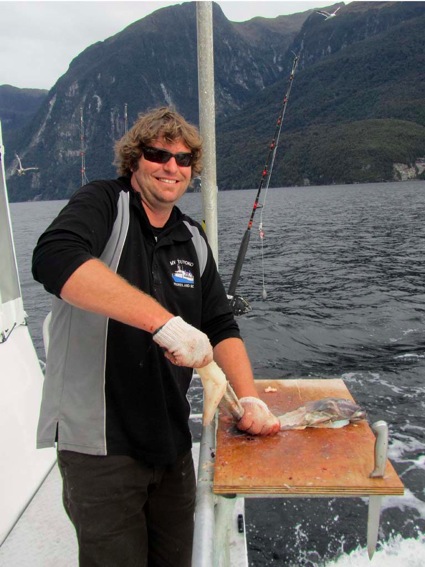
Yes, the skipper on a fjord boat and our fjord guide was called Fjord. Talk about clairvoyant parents.
There were only 4 other gueste, two couples who knew each other well: Vivian, Malcolm, Annalie and David. They are originally from Zimbabwe, but have been living in New Zealand for almost a decade. We quickly discovered that Malcolm and Vivian were the parents of Jennifer. I was at first a little skeptical. I have been on a trip once where the only other guests were very good friends of the owner and guide. He was not very sensitive to the situation and we ended up being the fifth wheel on the wagon while he was having a great time with his friends. My fears were quickly blown away, however. They were very open and great with the kids and the fact that they knew each other so well created a great family atmosphere. We were very happy with our boat choice.
Bubbly! Good start.
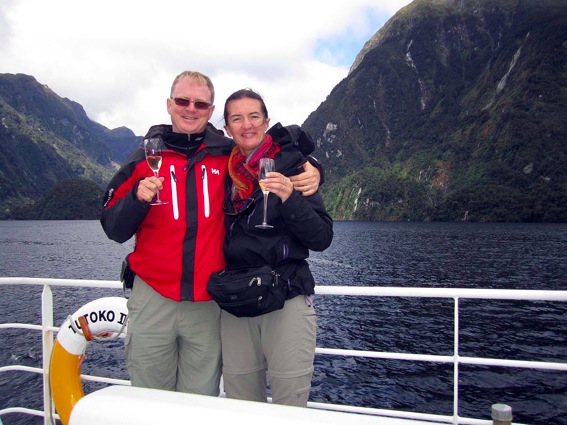
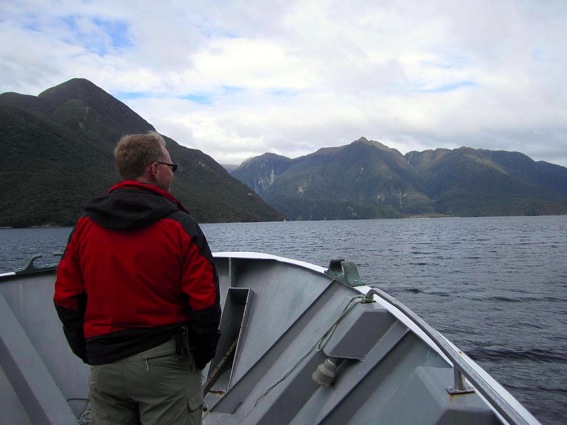
We slowly chugged our way out the fjord. It was beautiful and once again we thanked the weather god we had bribed before leaving on our voyage:
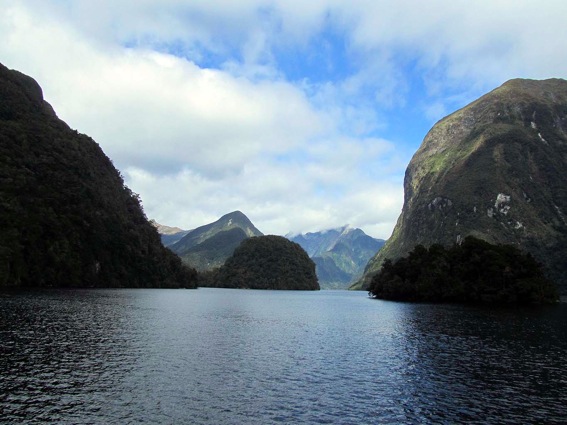
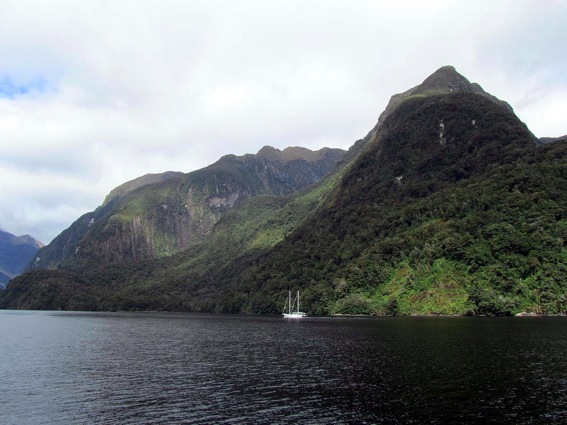
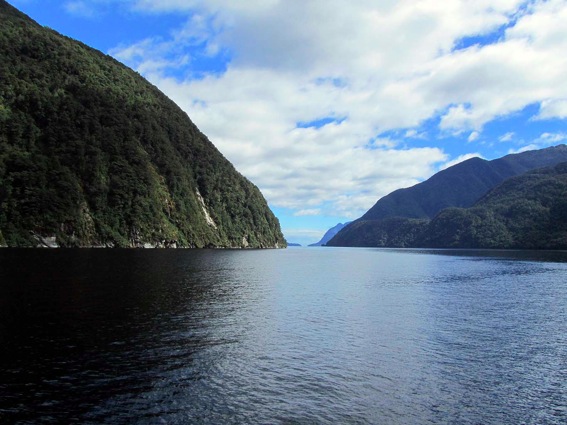
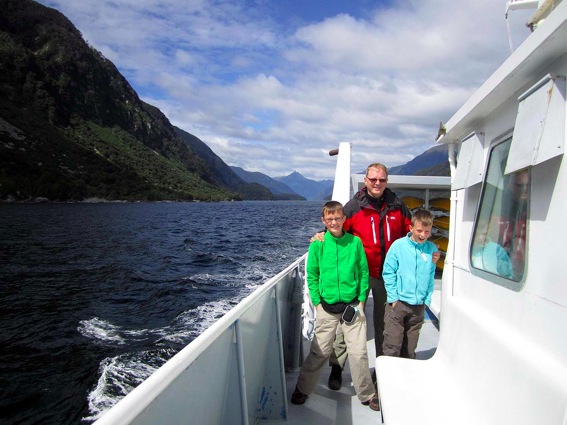
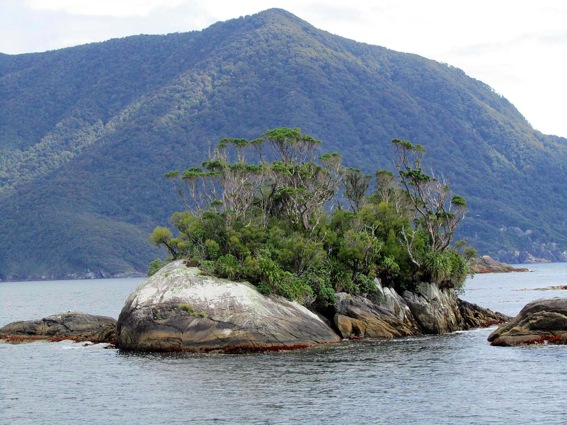
There were quite a few waterfalls, but apparently there are about 10 times more when it is raining:
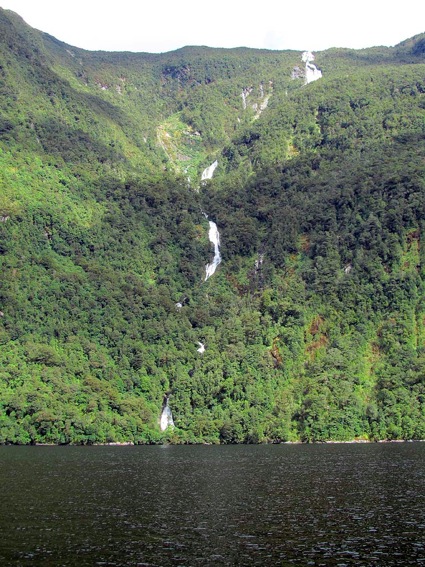
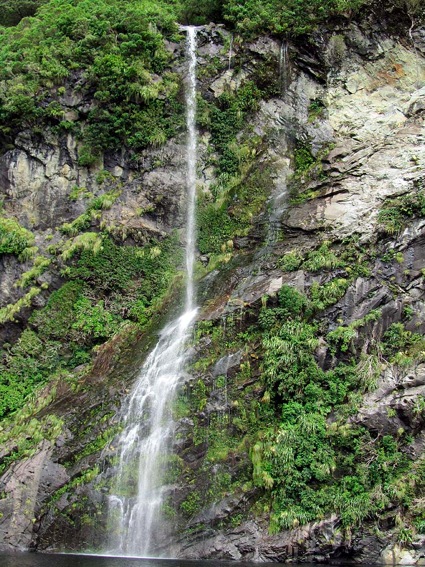
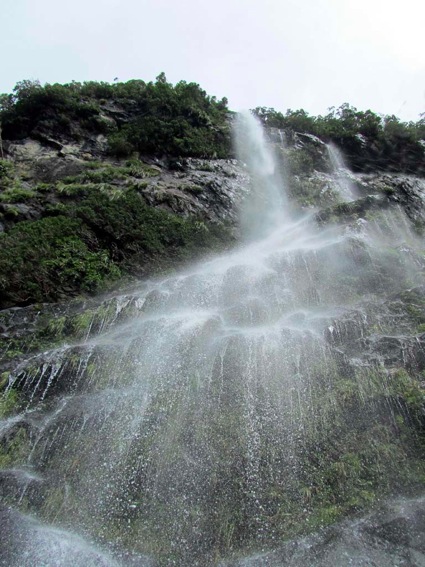
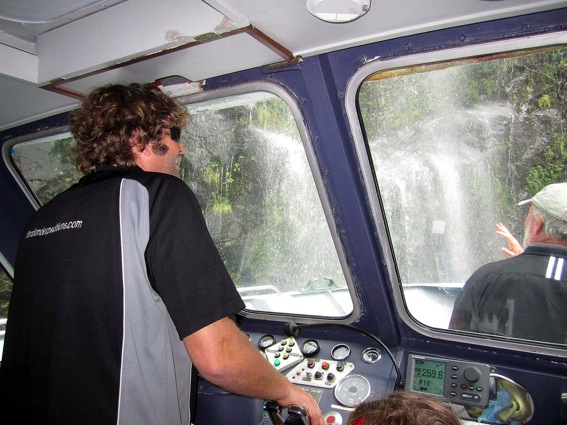
Fjord drove us straight under one, so everyone on deck got wet. No doubt that he enjoyed that part. Look at his smile. 🙂
We made it all the way to the end, where the fjord hits the Tasman Sea. Some really relaxed guys (New Zealand fur seals) were enjoying the sun:
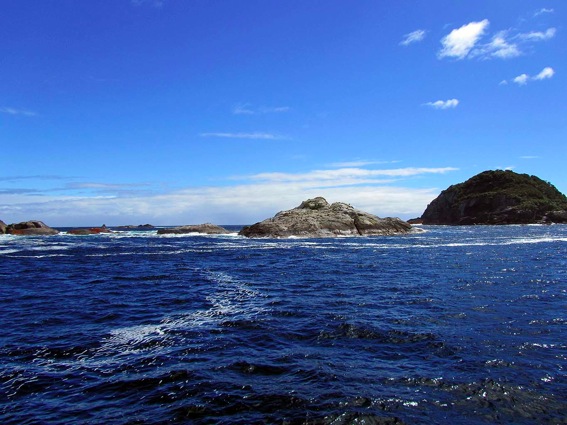
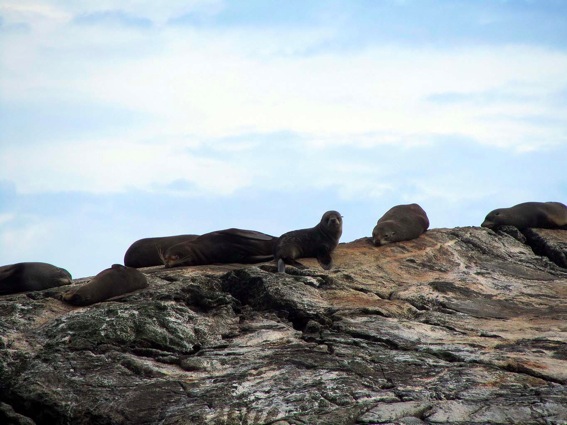
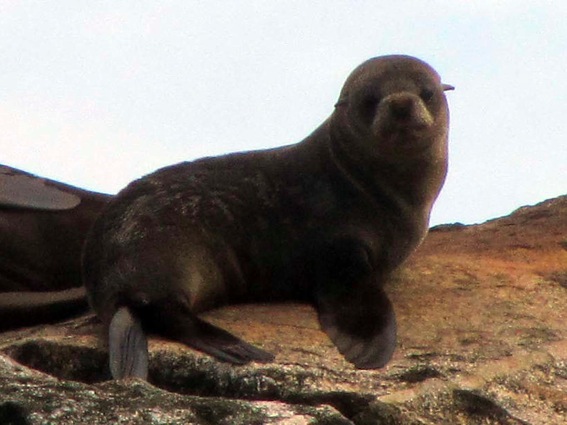
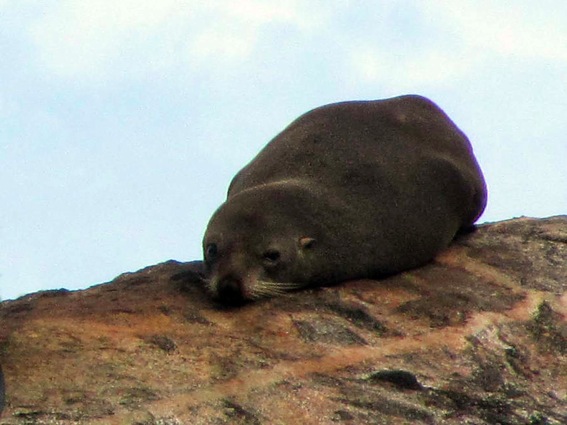
See that tiny piece of land in the horizon on the right? That’s Australia:
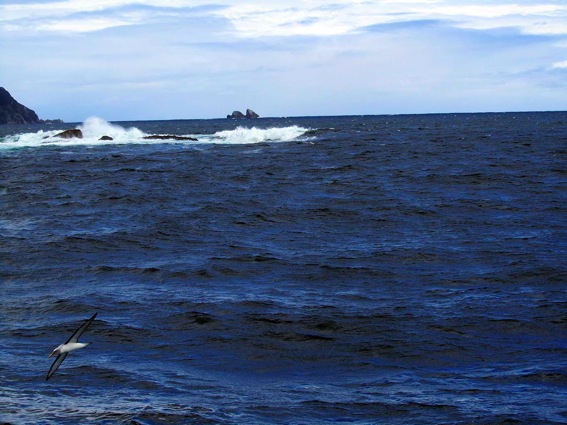
On the way back into the fjord we stopped to do some fishing. We needed dinner.
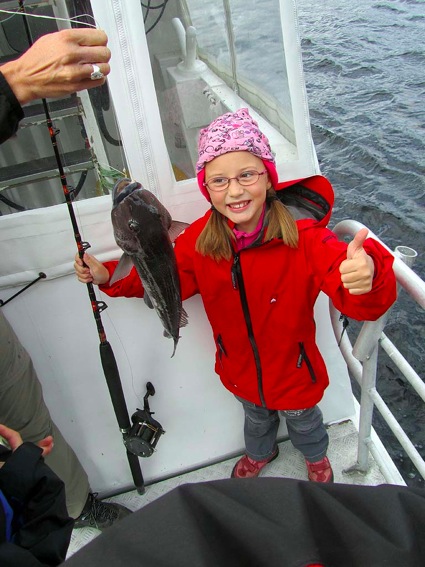
There were plenty of blue cod to be had. Iseline pulled up two nice ones all by herself:
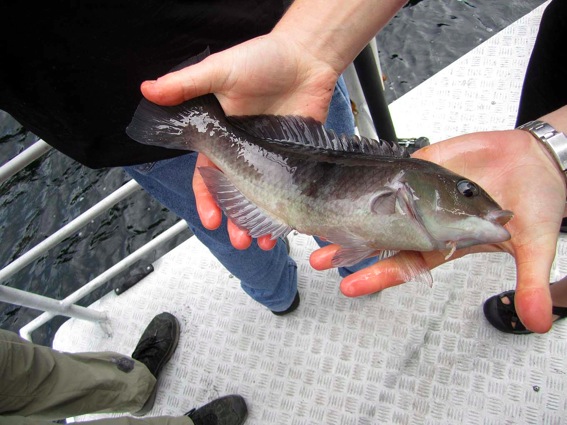
There were also many smaller fish we let go:
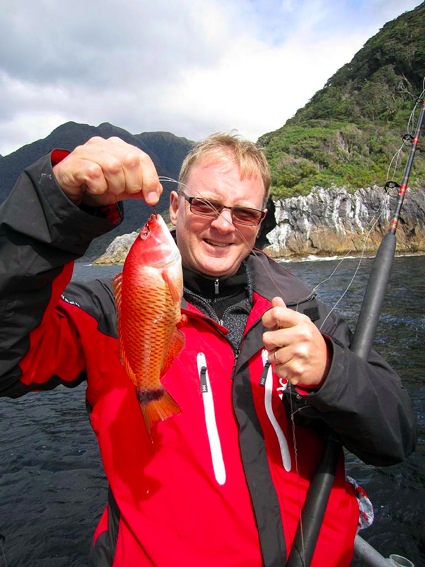
I put a lot of love and passion into postprocessing the photos of the blog and often nerd around in Photoshop Elements. I thought I would show you one example. Now you see the line:
Now you don’t:
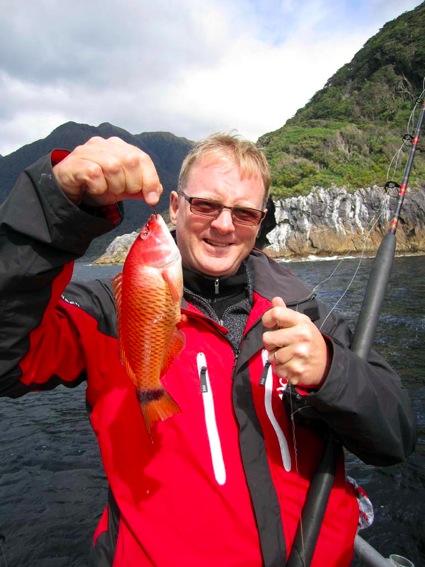
Digital magic. Cool, eh?
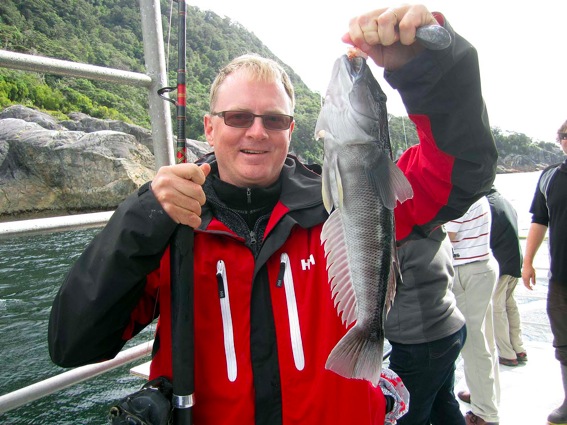
It took a long time before I got my first blue cod. Fjord mocked me by saying it was too small to be eaten. I answered by saying that he should have told me so, and that getting him a bigger one was no problem. I regretted my words immediately. But what do you know, 5 minutes later I got a big one, and could ask if this was big enough:
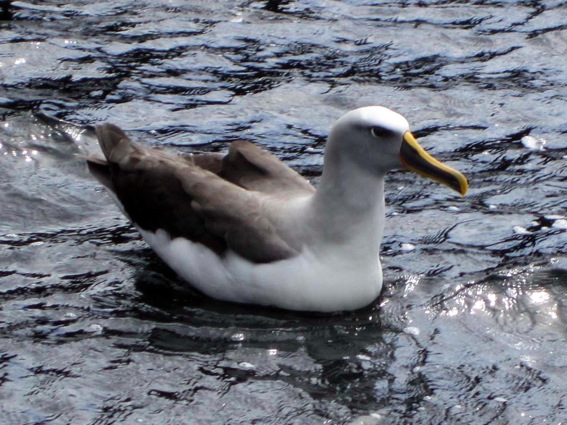
There were albatross in the water, waiting for some fish to fall their way:
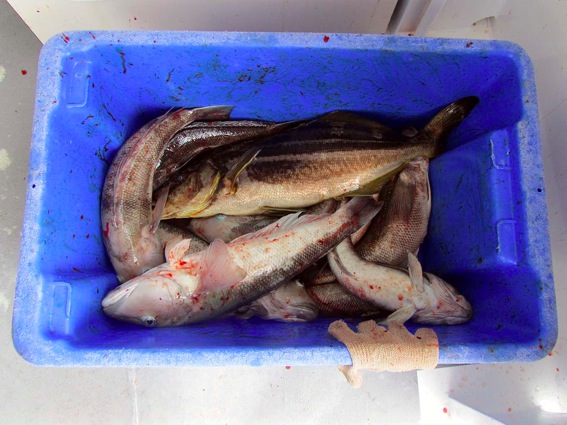
After a while we had more than enough for dinner:
OK. Main dish secured. Time to get an appetizer on board:
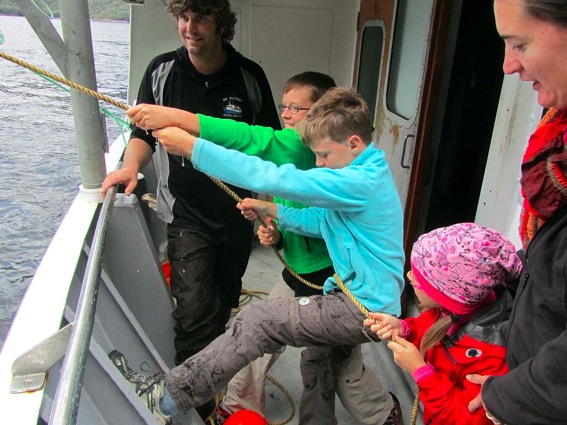
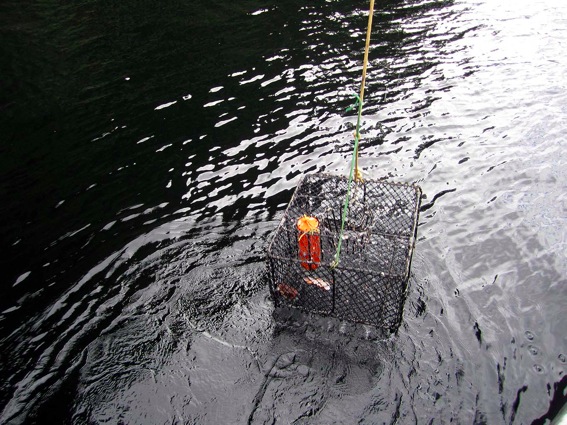
We had been octopussed, as Fjord put it. The most intelligent invertebrate, the octopus, had had our appetizer before we could have it. Only the exoskeleton remained:
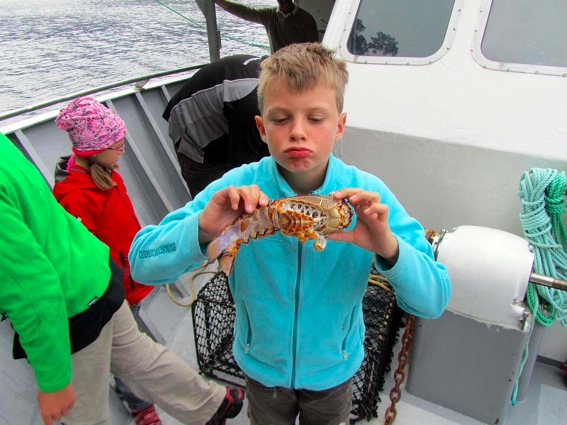
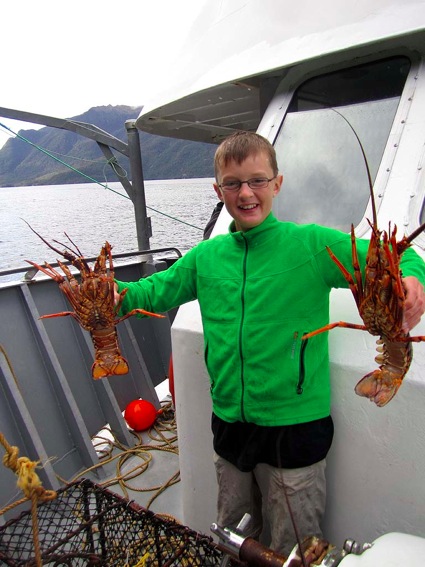
Luckily there was a second trap, and there were 3 lobsters in it. Picture of picture being taken:
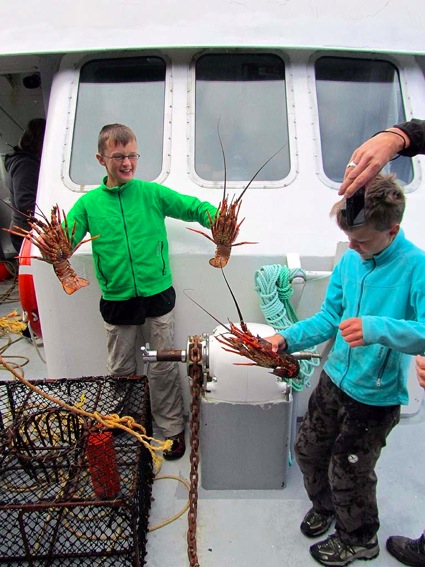
Picture taken while the picture above was taken:
We continued gliding along the fjord. It was great standing on deck and taking in the majestic beauty of the place, just like we did when Helene and I took the Norwegian Coastal Express during our honeymoon. (That trip took 6 days, from Bergen almost to the Russian border)
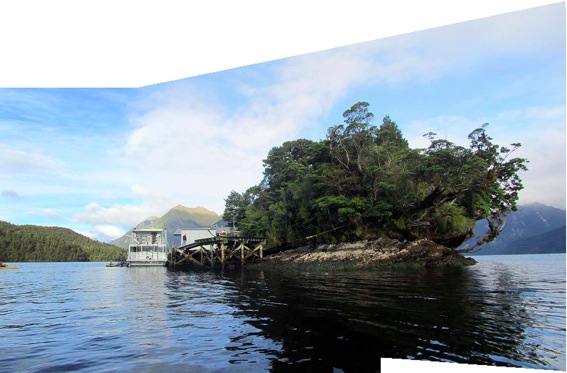
We stopped at a small island. This was going to be our resting place for the night later on:
The kids and I couldn’t resist fishing some more:
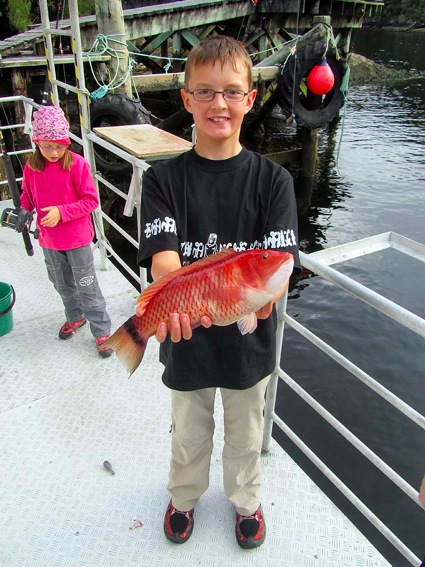
Adrian caught this one, which Fjord told us was a male and the dominant leader of a school of females. If he dies, one of the females in the school, the most dominant one, will change sex (!) and take the leadership position. We didn’t have the heart to kill him and released him so he could be reunited with his harem.
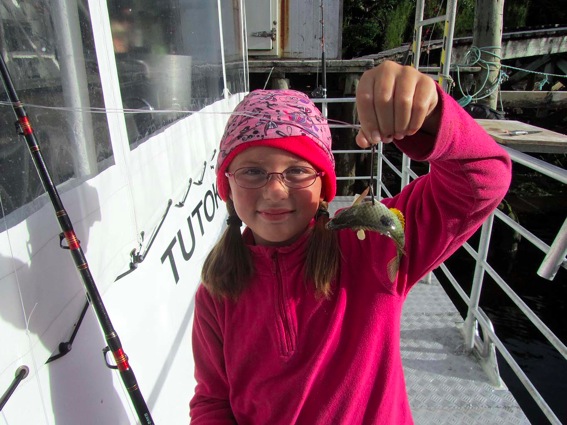
Iseline landed the smallest fish of the day:
Then Iseline, Adrian and I did some kayaking. Iseline was alone in a kayak for the very first time. She absolutely loved it:
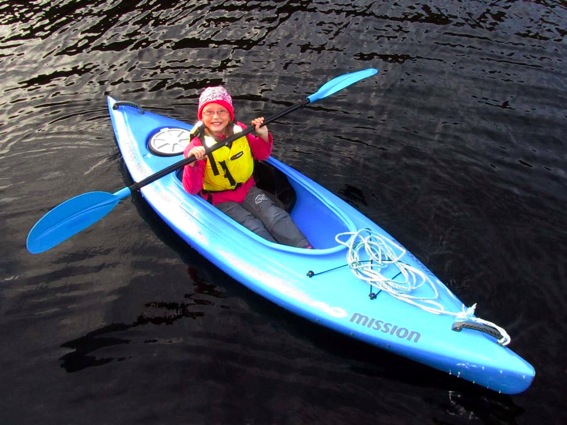
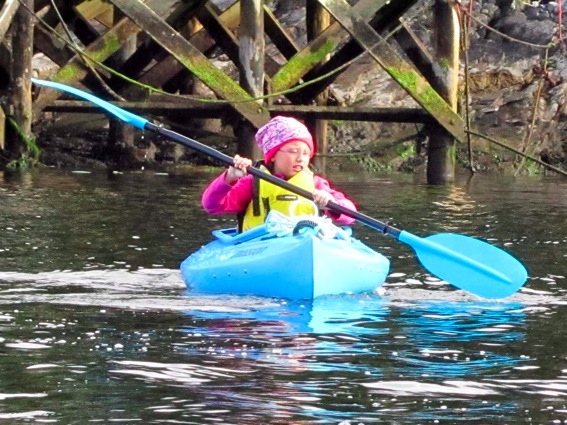
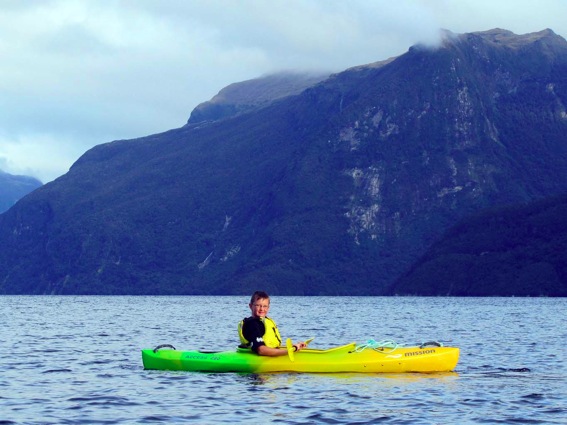
We took off to have dinner further out. The sandflies here are a big problem as soon as you get close to the vegetation. These minuscule terrorists will not take no for an answer and suck your blood all he time. Yes, Gwen, some insects are indeed not very useful.
We got close to the tourist machine and Fjord called them up on the radio.
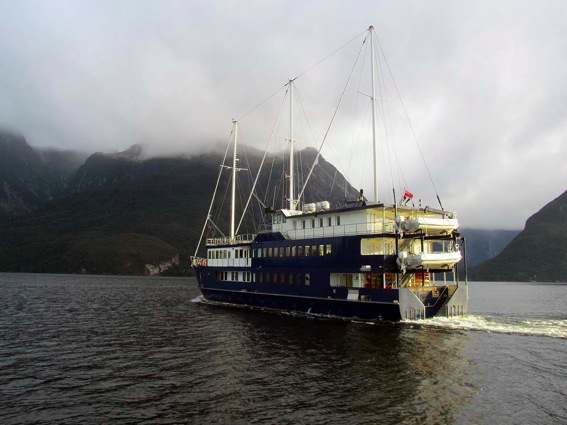
He told me they were going to trade with the natives. Two plastic bags changed hands from deck to deck. We had just traded 3 live lobsters for gluten-free bread for Helene. We gave Fjord and Jennifer a hard time for their appalling negotiating skills 🙂 We were impressed by their efforts to find food for Helene and luckily there were plenty of lobsters available from yesterday’s catch. They also told us that all the boats here helped each other out with supplies as much as they could.
The kids were happy. Just being in a boat, not to mention the prospect of sleeping on one, was thrilling to them.
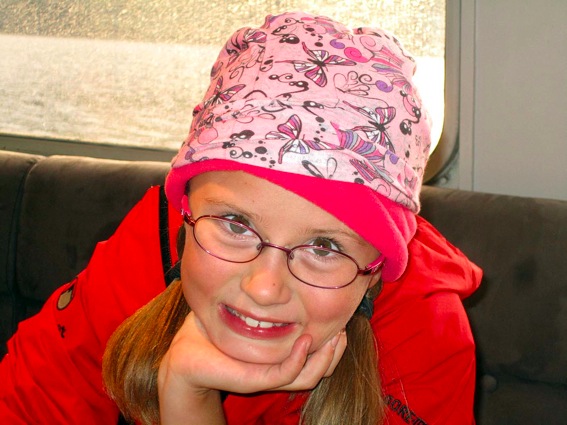
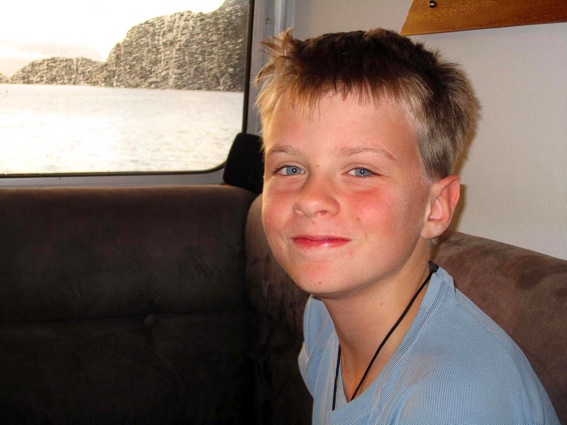
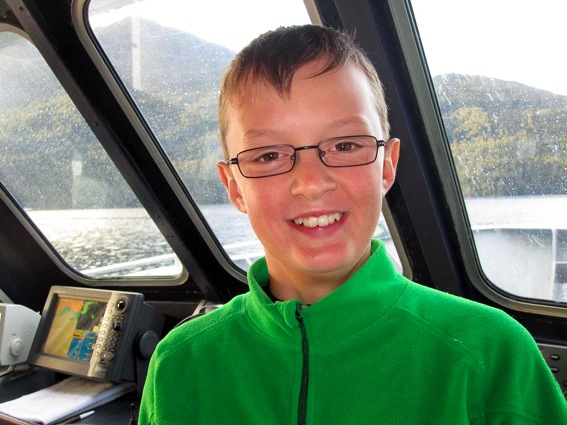
Dinner was prepared. “Please don’t let go of my tail. Pretty please!” Plop.
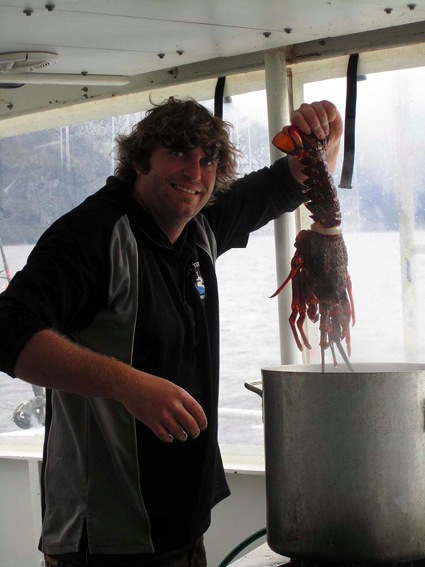
Dinner!
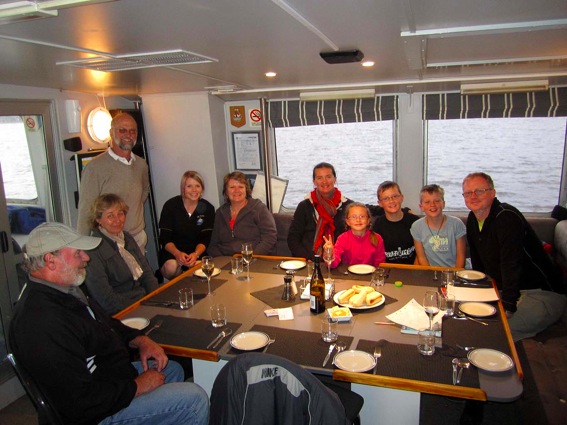
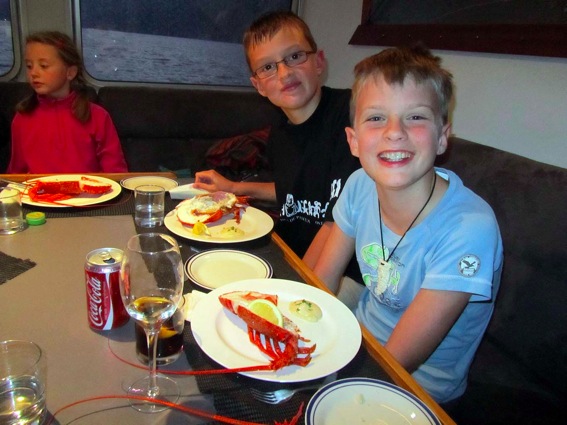
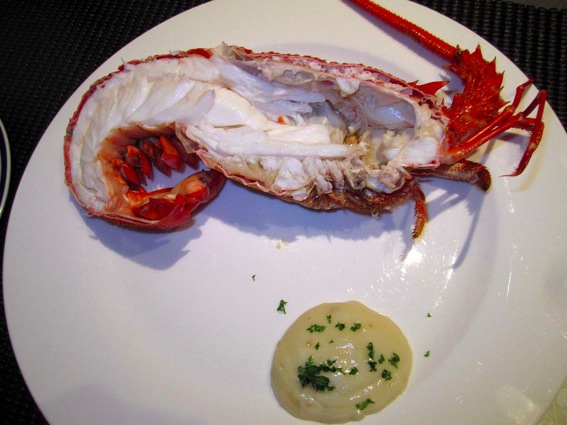
And so the sun set on Doubtful Sound
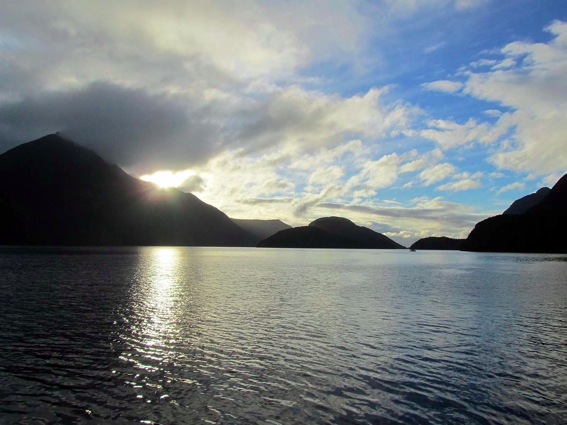
For some strange reason sandflies go to bed as soon as it gets dark. One would think that was a loser evolutionary strategy, but obviously it has worked overwhelmingly well for them. The Maori have a legend that Tu-te-raki-whanoa was the god who made the fjords. He was their Slartibartfast. When he was finished he had created a masterpiece, but there was one slight problem. The fjords were so beautiful that humans could not get any work done, the would only stand there and gaze upon these beautiful wonders of nature. So, the goddess Hinenuitepo found a solution. She created the sandflies to kick some human butt (hey, George Bush used that word in his speech about Saddam, so it should be kosher to use it by now) and get them working again. Problem solved.
With all sandflies tucked into their jungle beds, we could now go back to the little island, anchor up and tuck in for the night ourselves.
Eirik
—–

What a great place! It so reminds me of Maine where my wife’s mom lives right in the ocean. I hope one day you can all visit us there. We dine on lobster and catch fish every day. There are seals there too! Some day perhaps…