




NZ South Island – Day 15 – Milford Sound
March 8, 2011
We routinely got everything ready early in the morning and made our way the short distance down to Milford Sound. The tide was low:
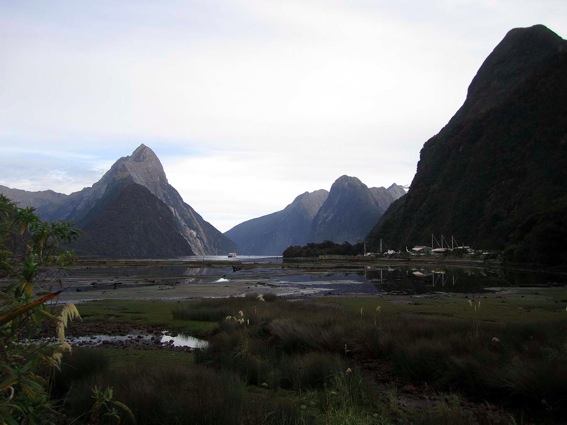
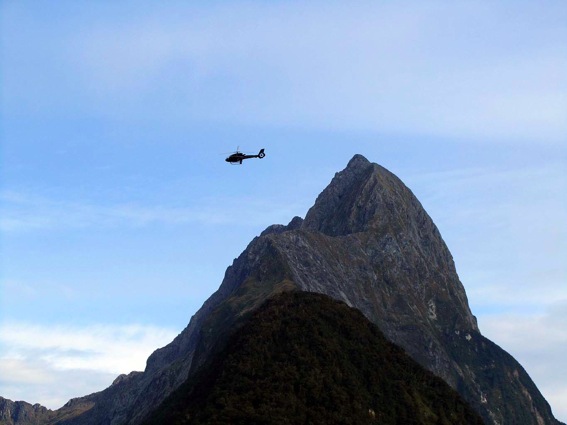
By the time we had checked in to our boat the fjord looked a bit better. To the left you can see MItre Peak (1692 meters, 5551 feet), arguably the most famous mountain peak in the Fiordland national park:
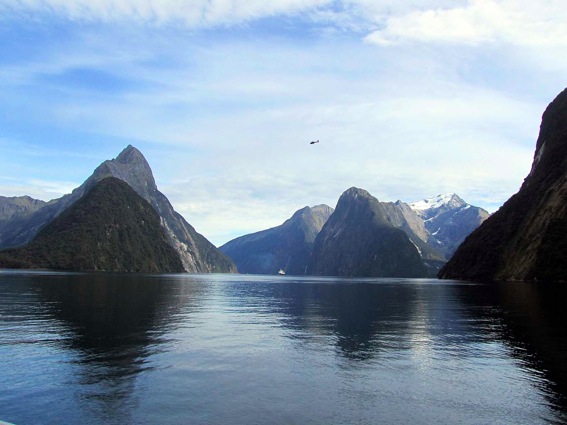
OK. Just wait a little moment while I adjust the zoom and that helicopter moves closer to the peak. Here we go:
As soon as we left the pier a group of dolphins showed up to say hello. Cameras out, everyone!
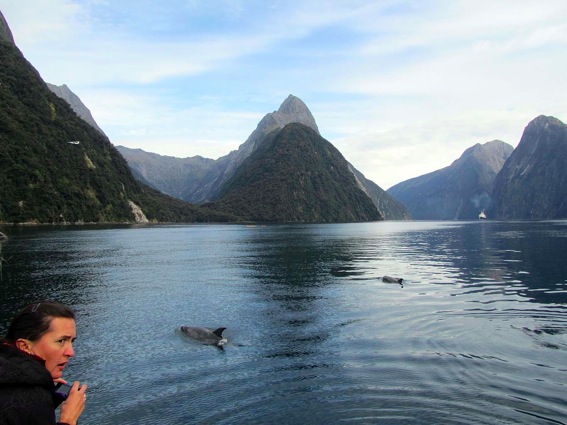
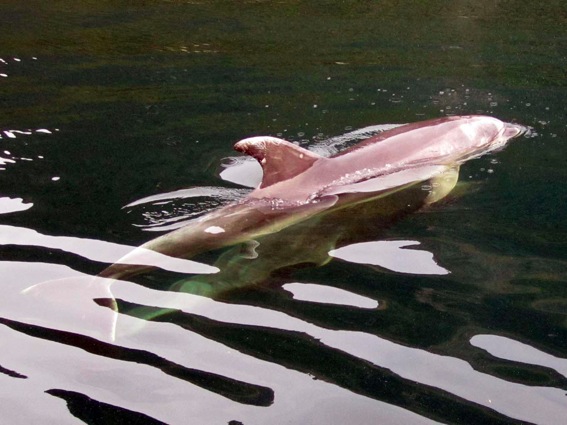
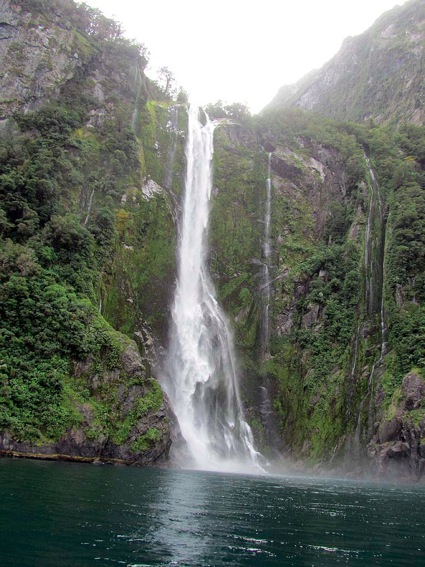
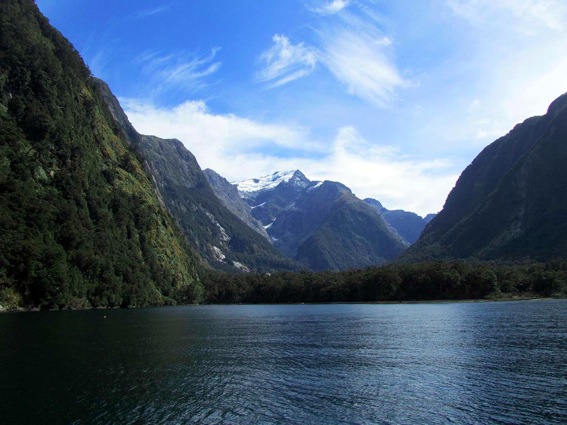
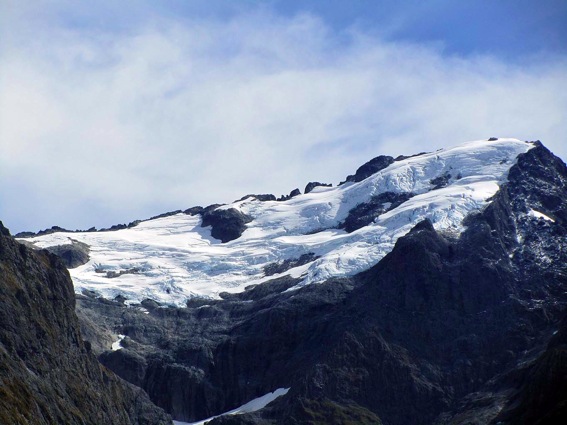
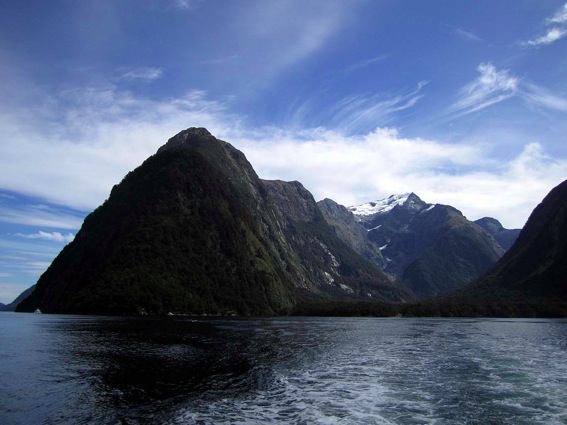
Our boat moved slowly through the sound. Milford is different from Doubtful, it is much shorter, but also has steeper mountainsides and seems “wilder”. We were unsure about doing both Doubtful and Milford, but had no regrets now.The views were stunning:
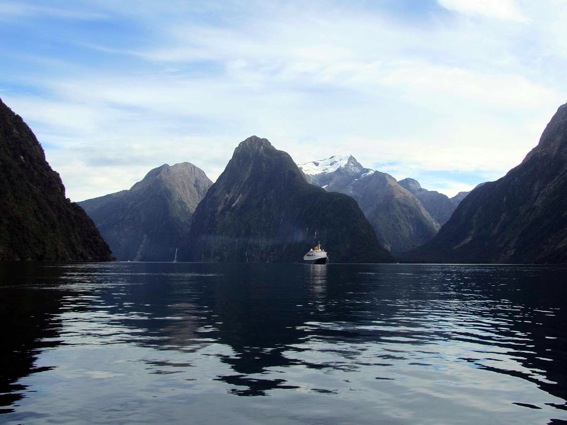
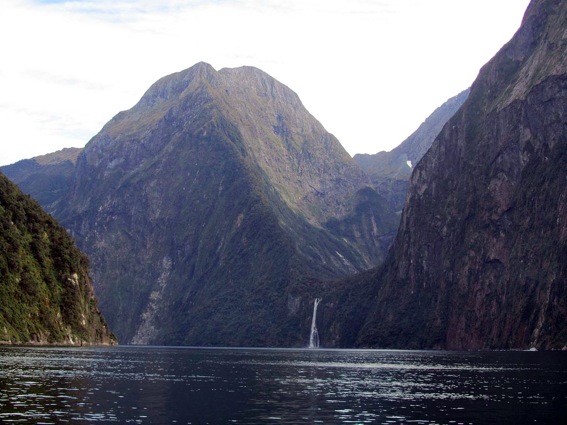
We passed a cruise ship:
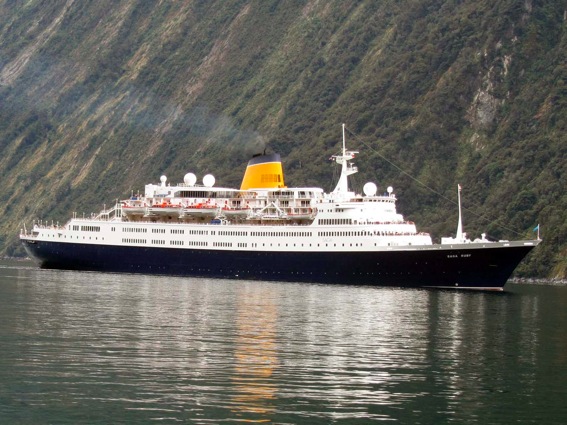
This is the Saga Ruby, which the local copy of Wikipedia I have on my phone could tell me had originally been built for the Norwegian America Line and had had its maiden voyage from Oslo to New York in 1973. I even found the captains blog on the net afterwards. Check his entry for March 8.
Oh, I’m so looking forward to augmented reality. The pieces are coming together and a lot of information is already available. This one is already well within what is possible today. A mini camera in my glasses could easily have captured the name of the ship and given me information as subtitles under the boat through the transparent LCD screen in my glasses.
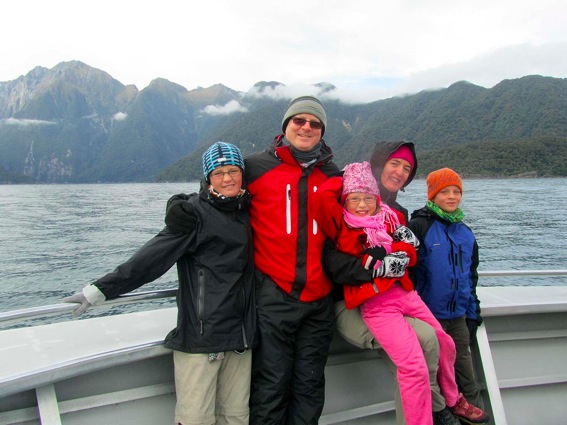
Everyone enjoyed the ride:
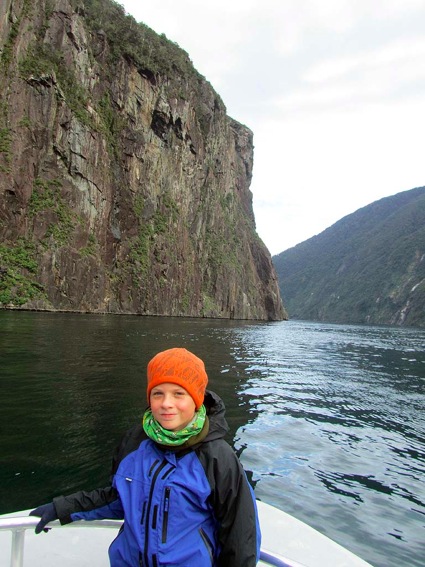
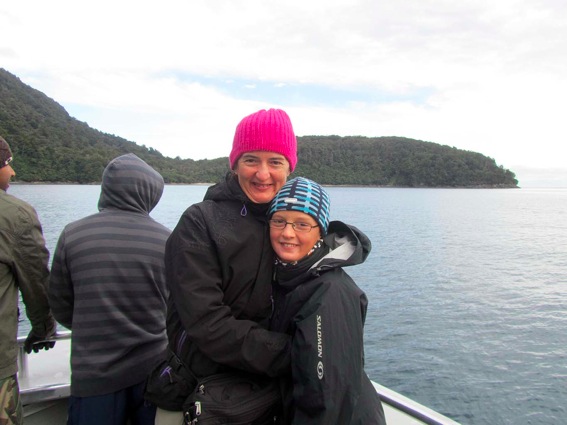
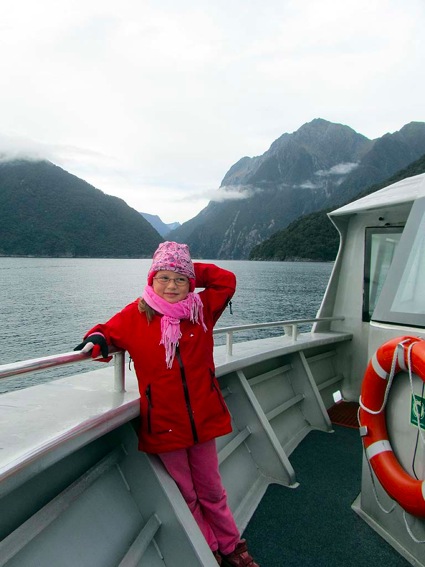
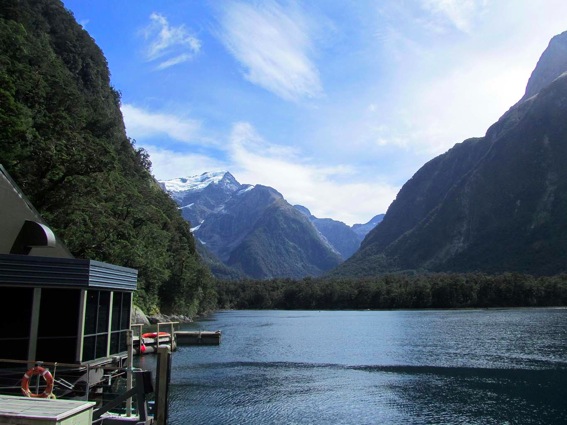
There is an underwater observatory here and it was optional to include it in the cruise. It was relatively expensive, but also sounded very interesting, so we had included it. When we stopped at the observatory (building to the left) we were the only ones to get off!
We got a great personalized tour and learned a lot more about the marine life here. Fiordland has some unique marine conditions. Because of the narrow opening to the ocean each fjord has a very slow exchange of water with the ocean. This is common for most fjords. However, since there are such extreme amounts of rain here, a 3-4 meter (10-13 feet) thick layer of freshwater rests permanently on top of the saltwater. Rainwater runs down the mountainsides and through the layer of leaves and humus the trees grow on (as you might remember there is no soil here). This gives the rainwater a tea-like color before it hits the fjord.
In other words, there is a permanent layer of dark freshwater on top of the saltwater in the fjord. This layer acts as “sunglasses” and limits the amount of sunlight that comes thorugh to the seawater below. The phenomenon is called “deep water emergence.” Species which normally live at a depth of several hundred meters are “tricked” by the light conditions and can be found at depths as shallow as 5 meters (16 feet) here.
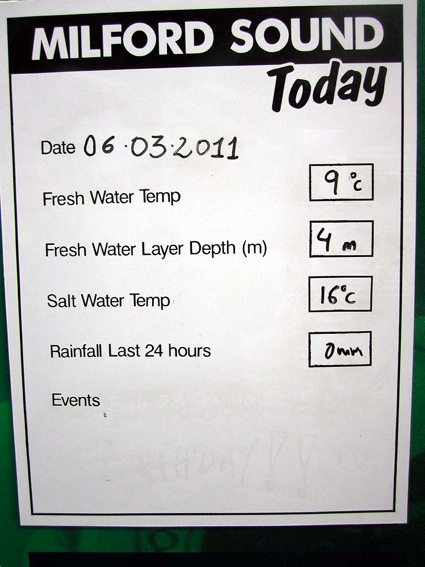
This interesting report was in the observatory (two days old or wrongly dated, but still interesting):
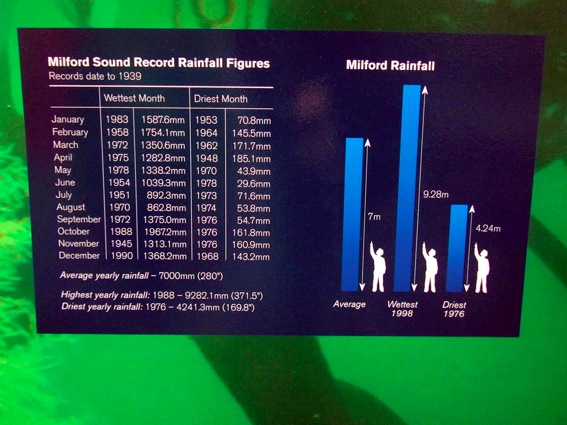
Cool rain statistics:
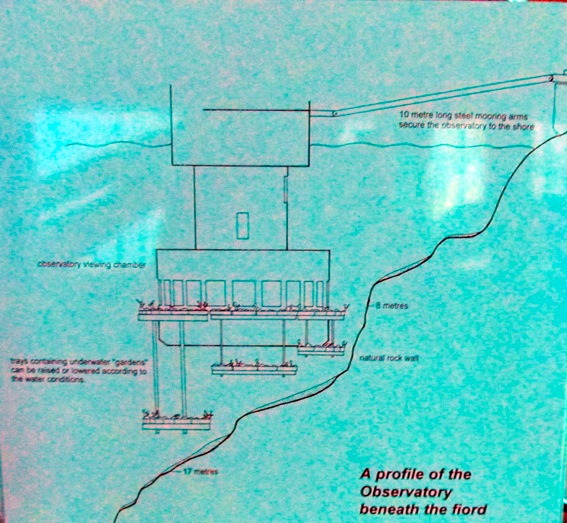
This drawing shows how the observatory is placed in the water:
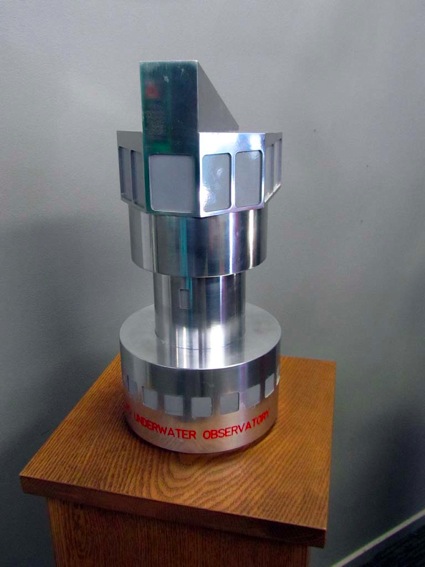
And here is a model of the construction. It was built in Invercargill on the south-east coast and towed all the way over here.
We descended down the spiral staircase and were 10 meters (33 feet) under water:
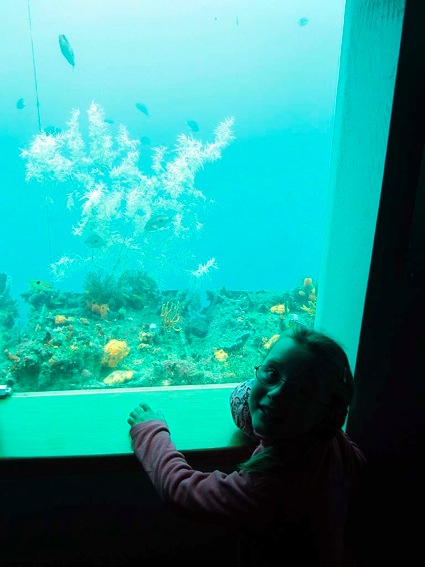
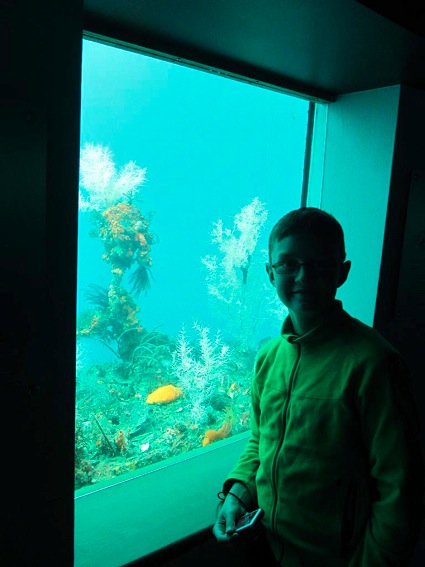
This is the bizarrely named black coral:
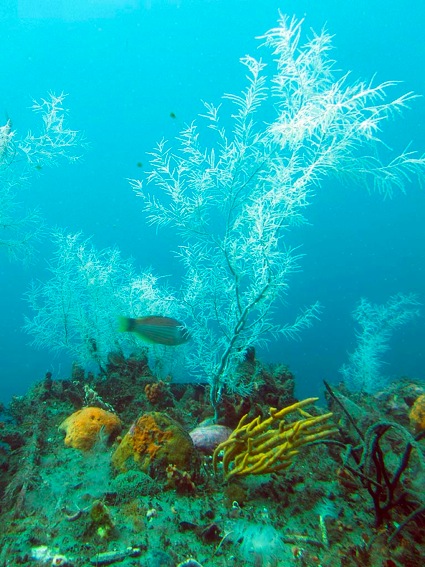
It has a black skeleton on the inside, giving it its name. These rare corals are normally only found in very deep waters.
There was a piece of glass, the same thickness as the windows we were watching through:
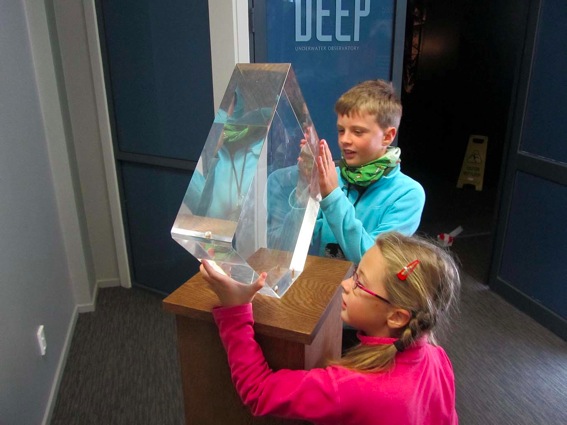
It was fascinating to learn about the special conditions and marine life here and cool to see some of it, but the limited reach of the viewing platform meant that there was really not much variation in what you could see through the windows. Was it worth the high entrance fee (roughly 100 USD for all of us.)? Probably not. And out of a cruise of 75 people, only the 5 of us did the visit. Maybe someone should reconsider their pricing?
We grabbed another cruise boat back to the pier, had a quick sandwich lunch in the van and was about to leave when Iseline could not find her iPod. We searched through everything 3 times. It was gone. She was devastated.
She couldn’t remember where she had it last. I went through our photos and we could see that she had had it next to her on our way down to Milford yesterday. Out best theory was that she had somehow left it when we visited the Chasm yesterday.
We drove back up there and the whole family took part in the search. We didn’t have much hope, the place was crawling with tourists. It was nowhere to be found. Iseline was starting to realize the graveness of the situation.
When we got back to the camper van Helene had the idea of looking in the crack of the back seat, the one just behind where you sit. Miracle of miracles, the iPod was there, and it was not broken! Very close call and a learning experience for Iseline.
We had spent quite some extra time and I had fishing plans for the evening. Not good. We took one last picture towards the fjord before starting on the climb:
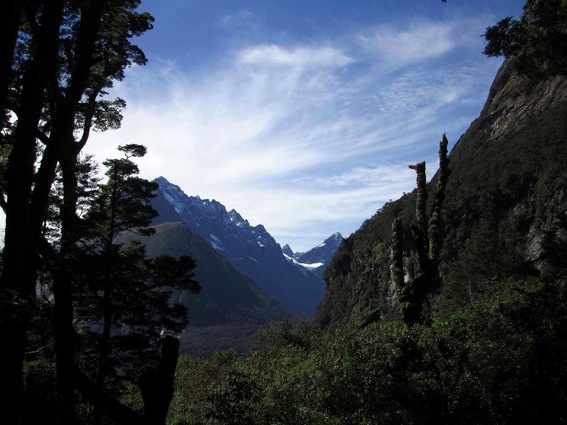
The road is spectacular and reminded us a lot about the “Trollstigen” road in Norway:
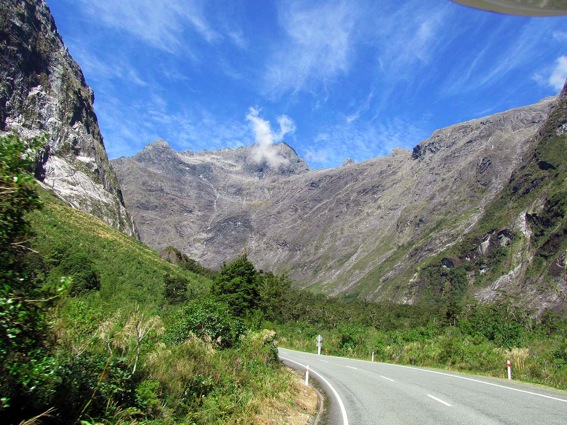
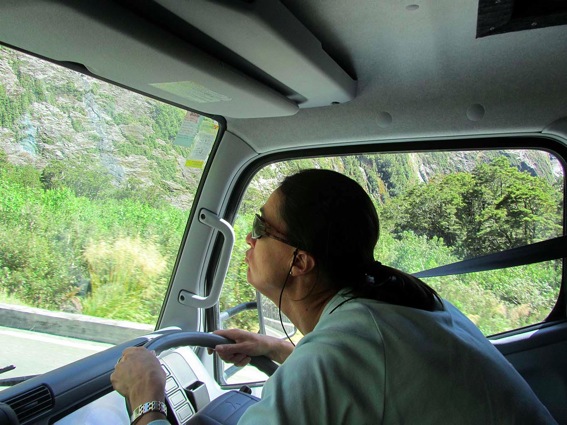
Helene enjoyed the drive, as always:
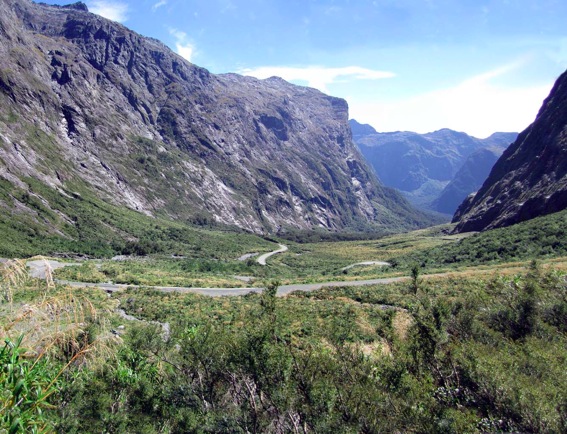
Look at that road winding its way through the landscape:
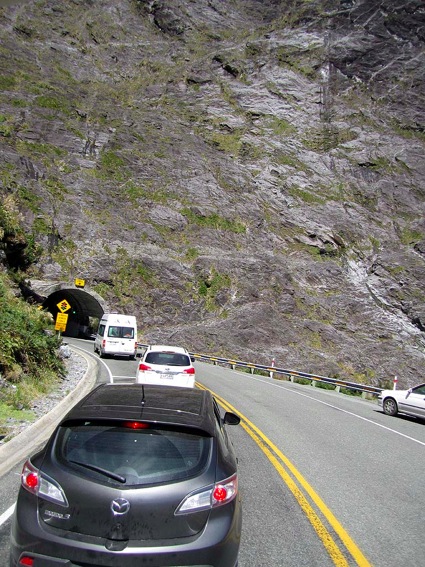
The tunnel is one-way, 15 minutes in each direction.
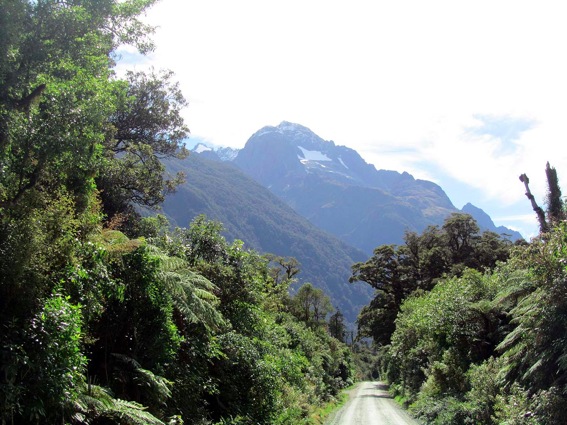
On the other side, we took off from the main road and drove into Hollyford valley on a gravel road:
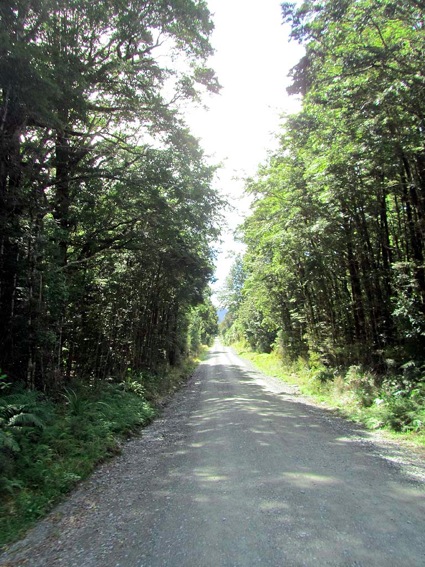
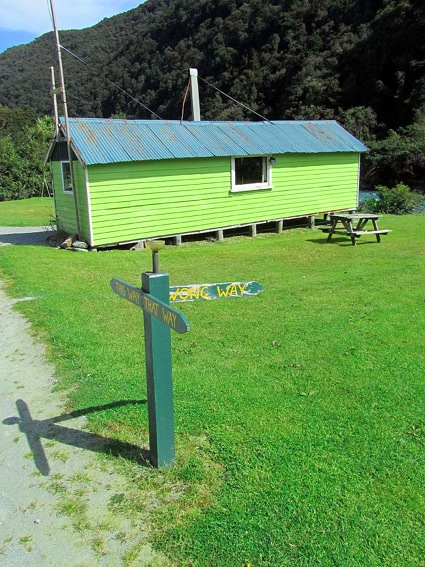
until we reached Hollyford campground, also known as the Gunn Camp. This is where the road workers lived when the road to Milford Sound was built.. It’s very small and the one junction on the site has a very clarifying sign (this way, that way, wong (sic!) way)
We reserved our space for the night and continued into the valley. I was given a 4 hour fishing permit by Helene. She took the kids on a small hike and then did some home schooling. Here they are, working their way up to a waterfall:
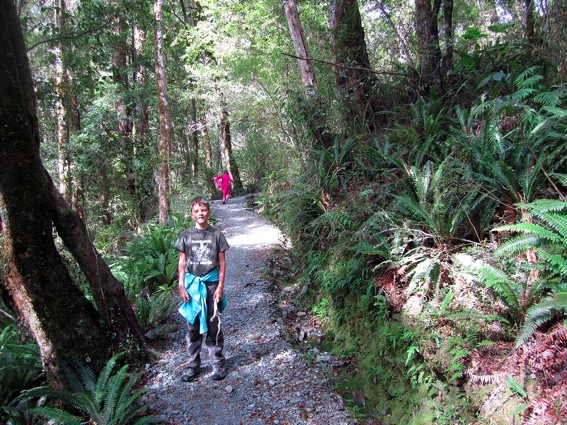
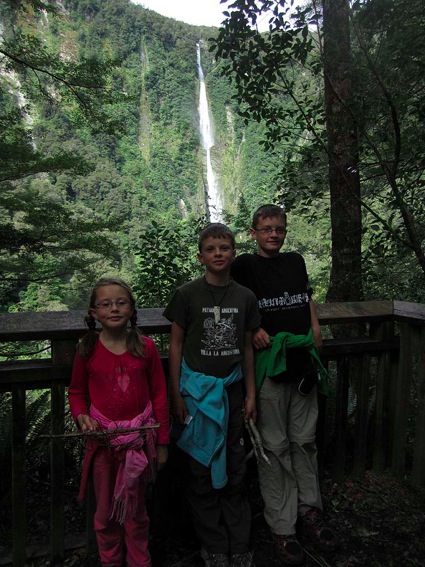
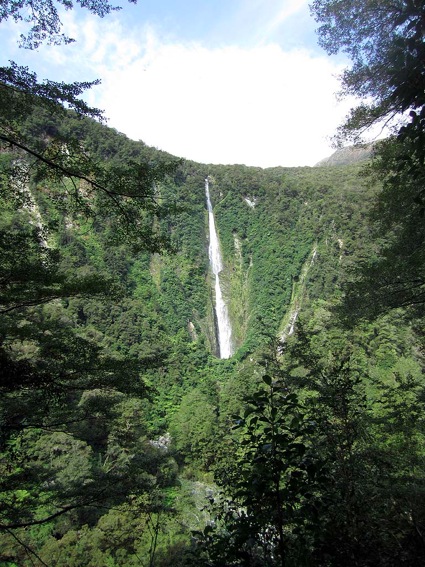
In the meantime I was searching for a good spot to access the river. The guy at the campground had told me I just had to follow the Hollyford trail for a bit and then there would be good access for fishing. The complete Hollyford trail is a 4 day hike down to some beautiful fjords. It’s a one-way access. When hikers reach the end they have the option of being flown out by plane or walking 4 days back again. The trail was beautiful:
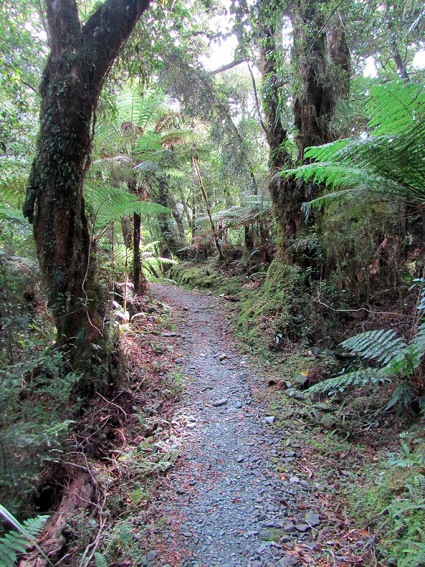
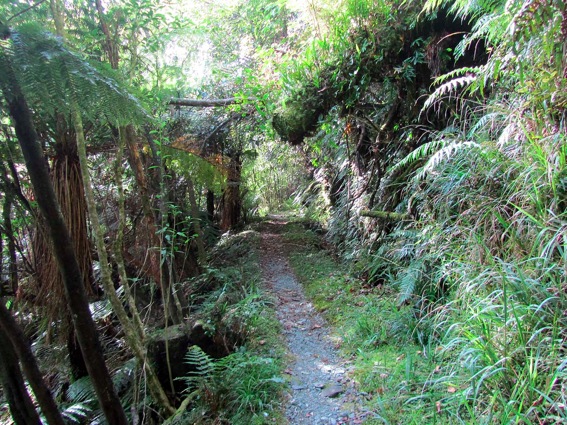
passing many streams and waterfalls
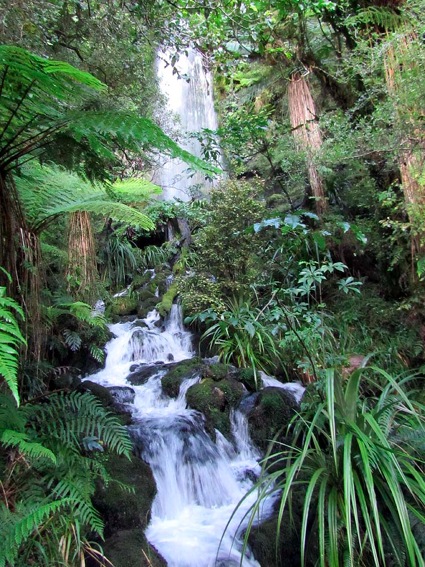
and with good views to the other side of the valley:
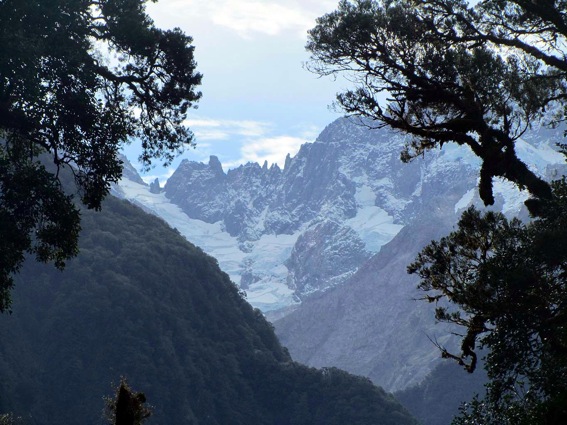
I would love to come back and do the whole trail some other time.
I worked myself up and down the side of the valley several times. Every time I thought I was getting closer to the river it turned the other way again. I had even downloaded the map of this area on the computer, but hadn’t bothered to copy it to my phone. Neither had I asked the guy at the camping just how long I had to walk. There was no cellphone coverage. I had no choice but to continue. After I had been walking quite fast for an hour, full of unspent fishing energy, I was starting to lose hope. Oh well, at least it was a great hike. I did several tries to reach the river, which I could hear in the distance, but the jungle was just too dense.
After almost two hours, with probably half that time spent swearing in the jungle, the trail suddenly joined the banks of the river, and I was met with this lovely sight:
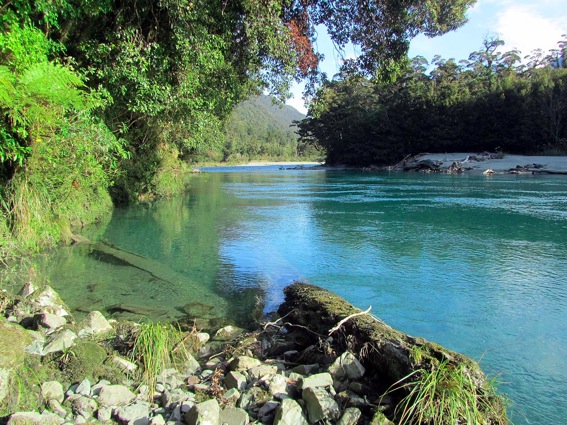
I knew there was monster trout in there, and i did all I could do catch them, but today wasn’t the day. It didn’t matter much. I already had my NZ monster trout well in the bag and I had had a wonderful hike and a great meditation-like fishing trance. It was time to leave after only an hour of fishing
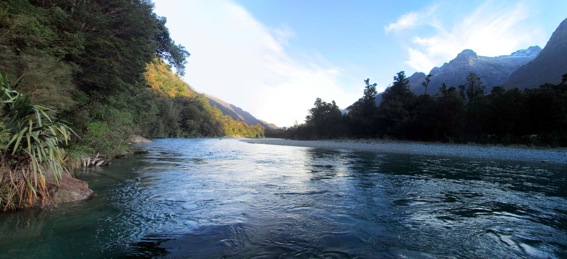
The sun was getting low
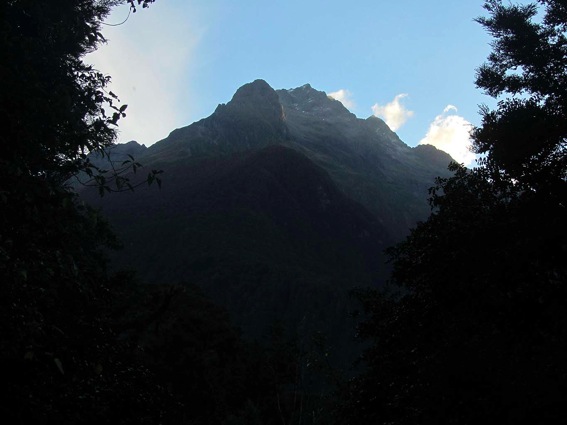
and I had a good workout getting back in one hour. I reached the camper van 4 minutes before my allotted fishing time had been spent. I was exhausted and happy. It had actually been a very good fishing excursion.
Eirik
—–
